








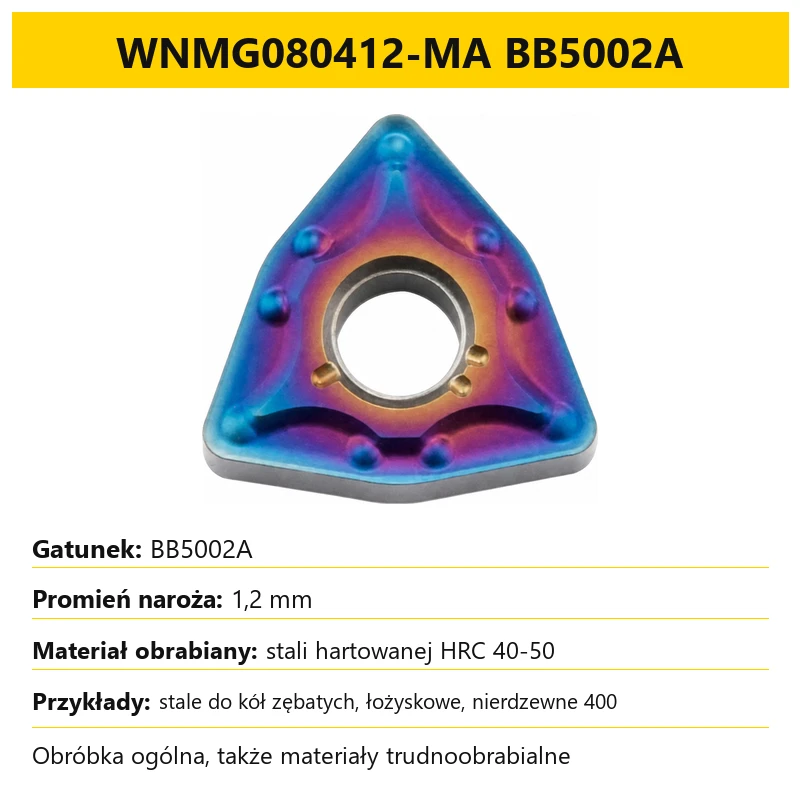


Indexable Turning Inserts WNMG for Steel, Stainless Steel, Hardened Steel and Aluminium (10 pcs)
Shipping costs are not included in the price.
Shipping costs are not included in the price.

Weekly deals
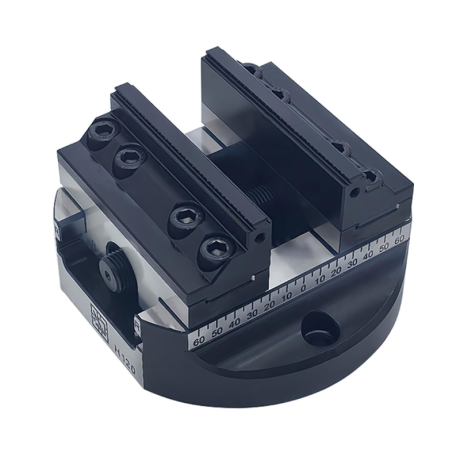
5-axis vise with hard jaws
Self-centering machine vise. Hard jaws included.
excl. VAT
Regular price:
Lowest price in the 30 days before the reduction:
Time left
Offer ends 06.11.2026 23:59. Offer applies to the vise + hard jaws bundle only.
Ask about the product

The administrator of personal data is Kortools. We process it to respond to your inquiry. More information regarding the processing of personal data can be found in privacy policy.
Select a product variant:
Individual variants may differ in price
Product code: 6C3D-1961B
Product description
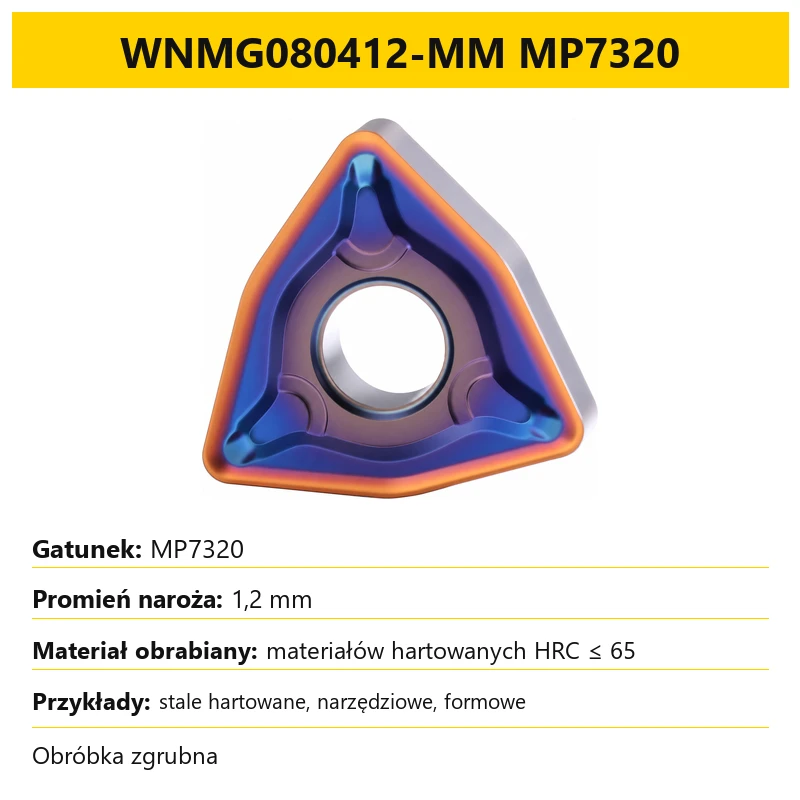
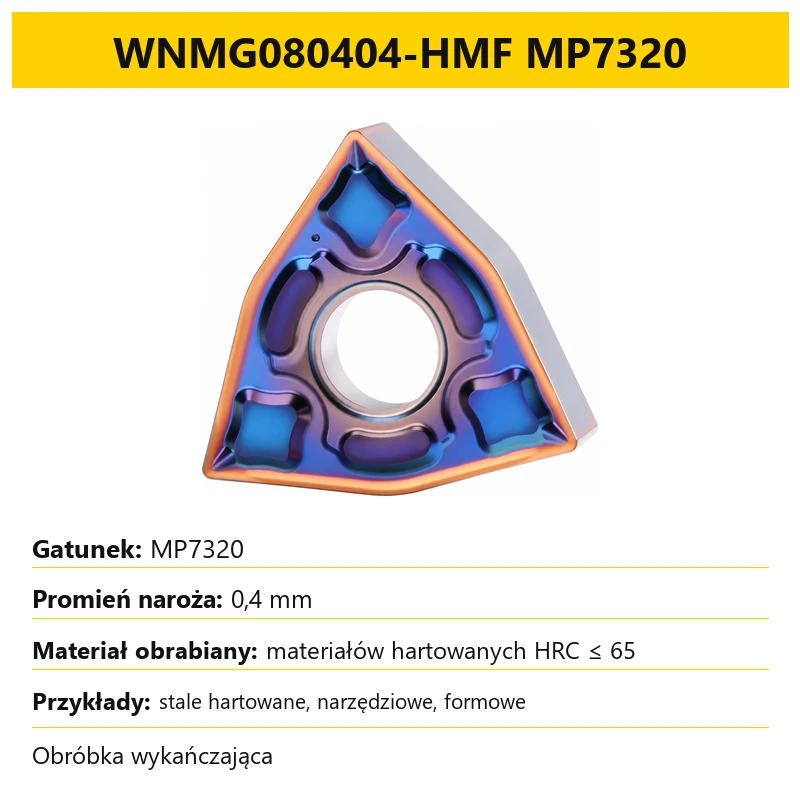
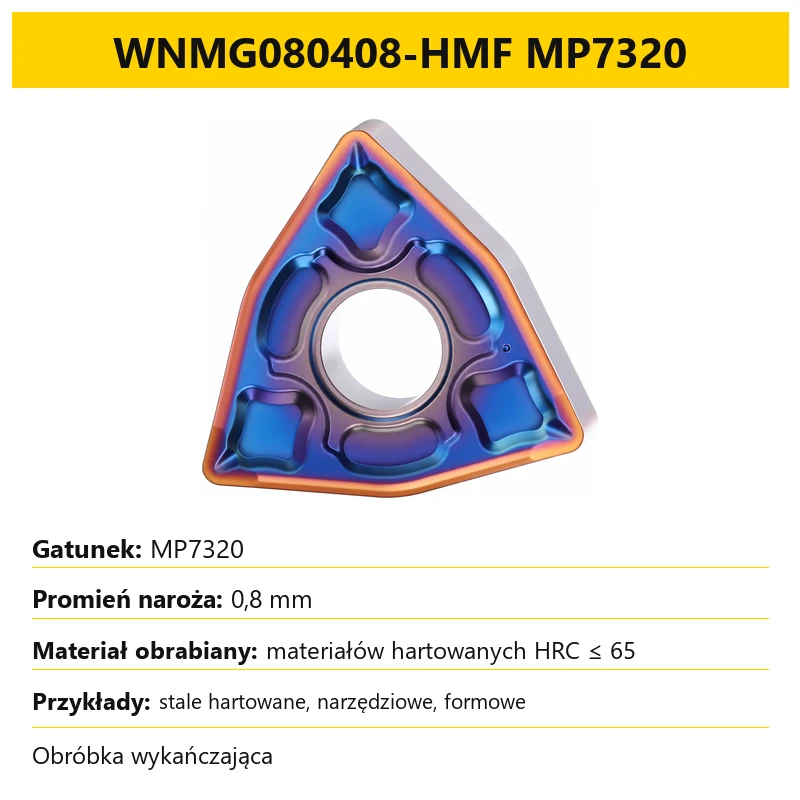
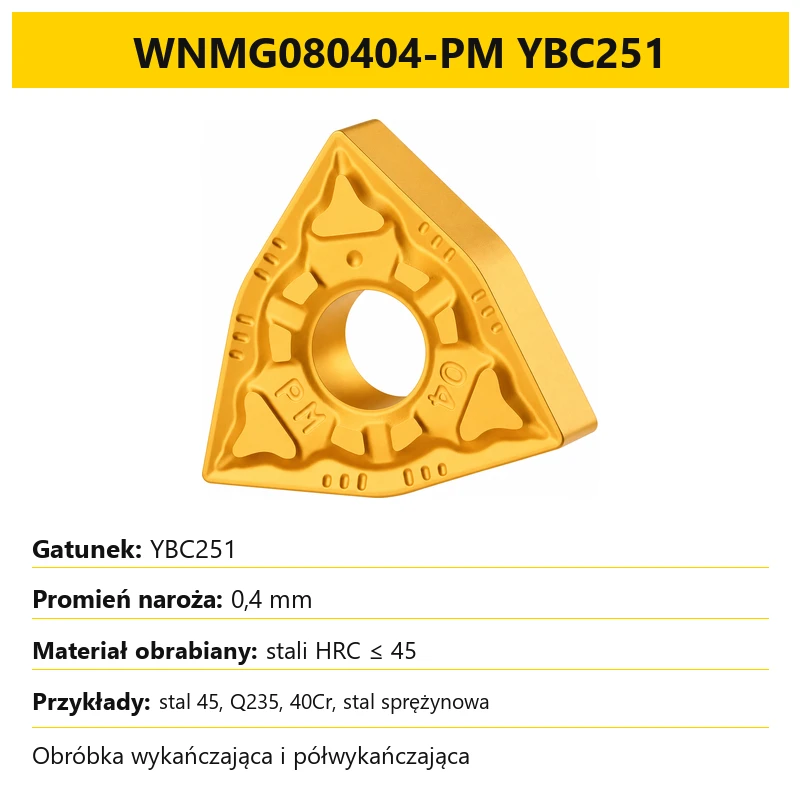
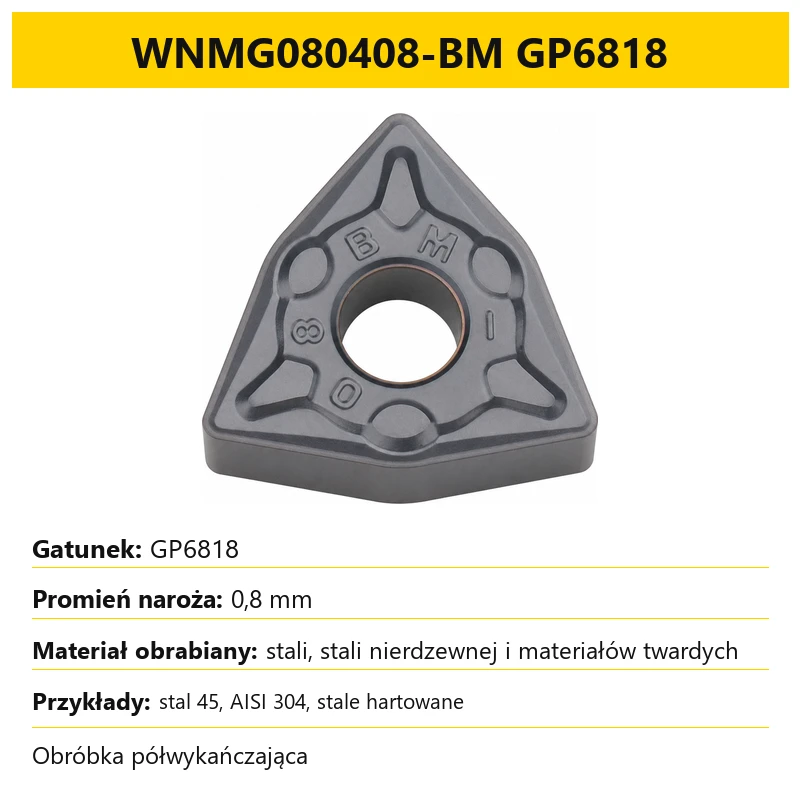
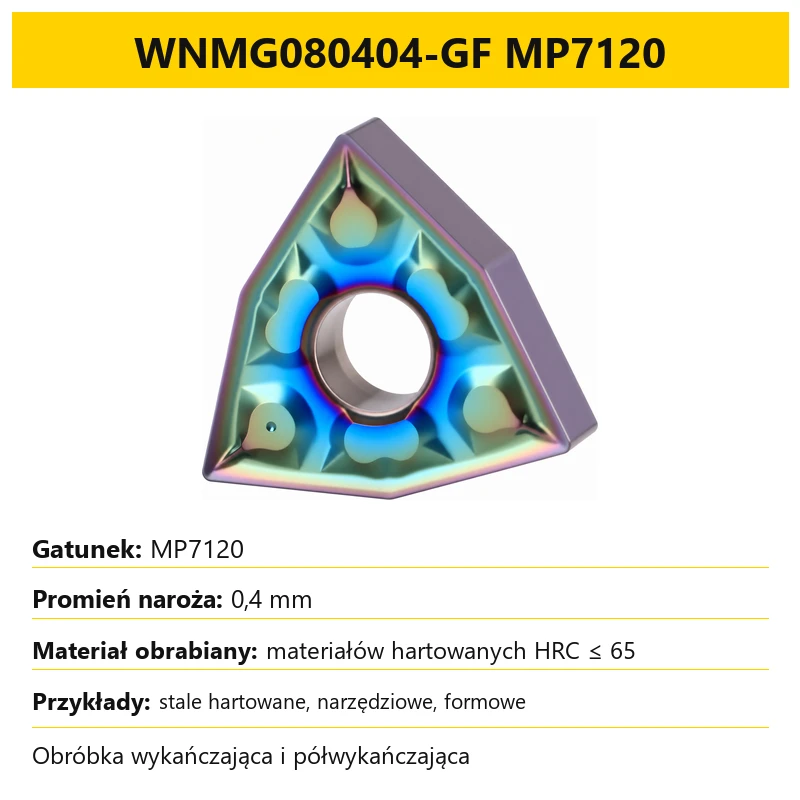
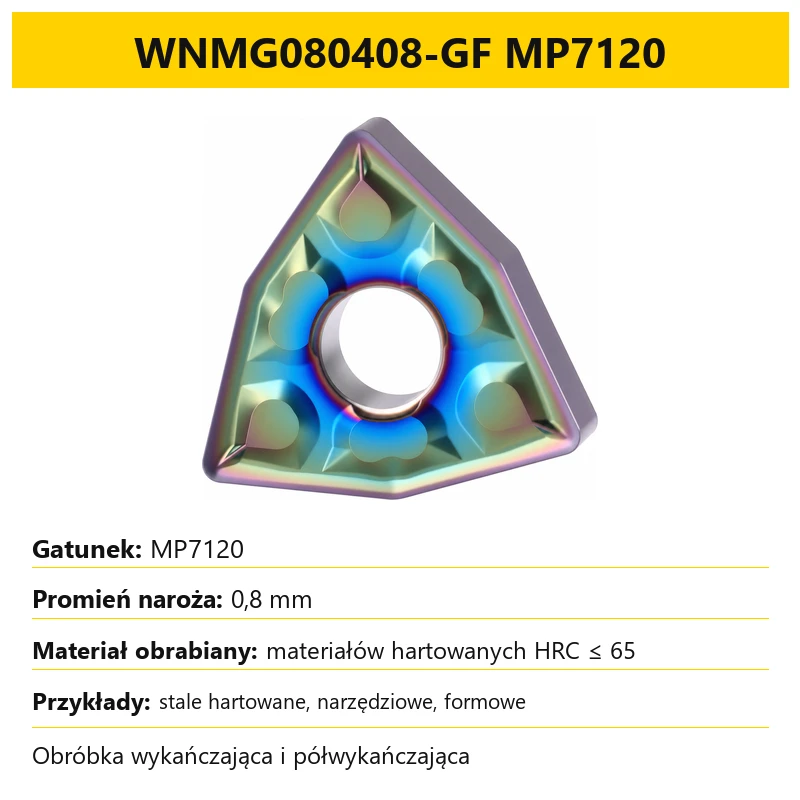
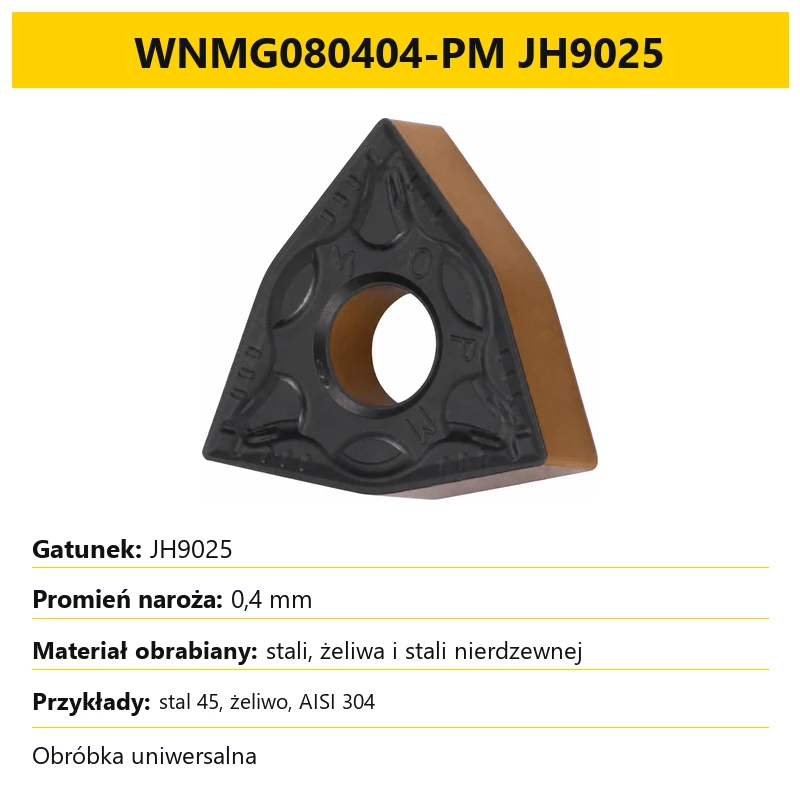
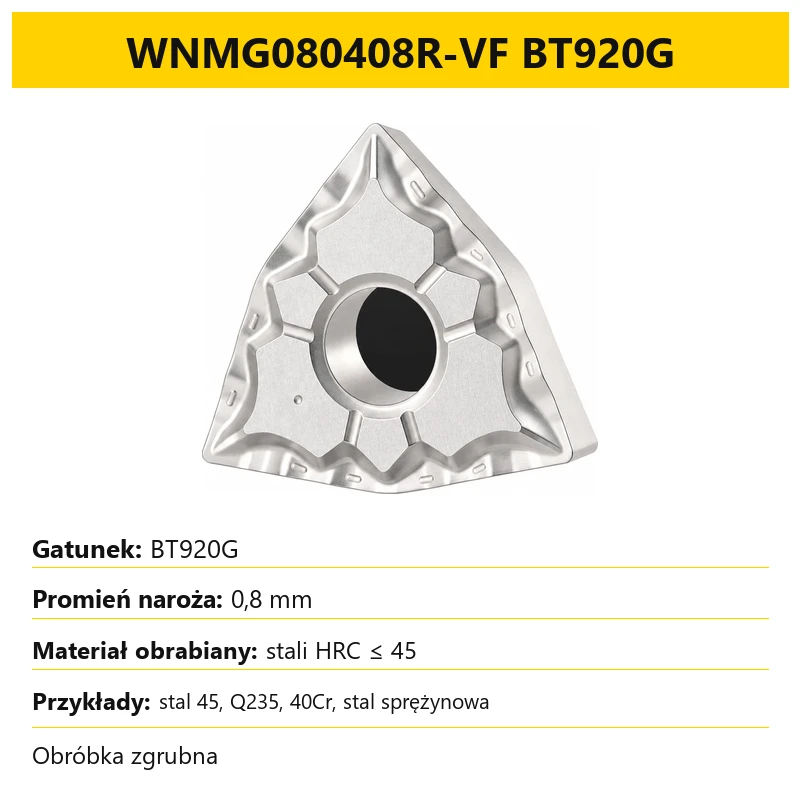
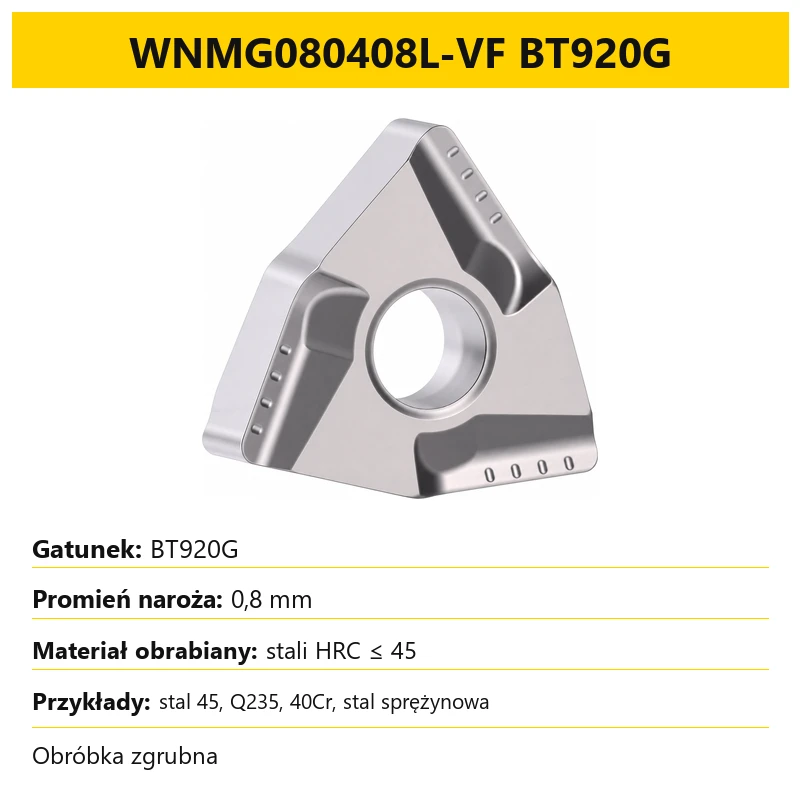
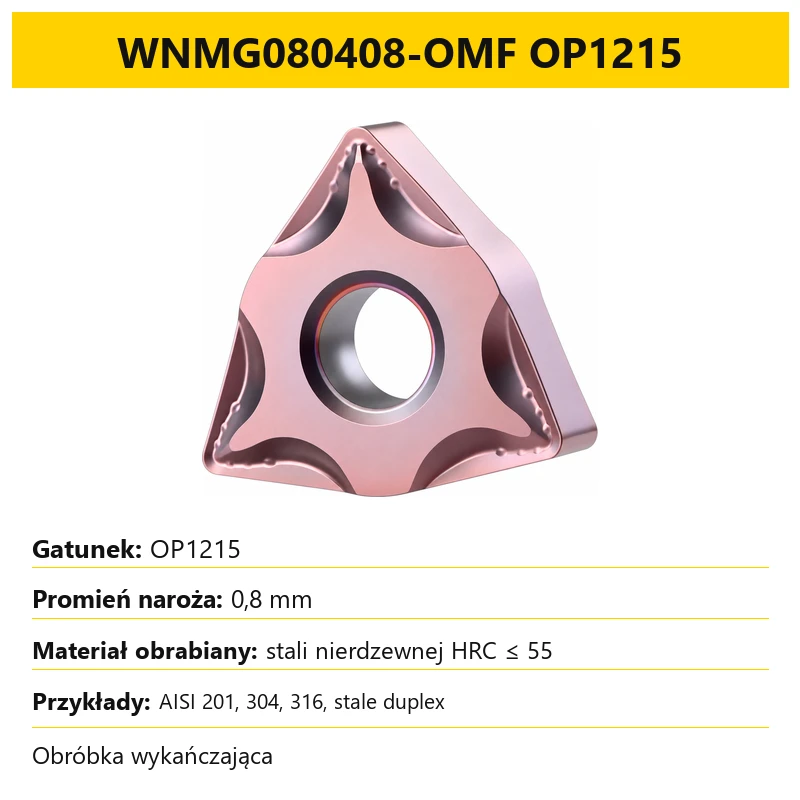
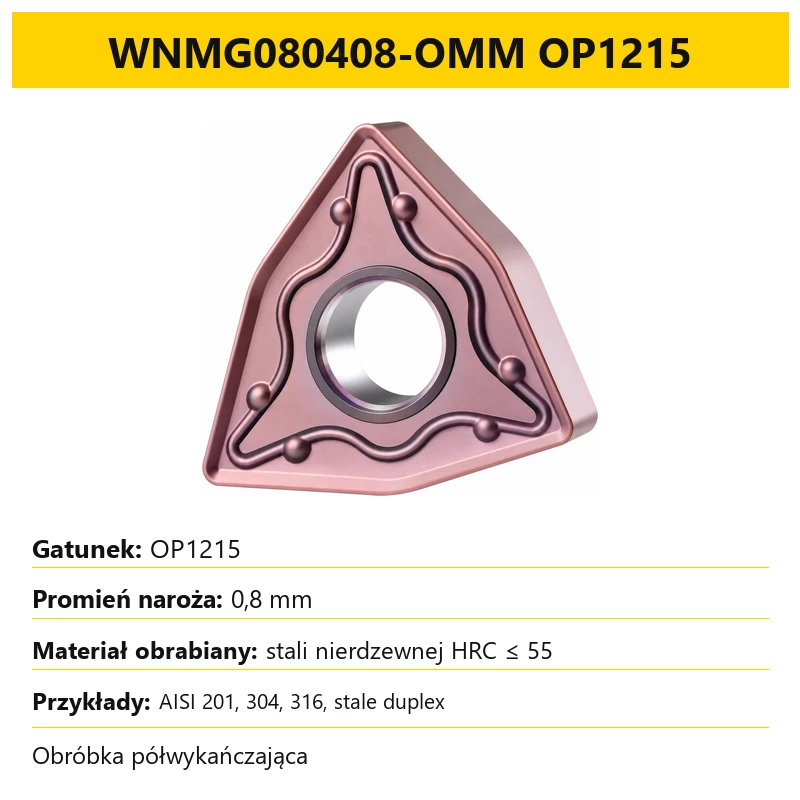
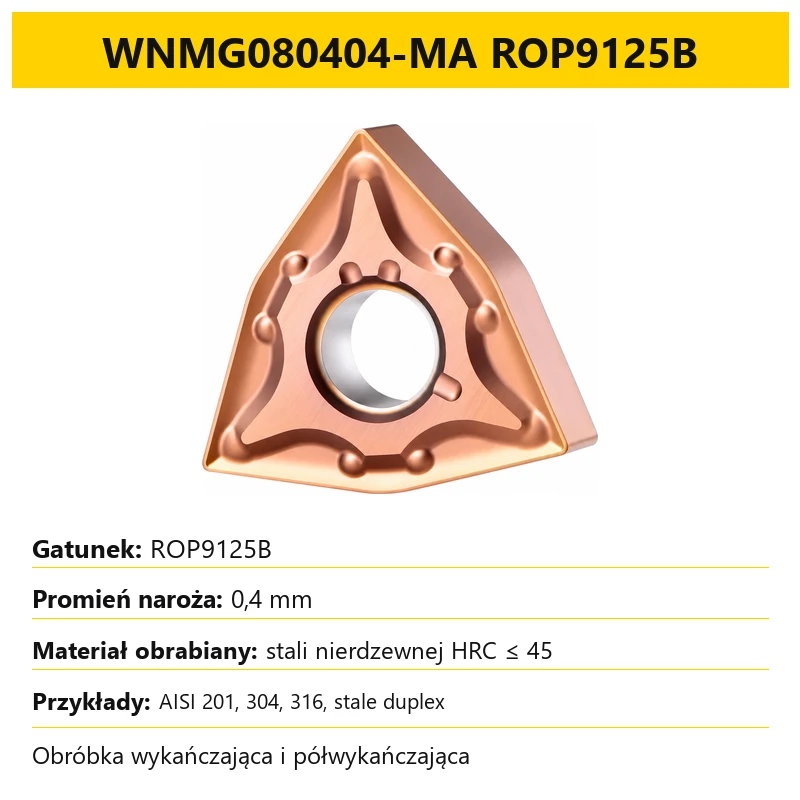
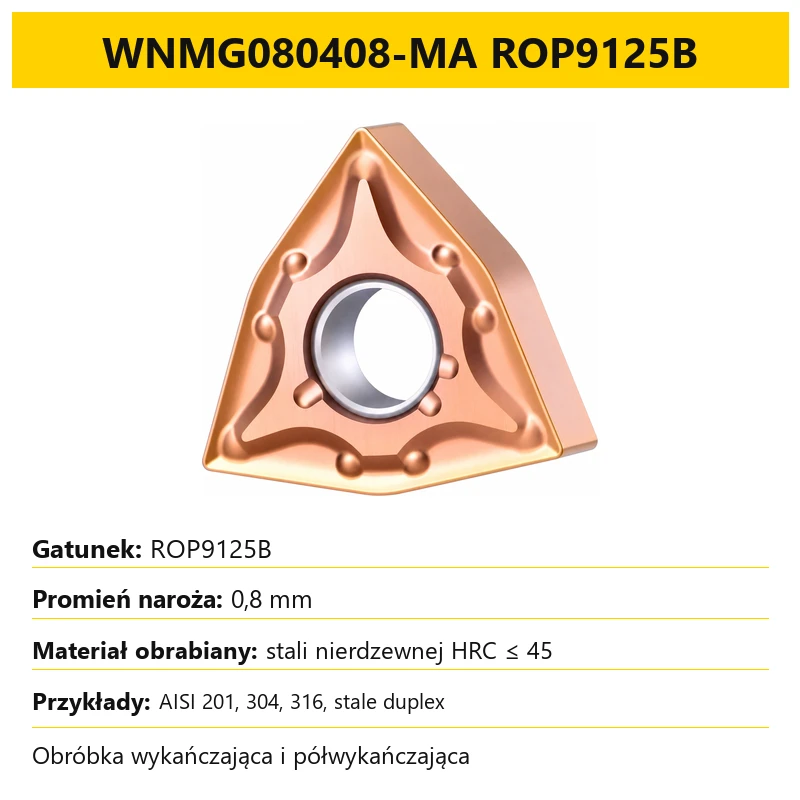
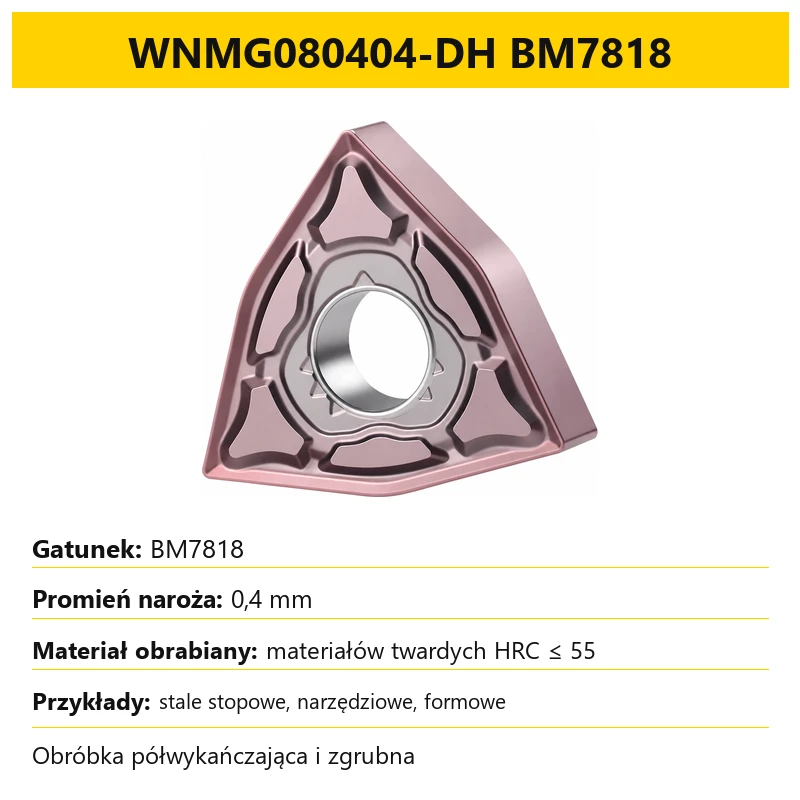
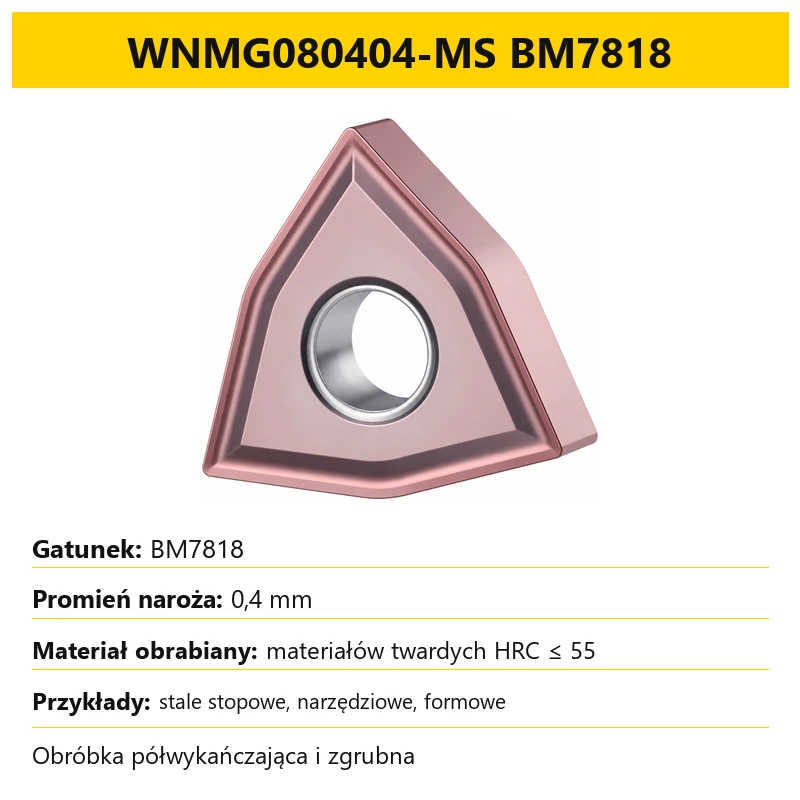
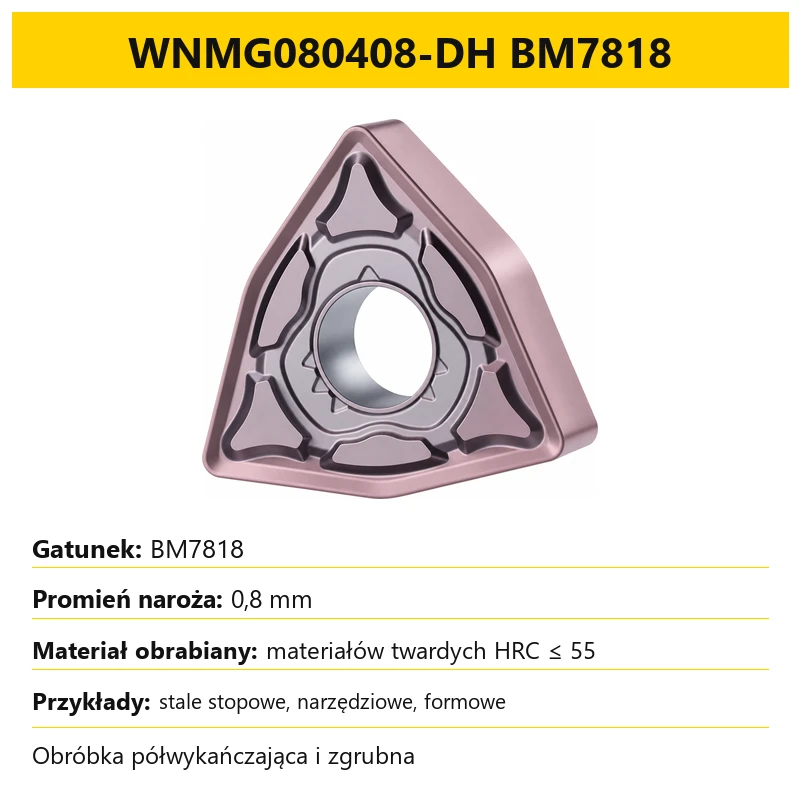
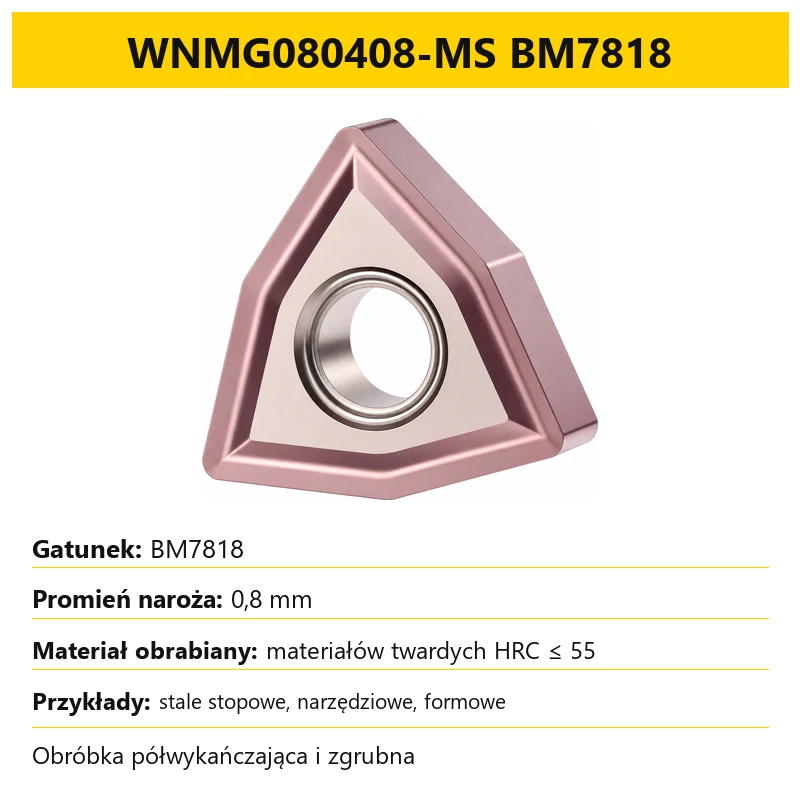
WNMG indexable inserts are intended for external turning. They have a triangular shape, a mounting hole and six usable cutting edges, three on each face. Select the variant by its complete designation: size, chipbreaker geometry and grade together determine its application.
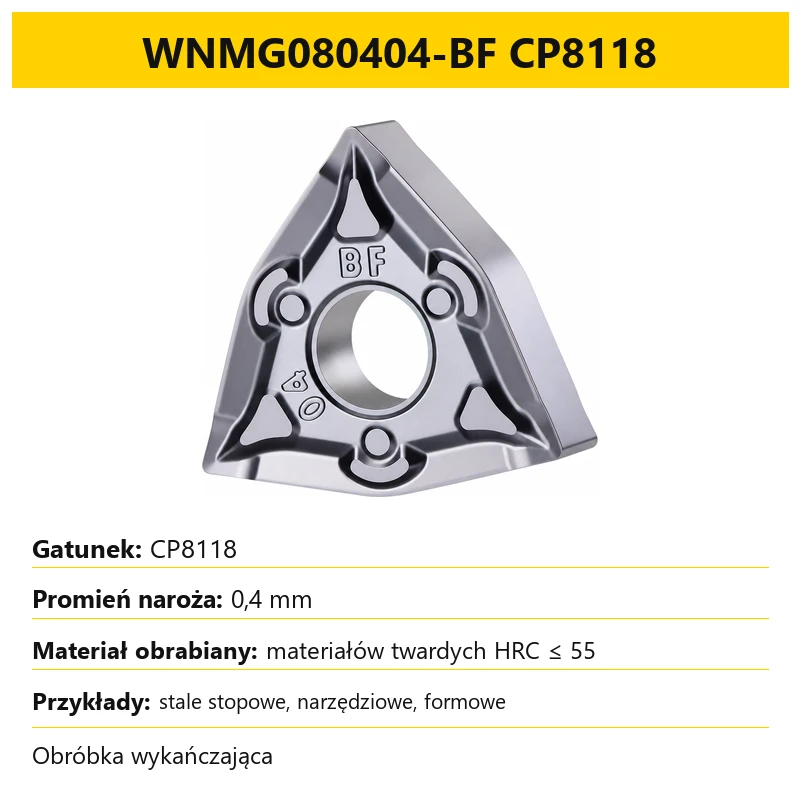
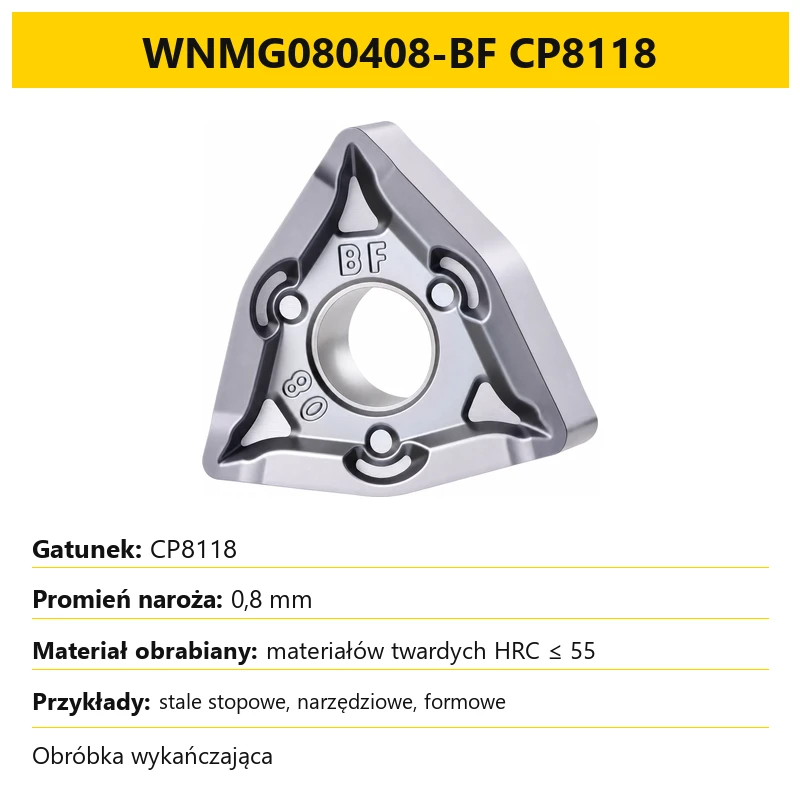
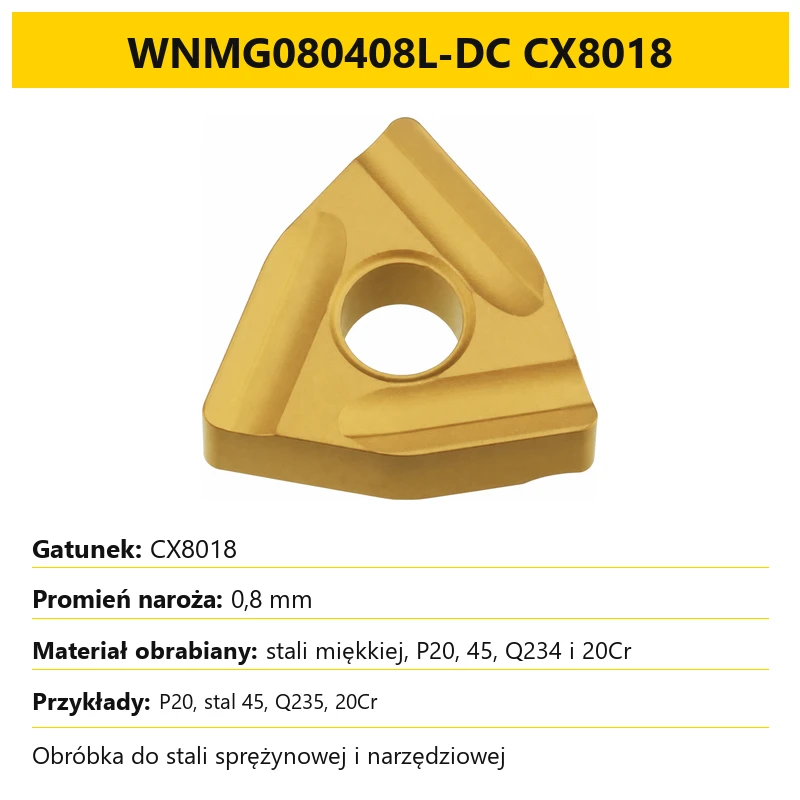
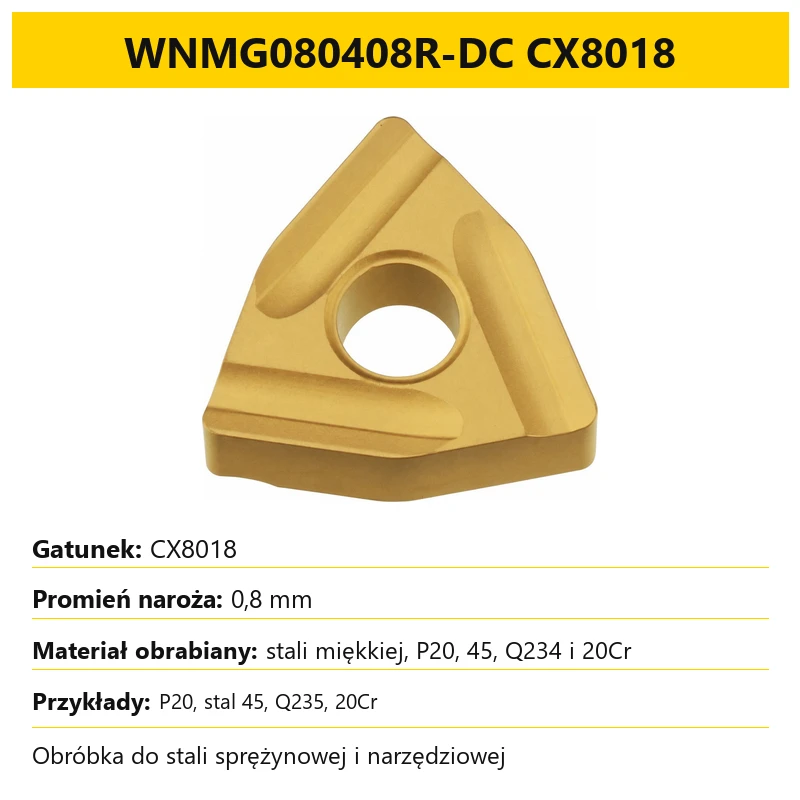
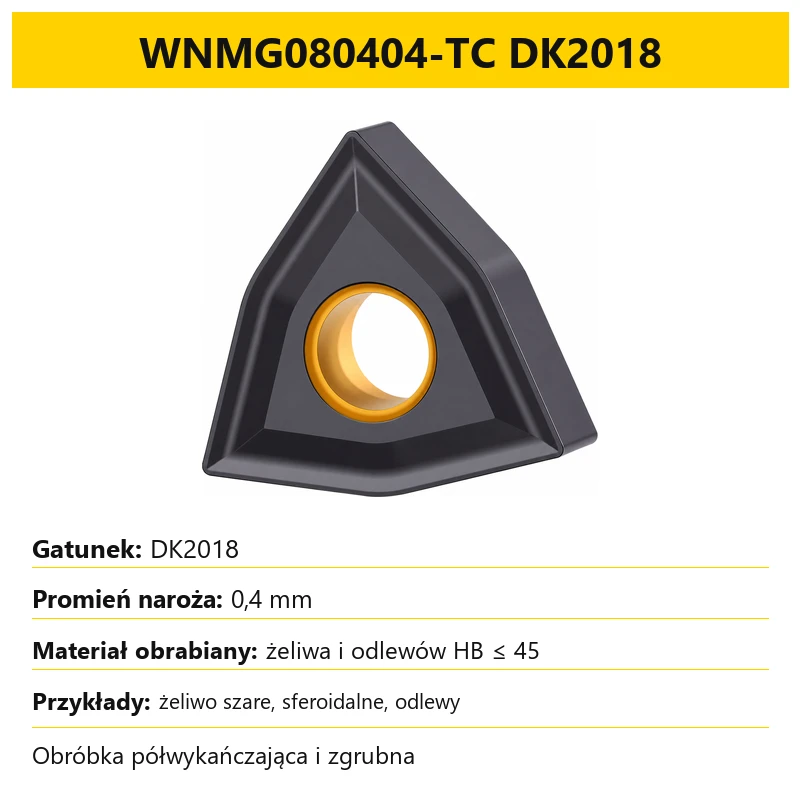
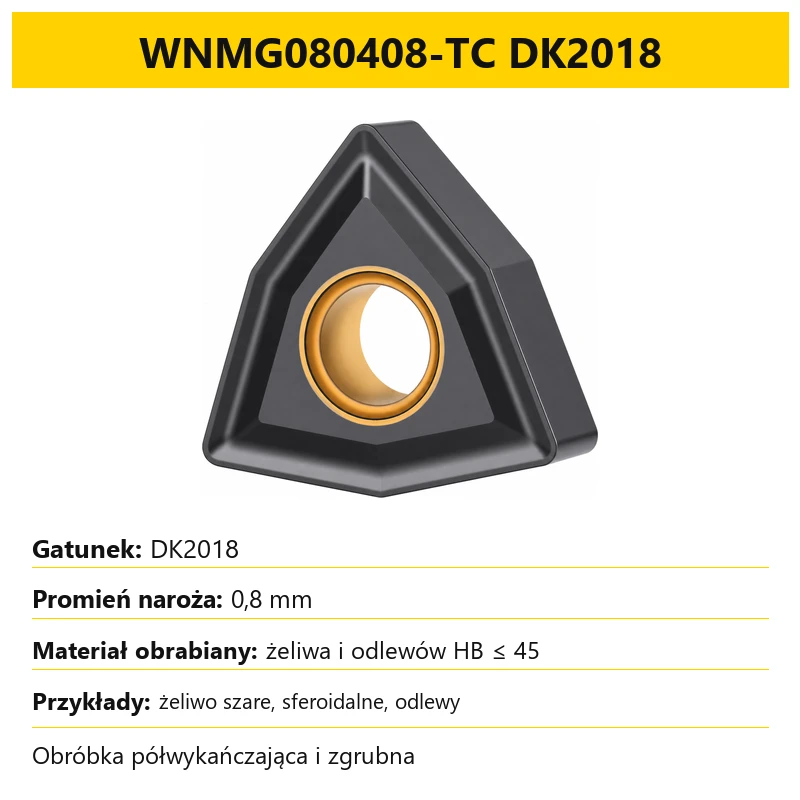
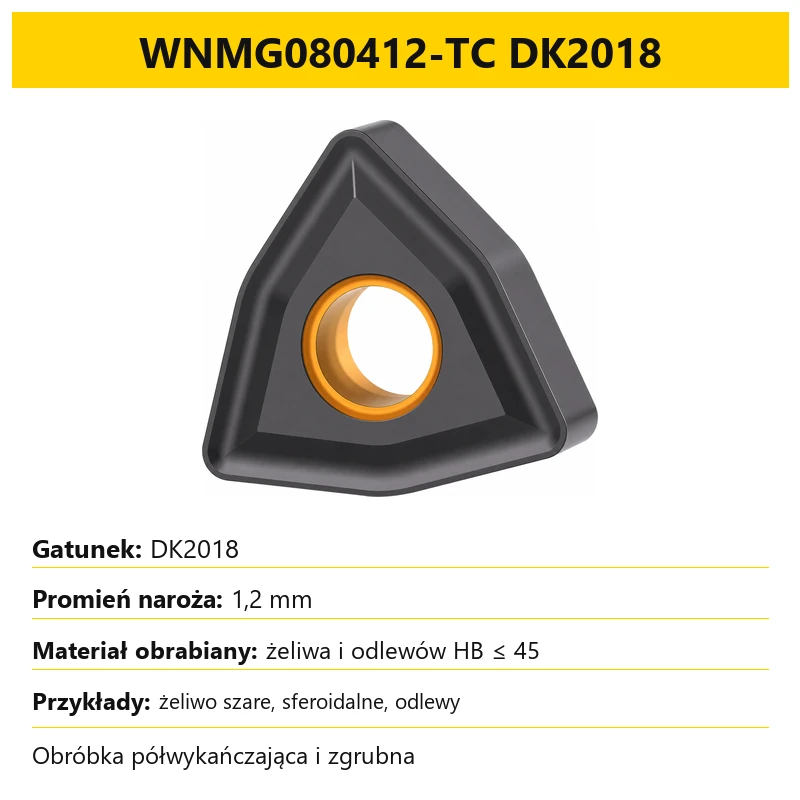
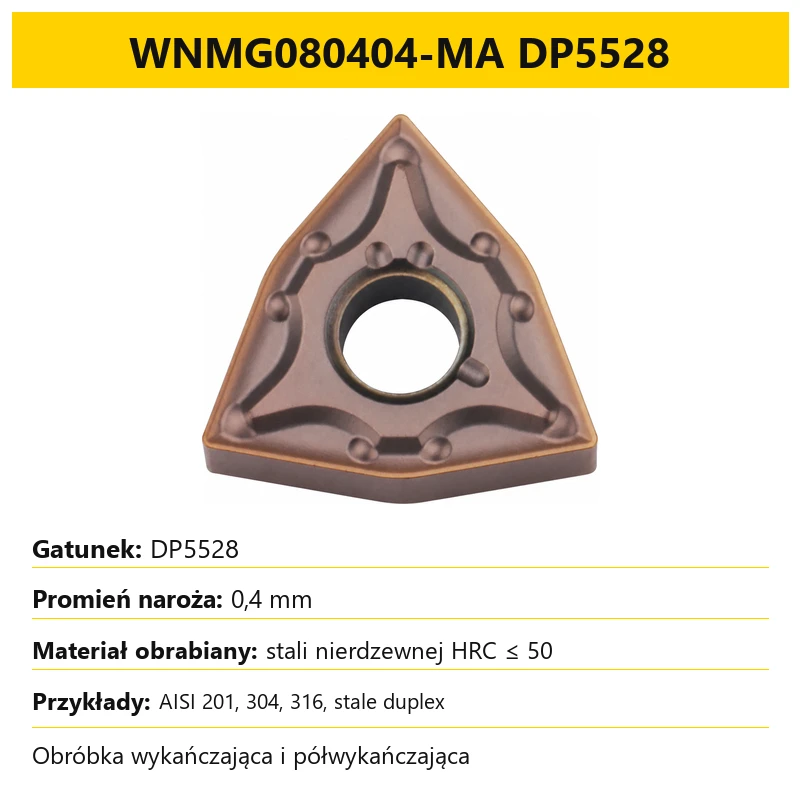
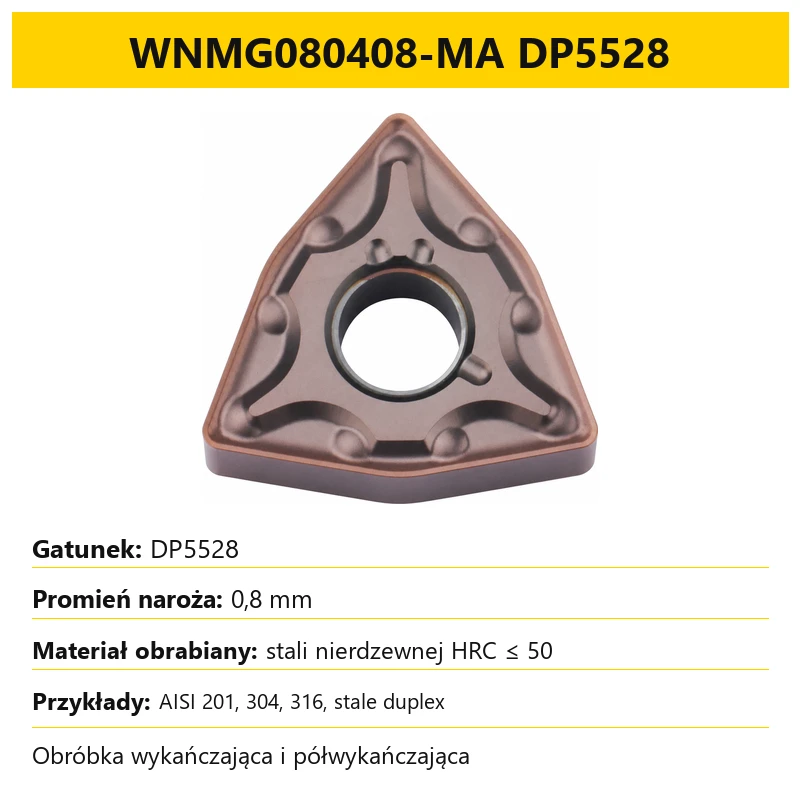
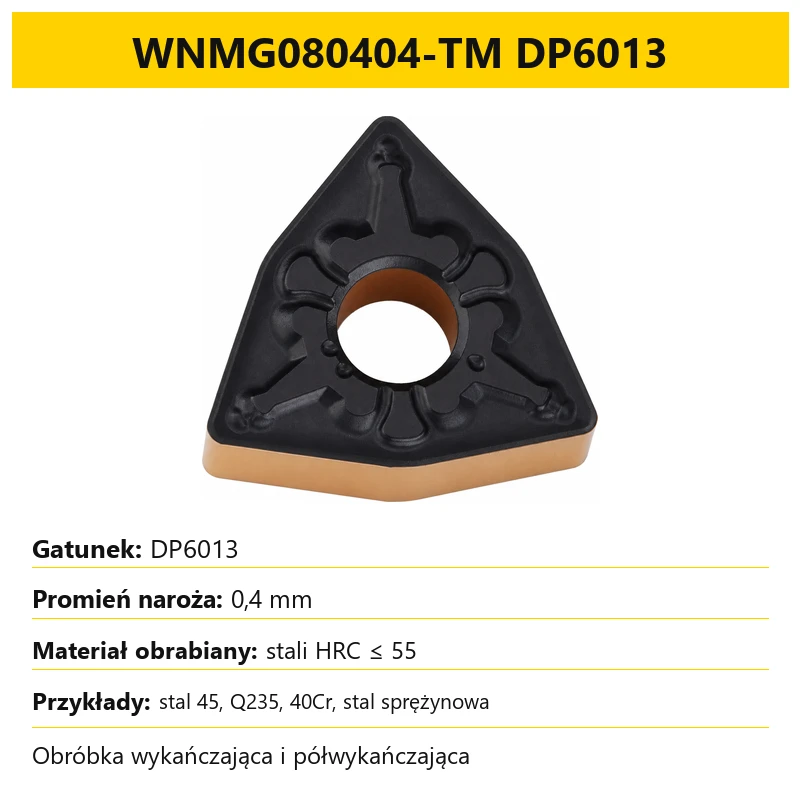
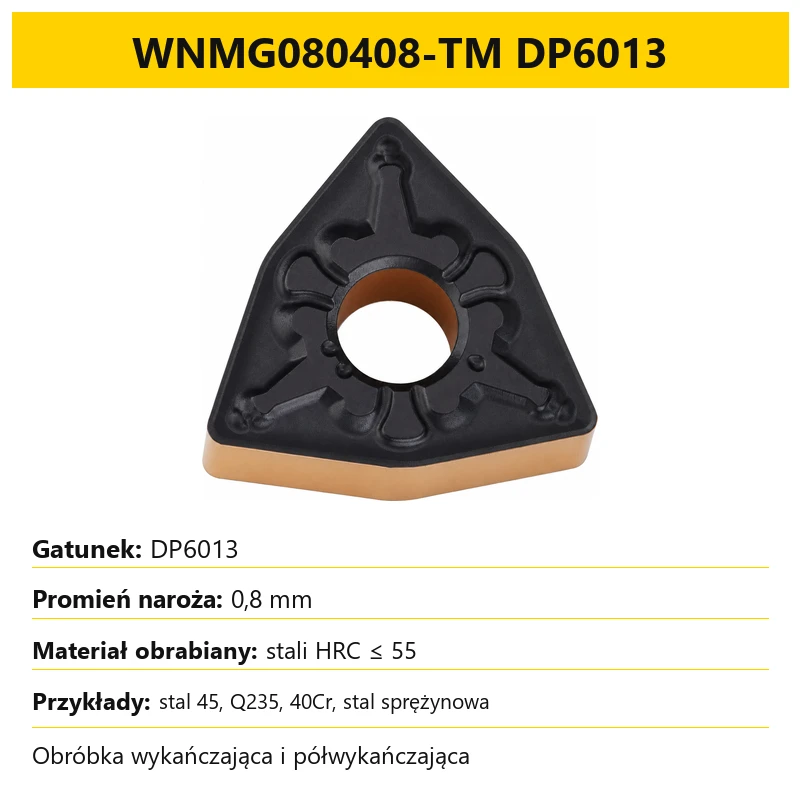
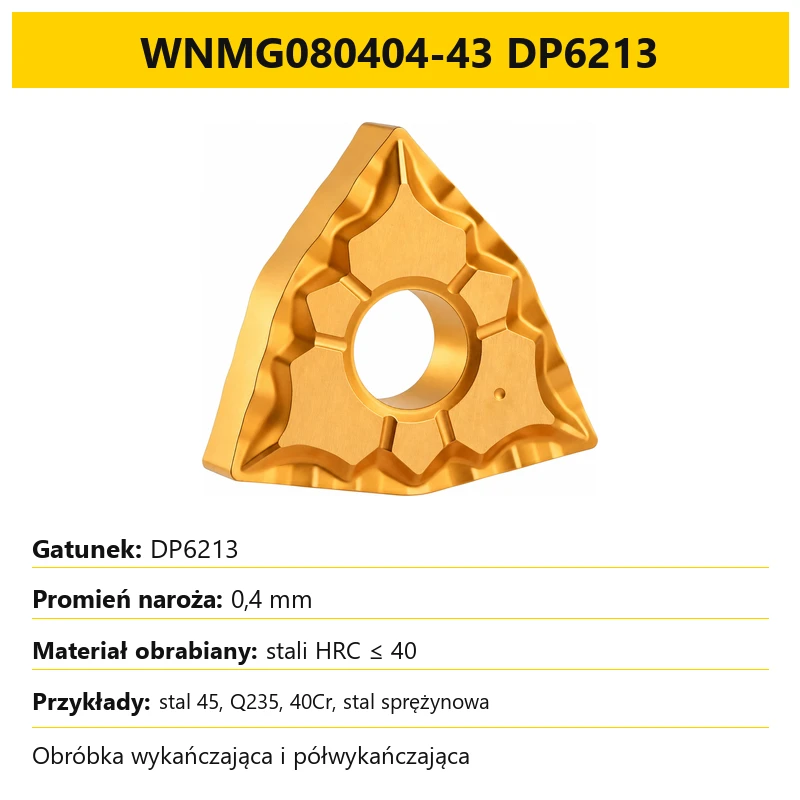
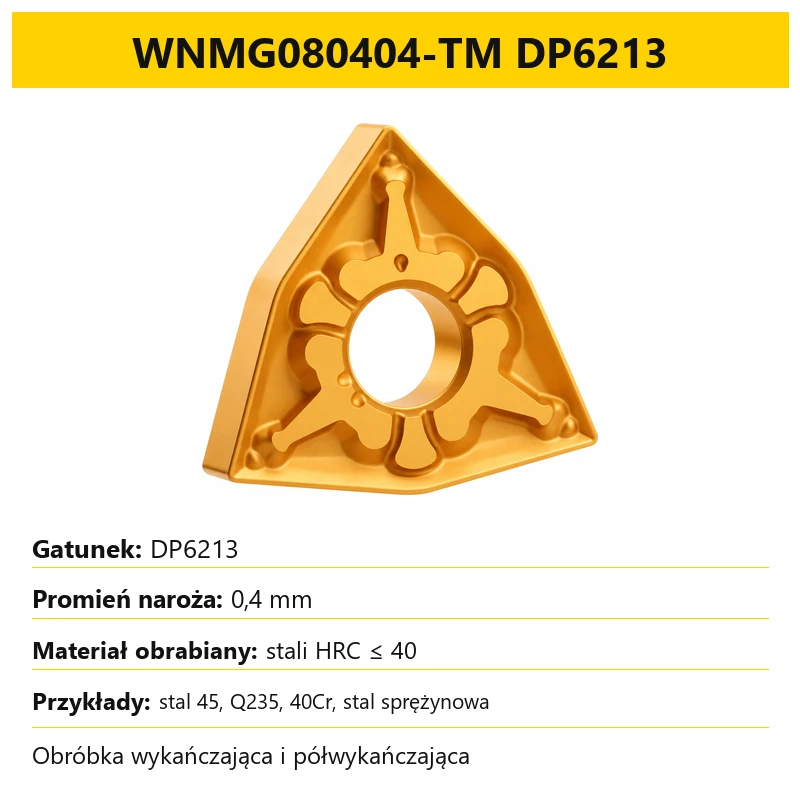
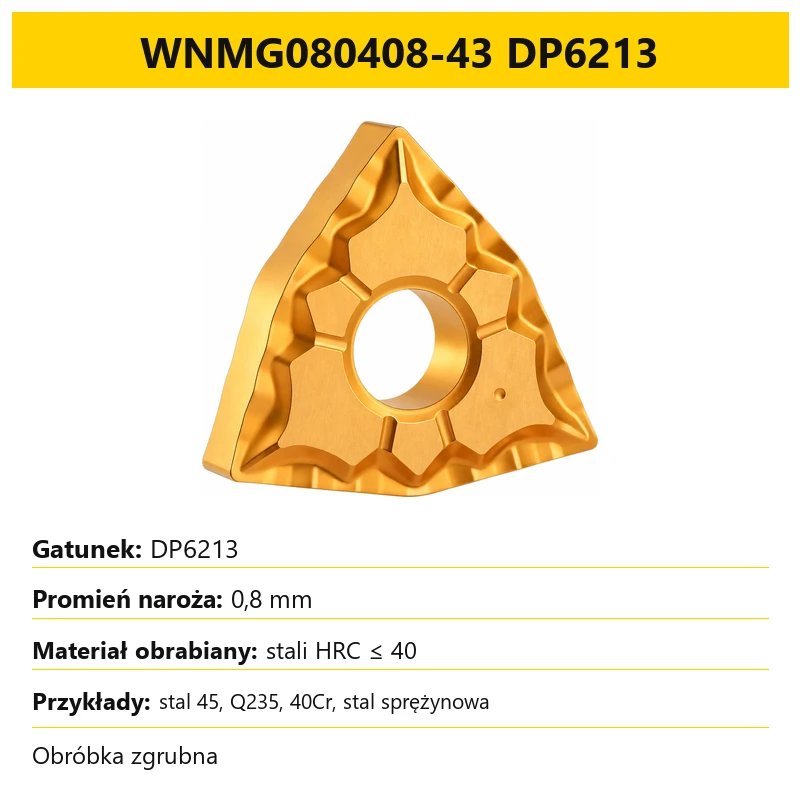
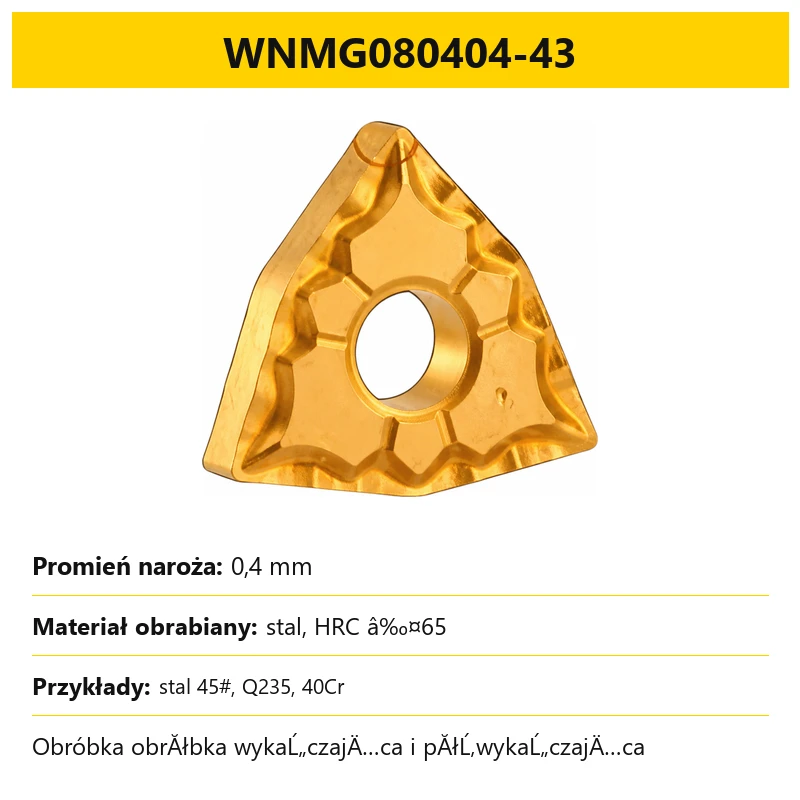
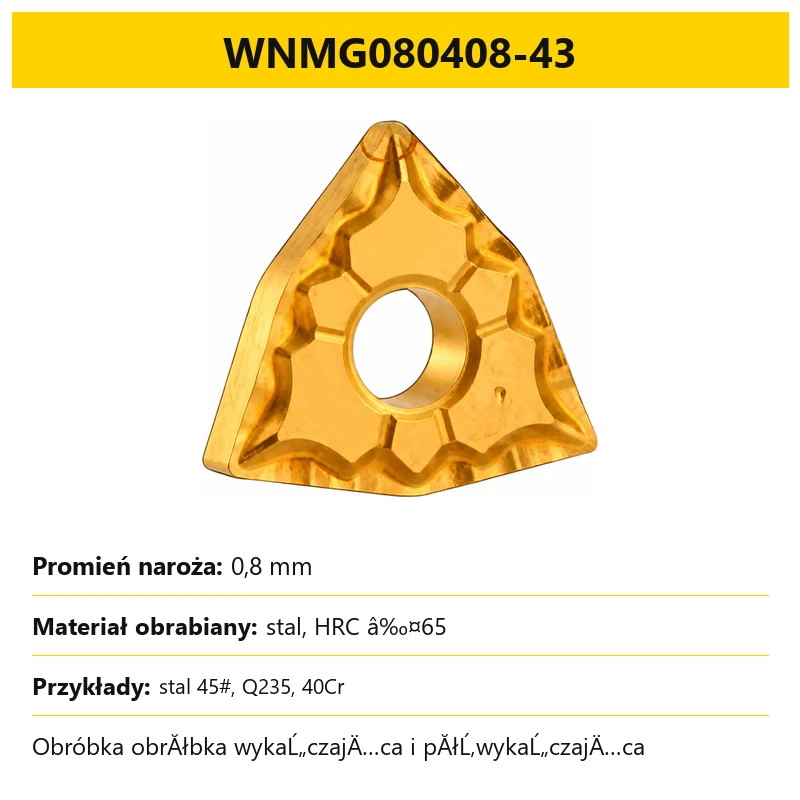
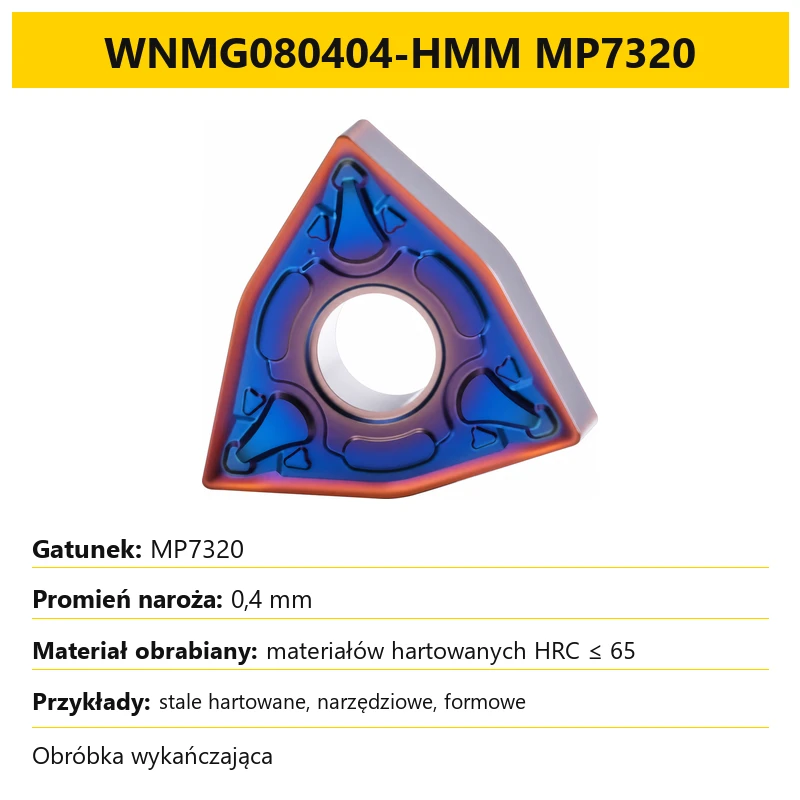
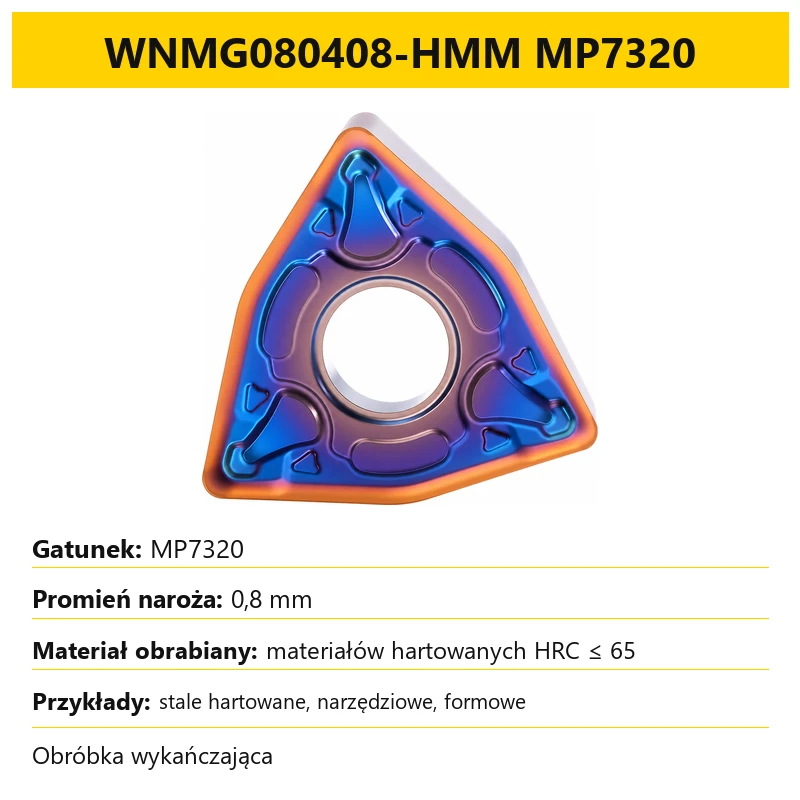
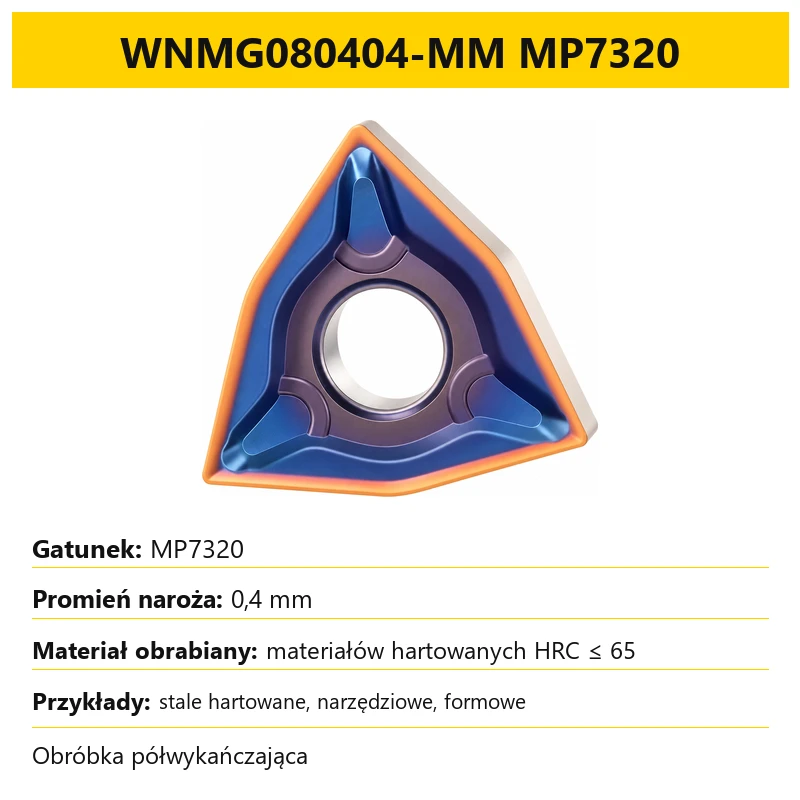
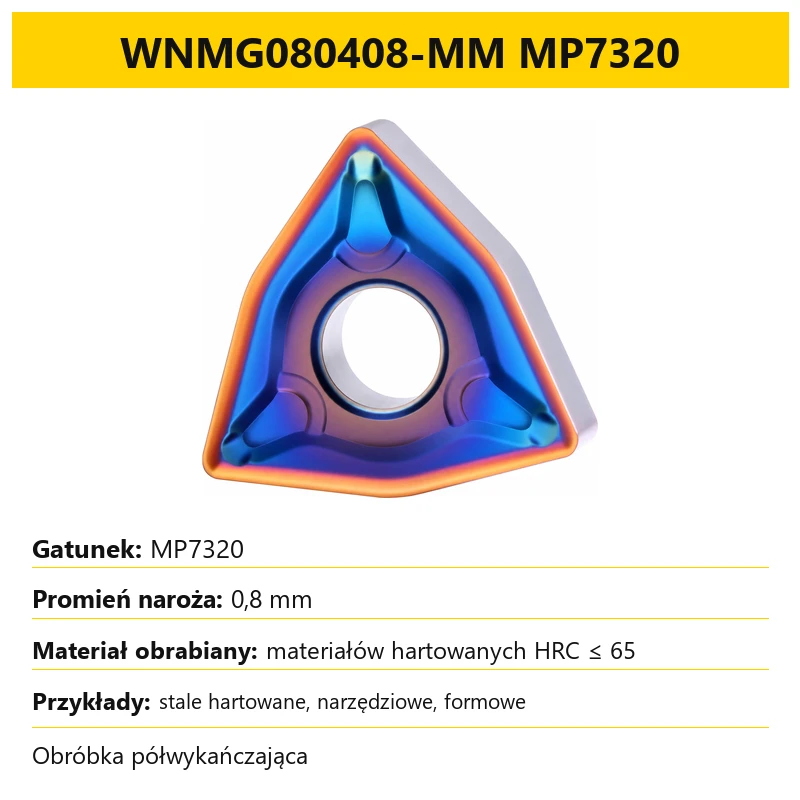
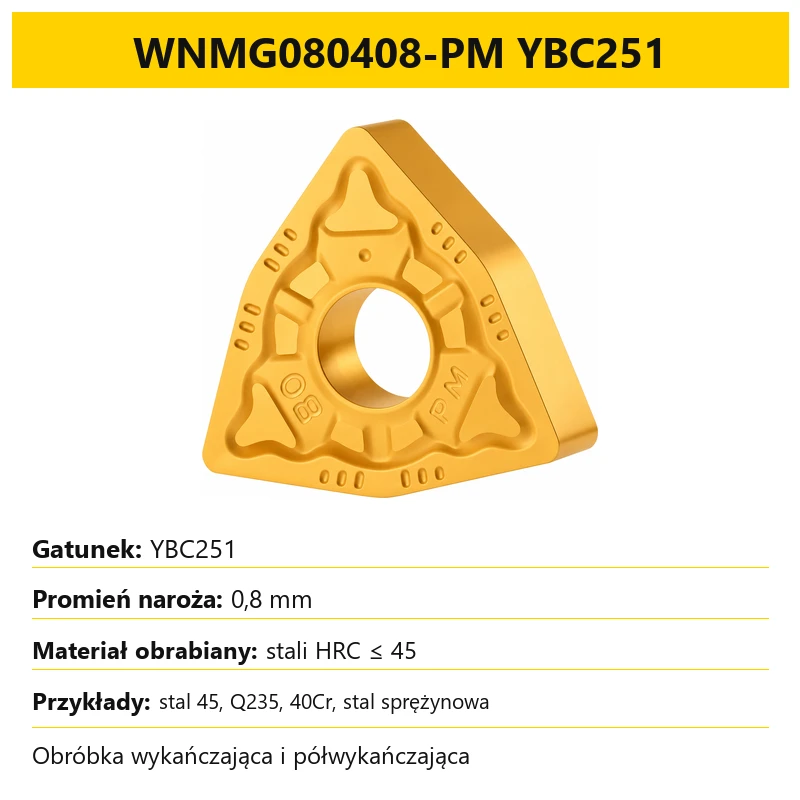
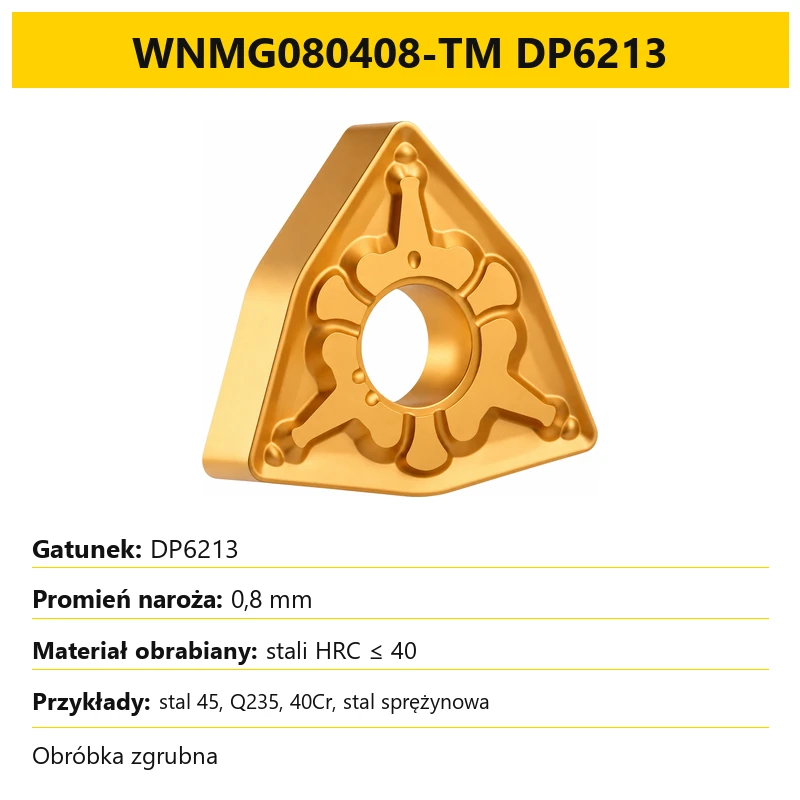
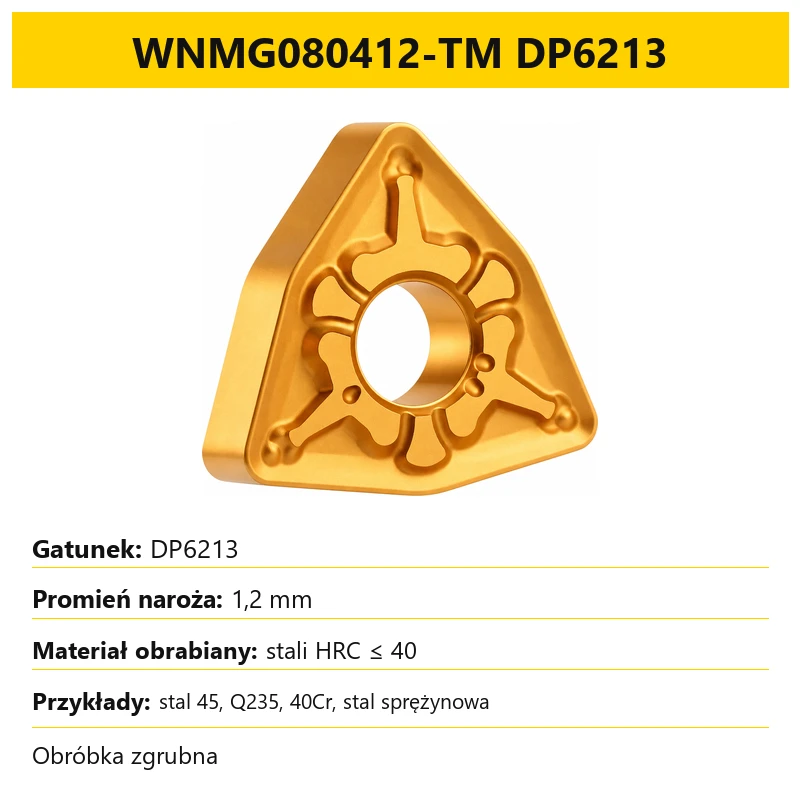
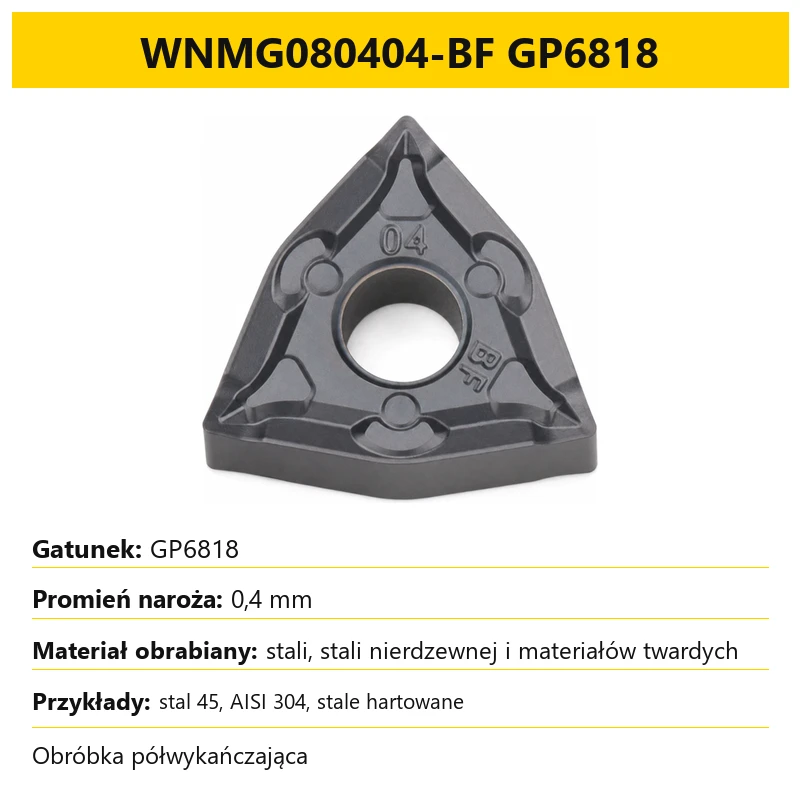
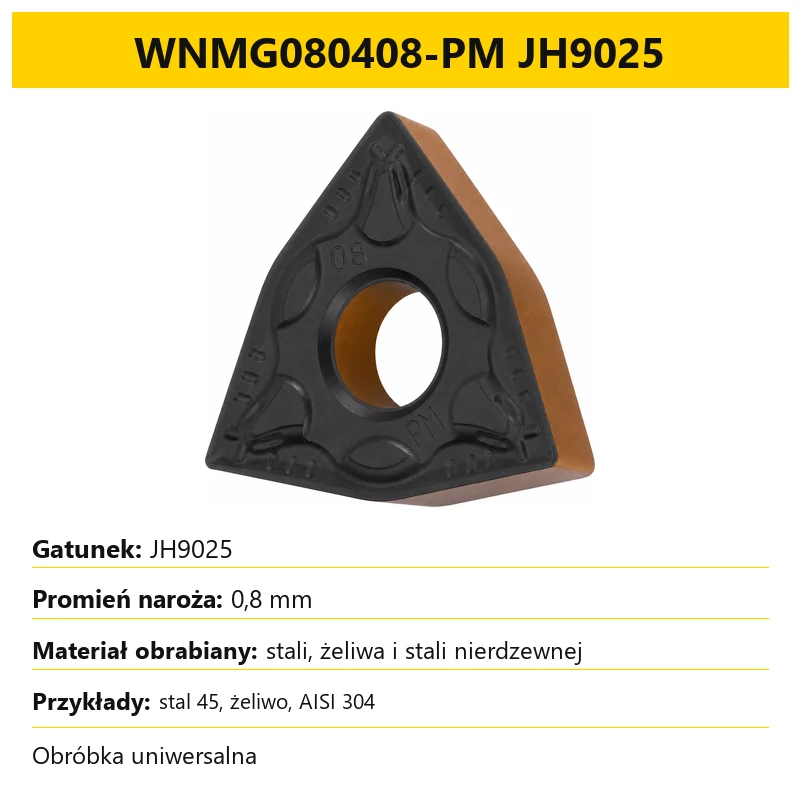
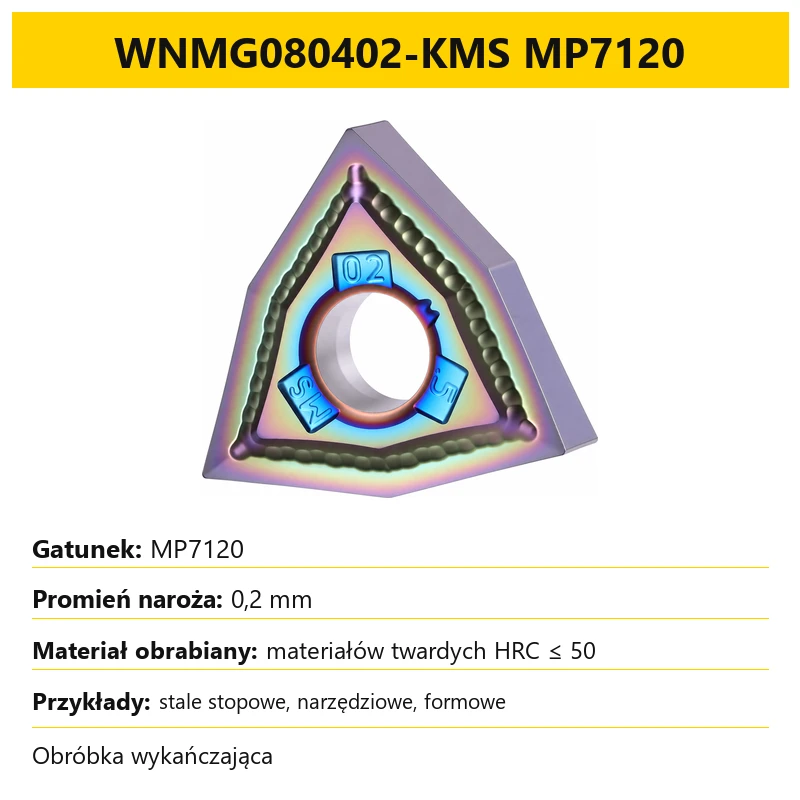
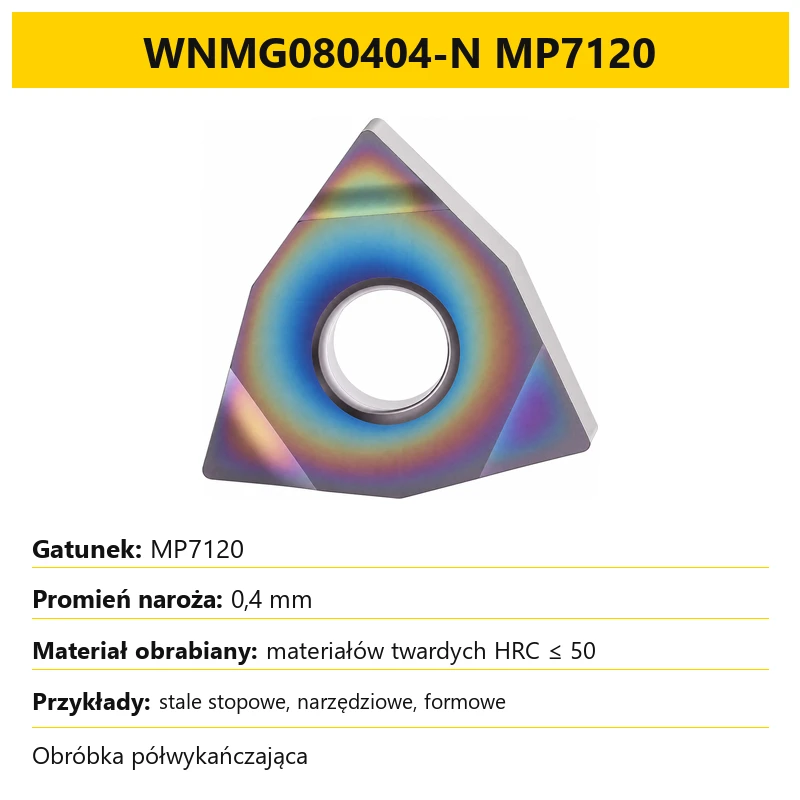
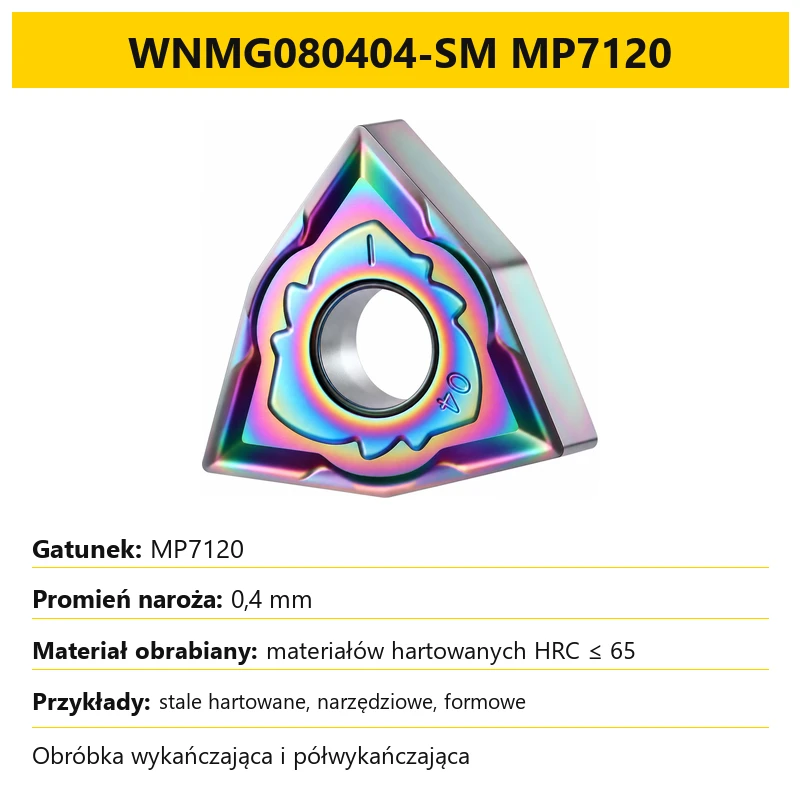
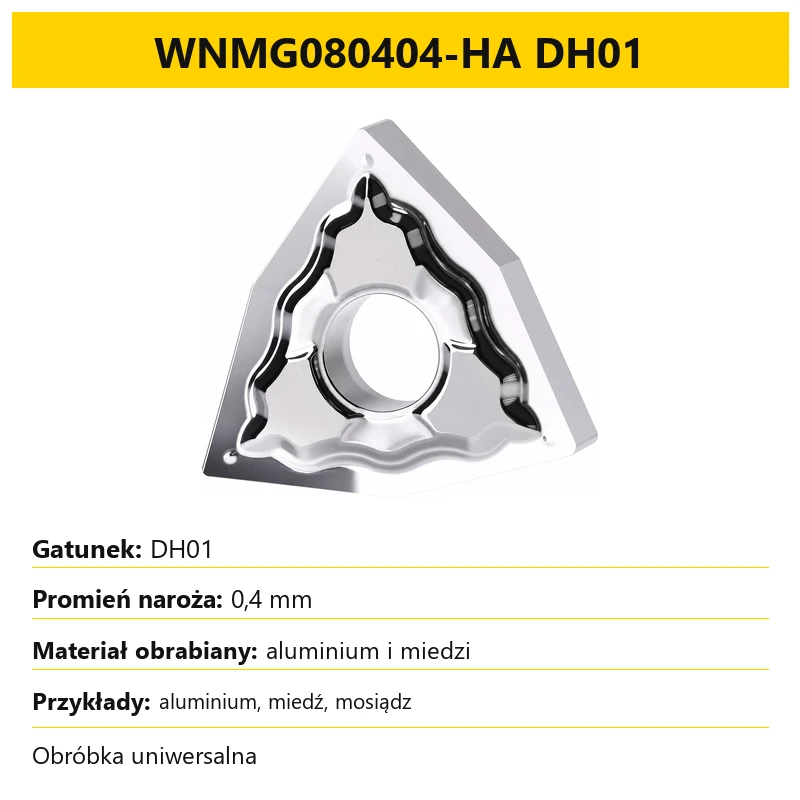
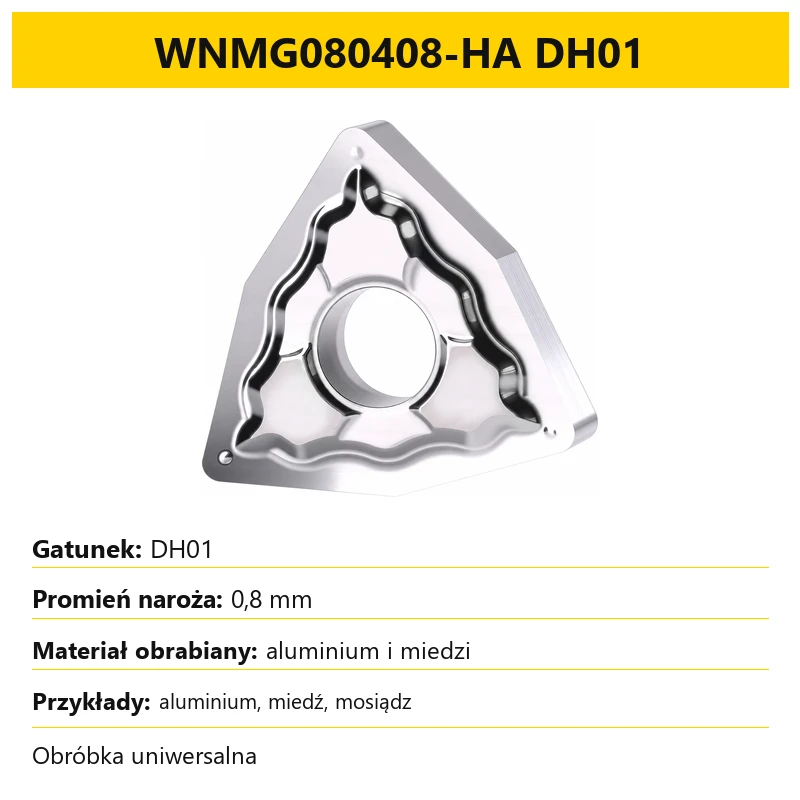
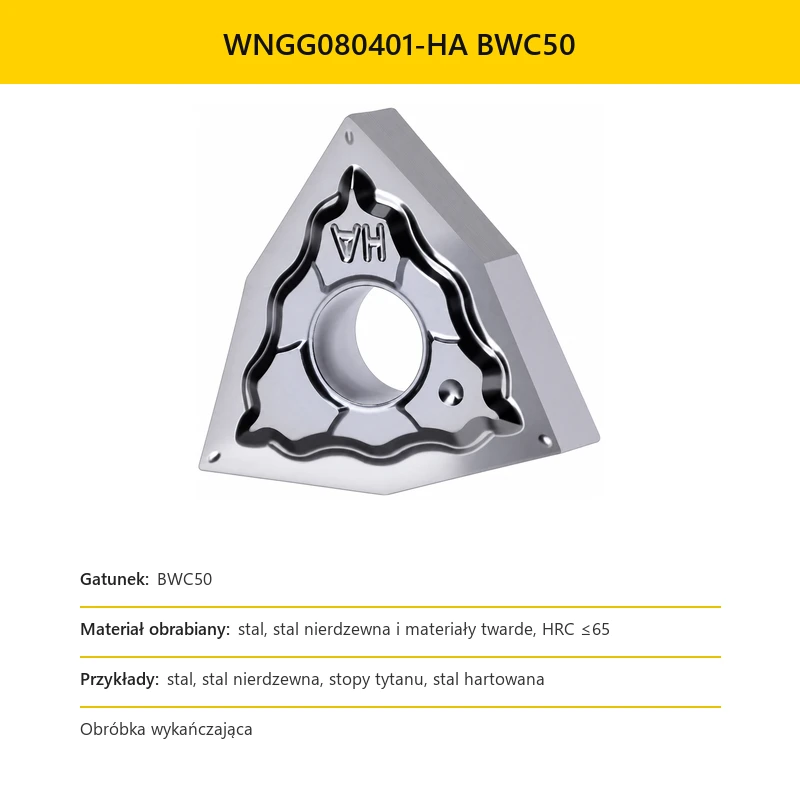
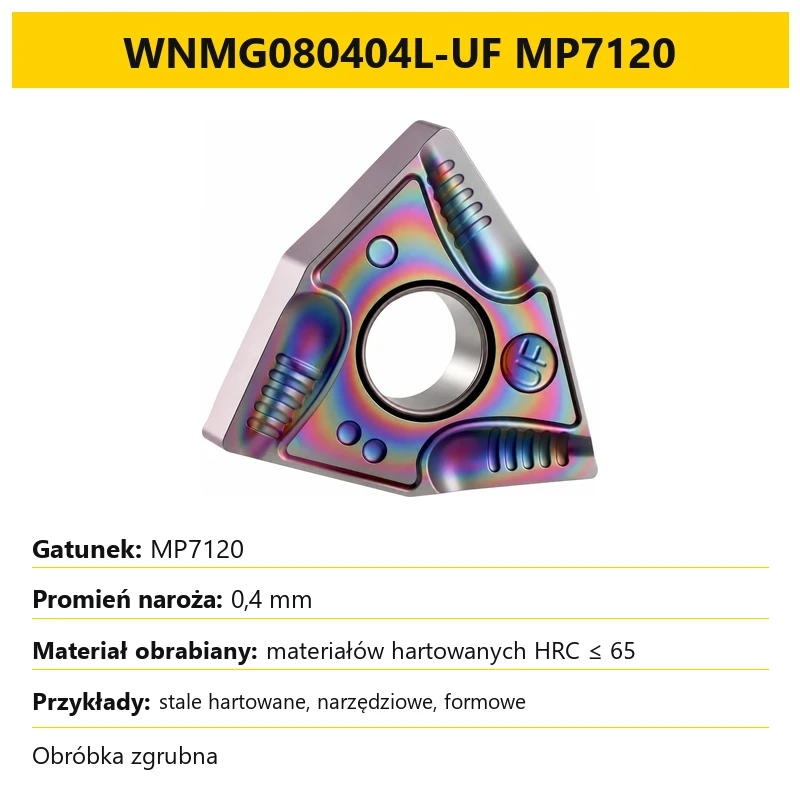
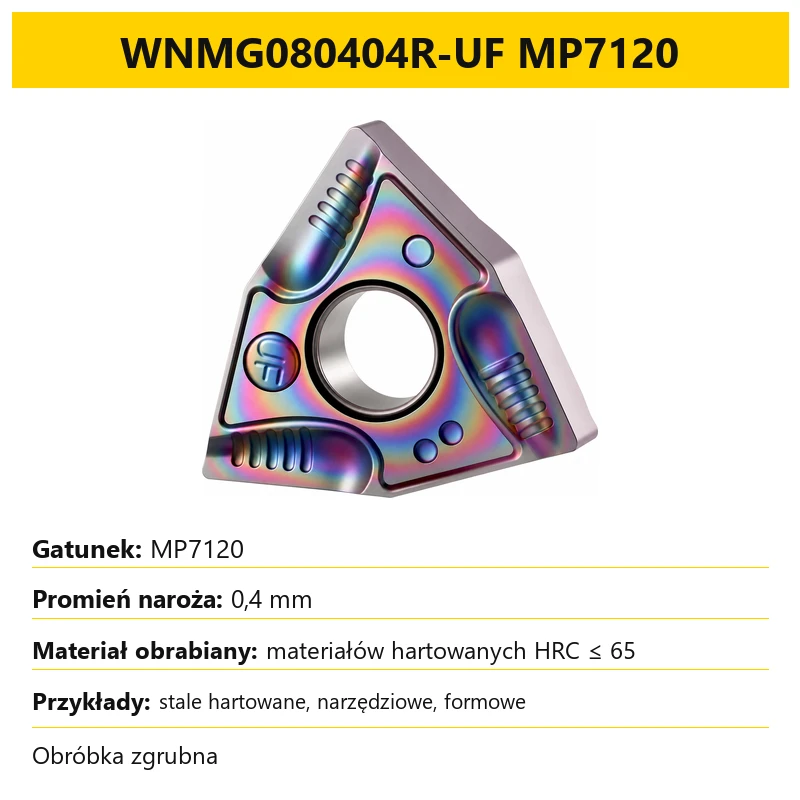
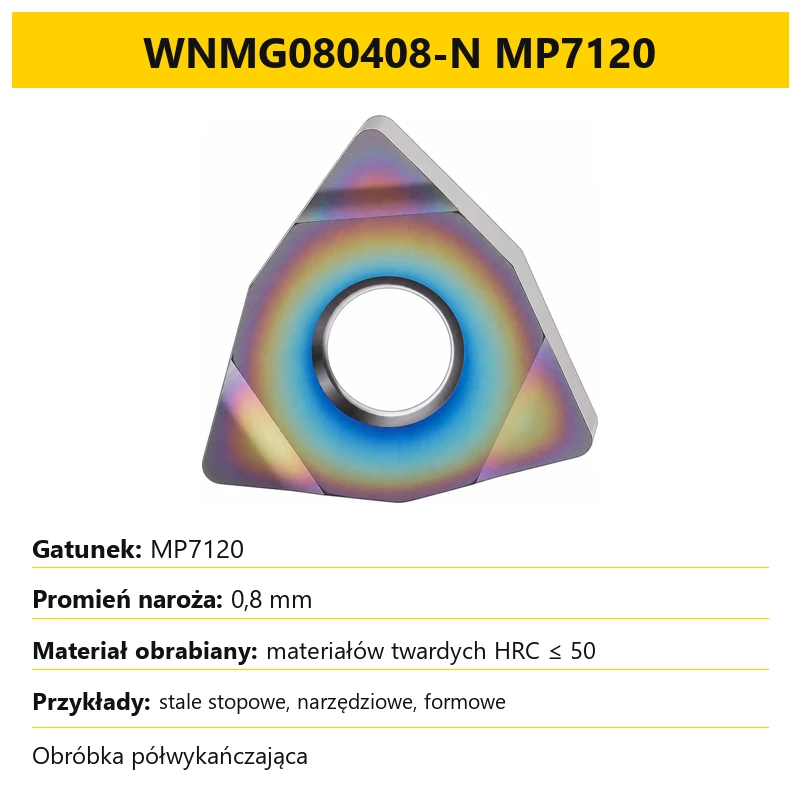
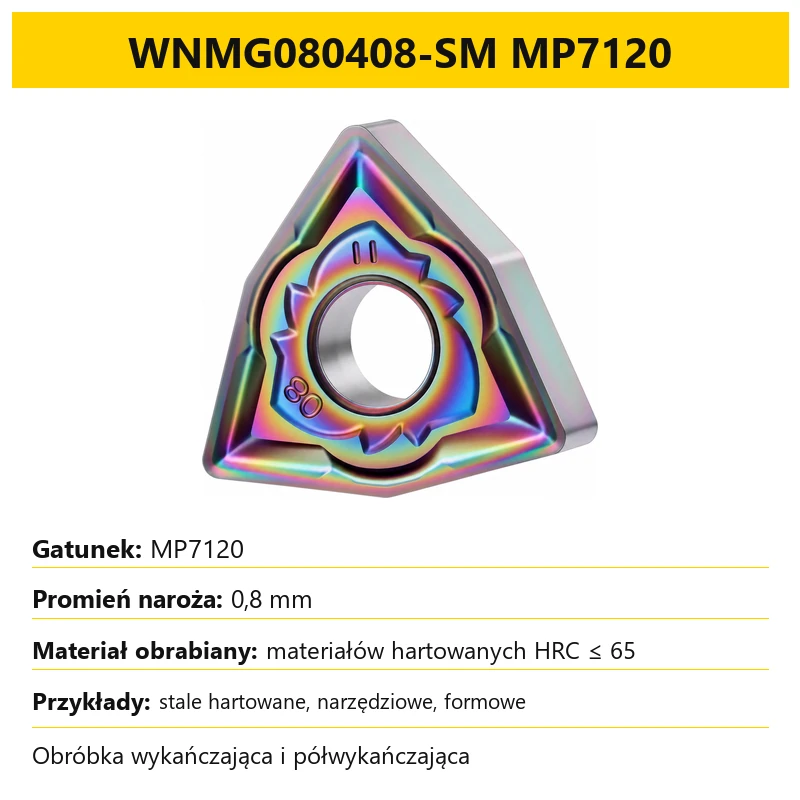
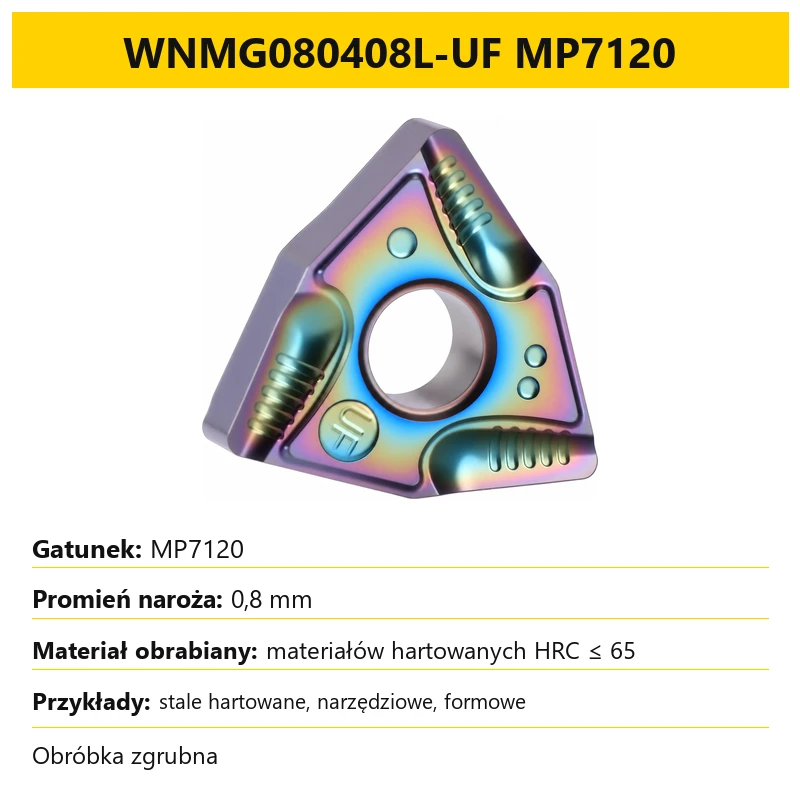
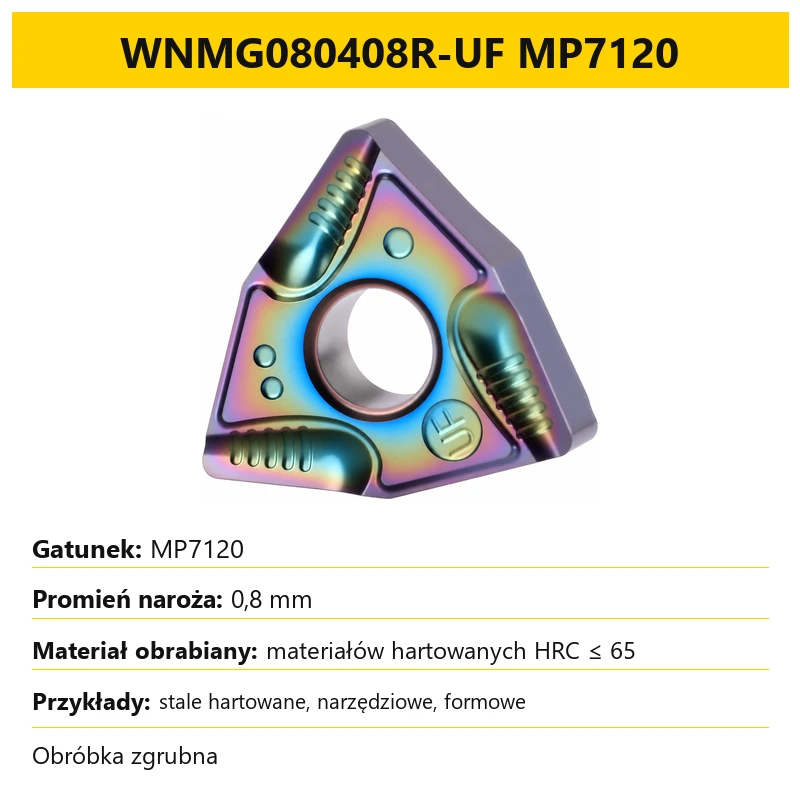
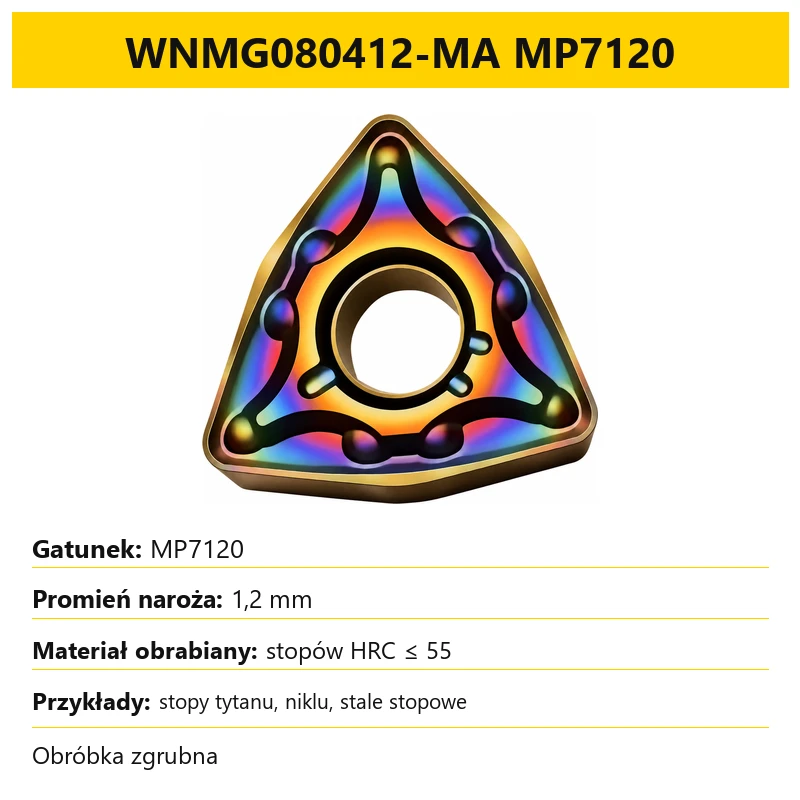
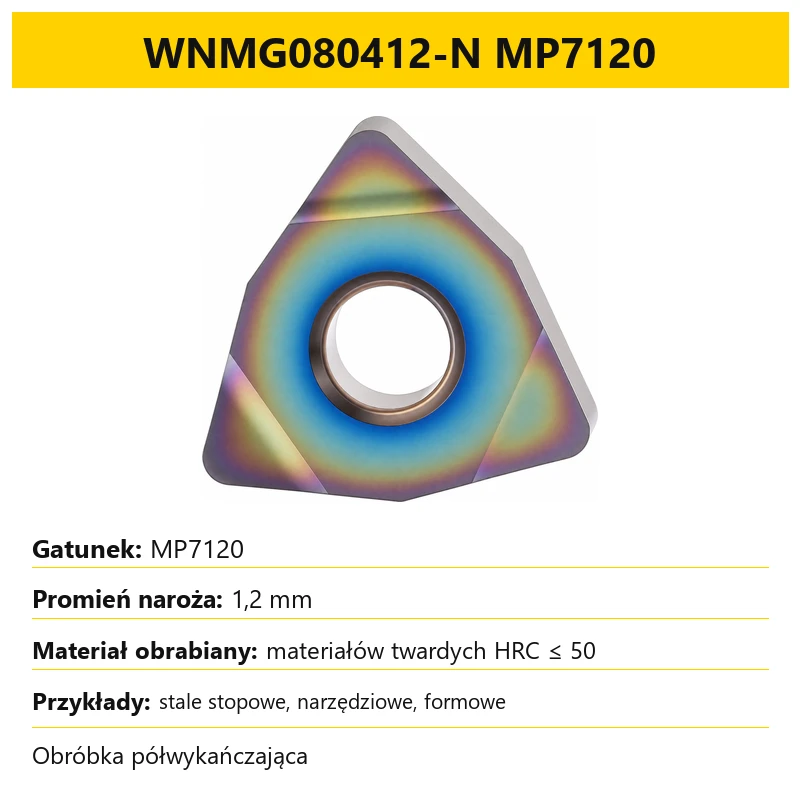
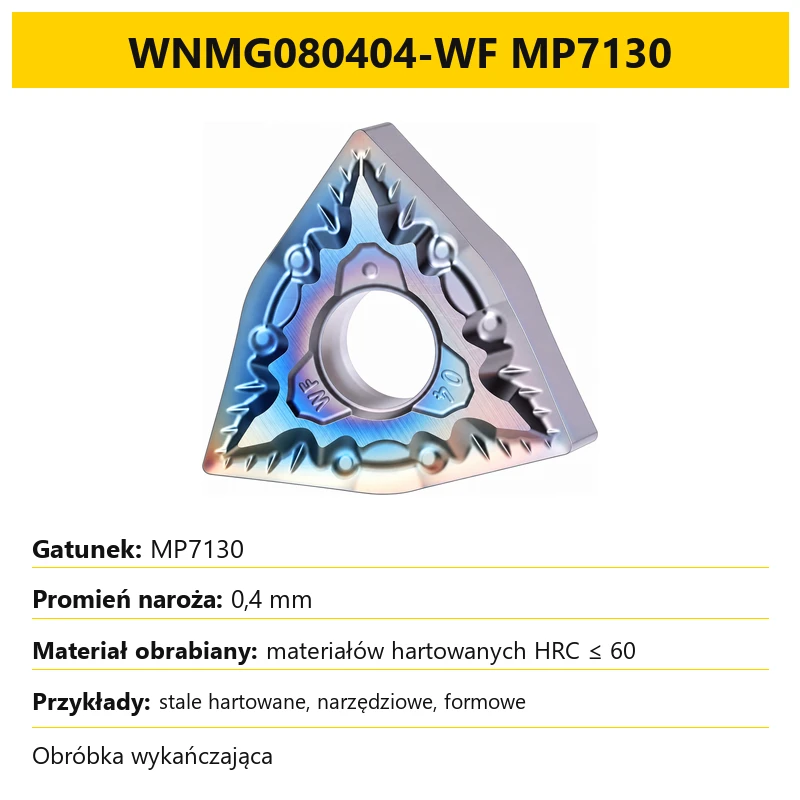
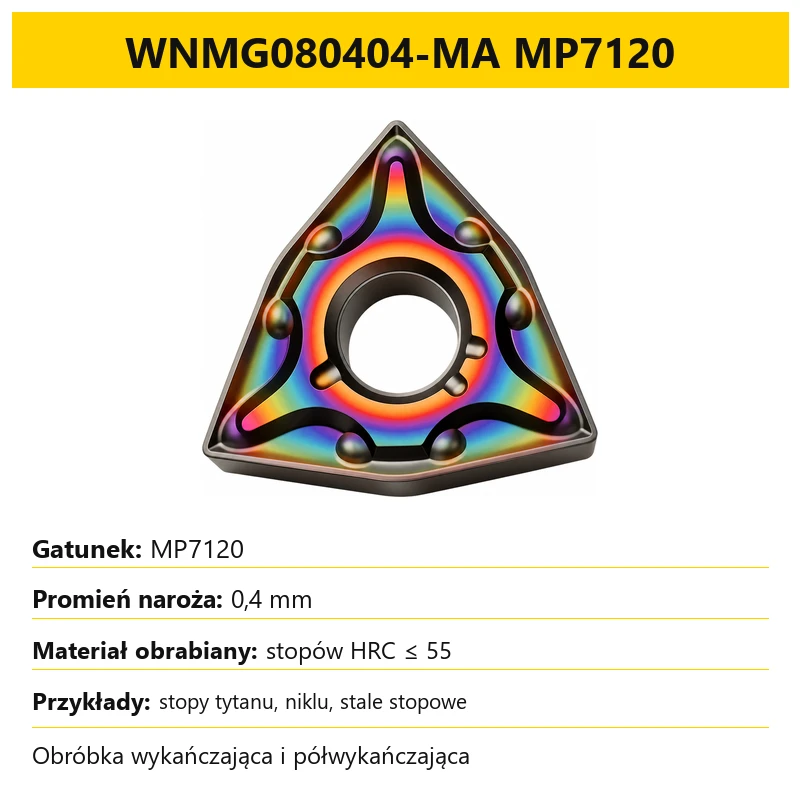
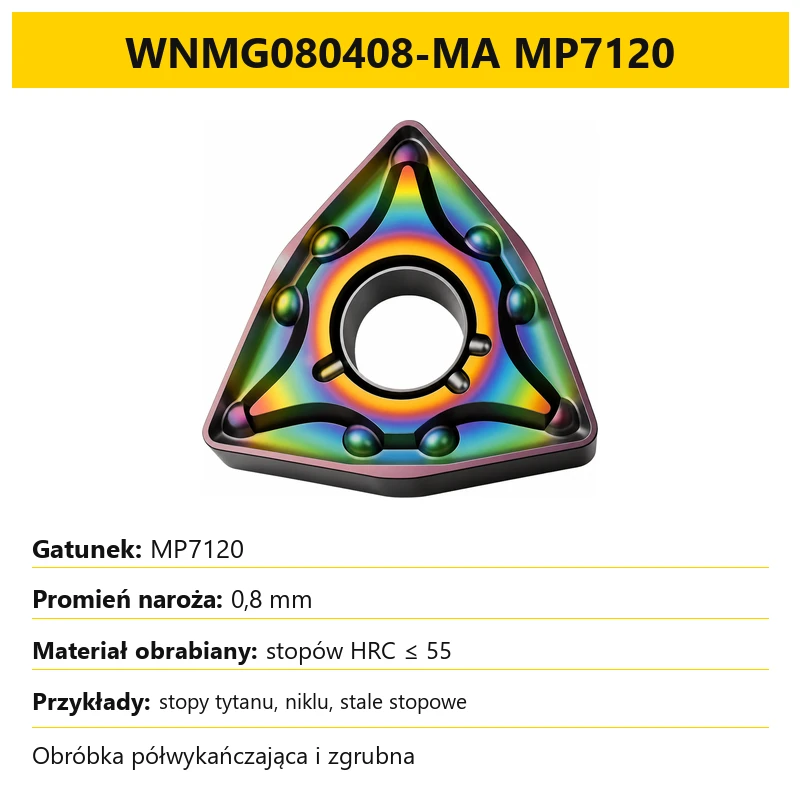
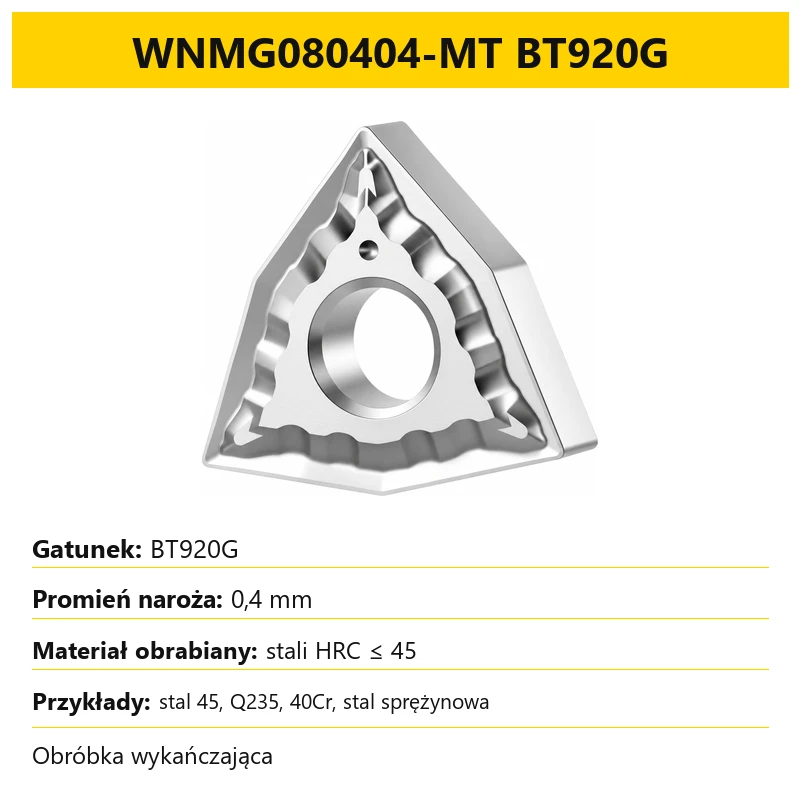
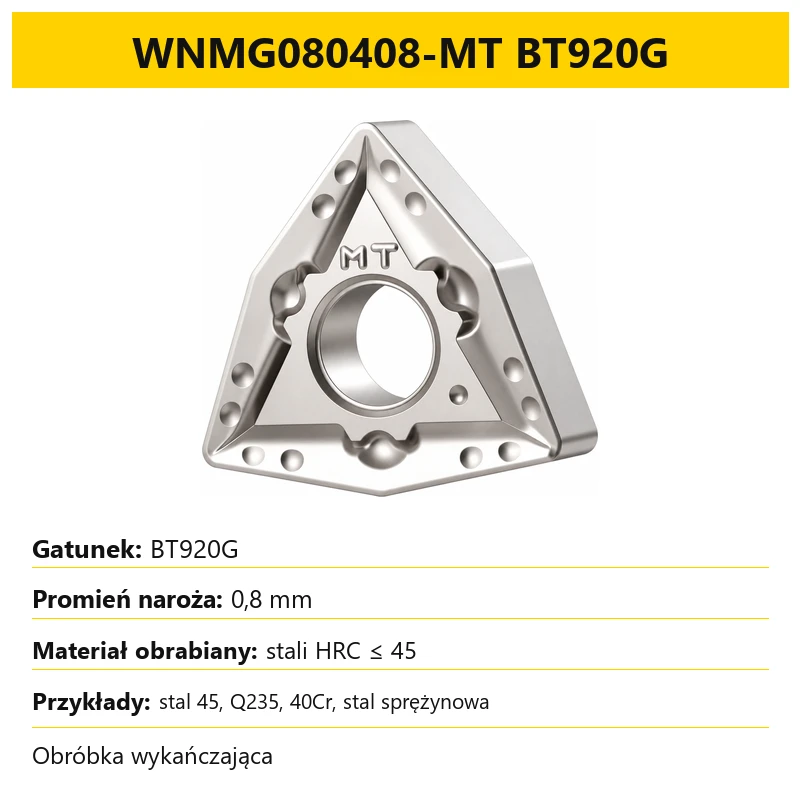
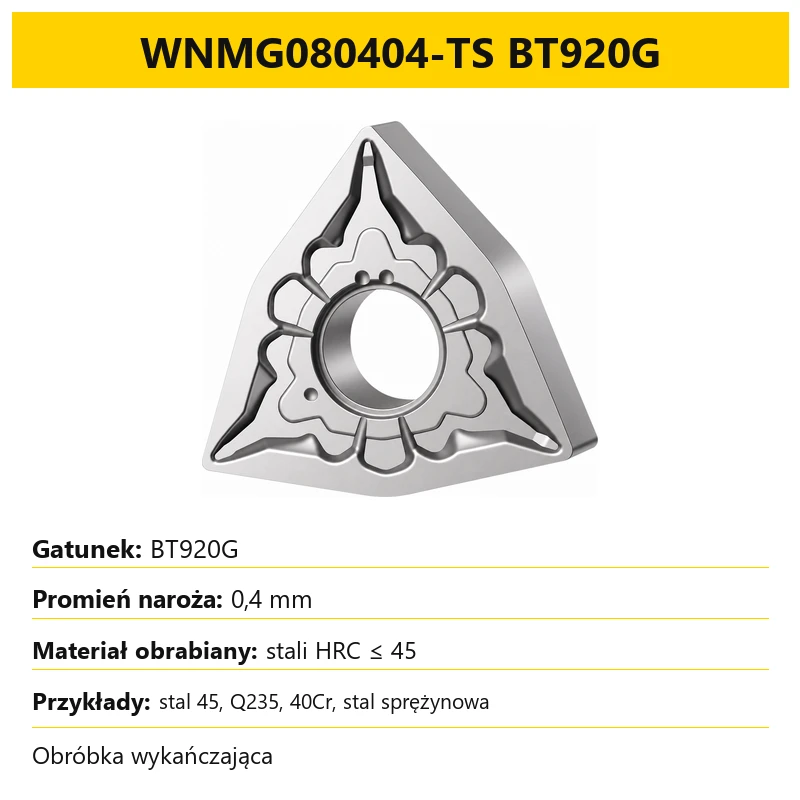
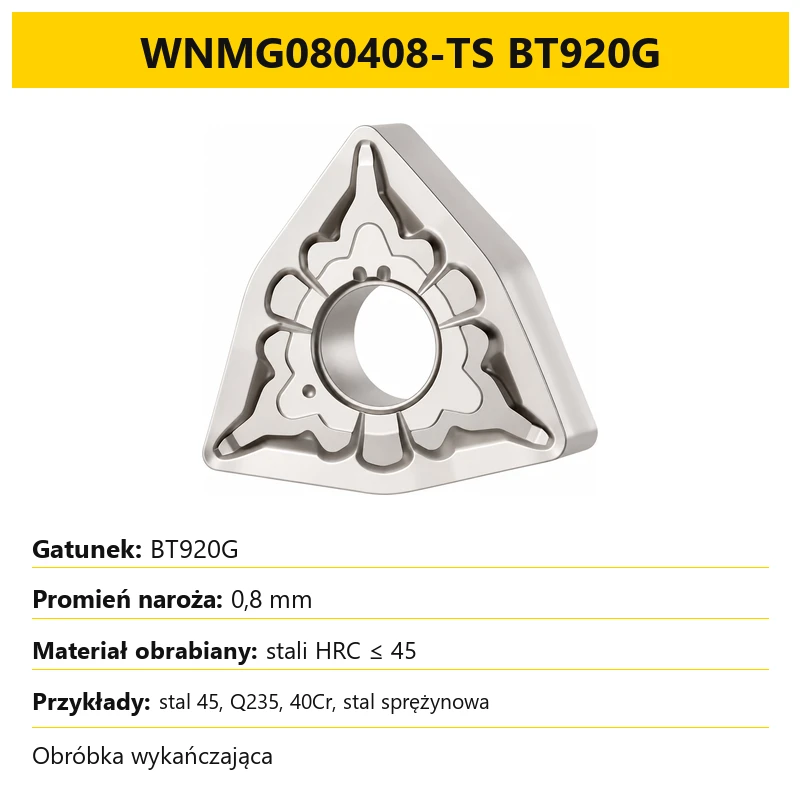
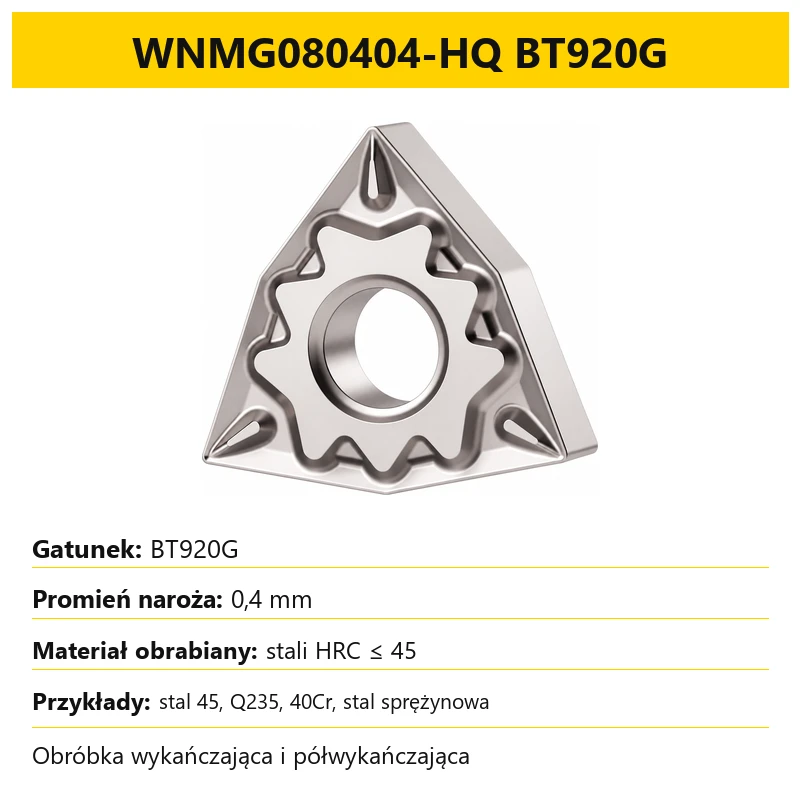
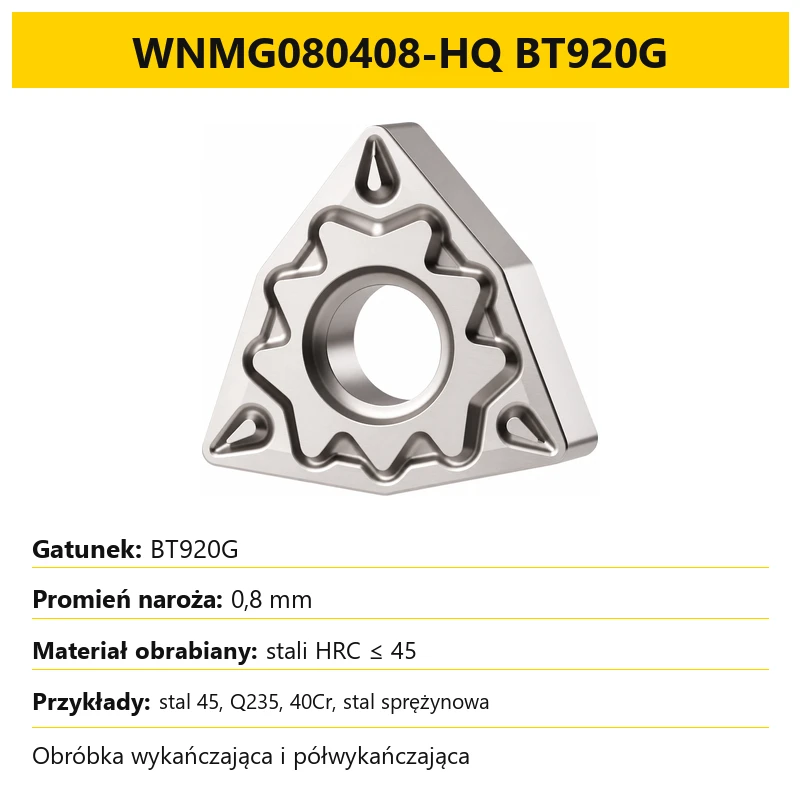
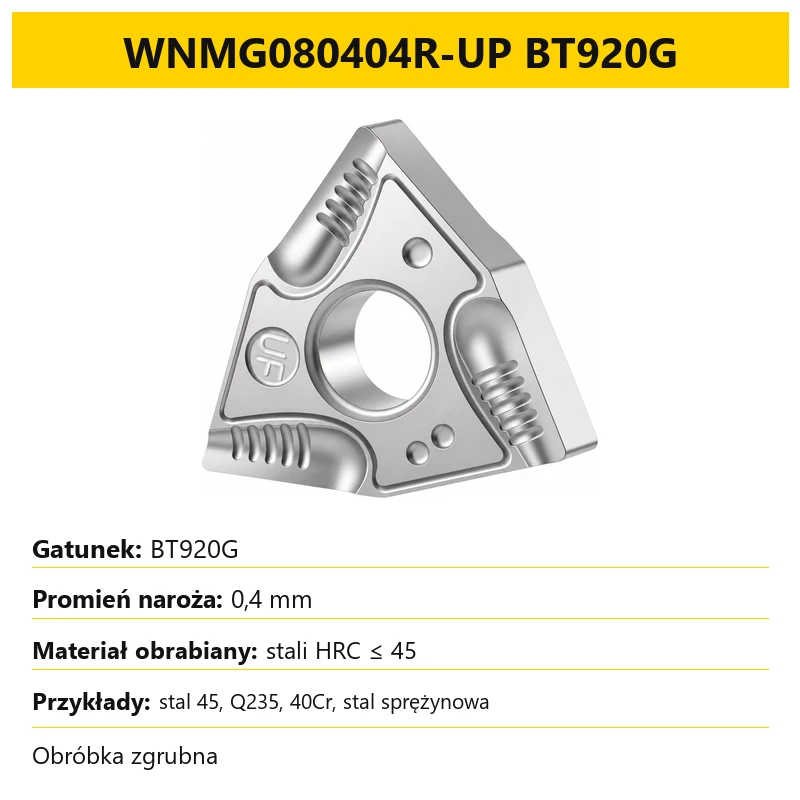
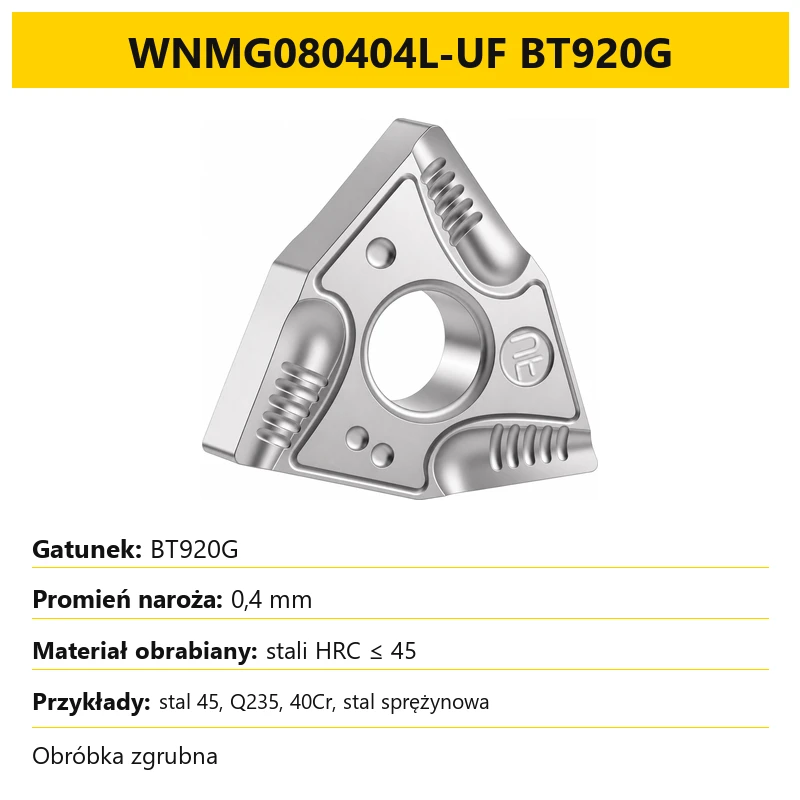
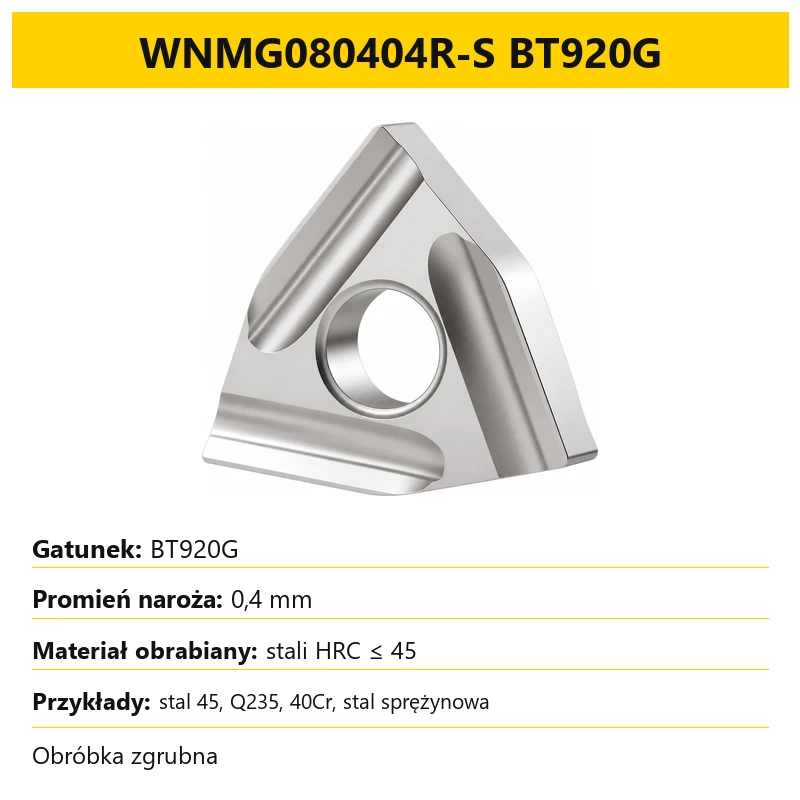
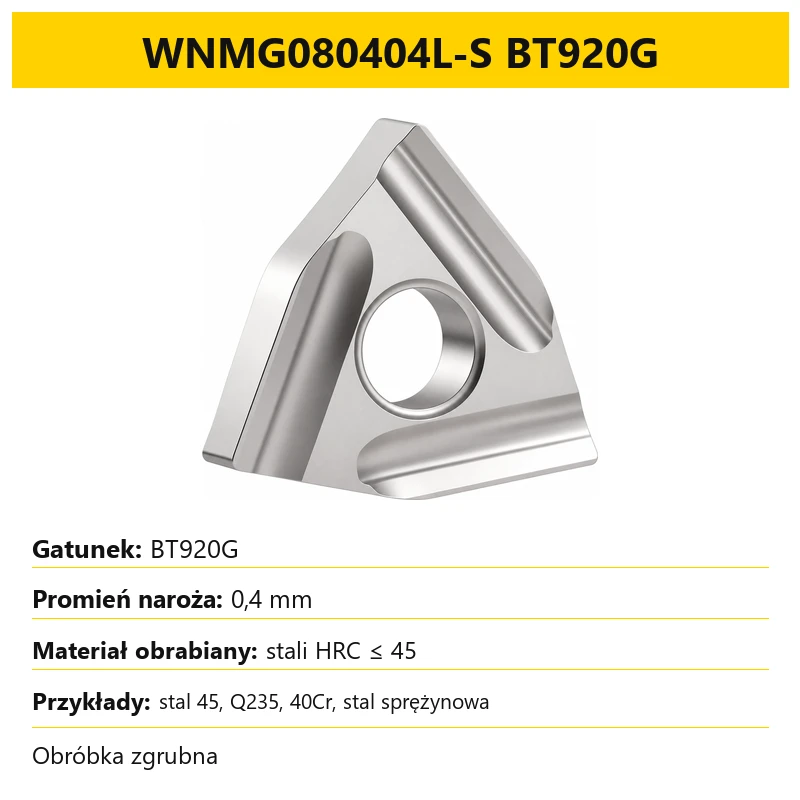
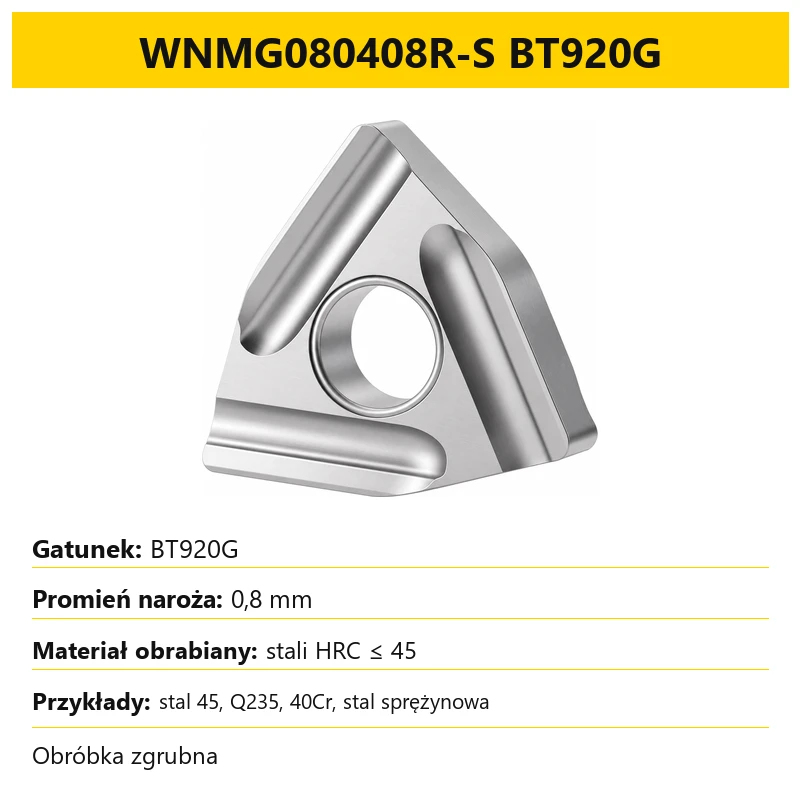
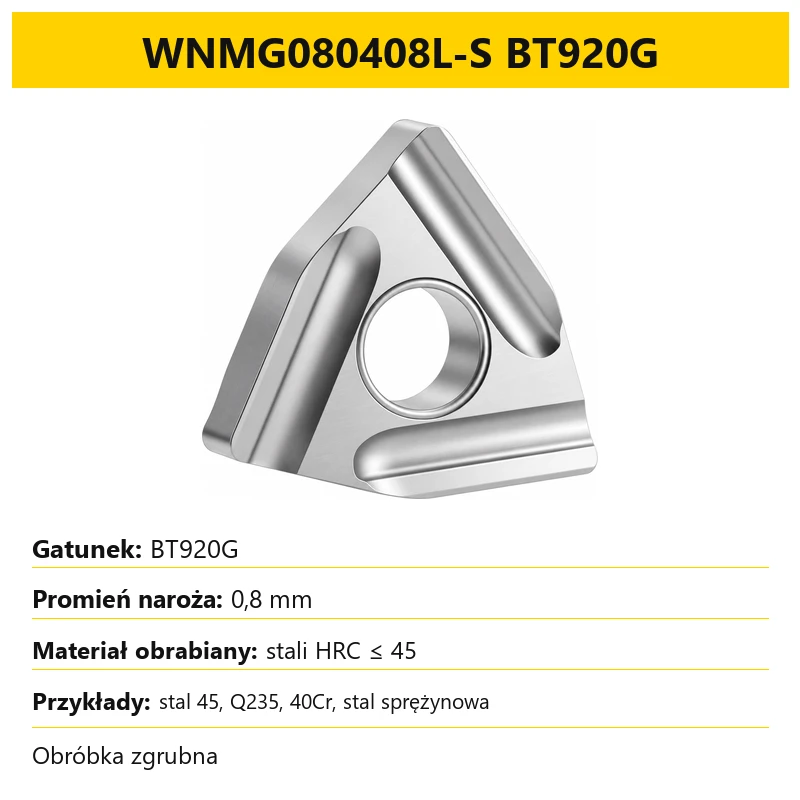
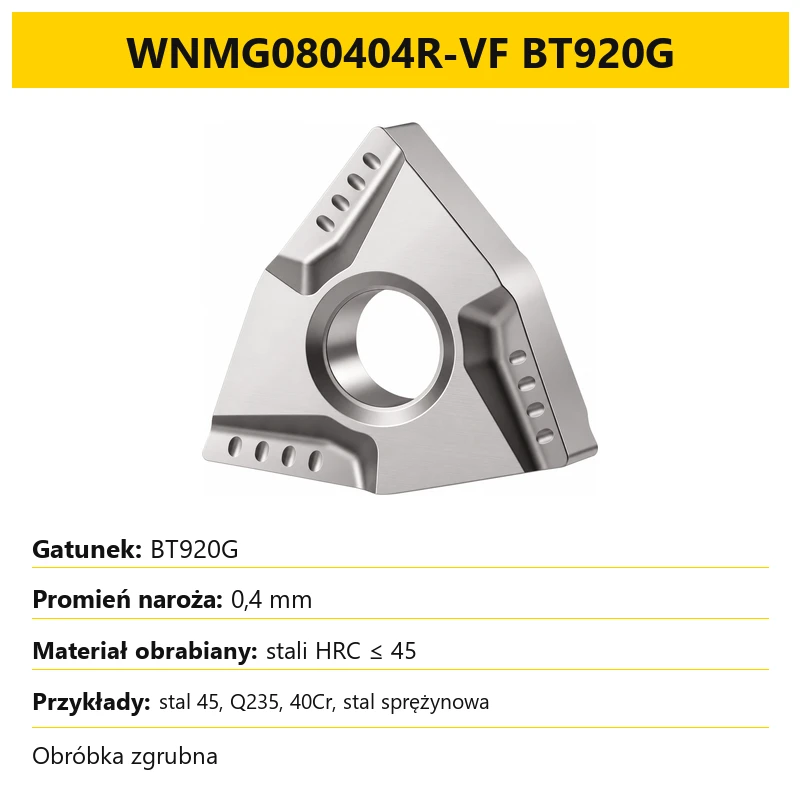
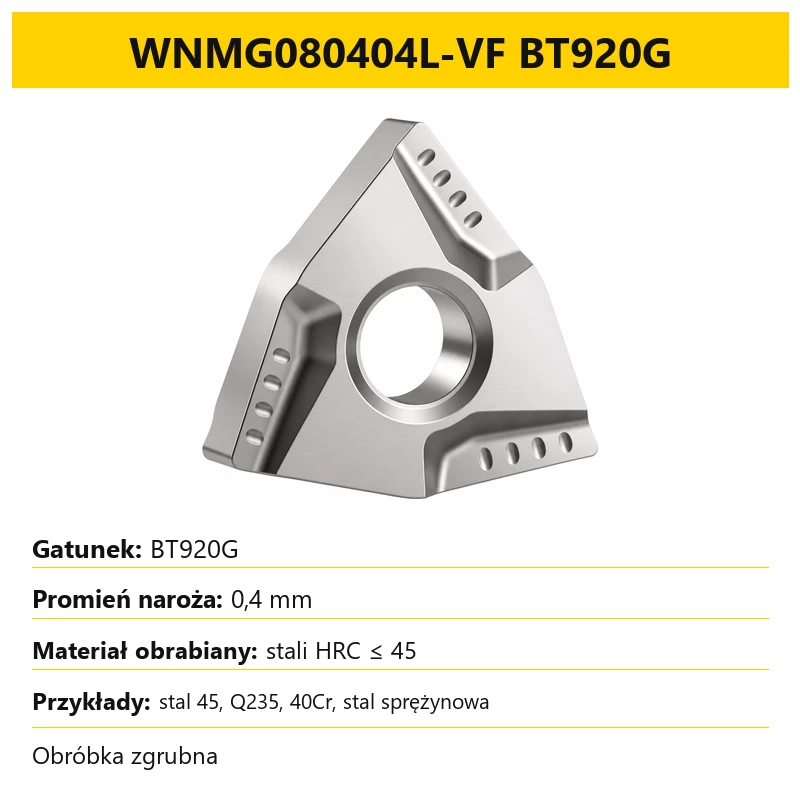
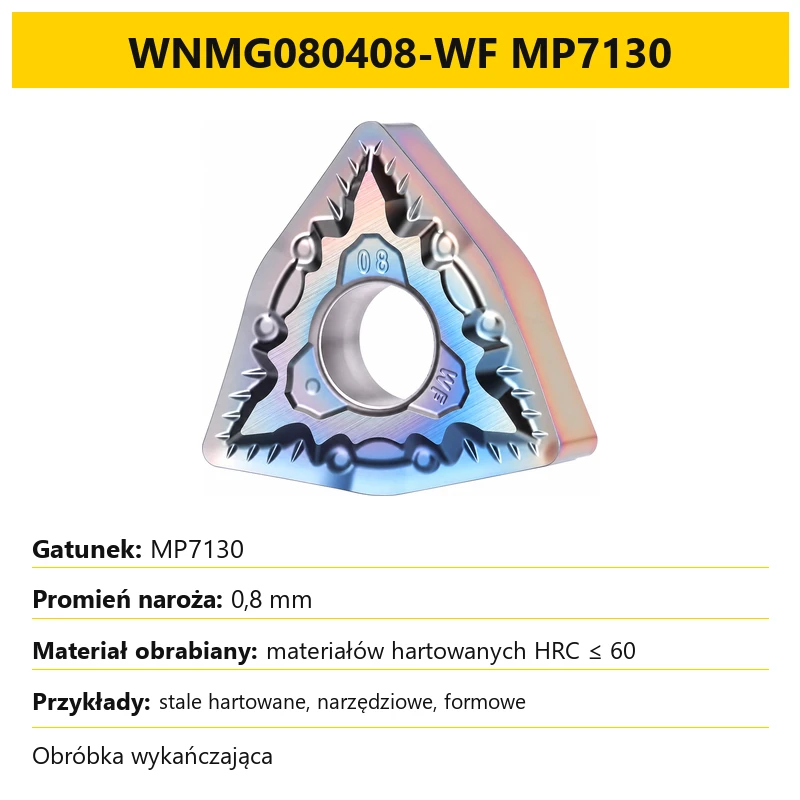
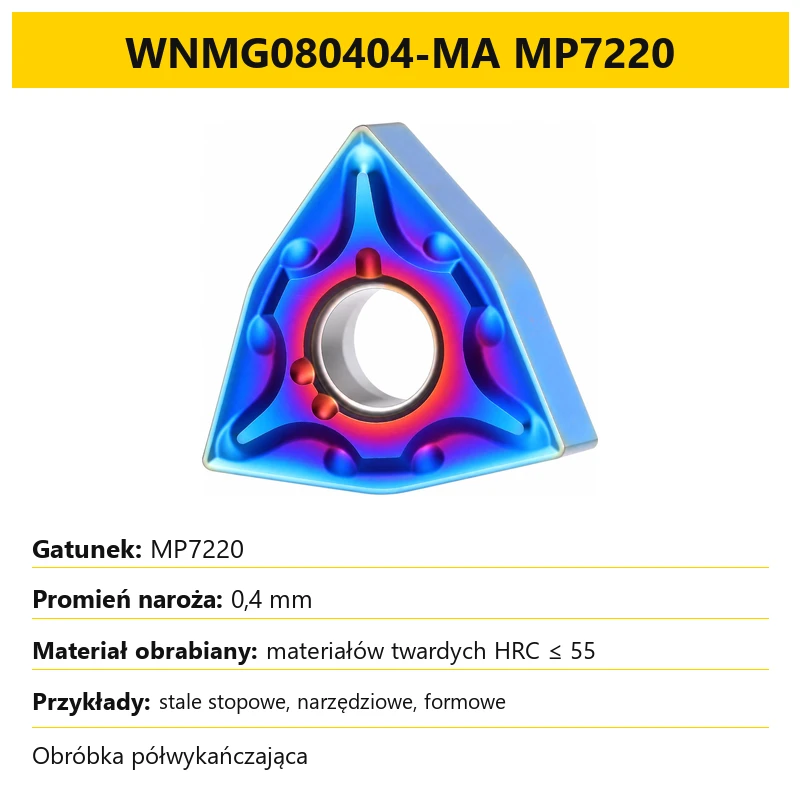
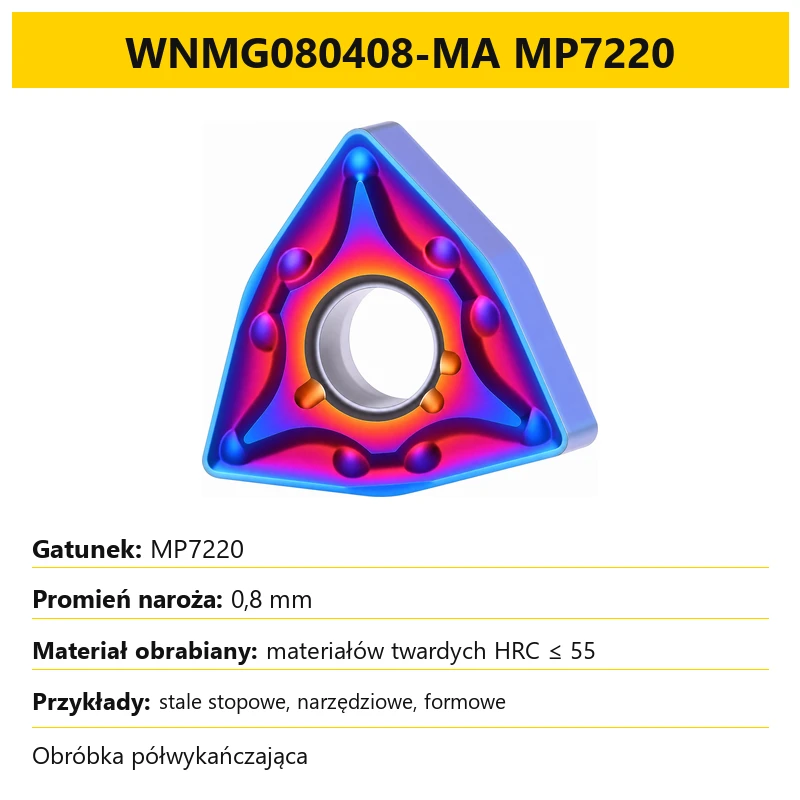
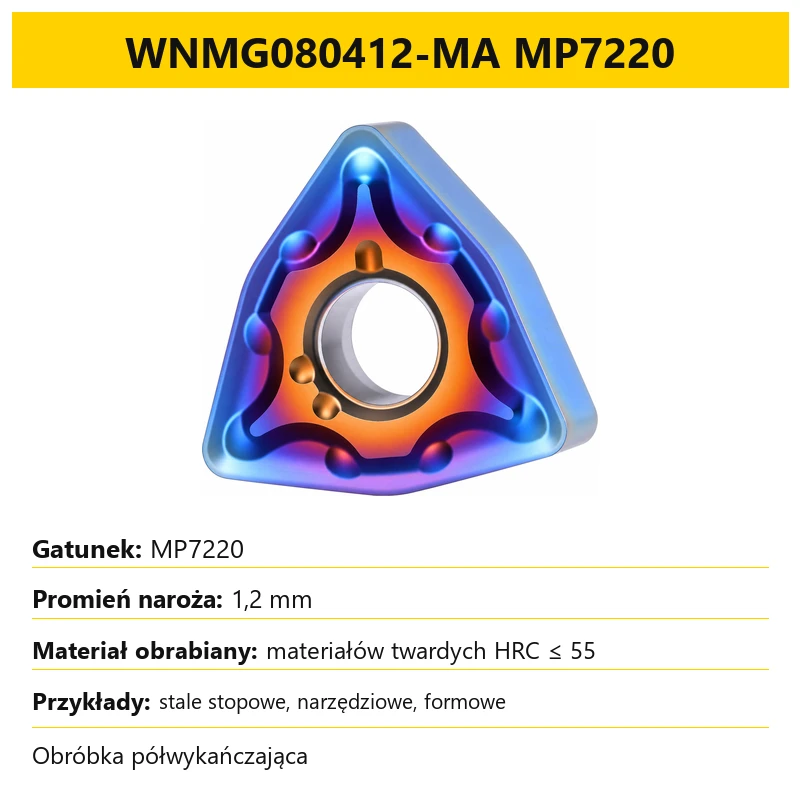
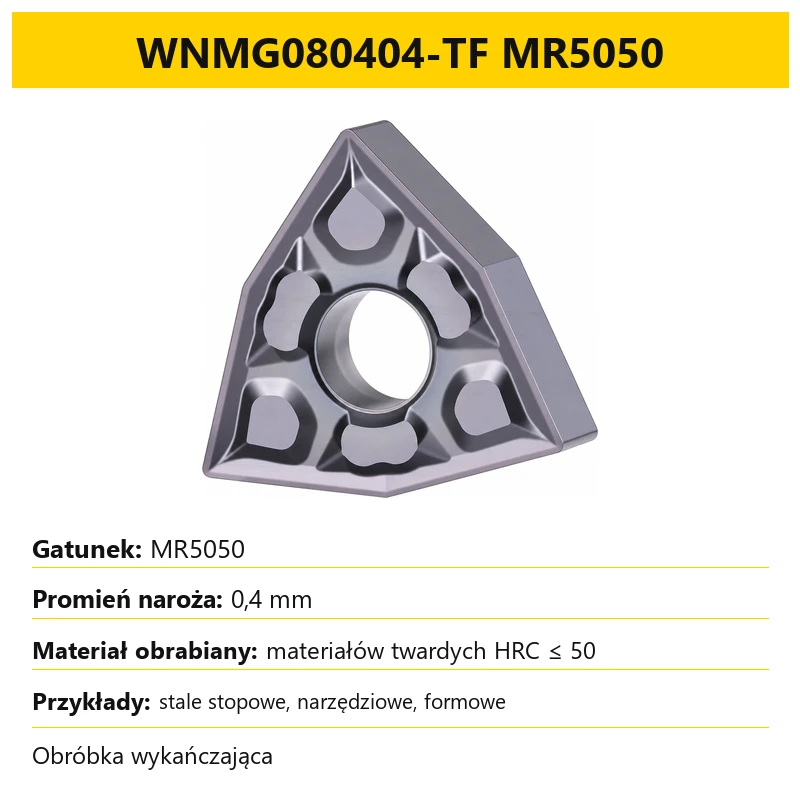
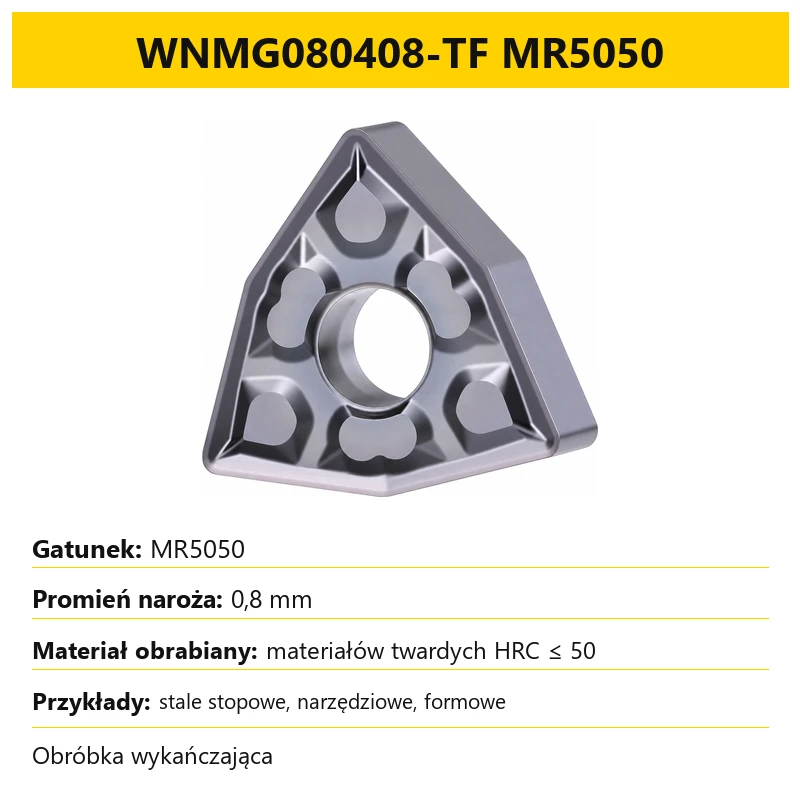
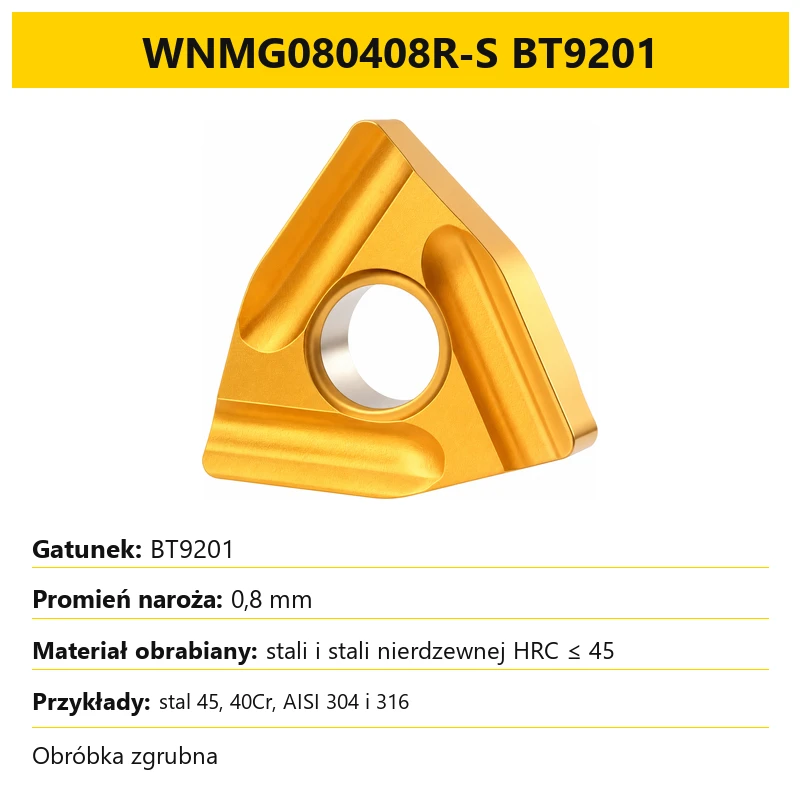
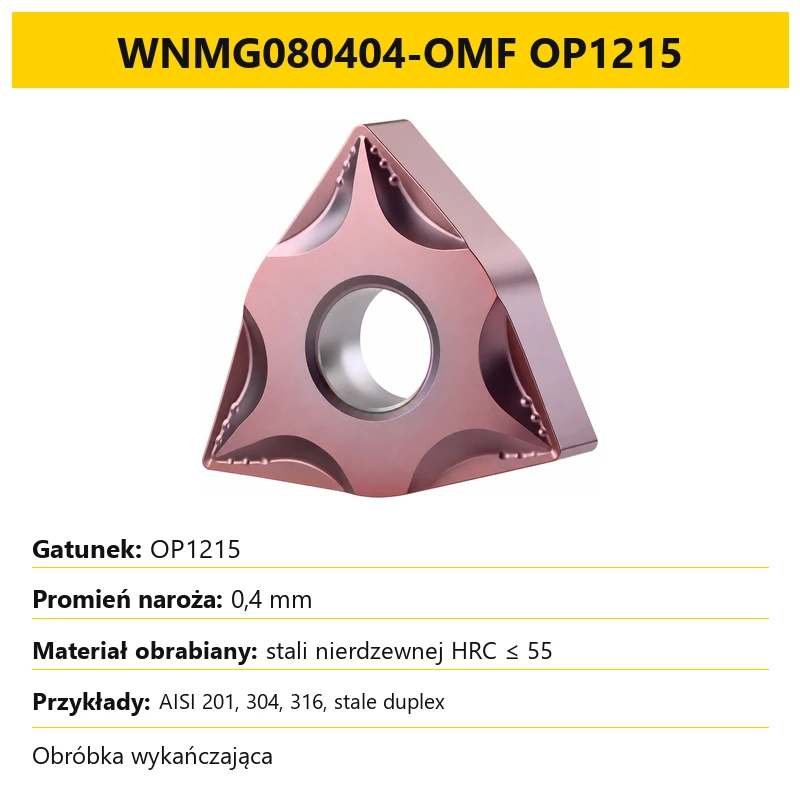
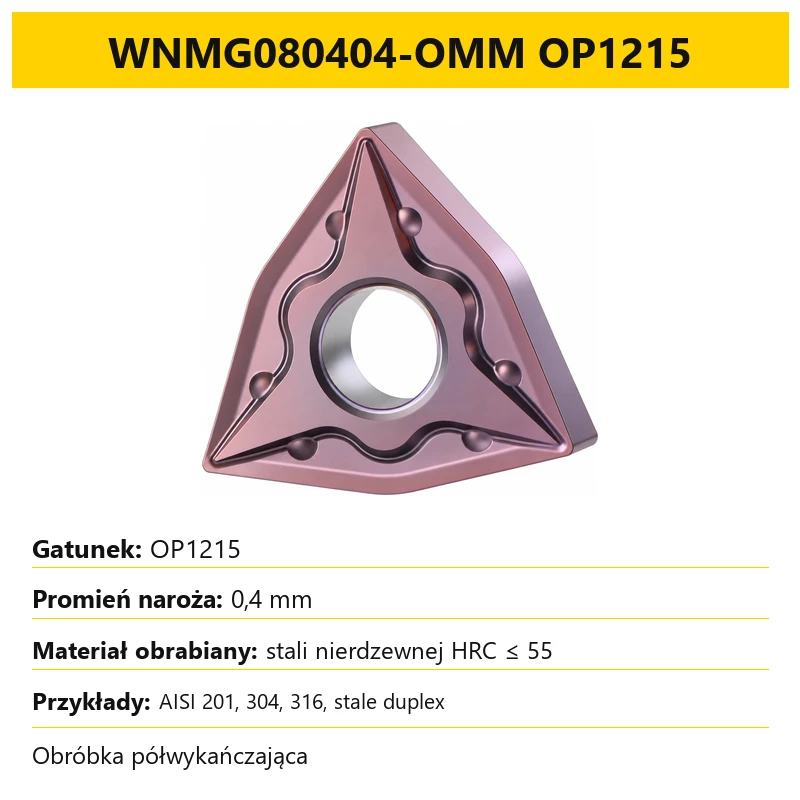
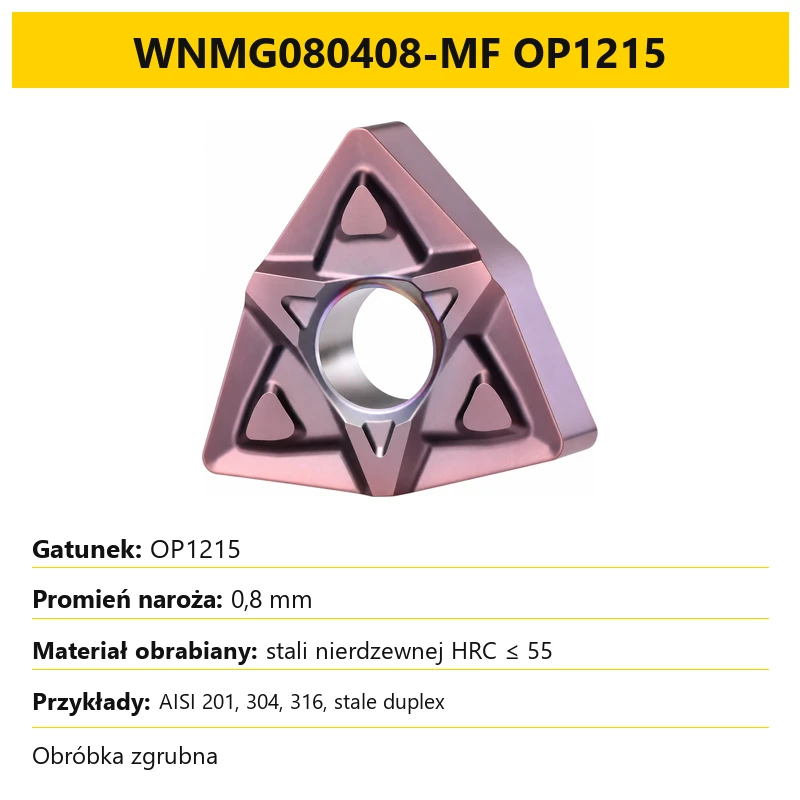
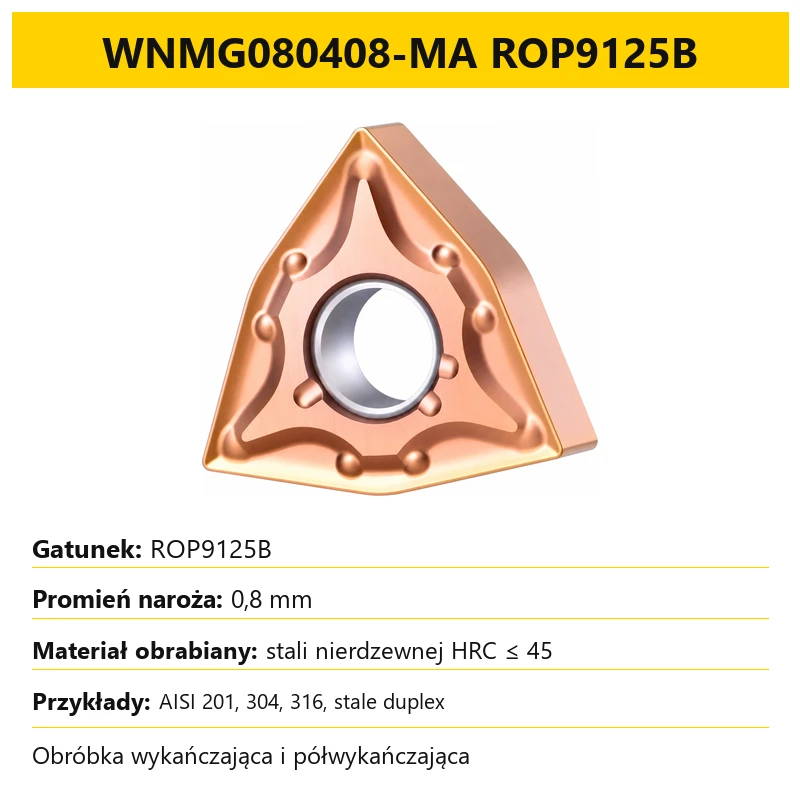
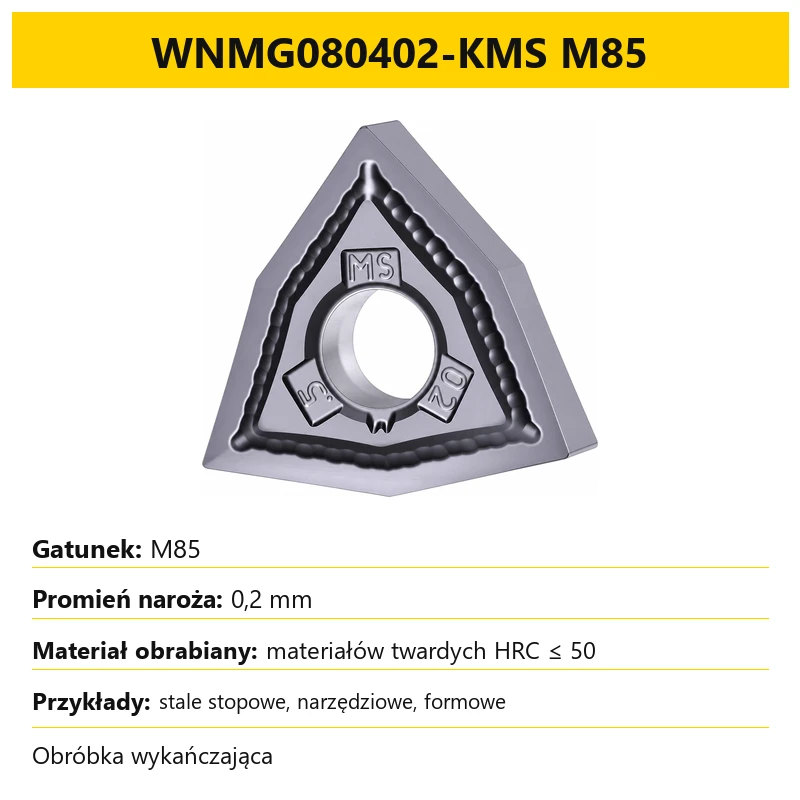
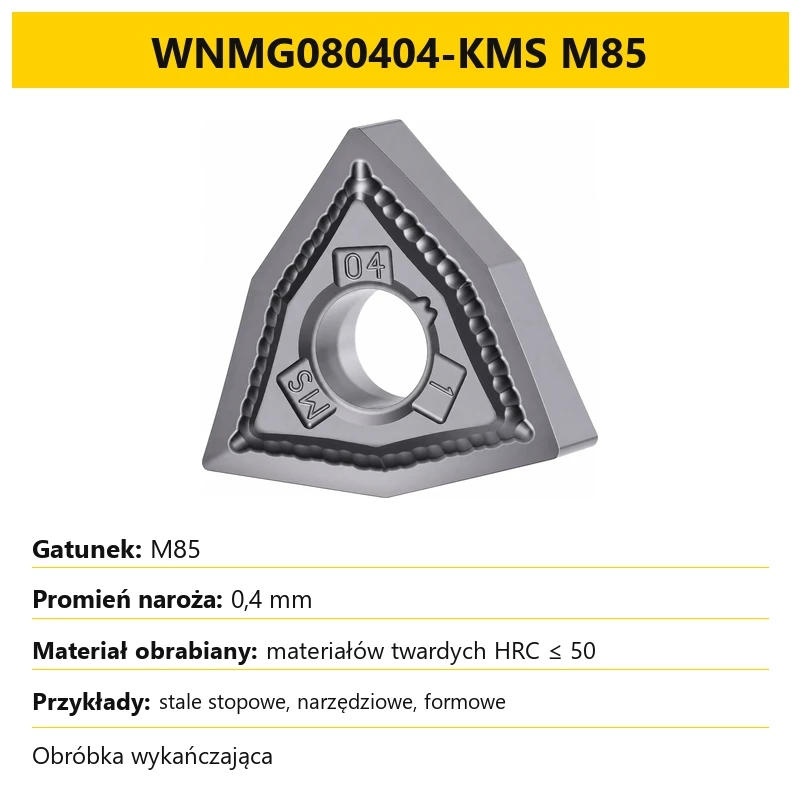
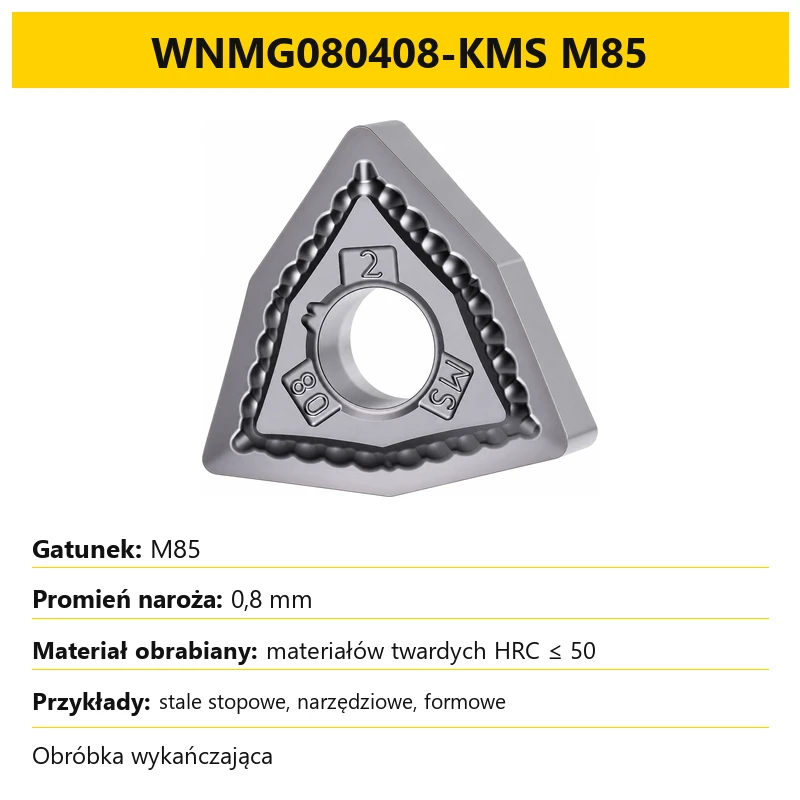
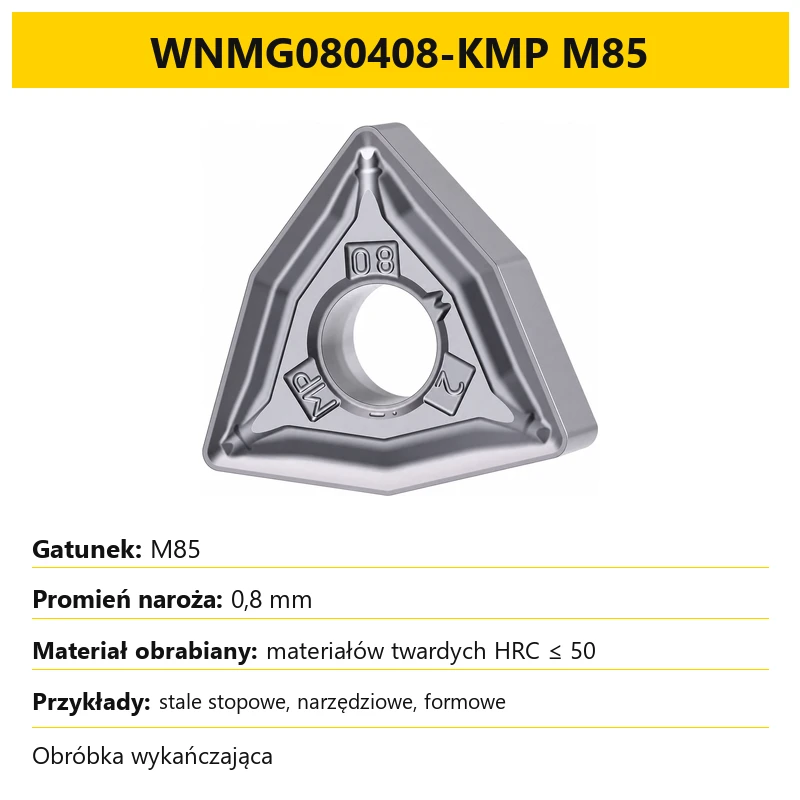
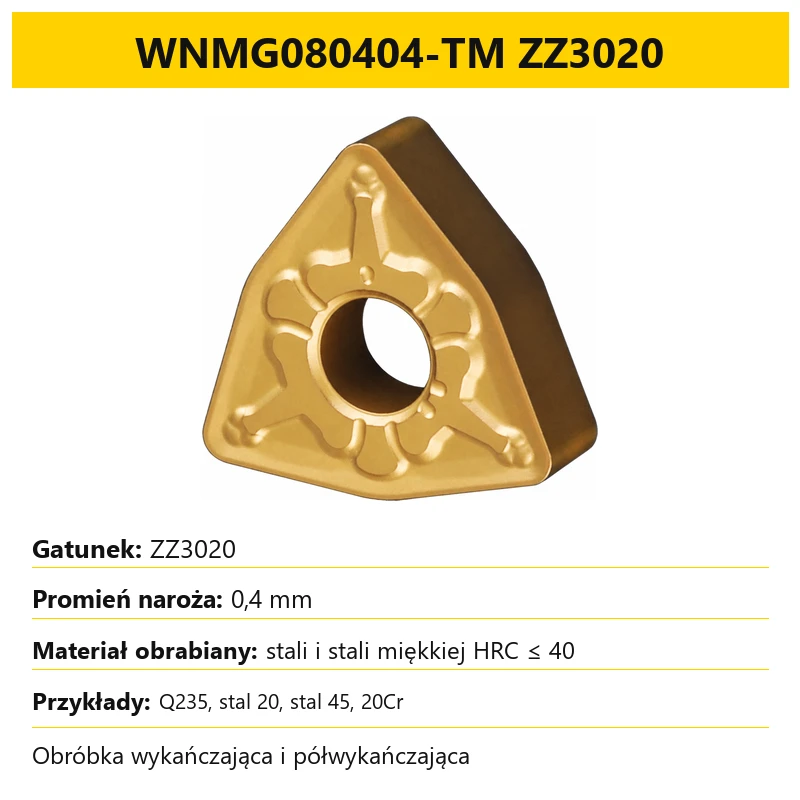
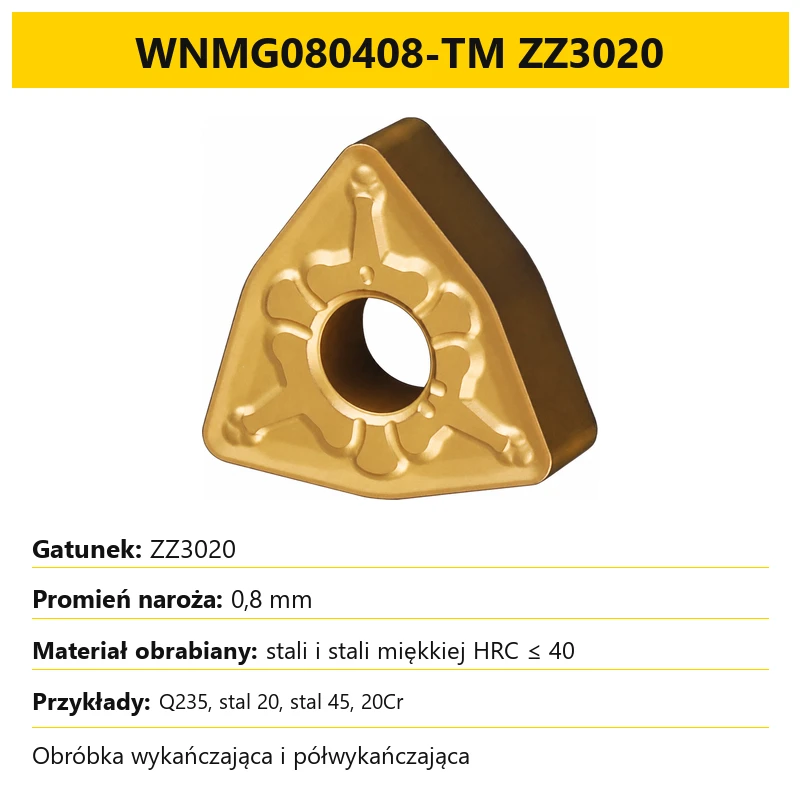
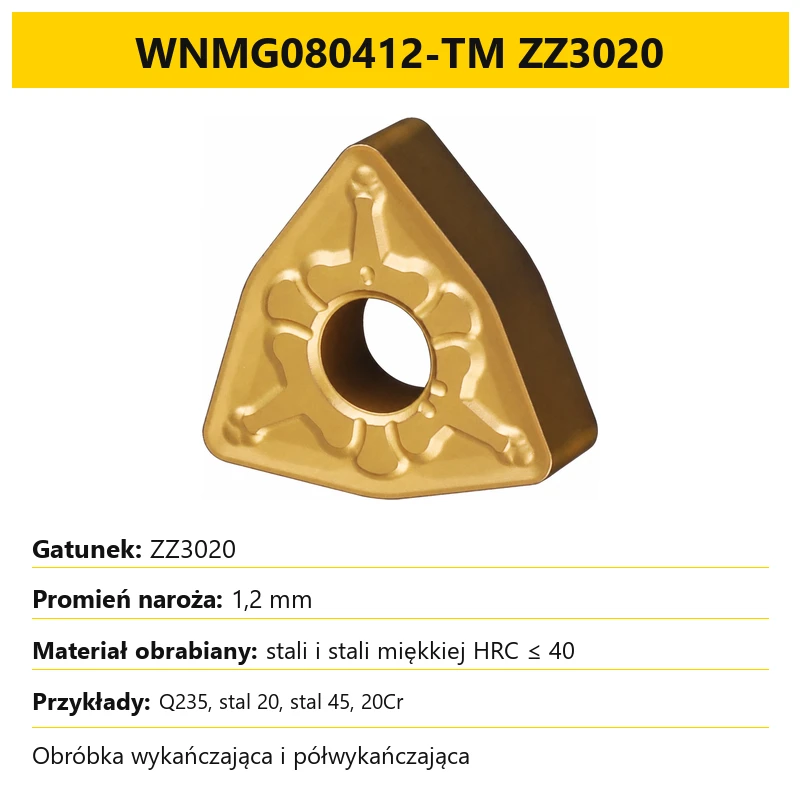
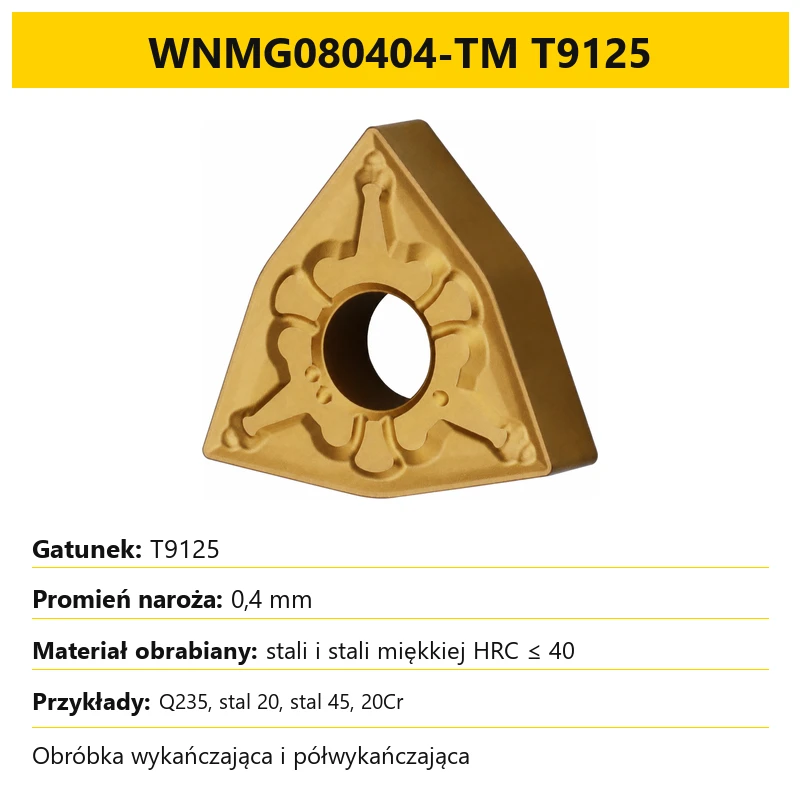
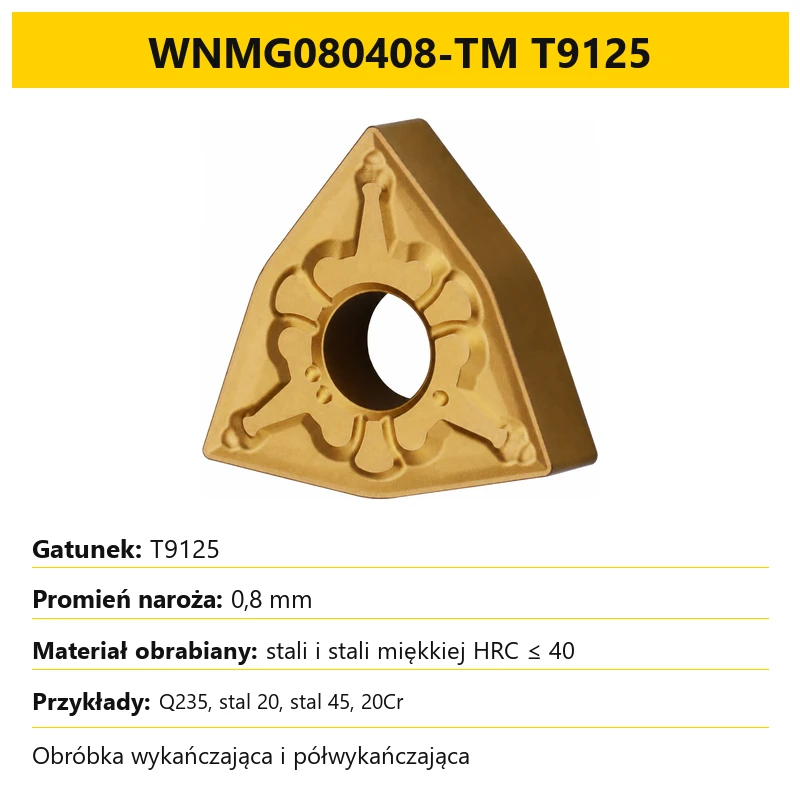
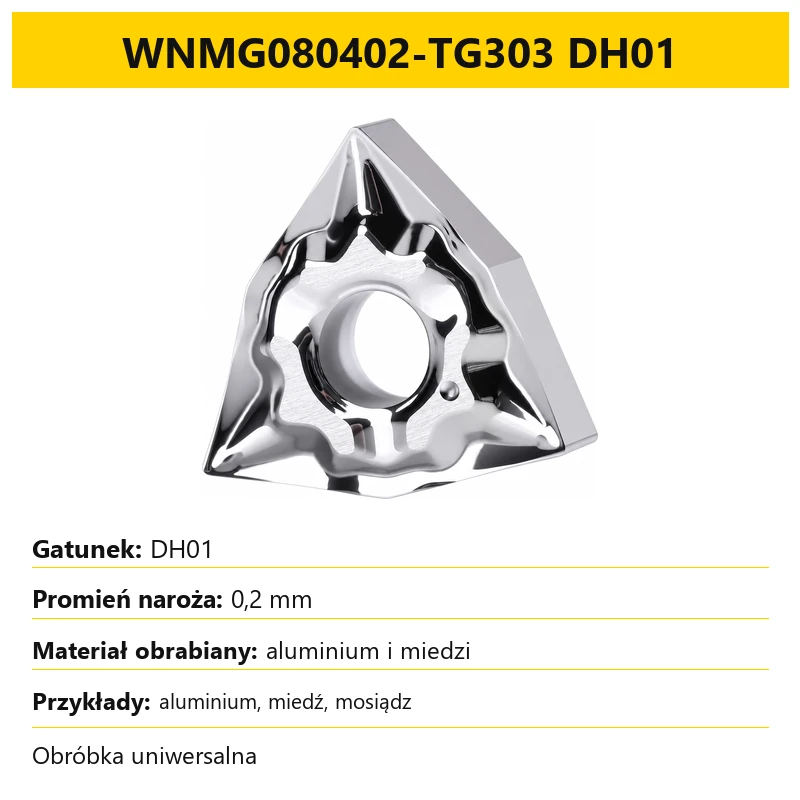
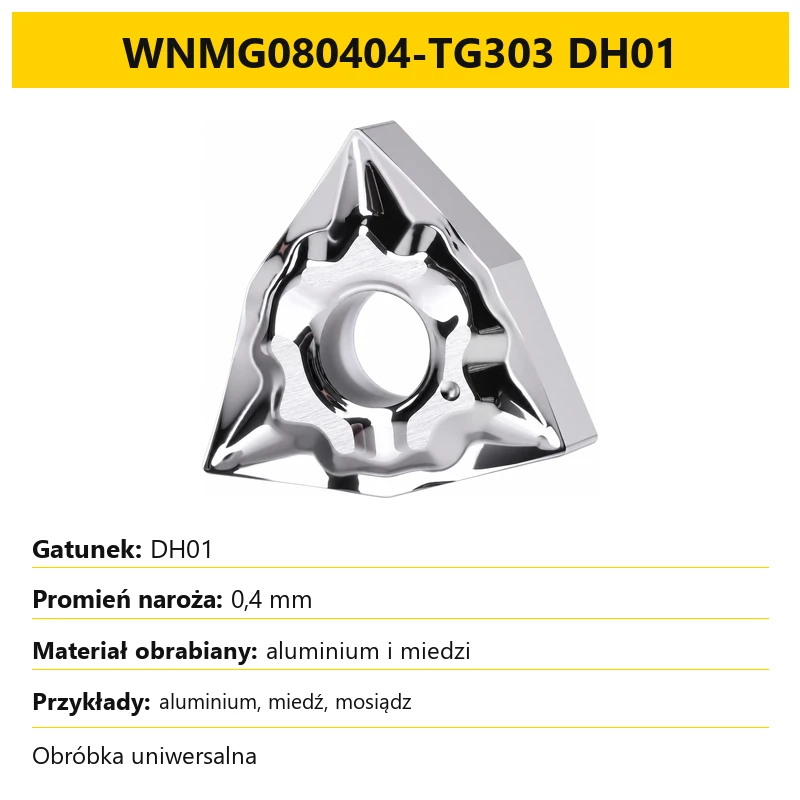
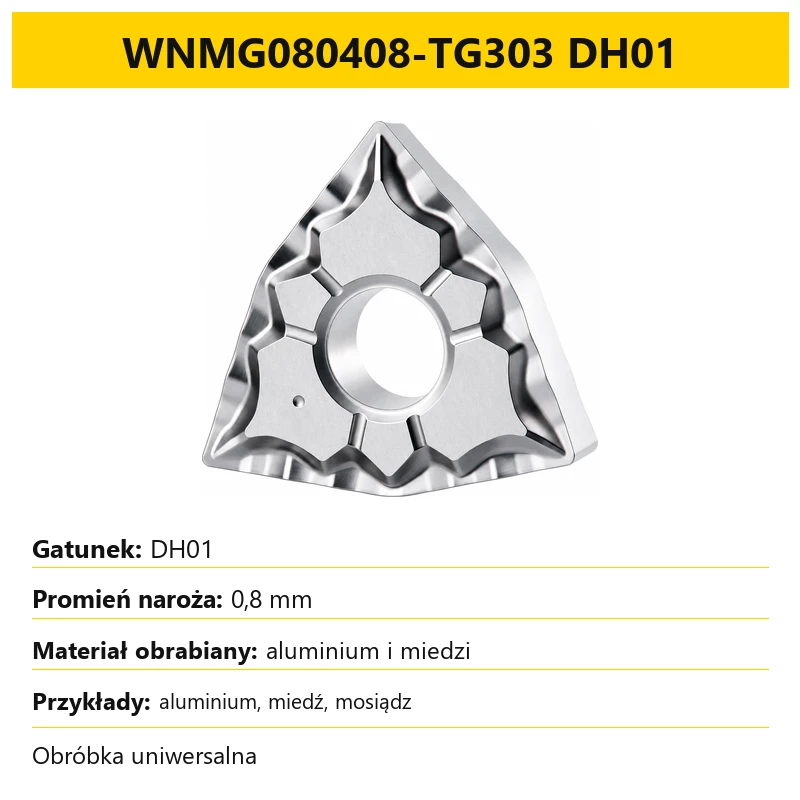
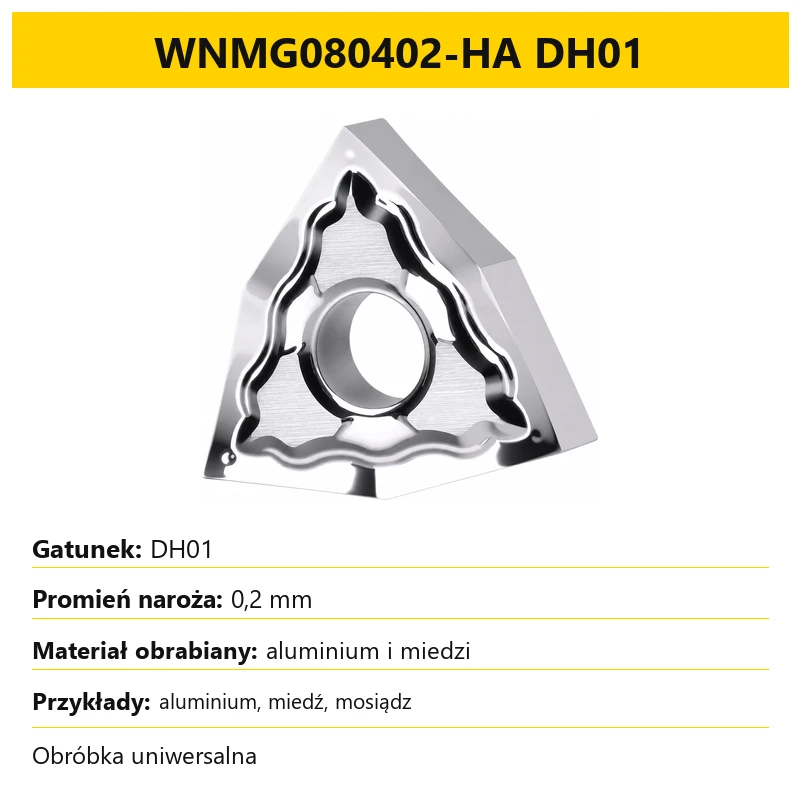
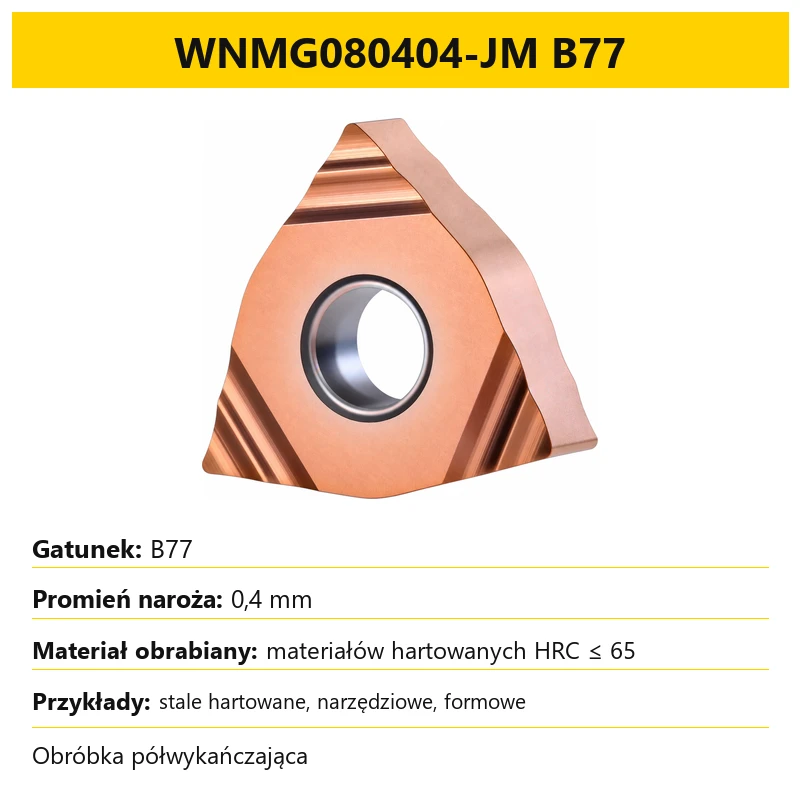
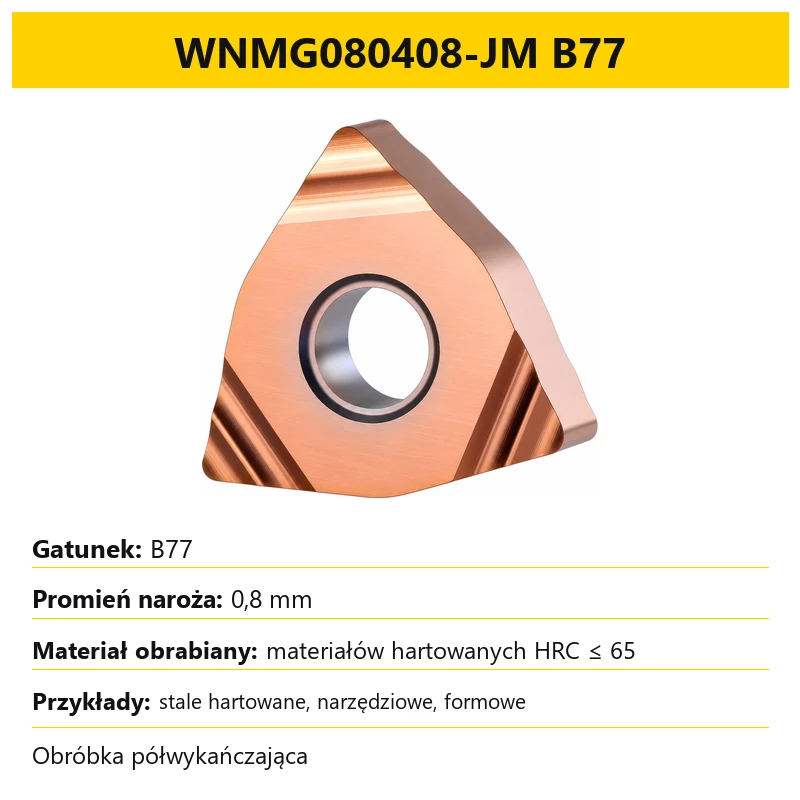
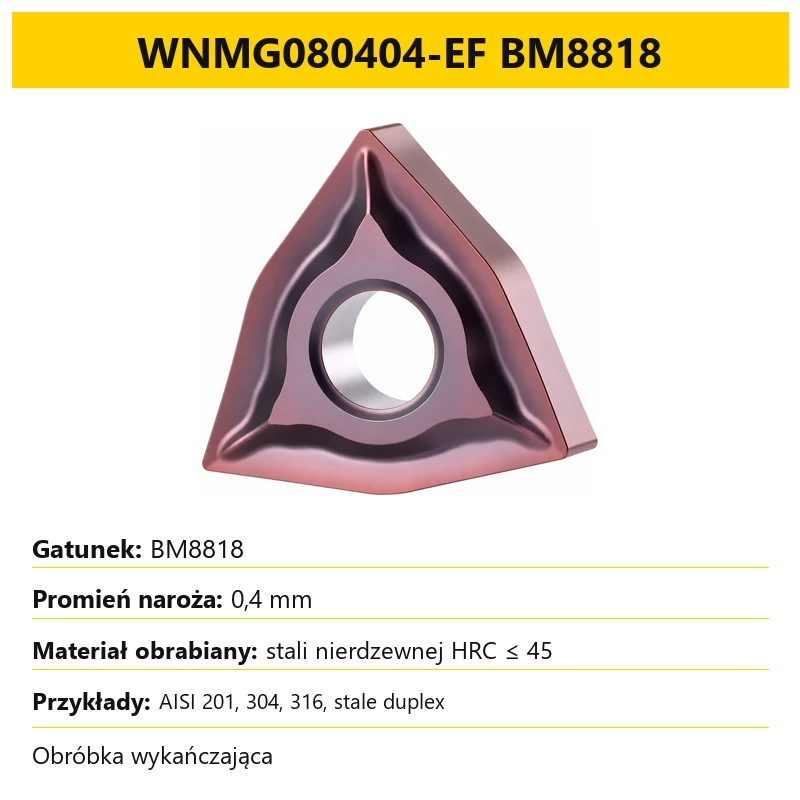
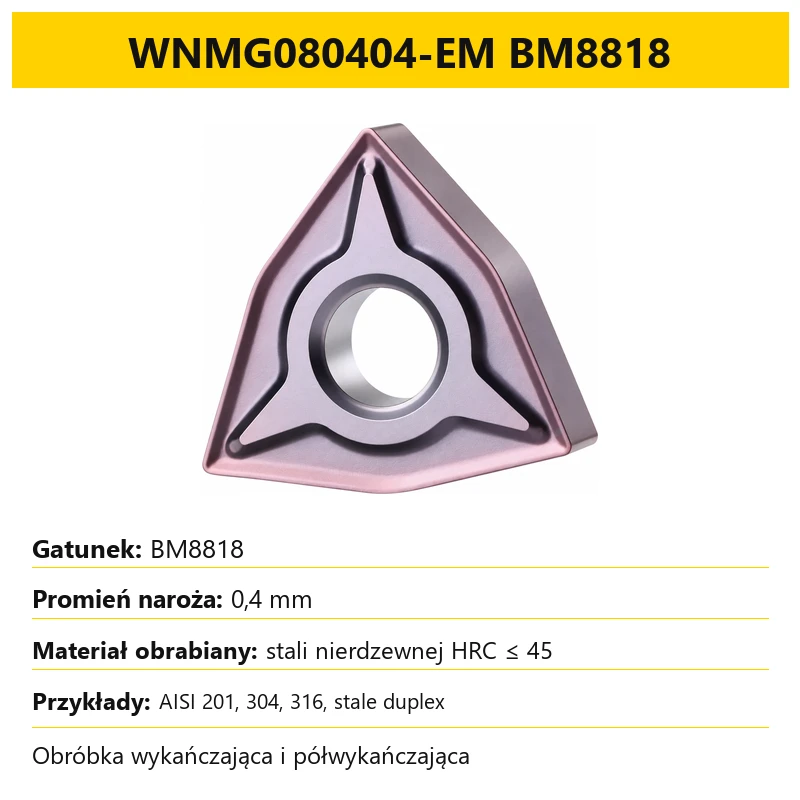
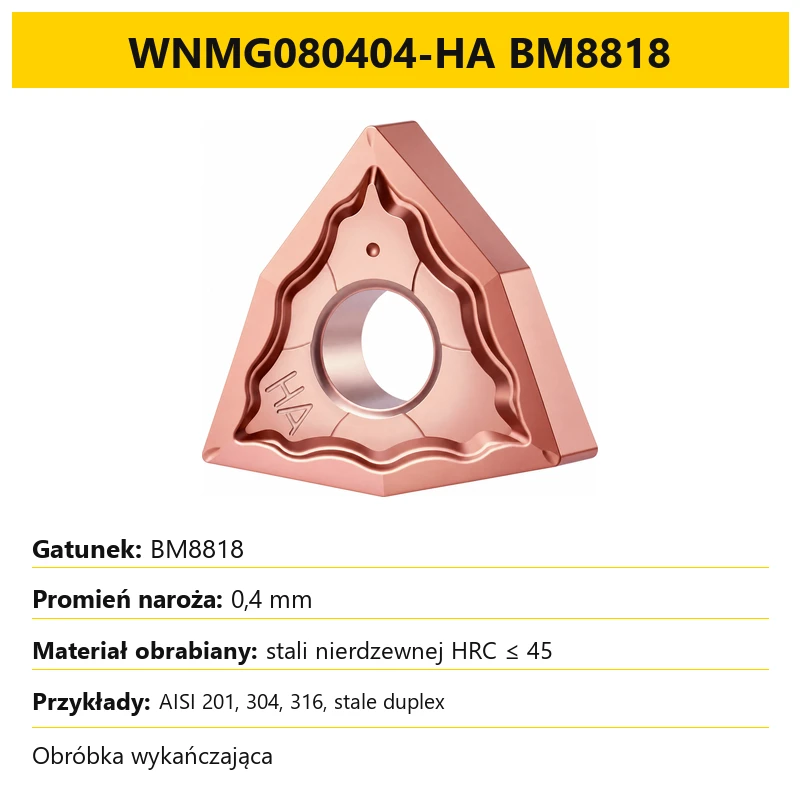
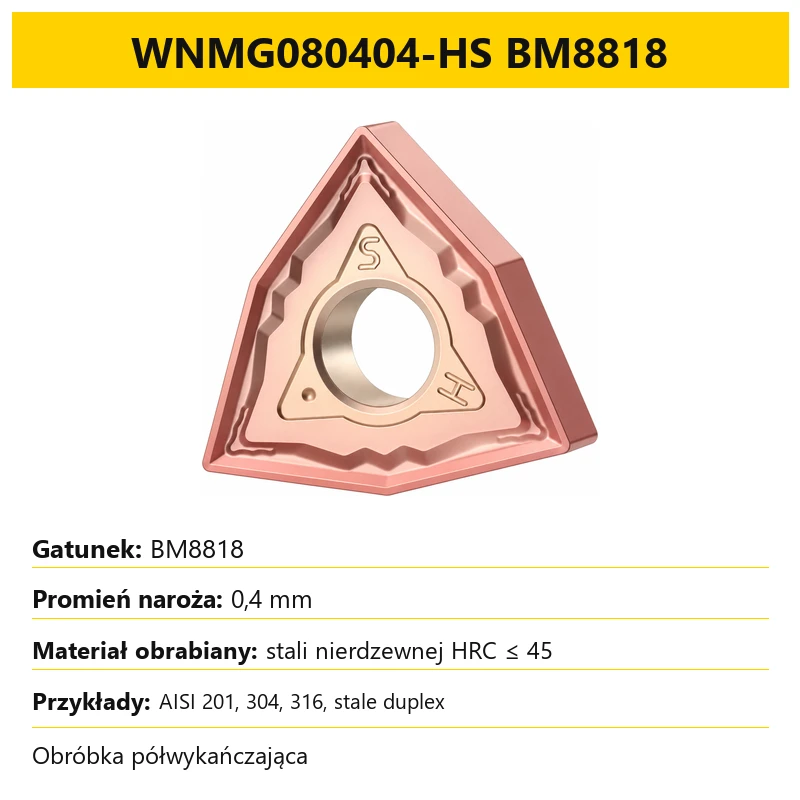
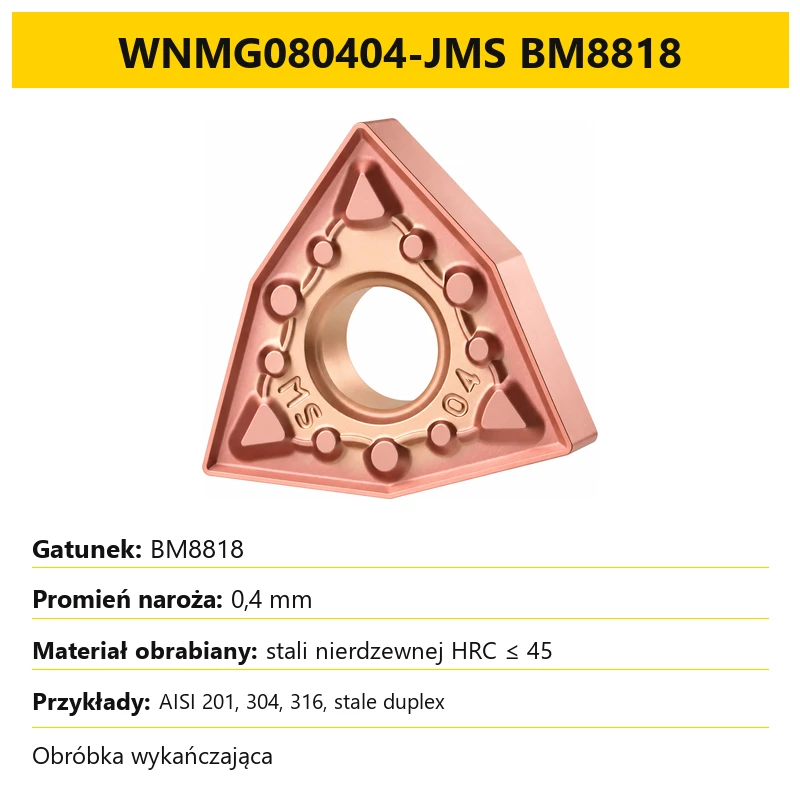
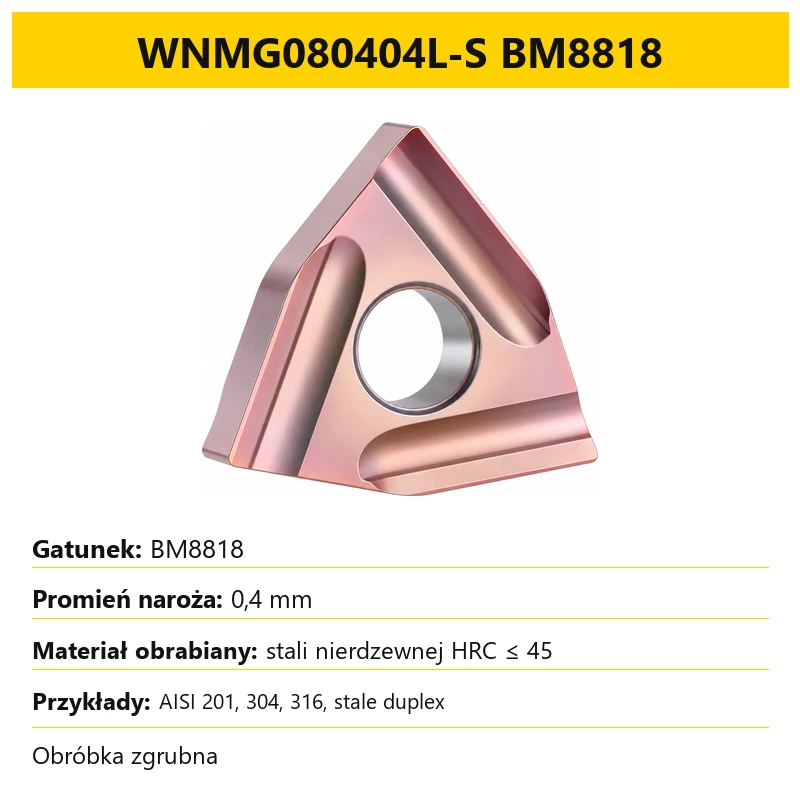
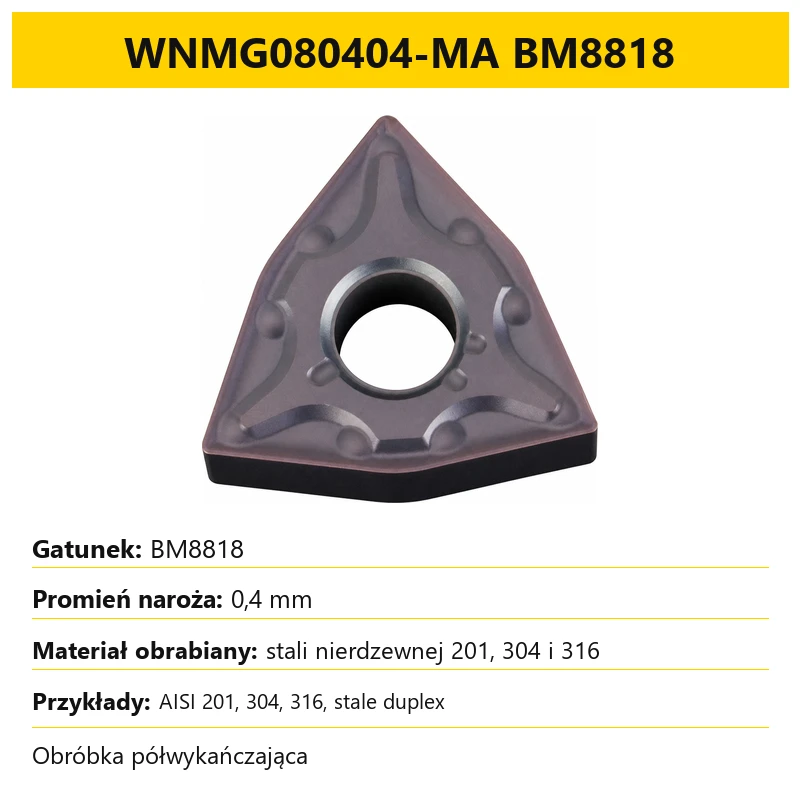
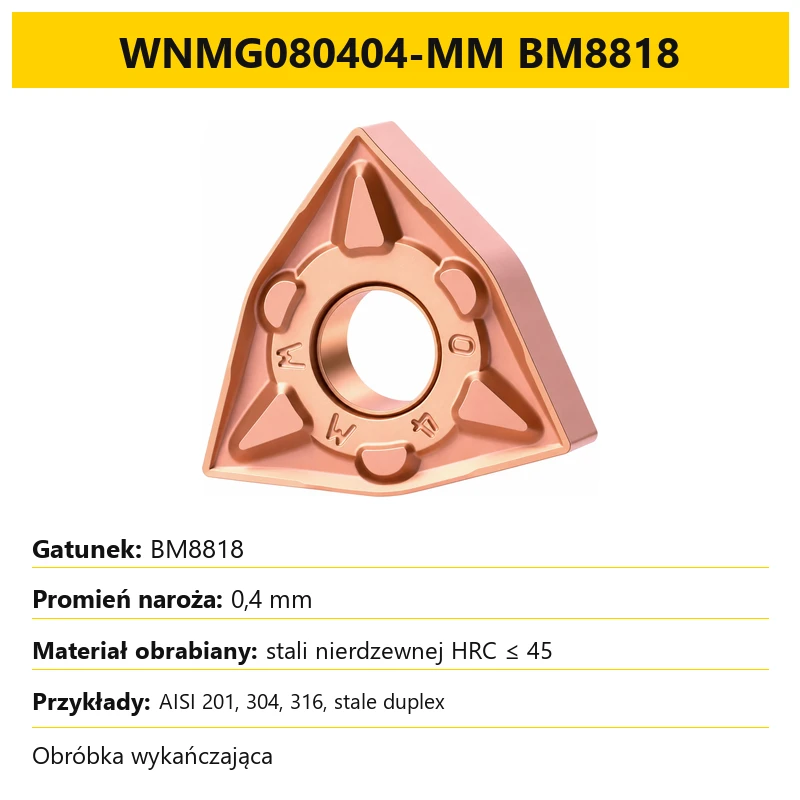
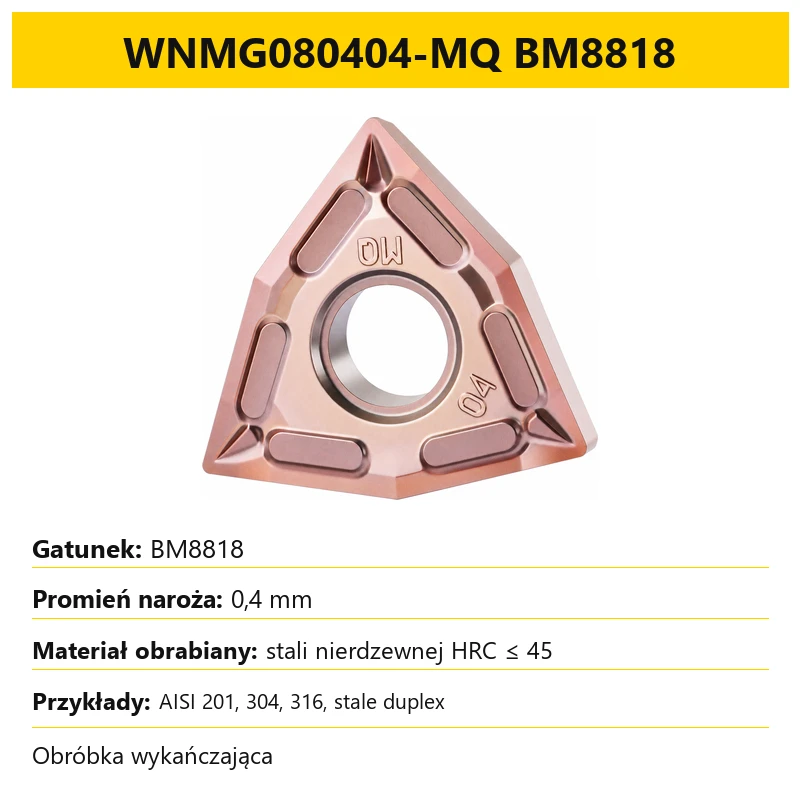
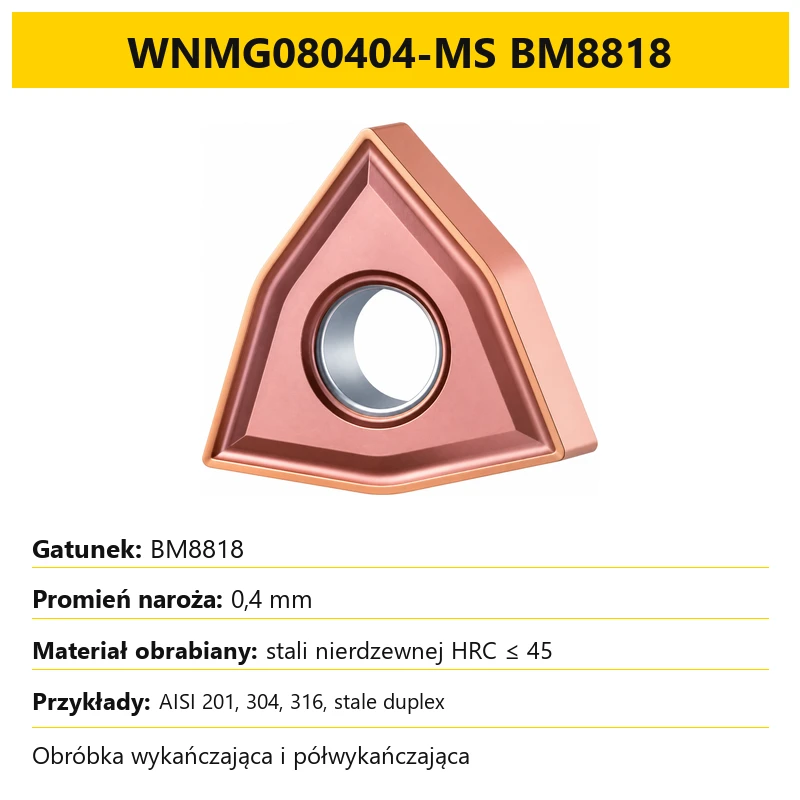
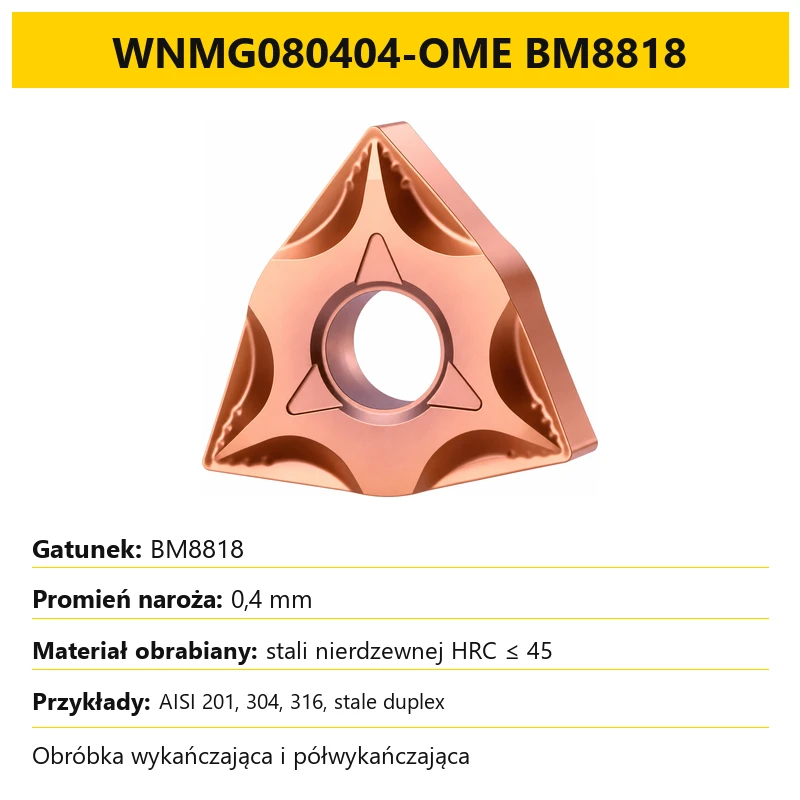
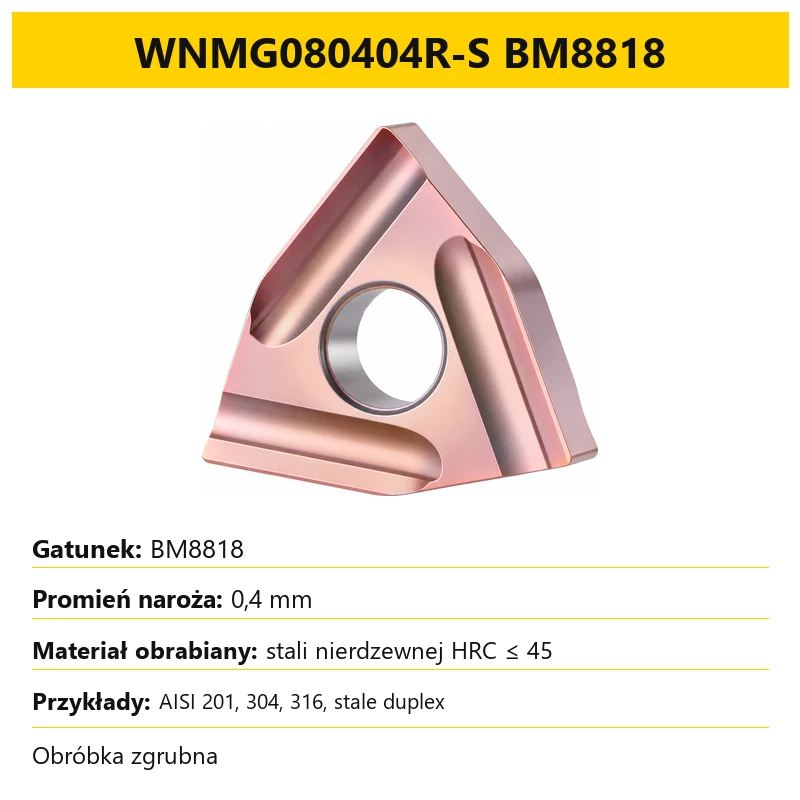
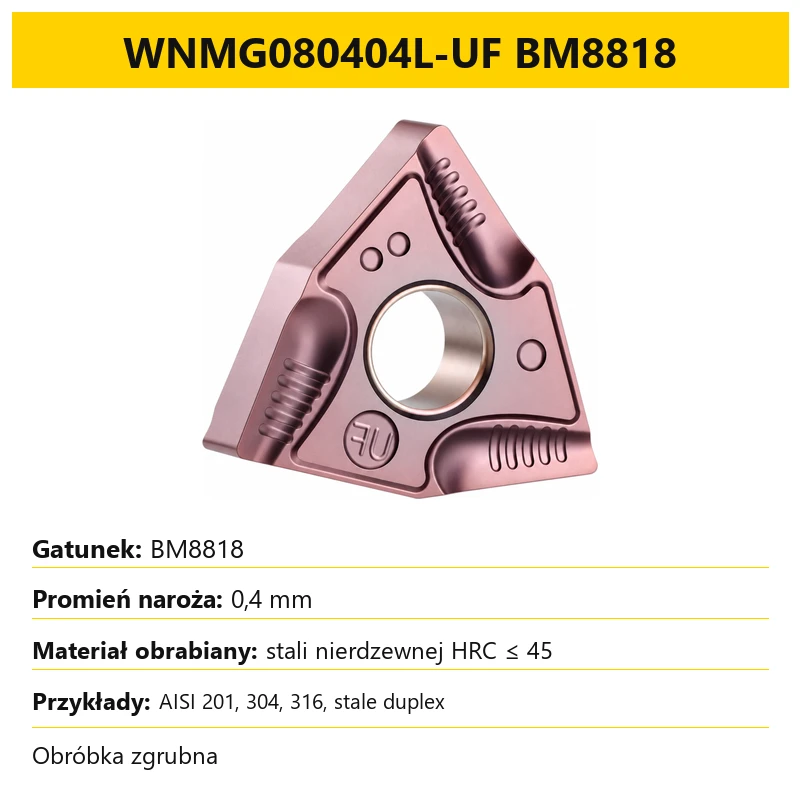
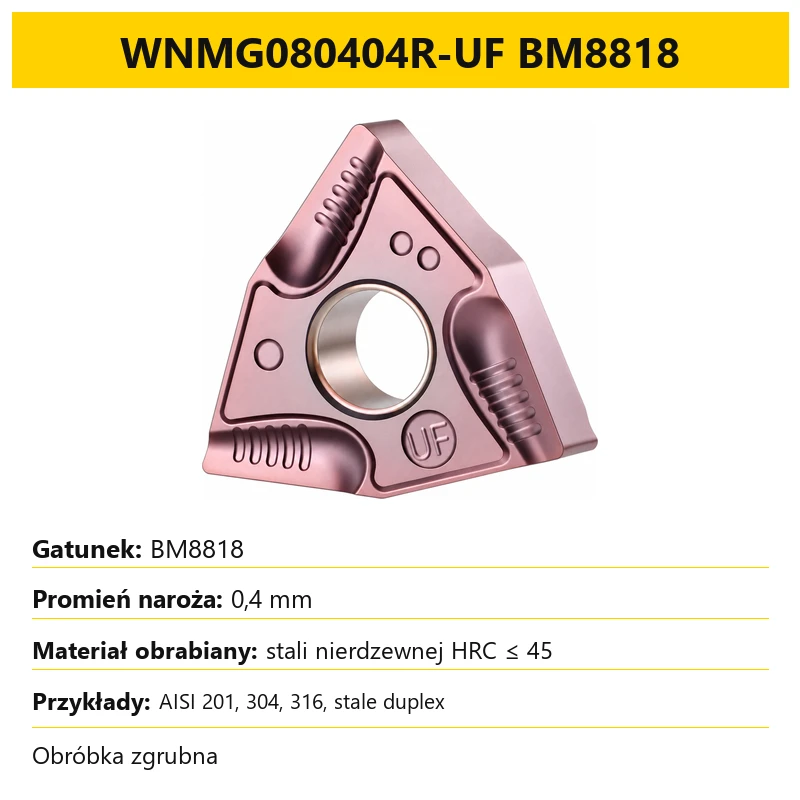
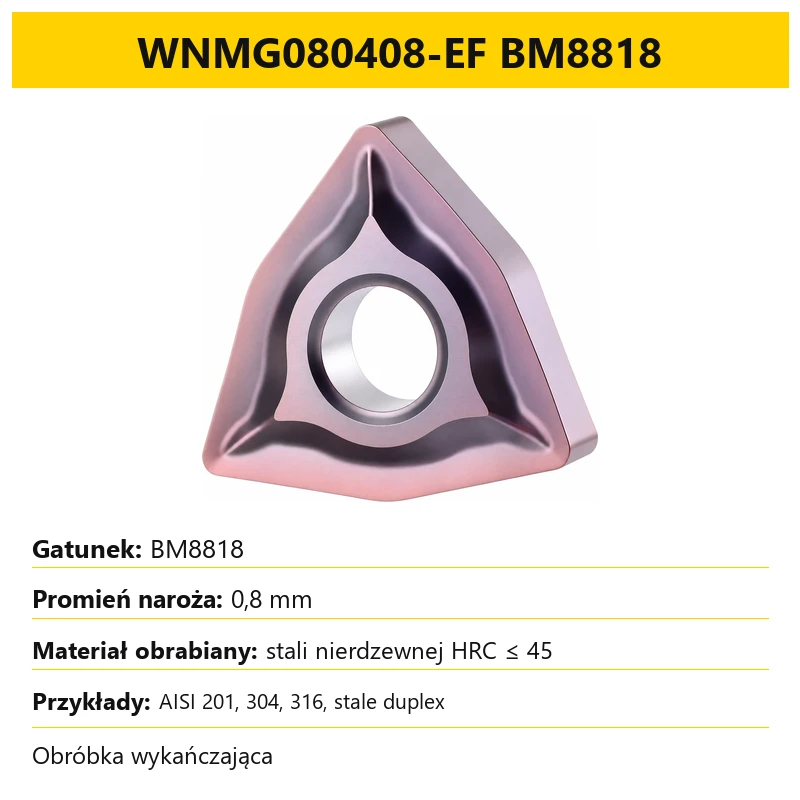
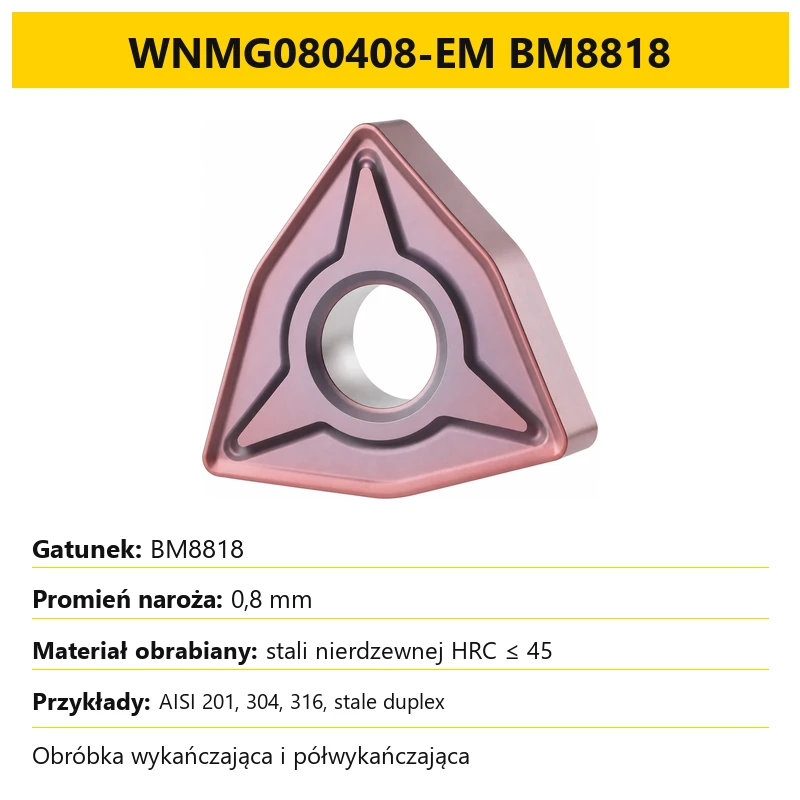
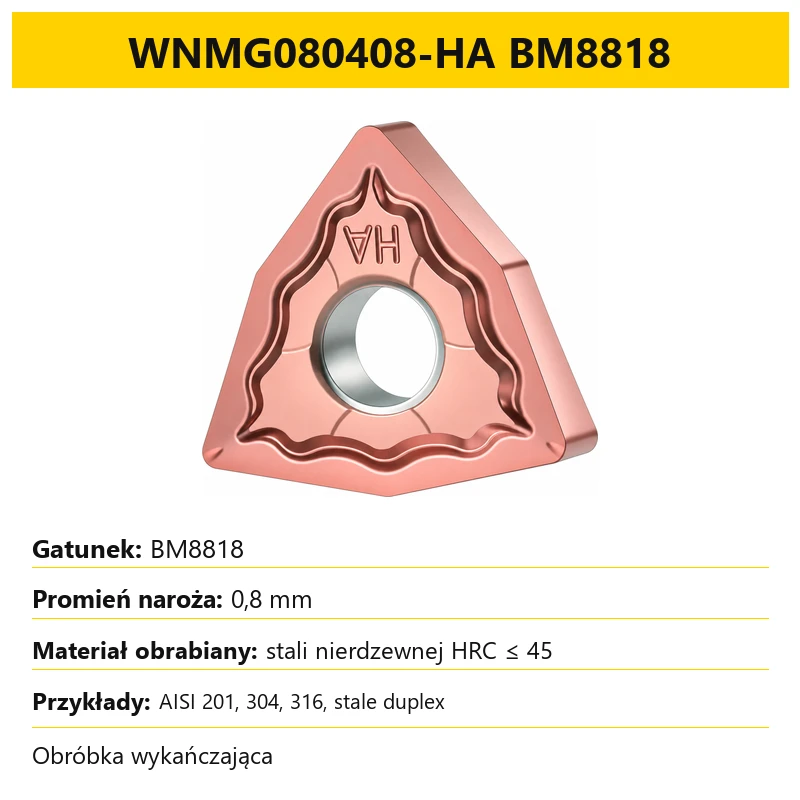
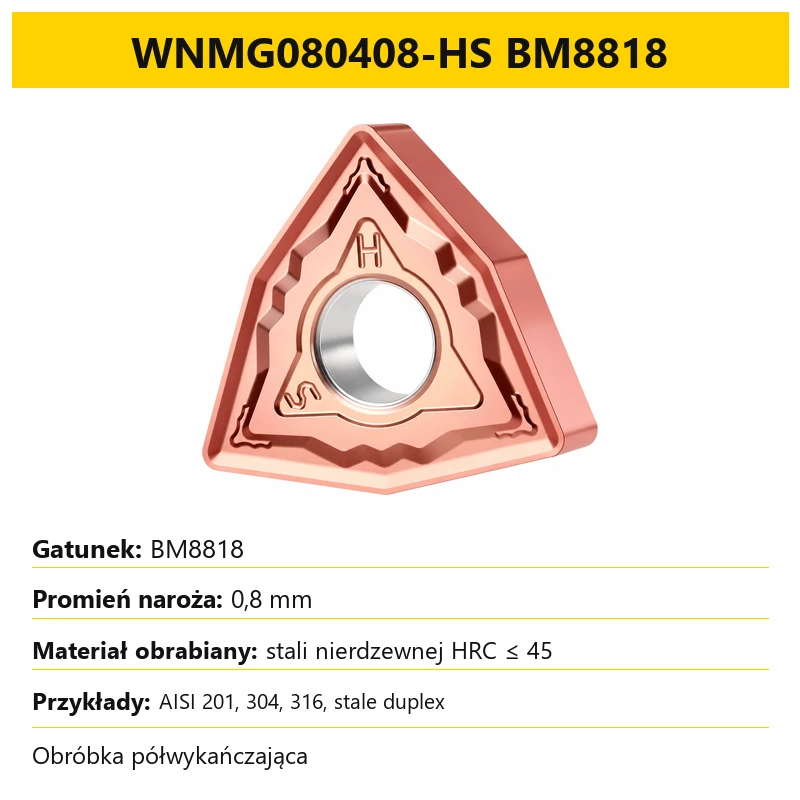
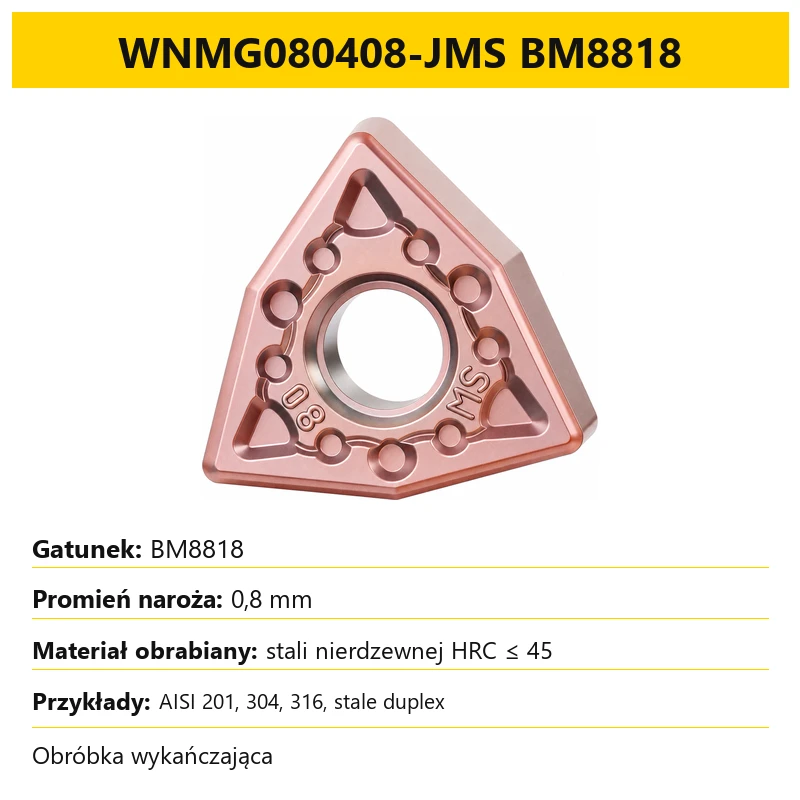
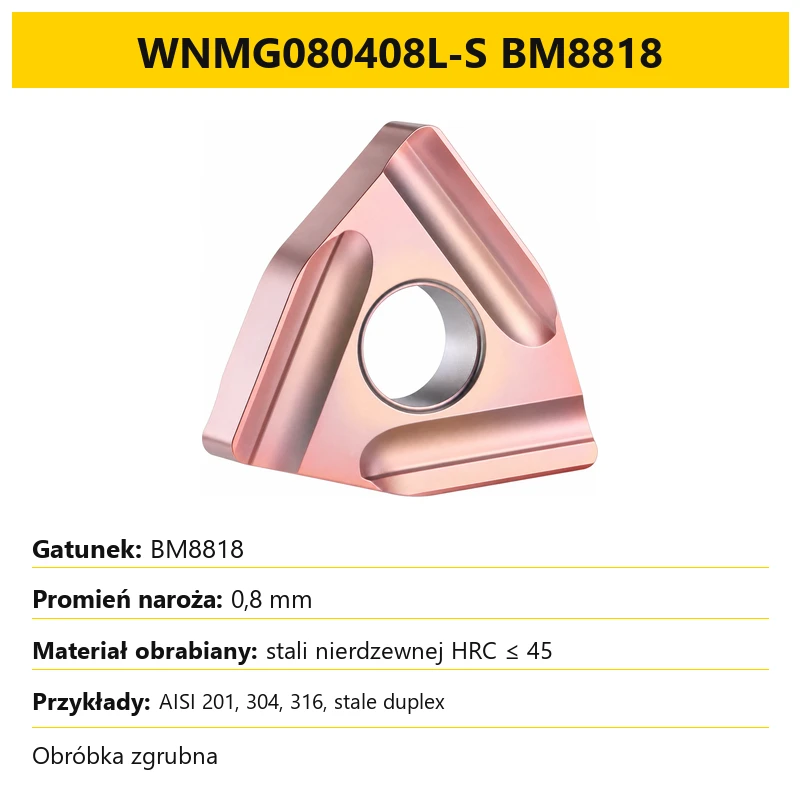
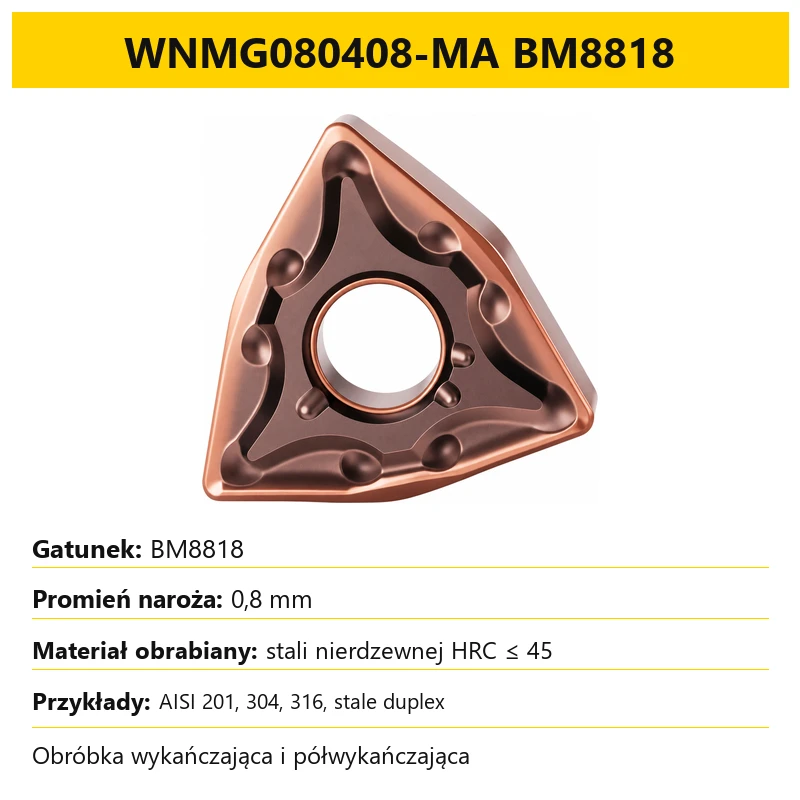
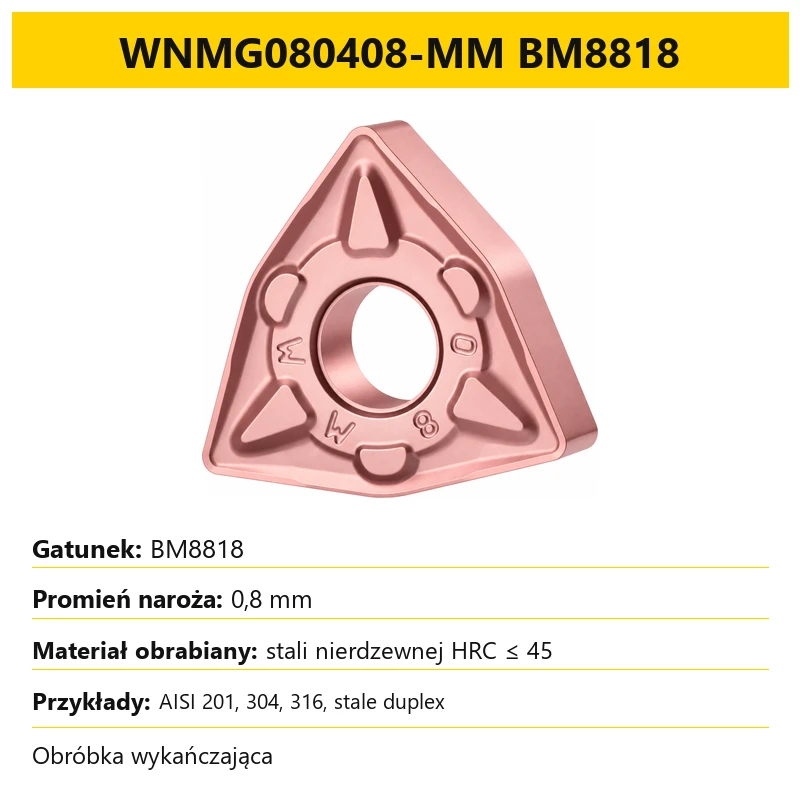
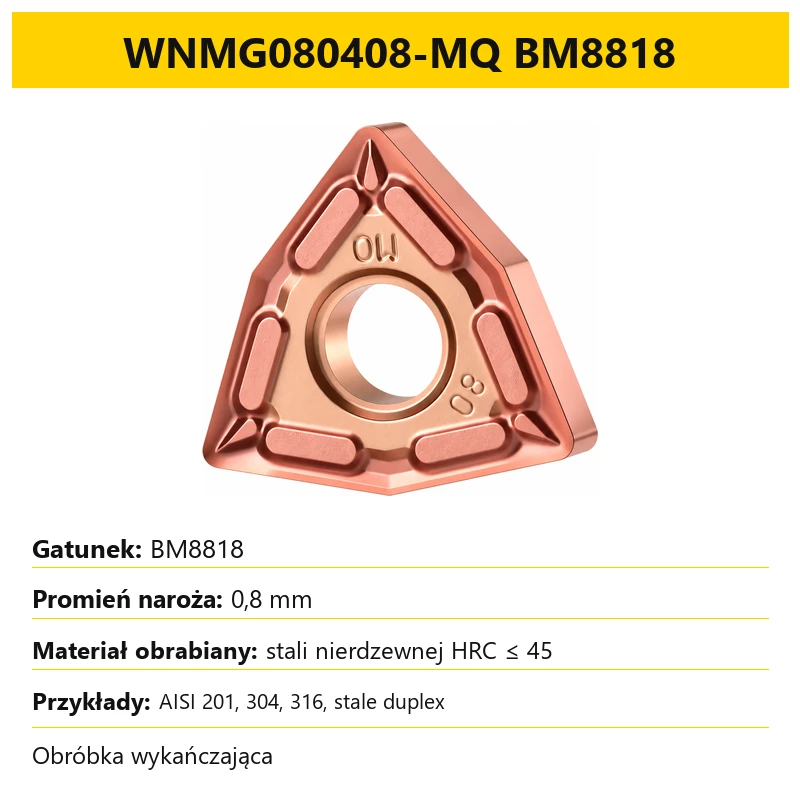
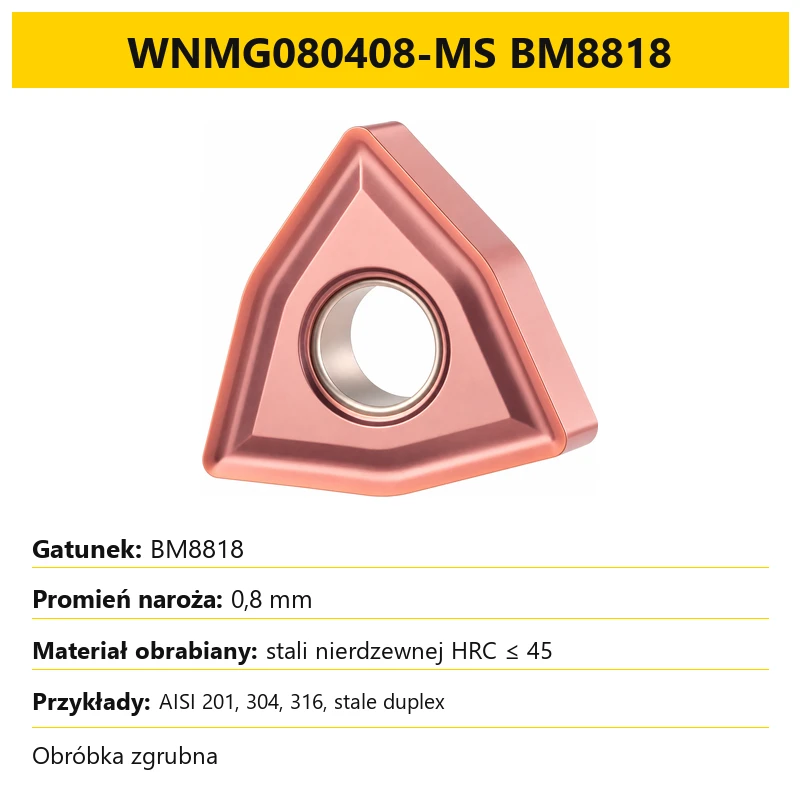
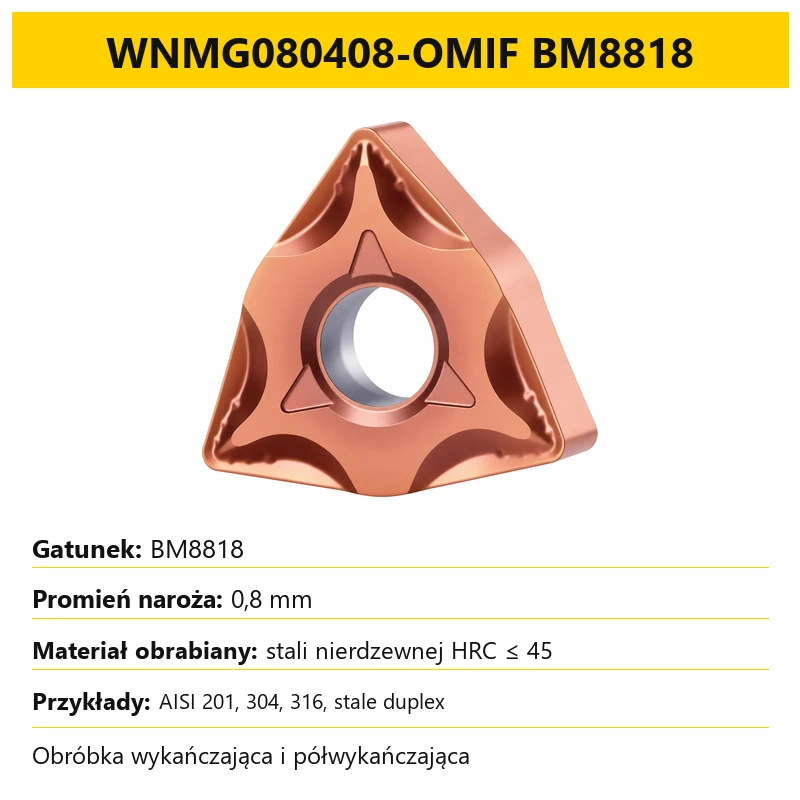
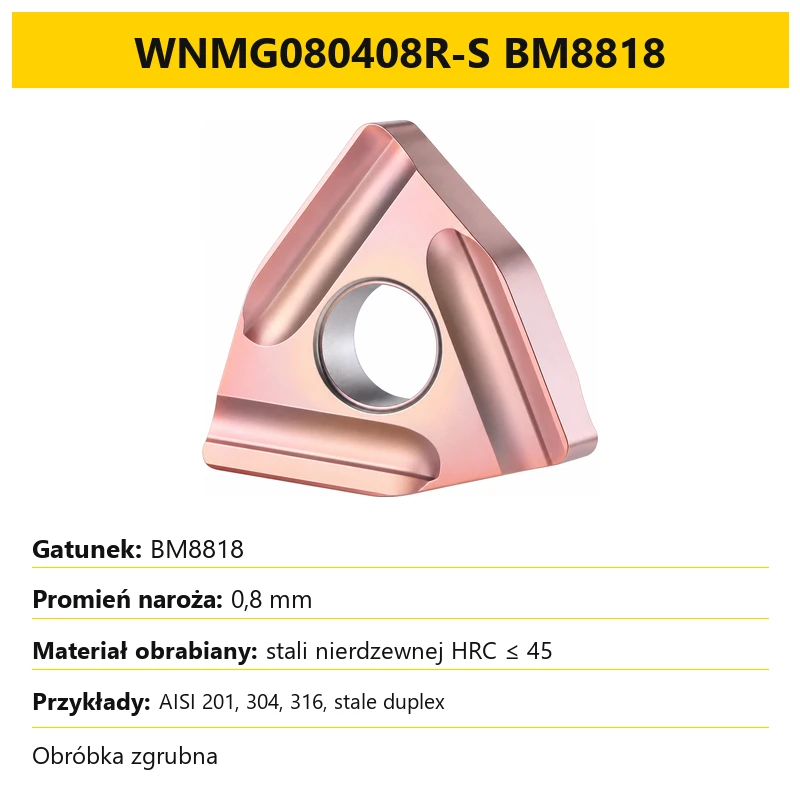
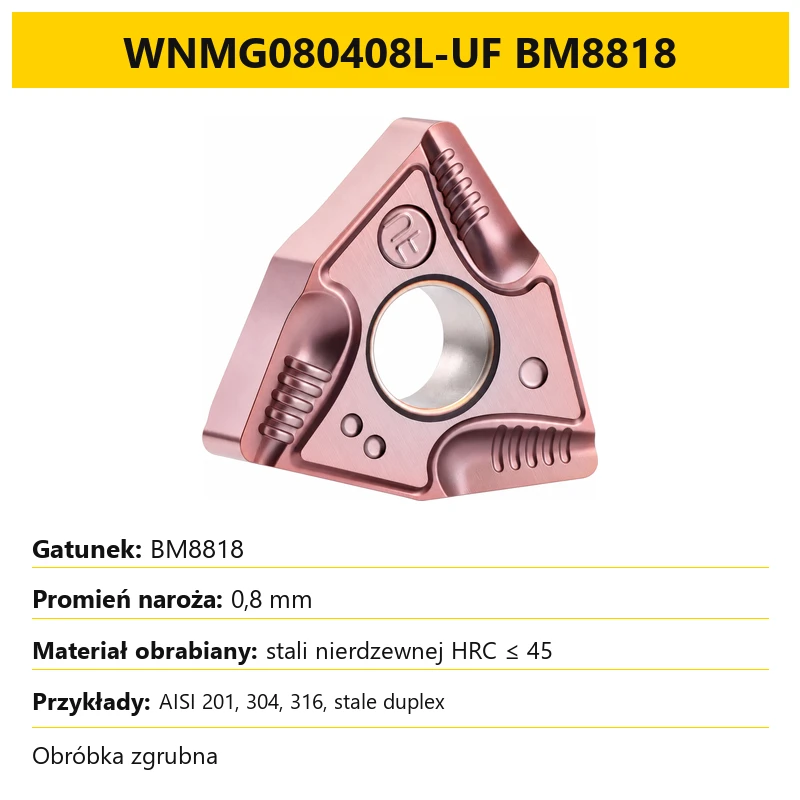
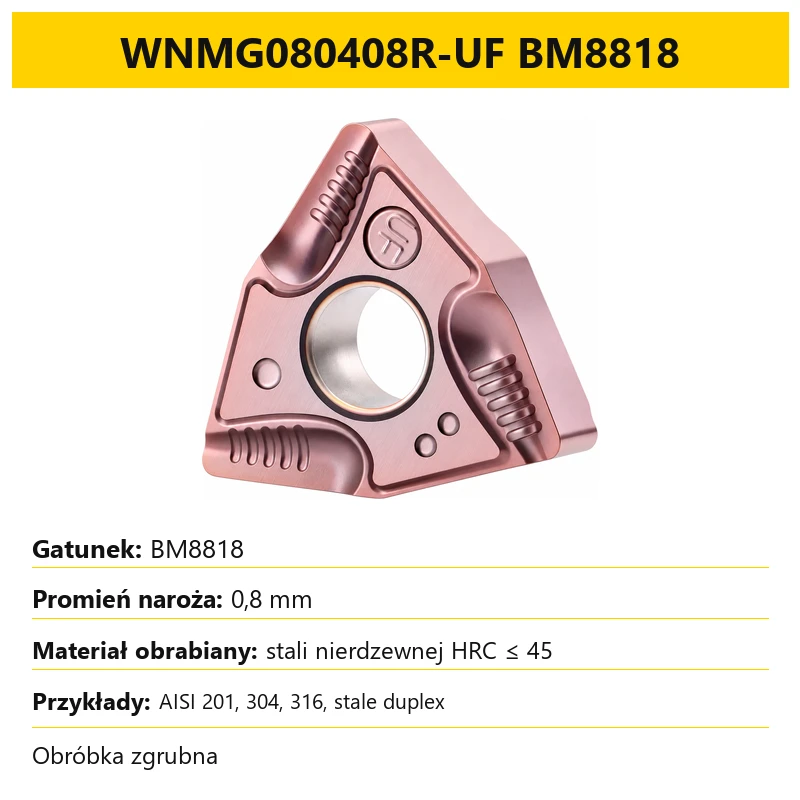
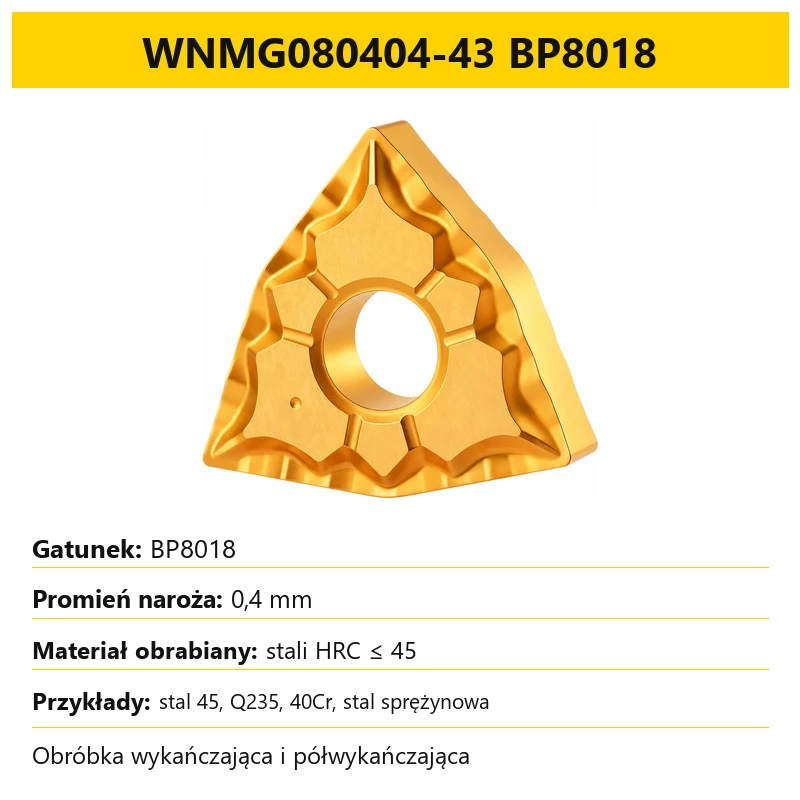
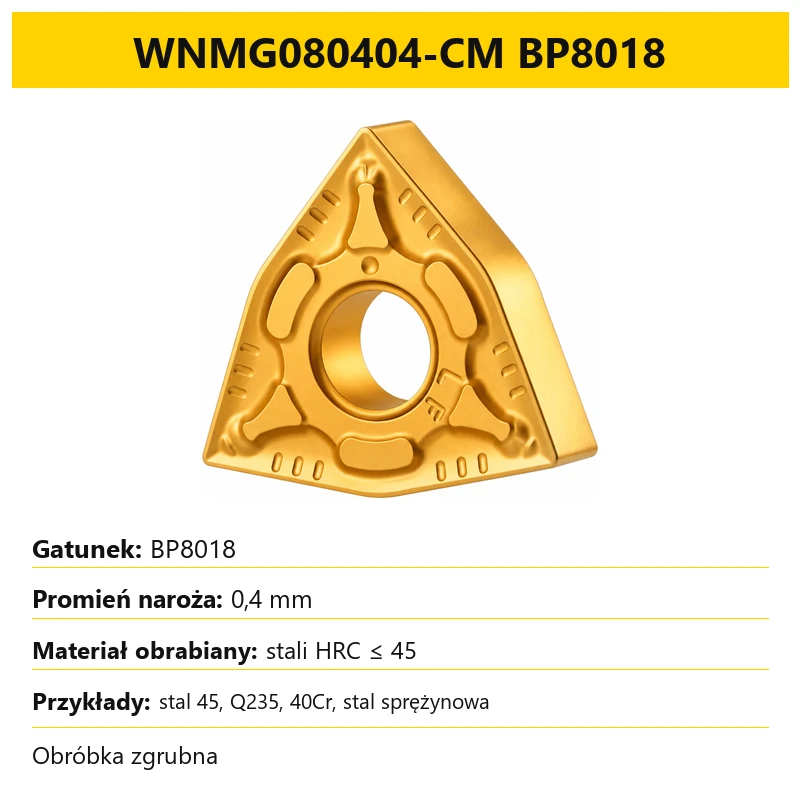
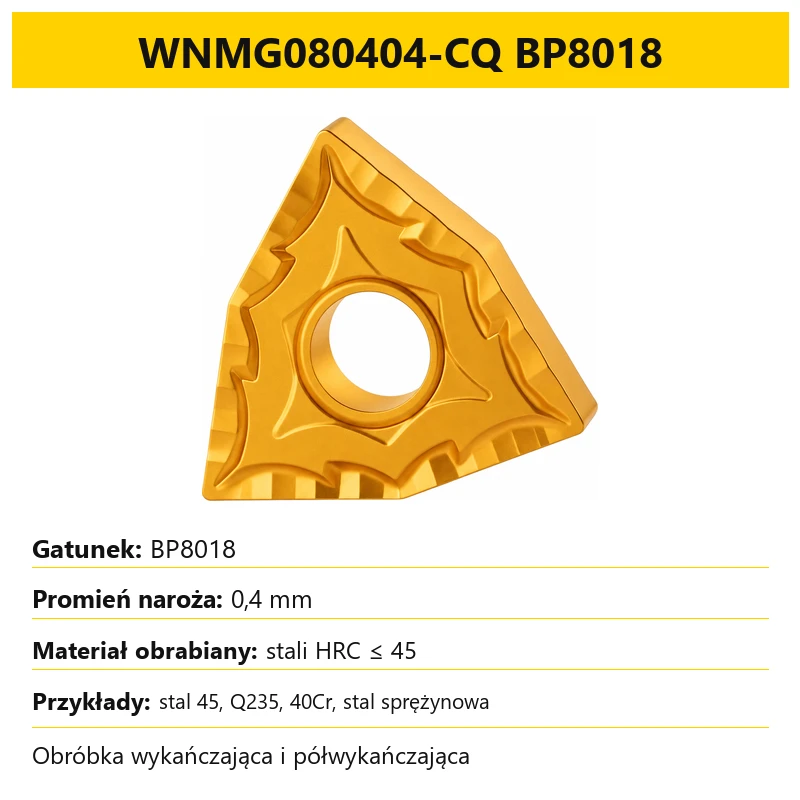
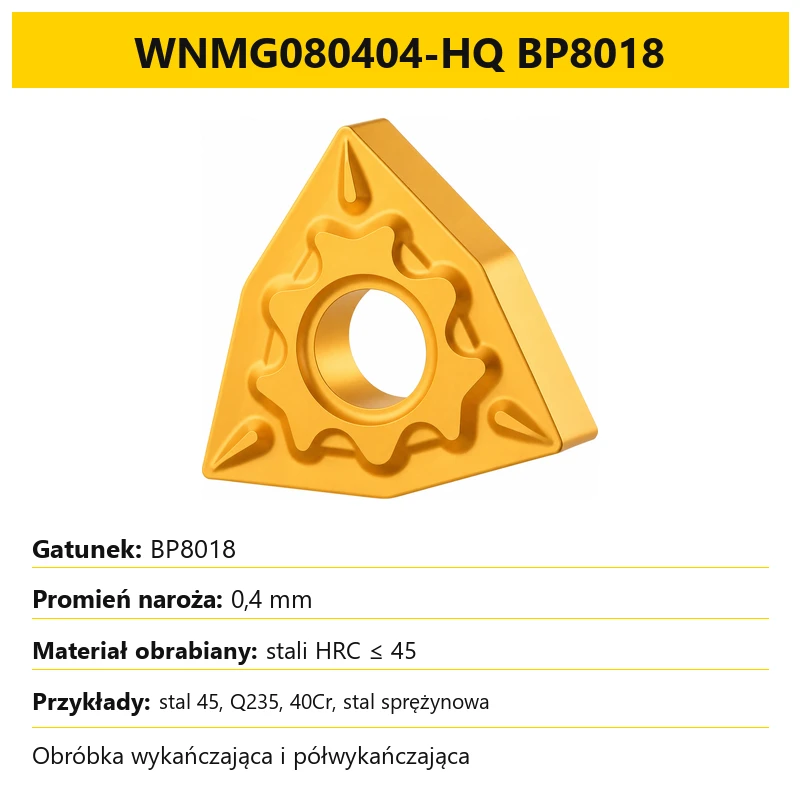
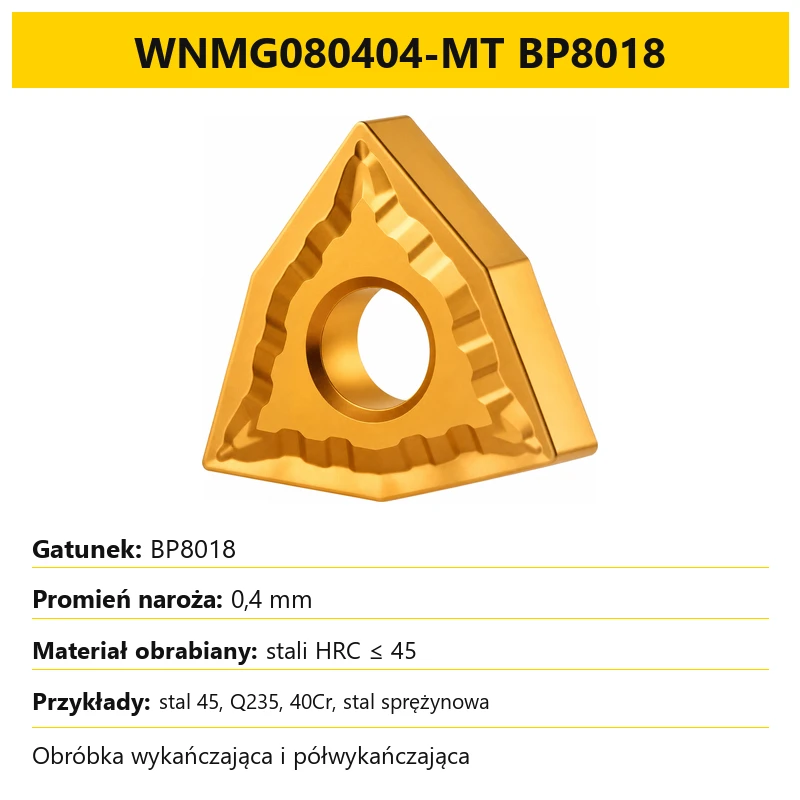
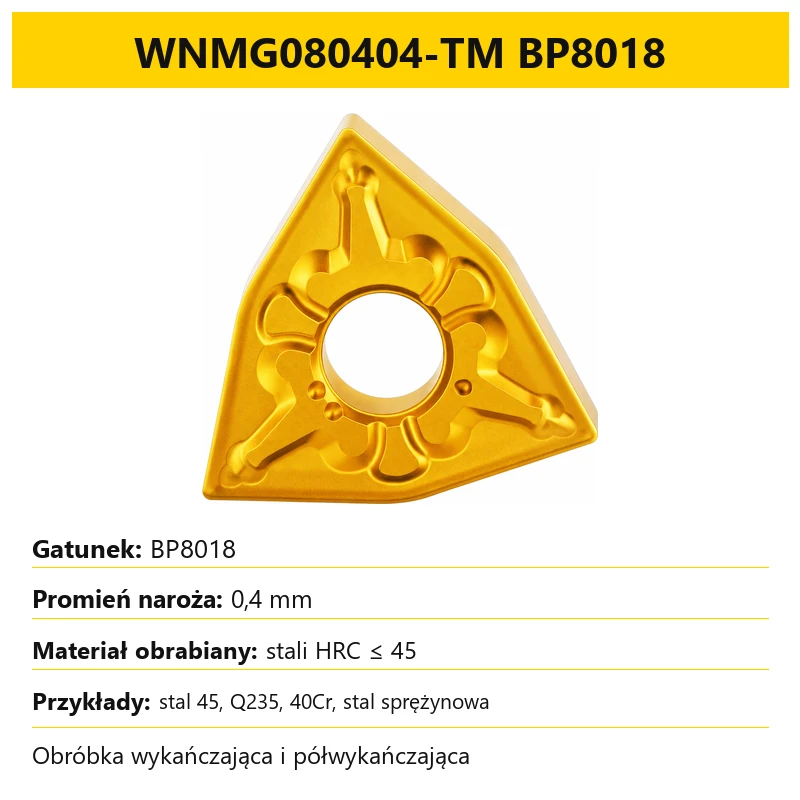
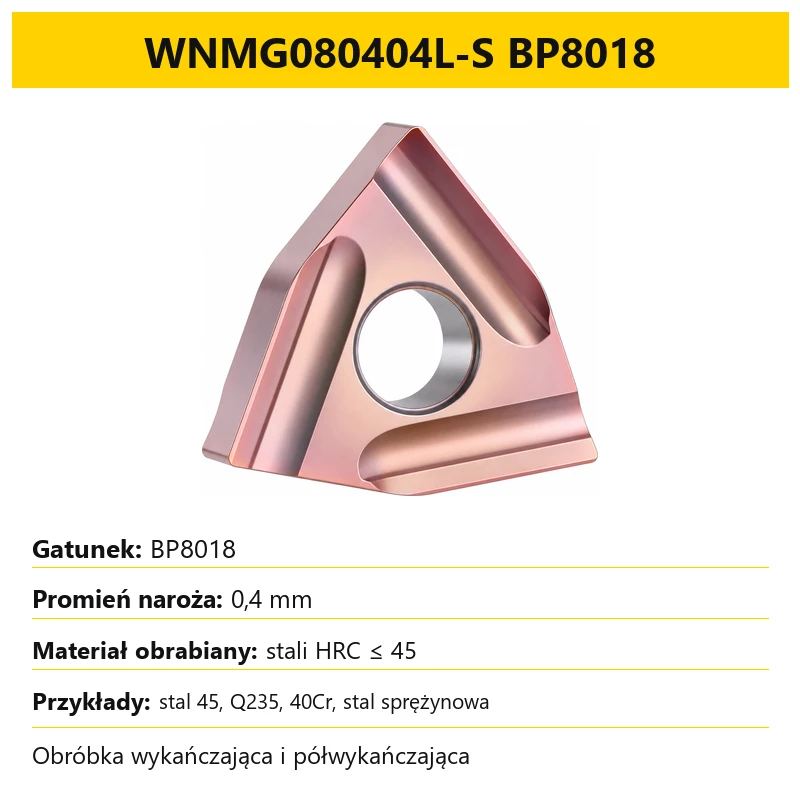
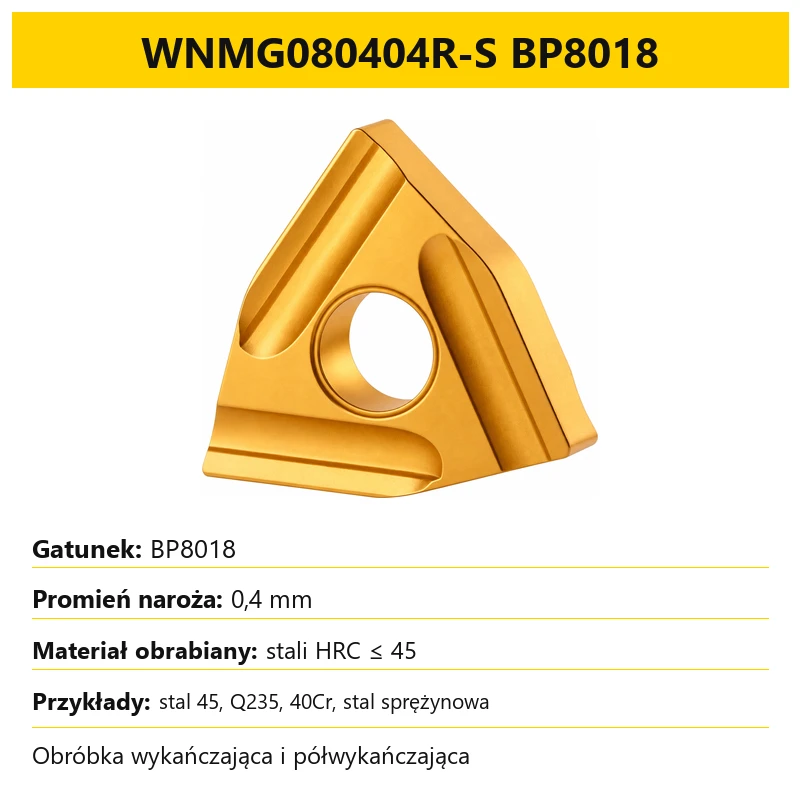
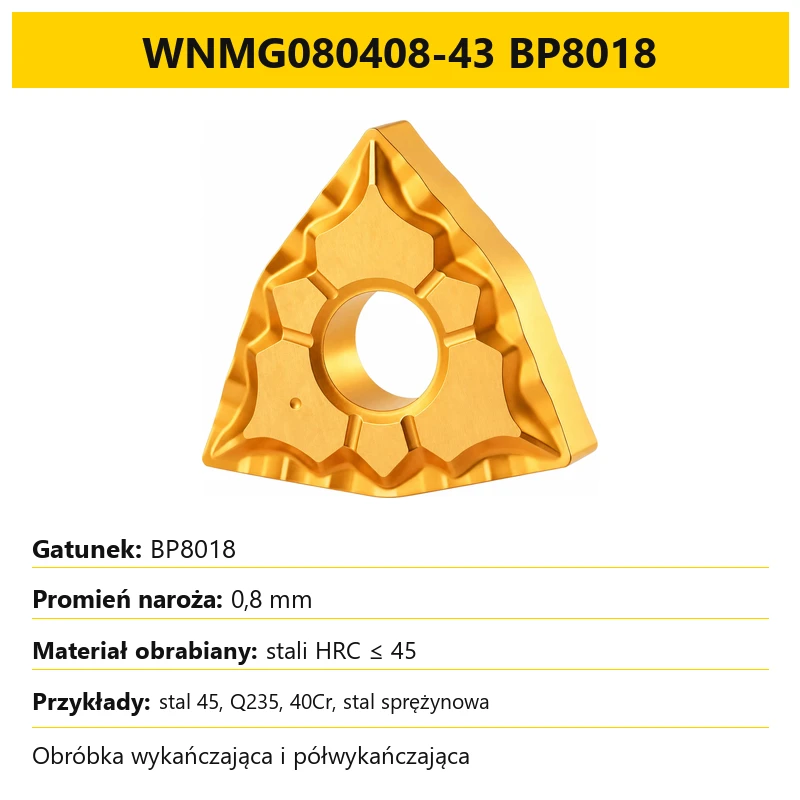
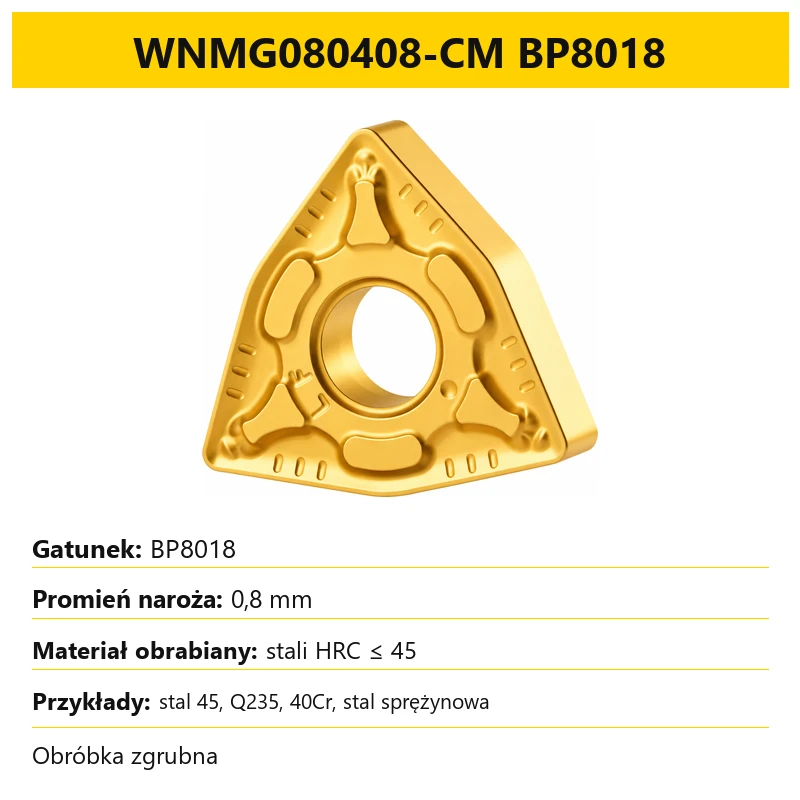
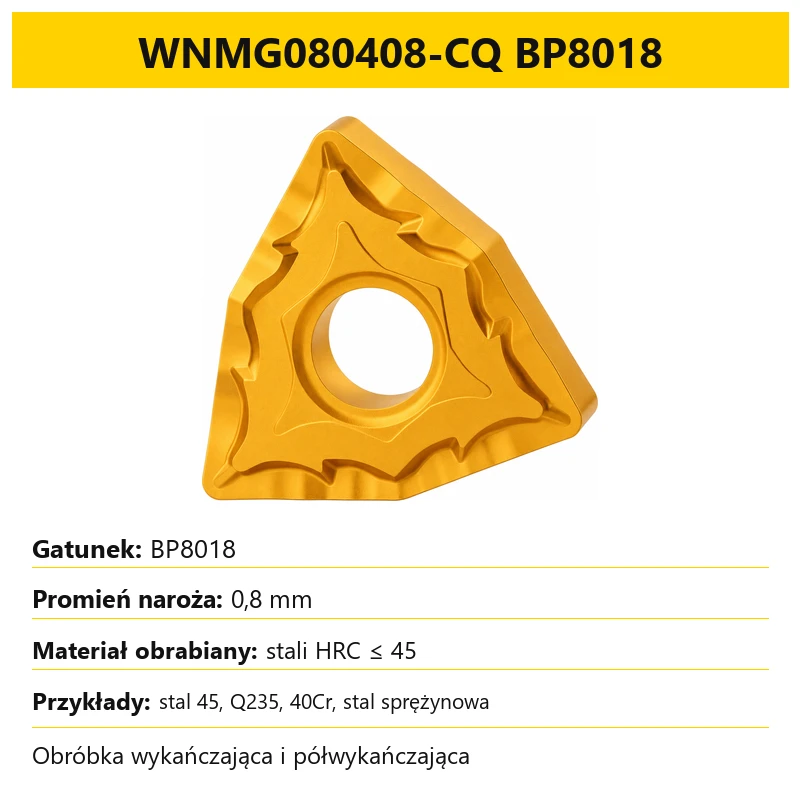
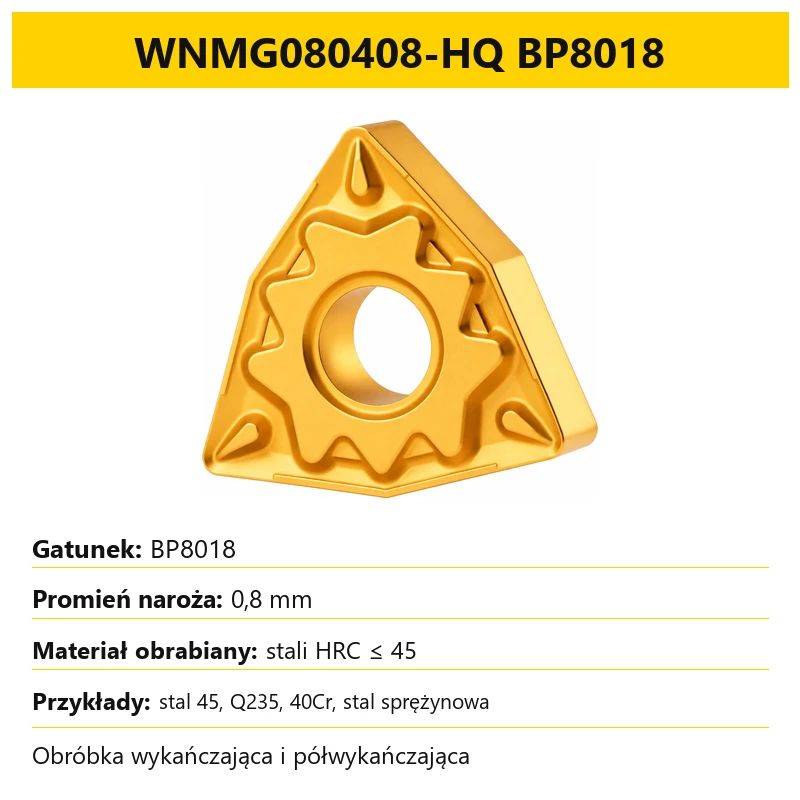
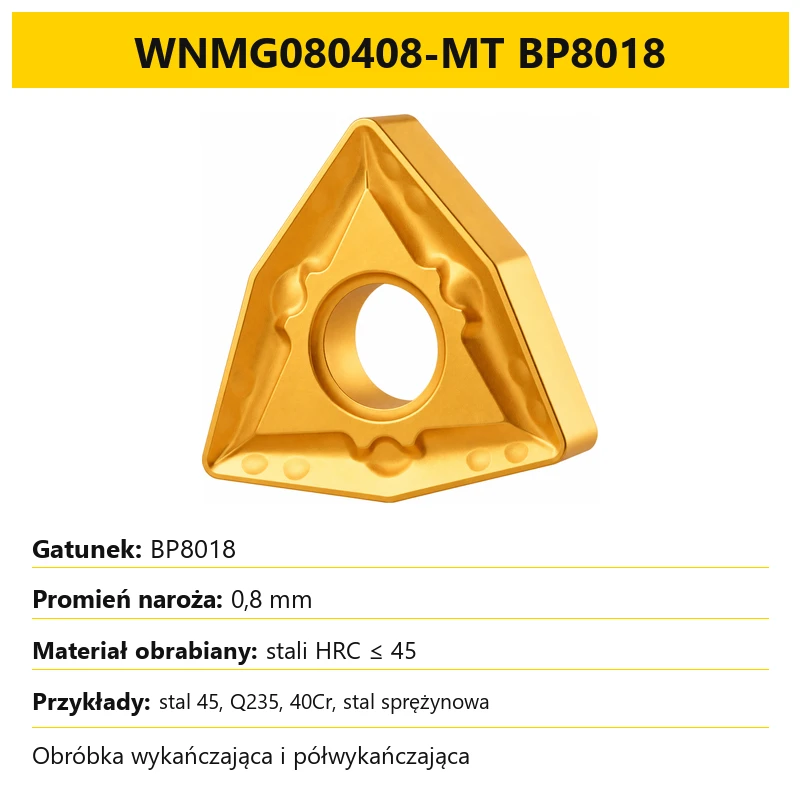
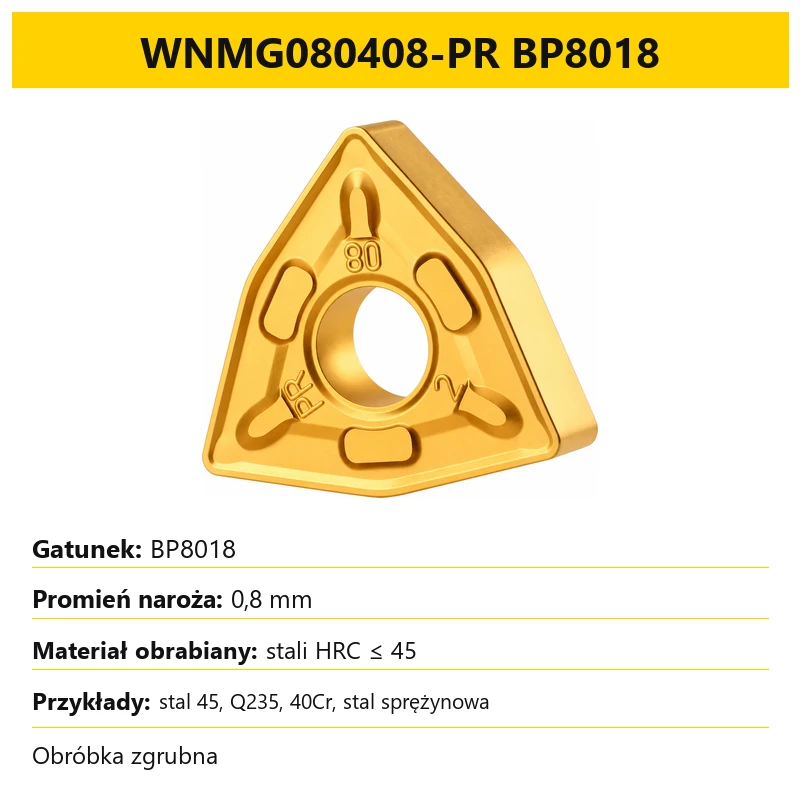
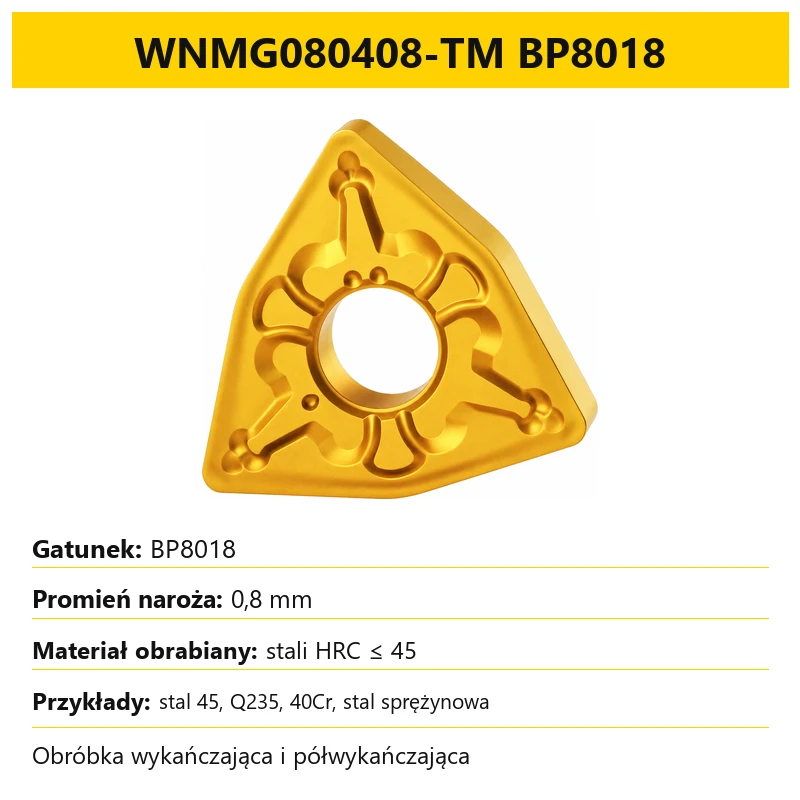
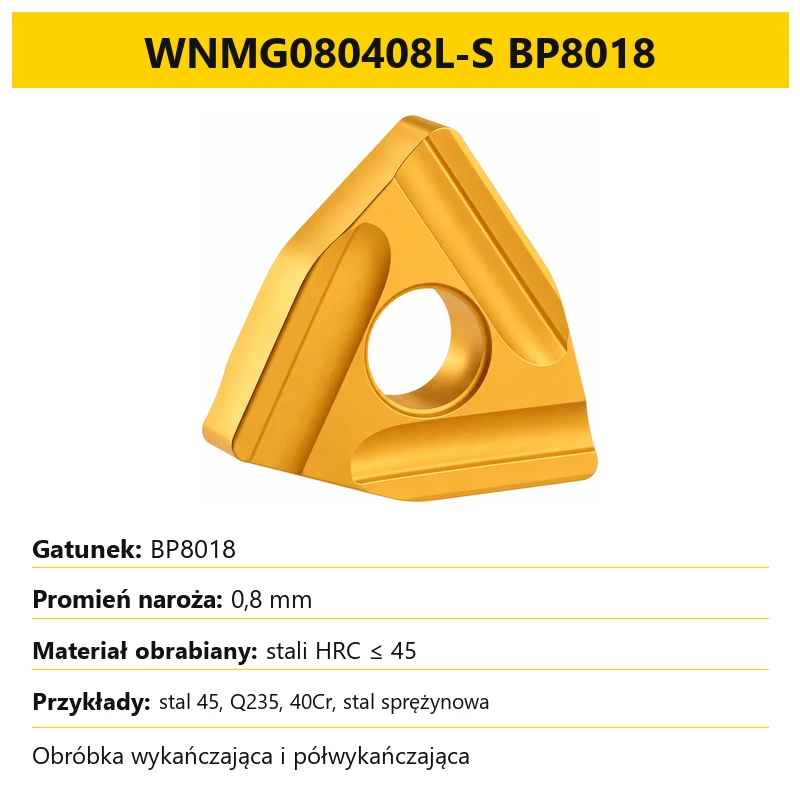
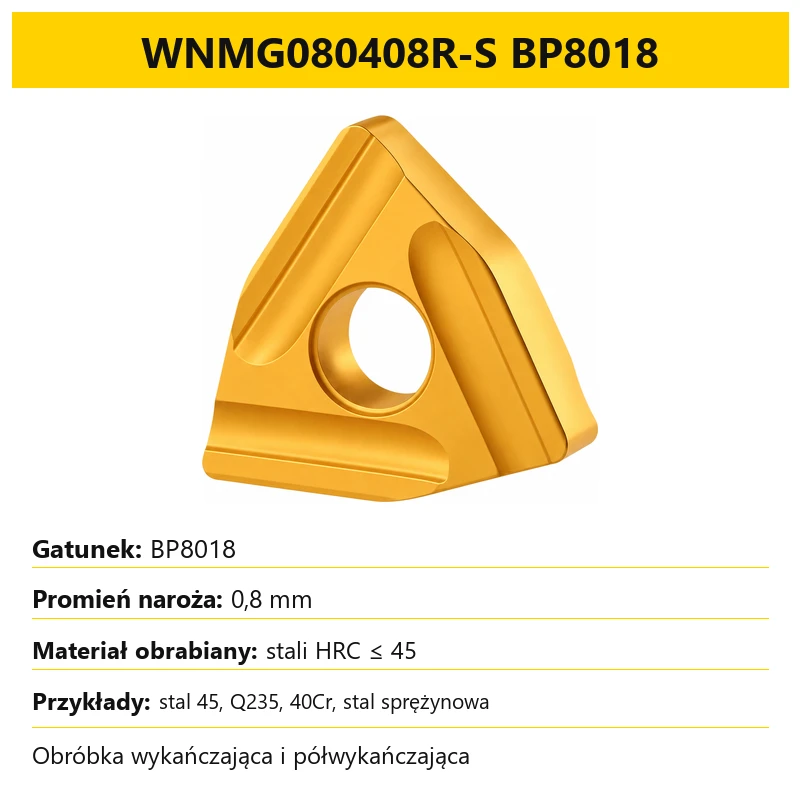
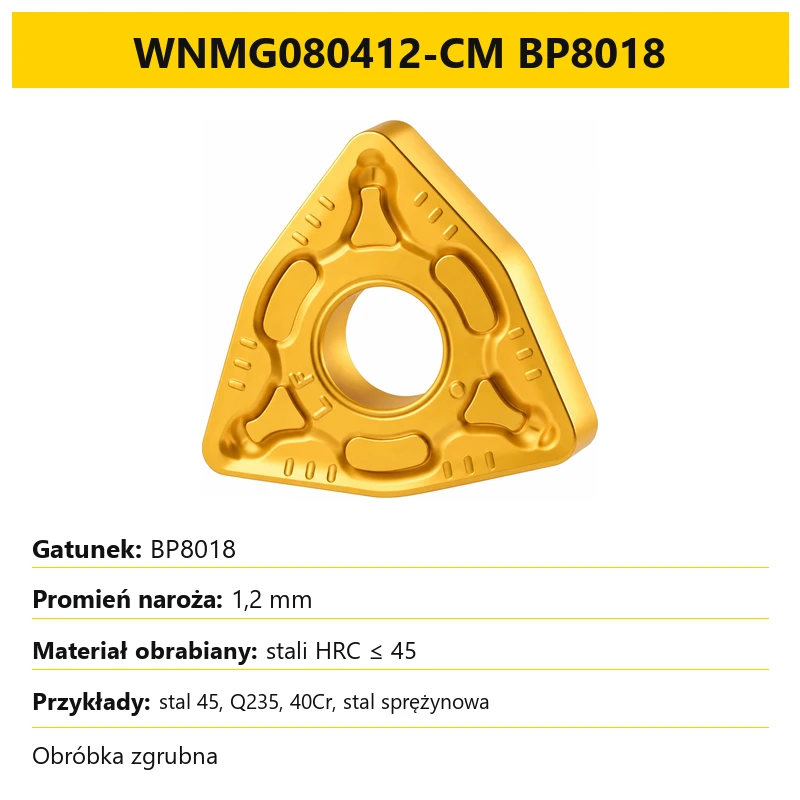
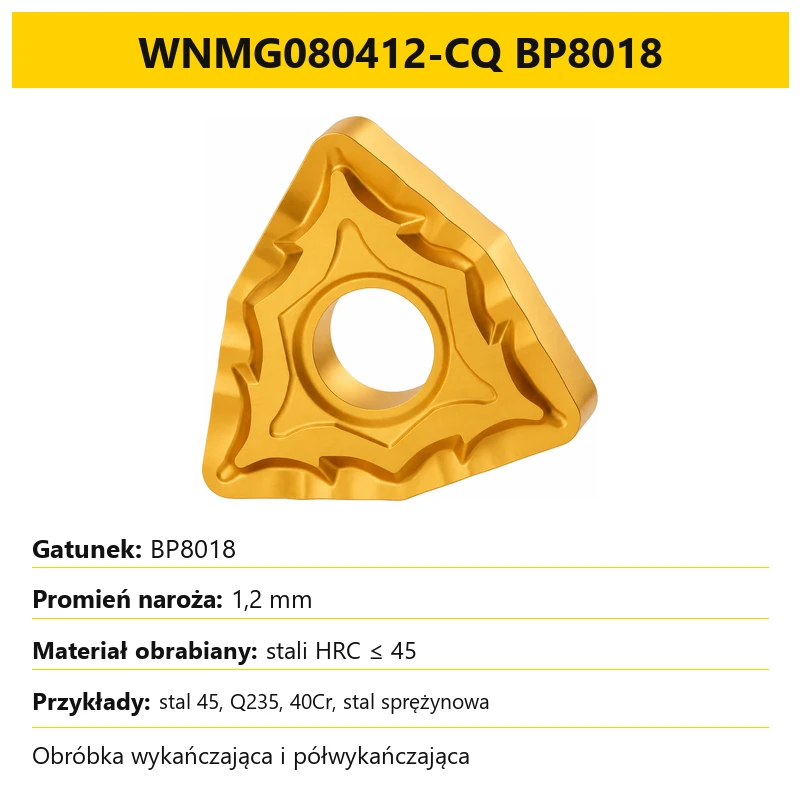
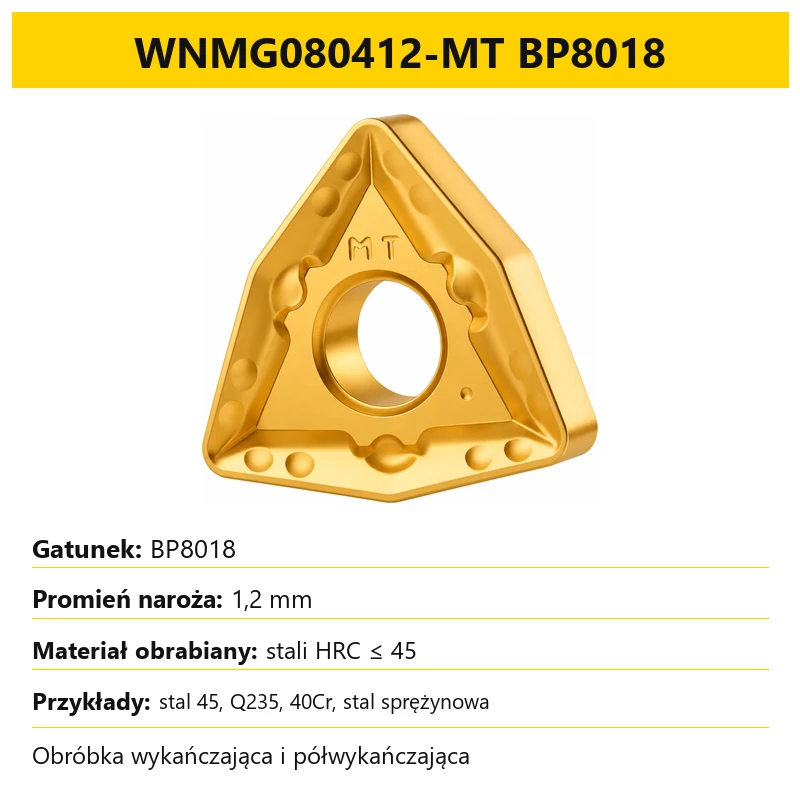
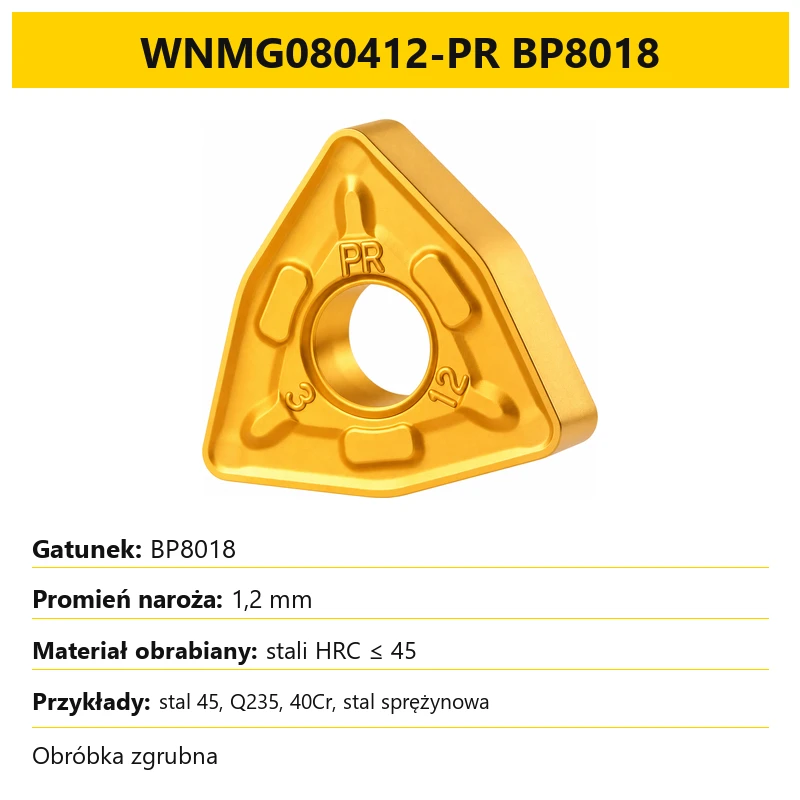
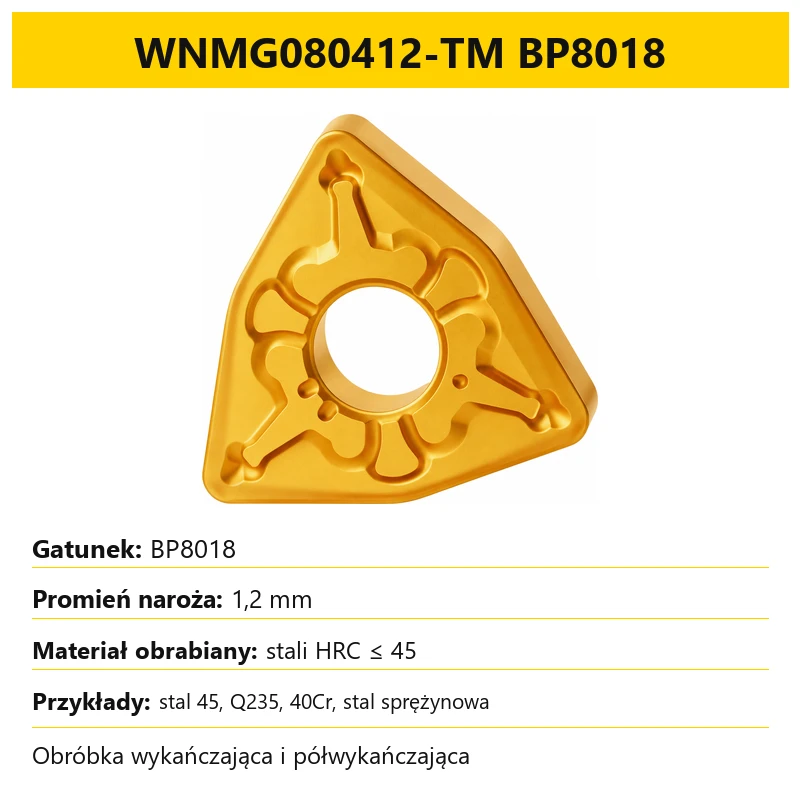
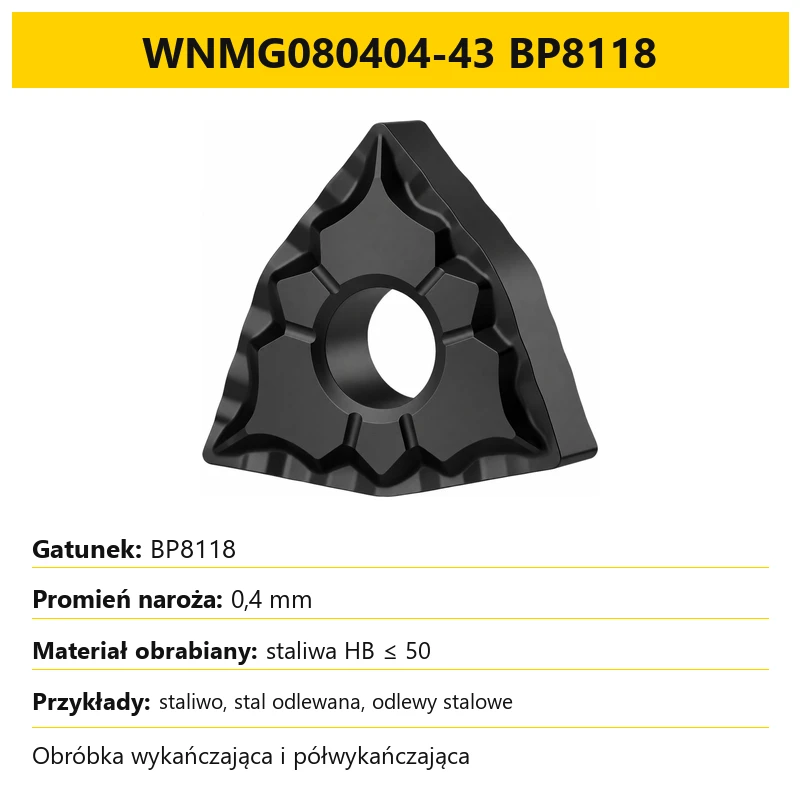
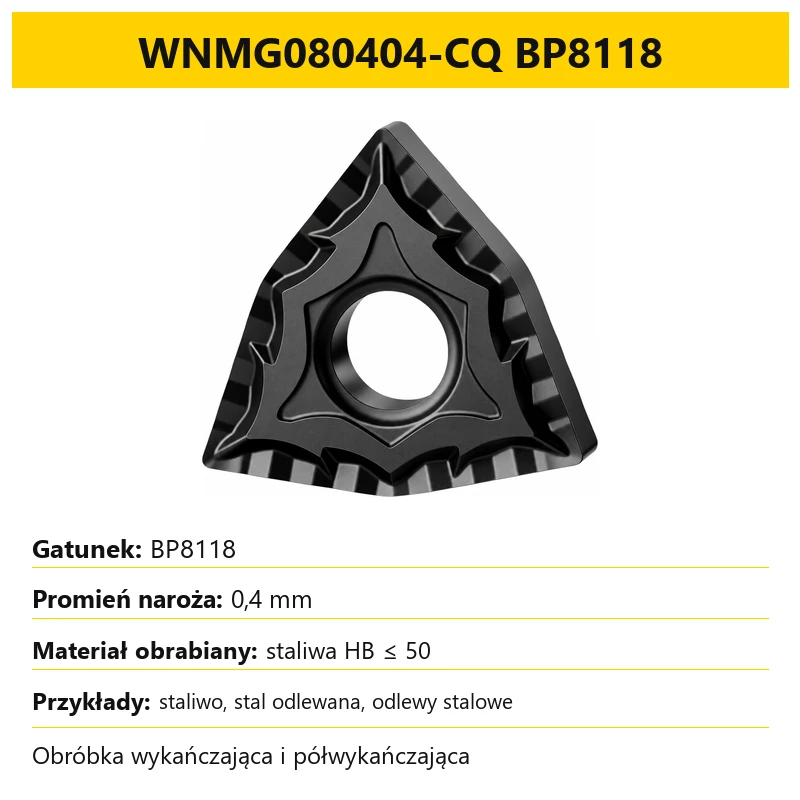
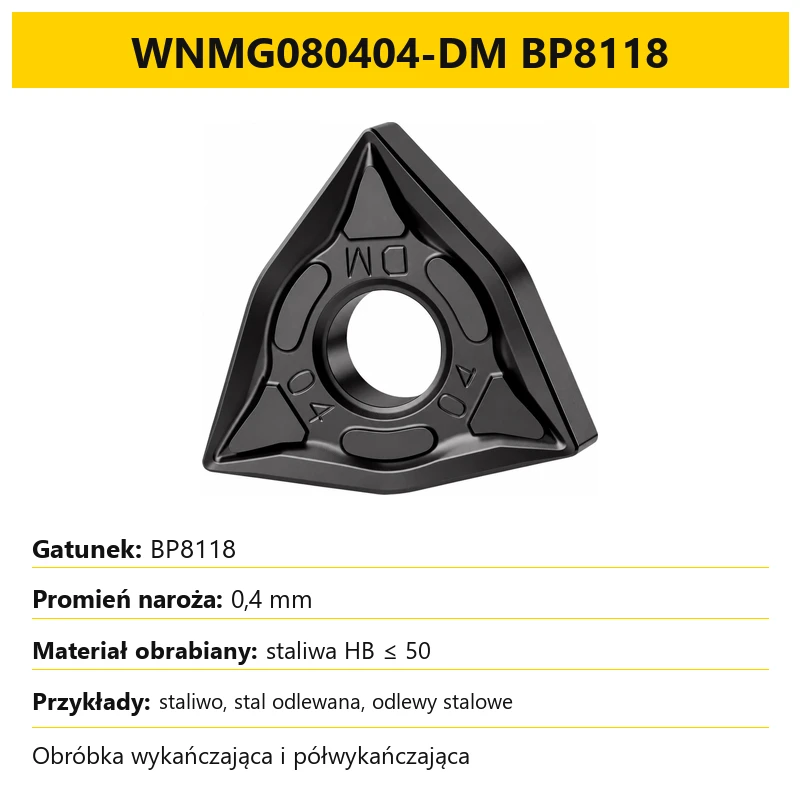
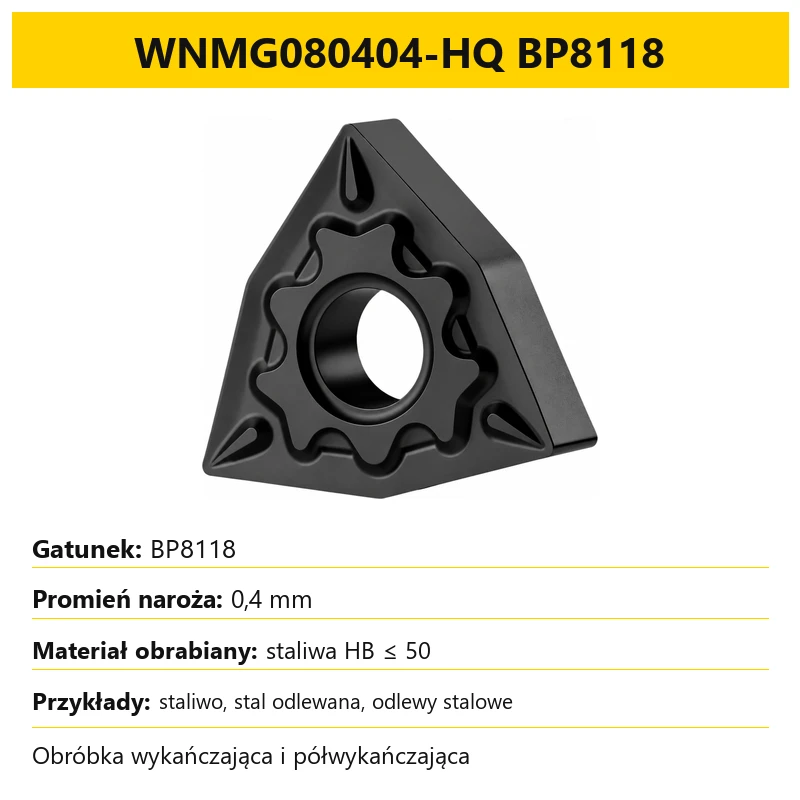
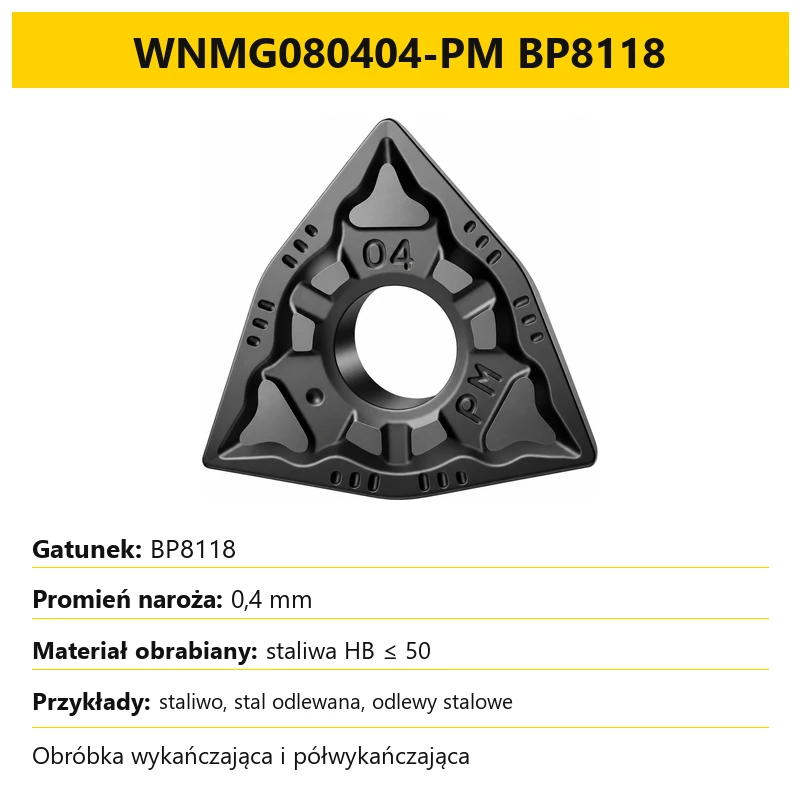
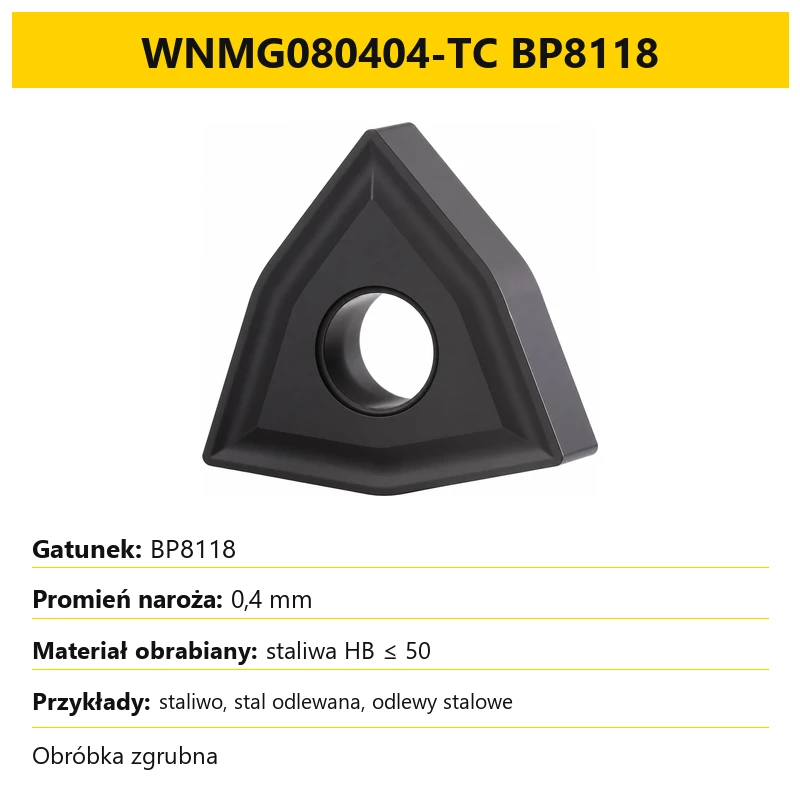
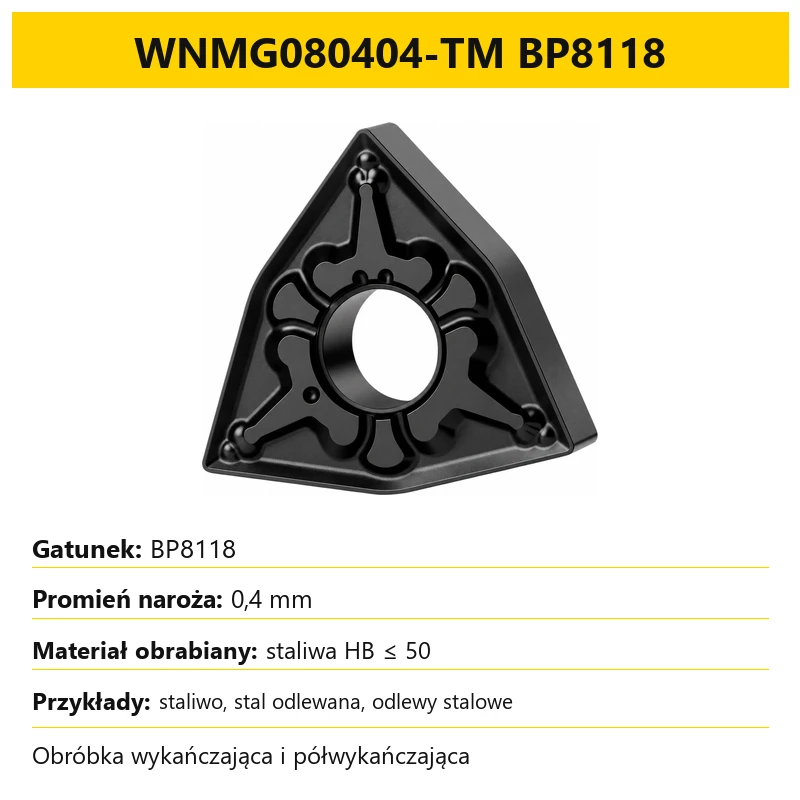
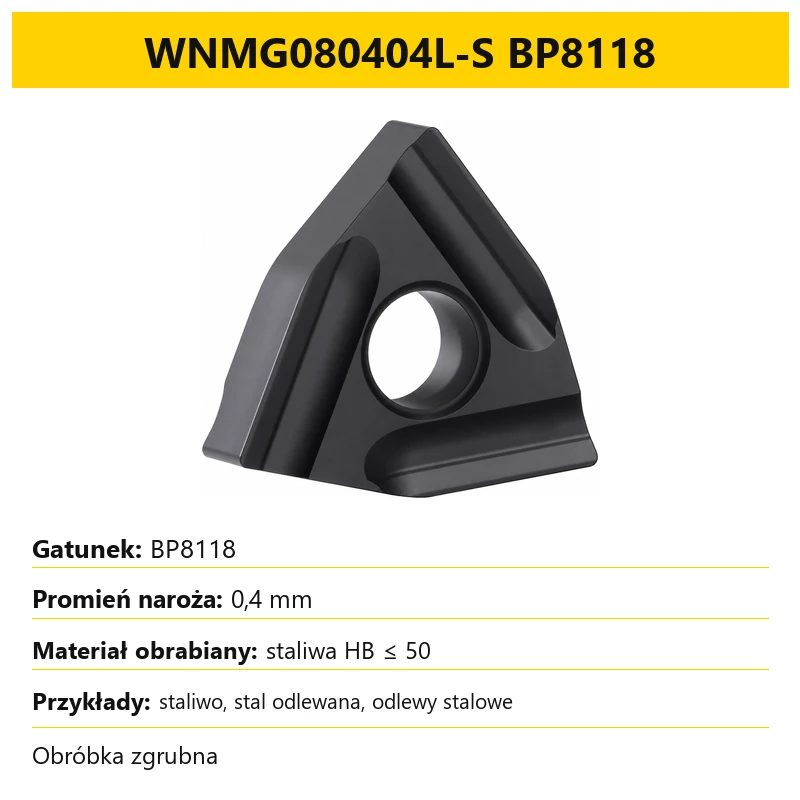
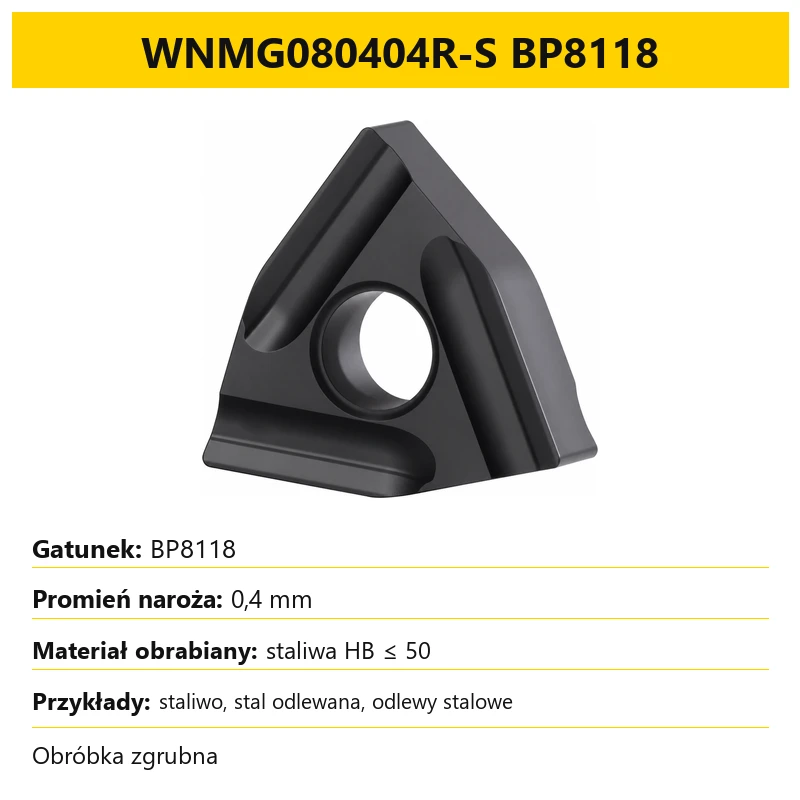
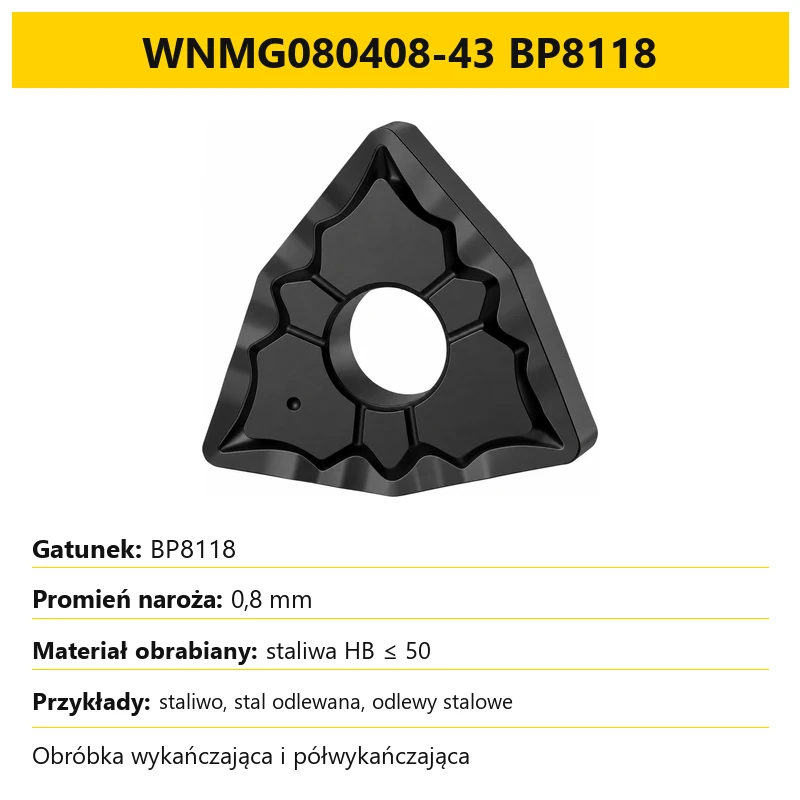
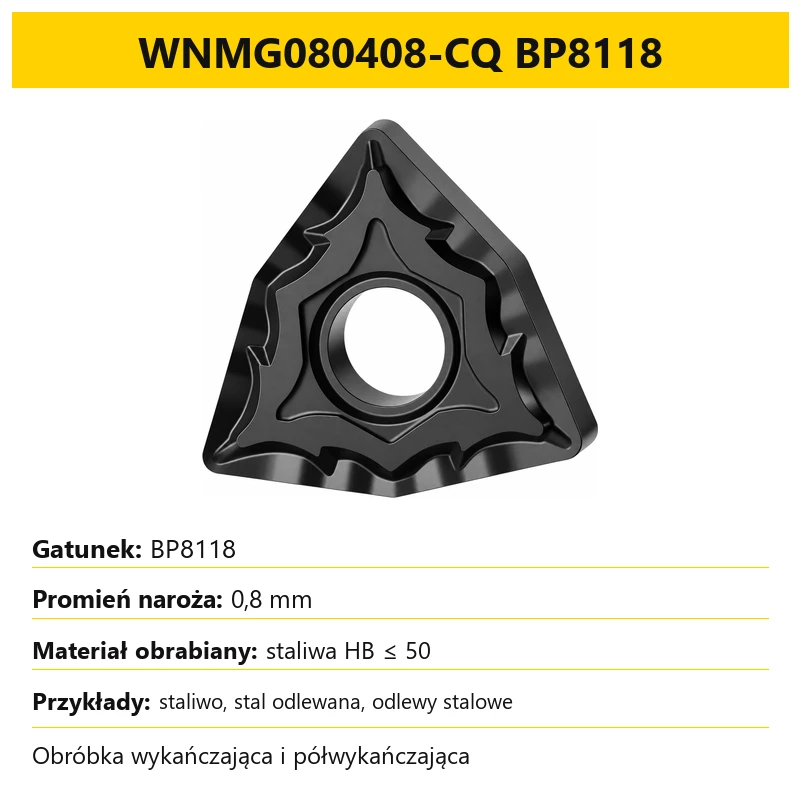
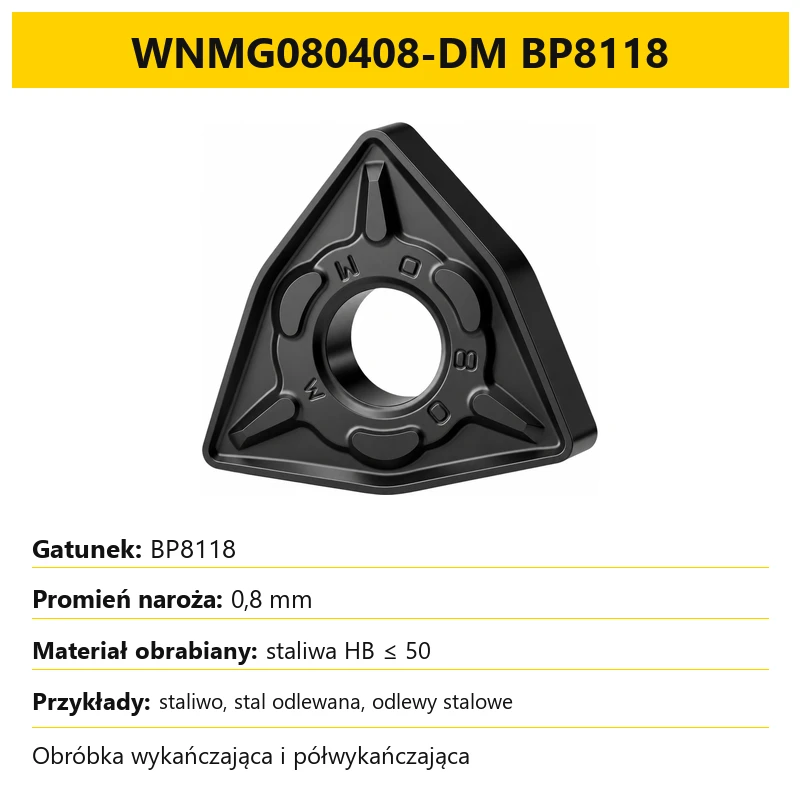
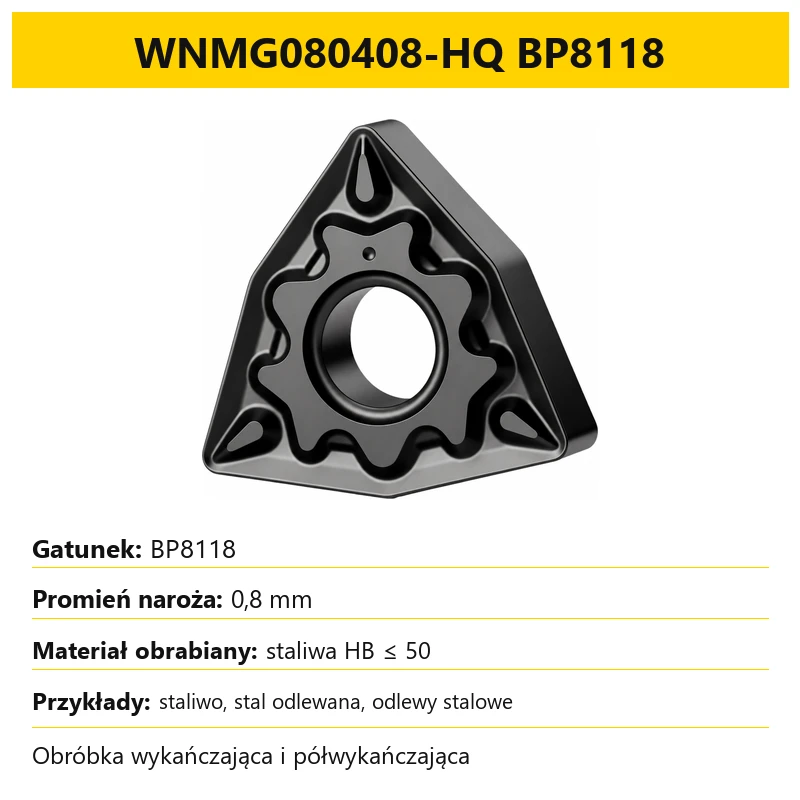
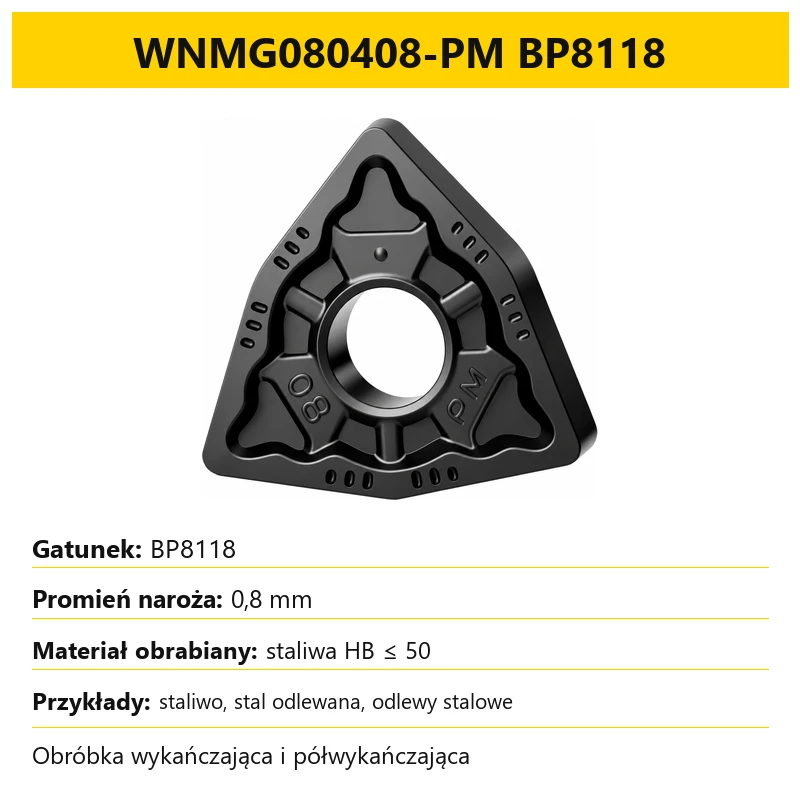
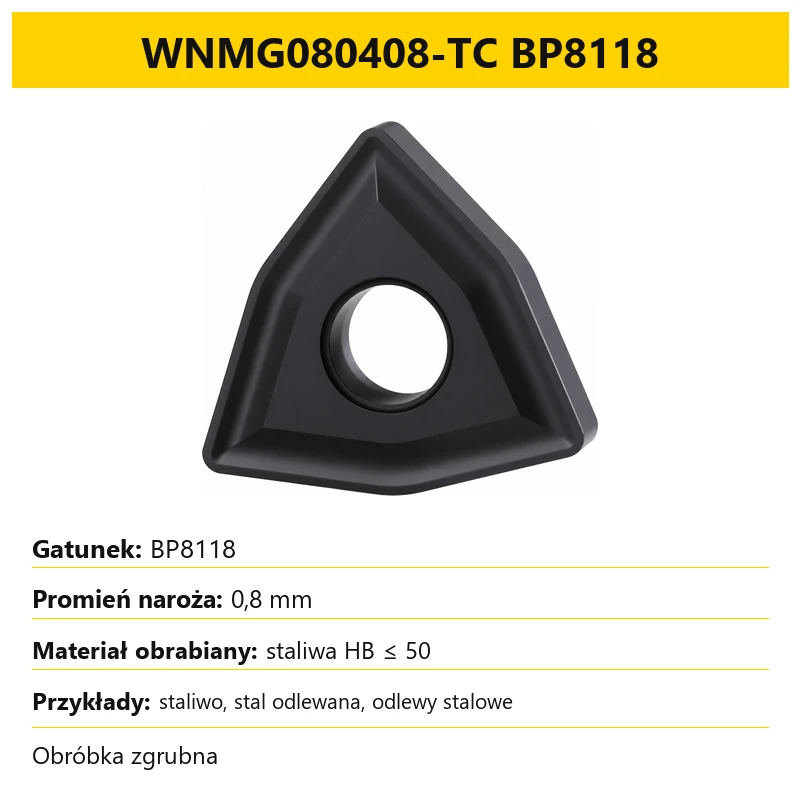
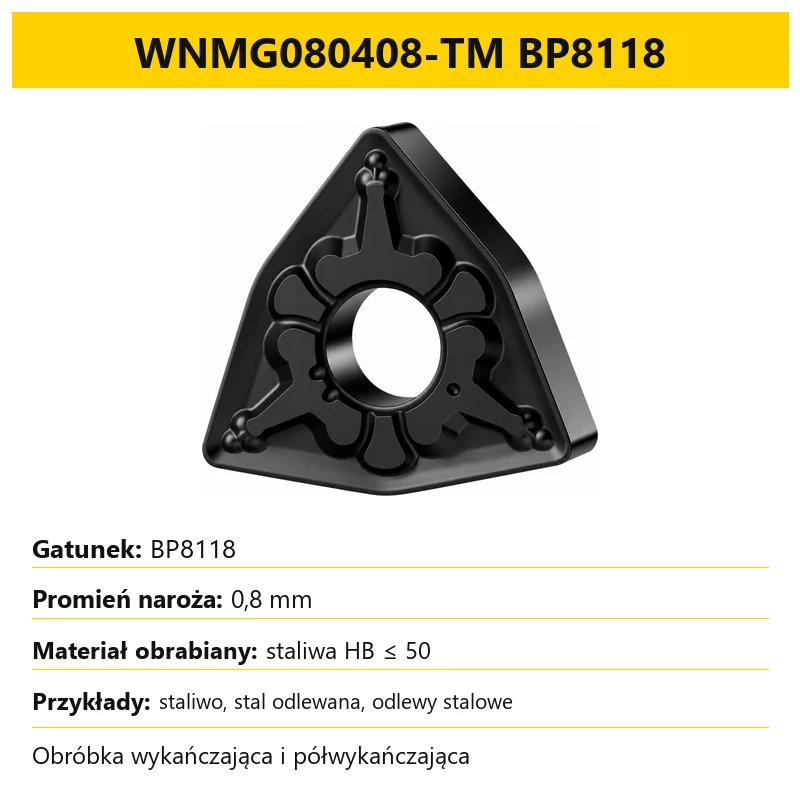
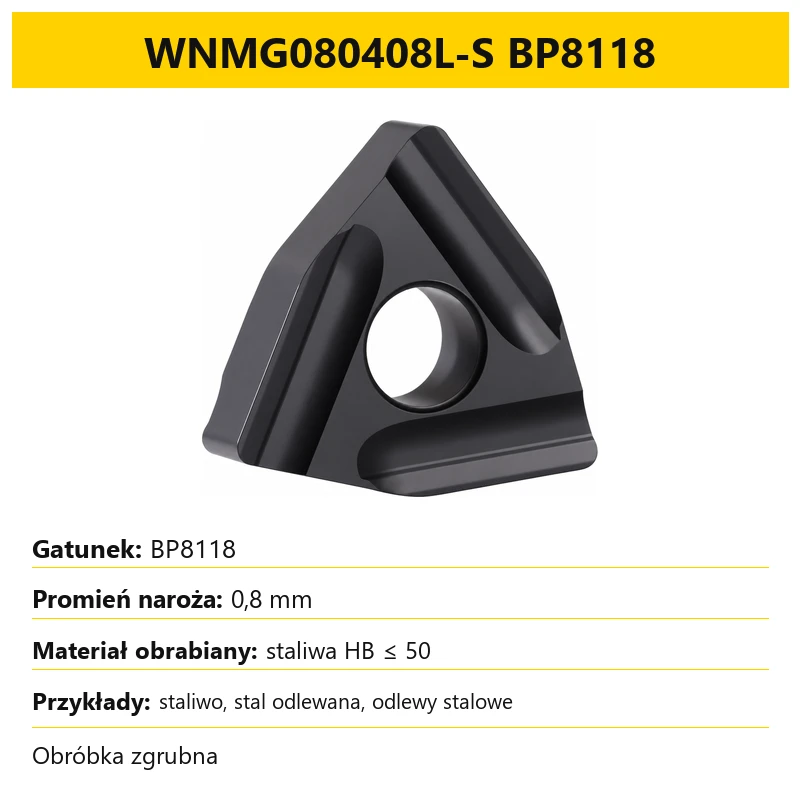
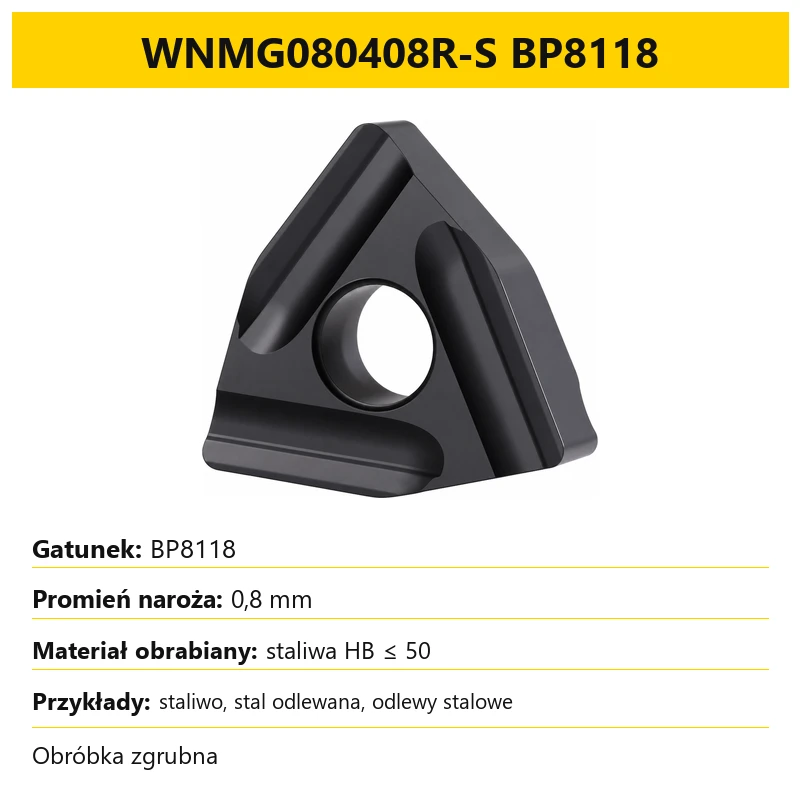
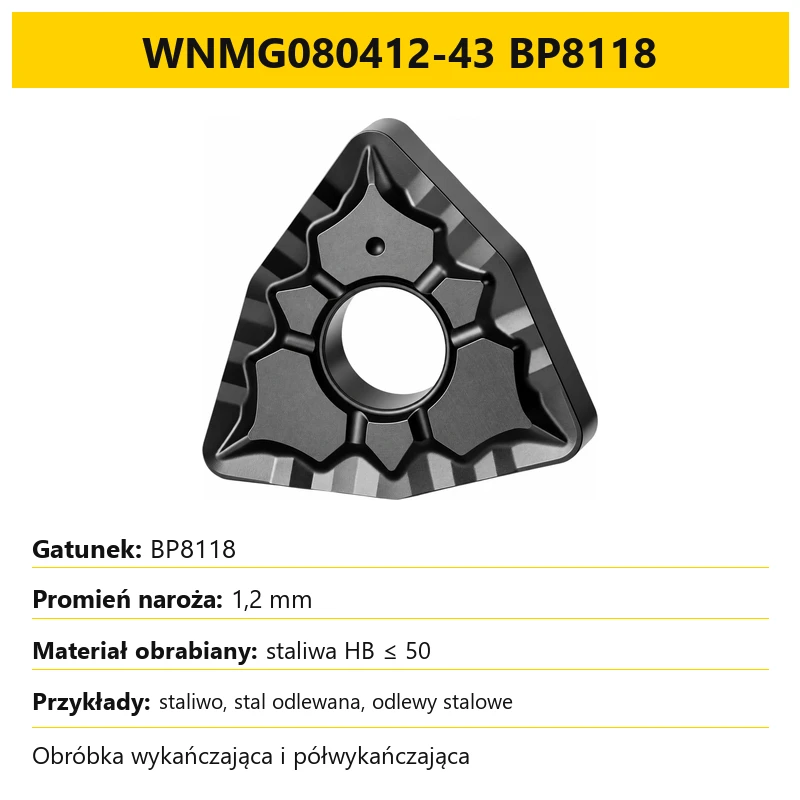
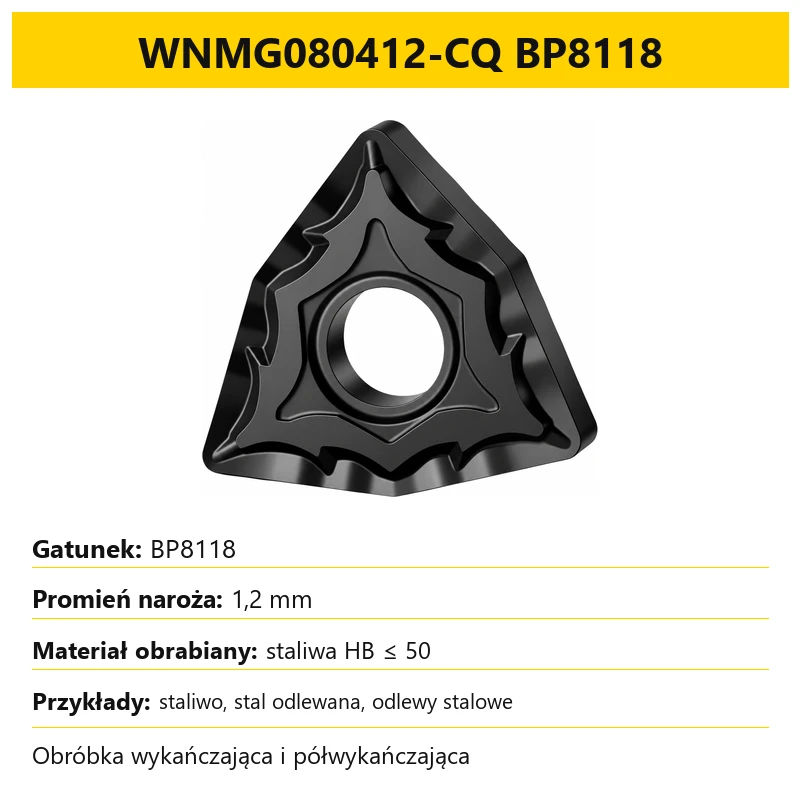
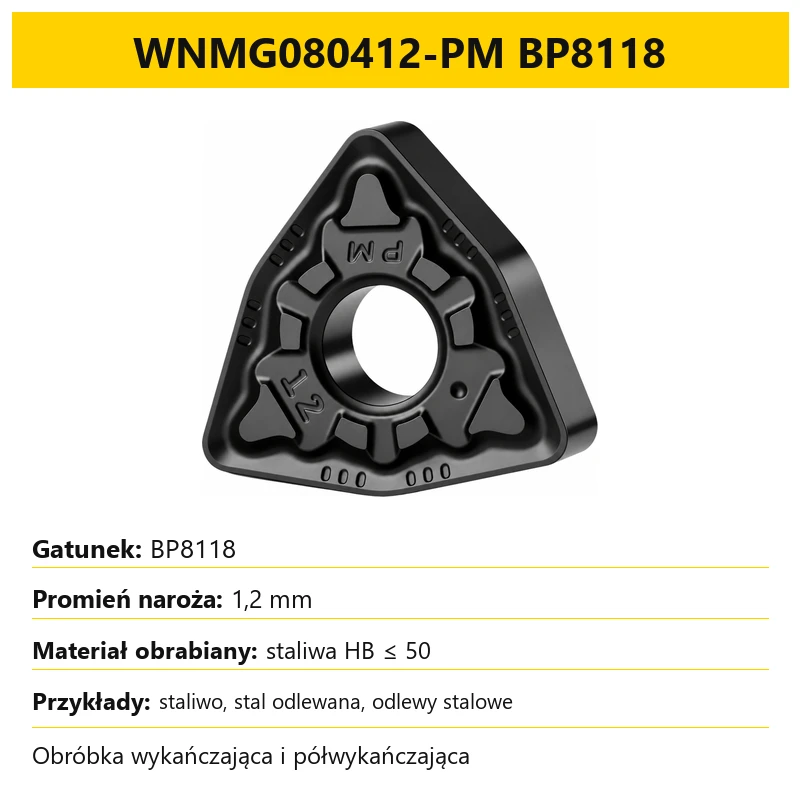
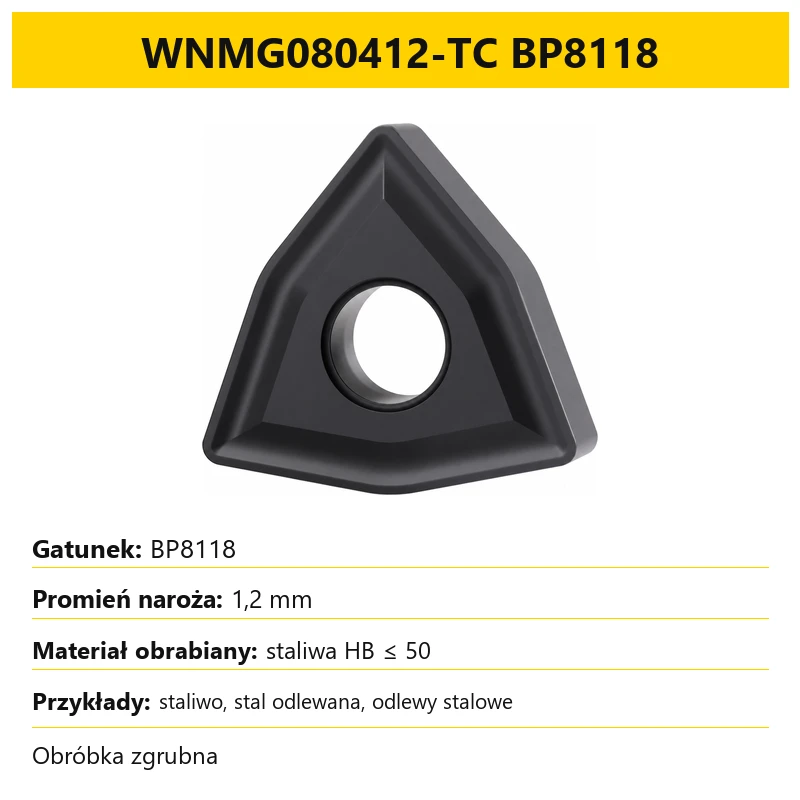
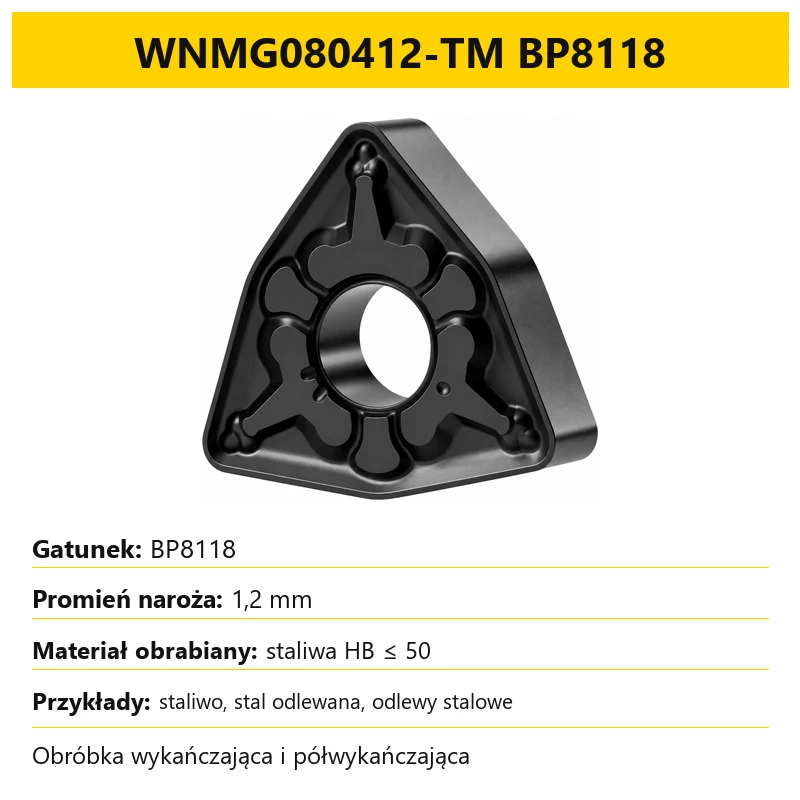
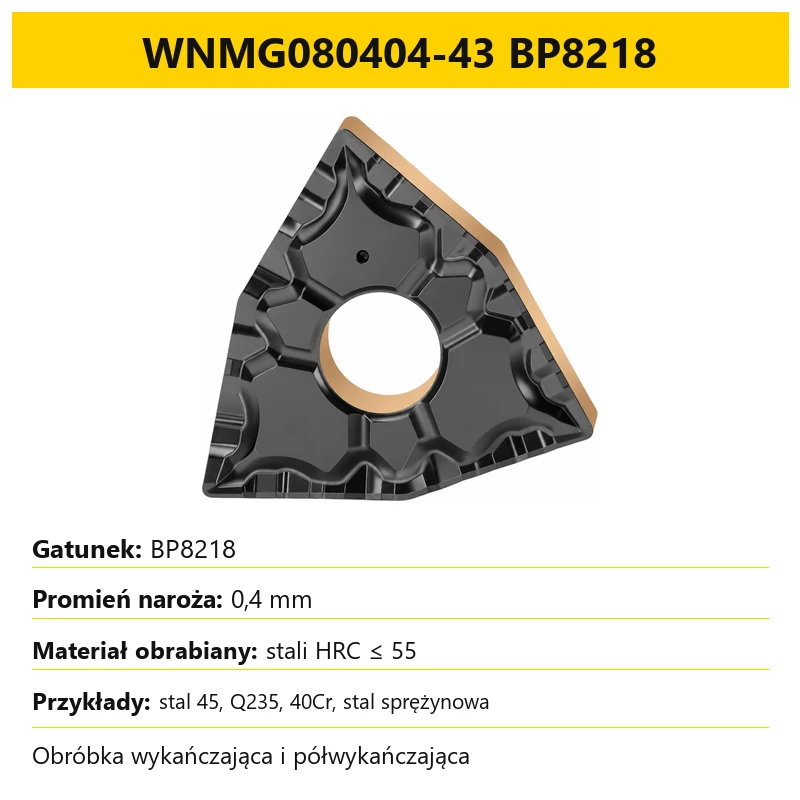
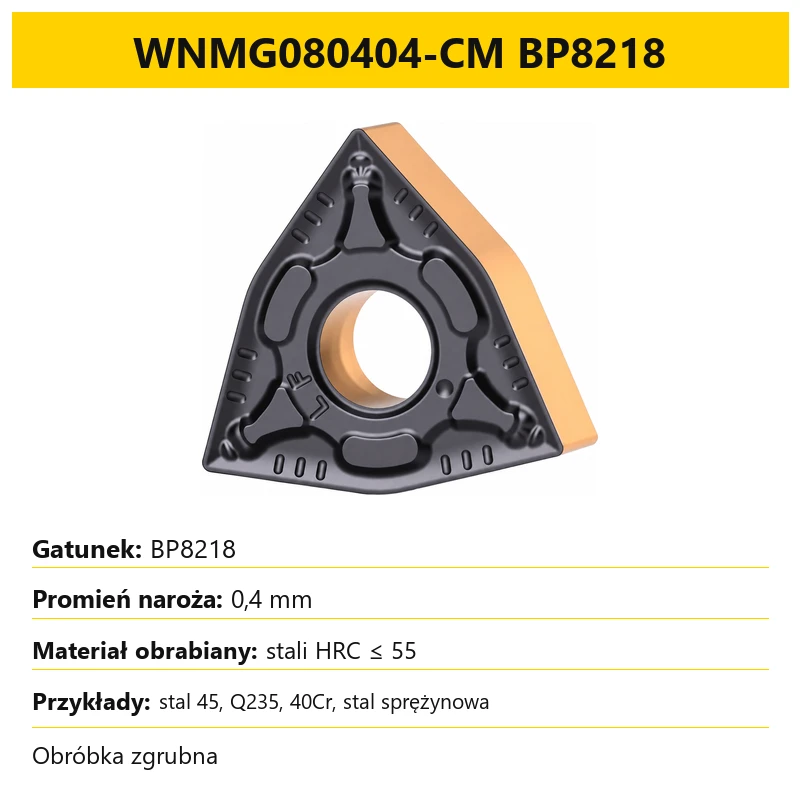
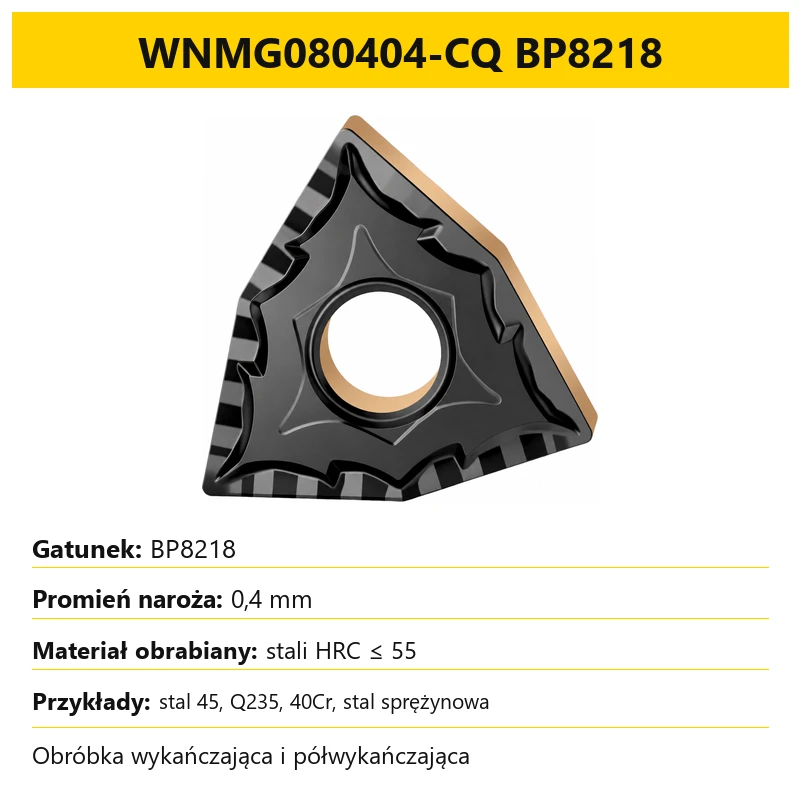
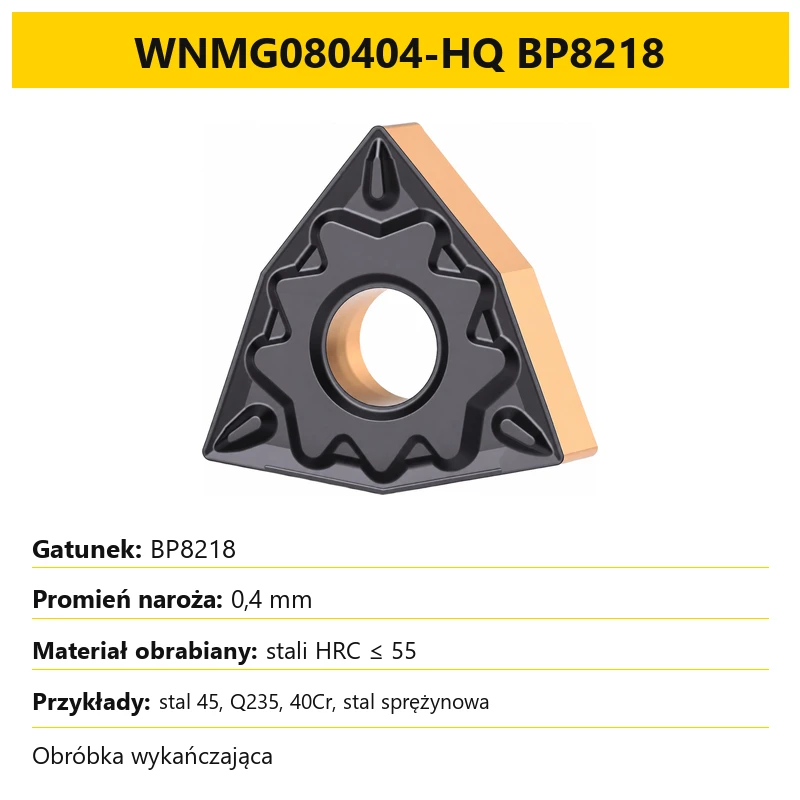
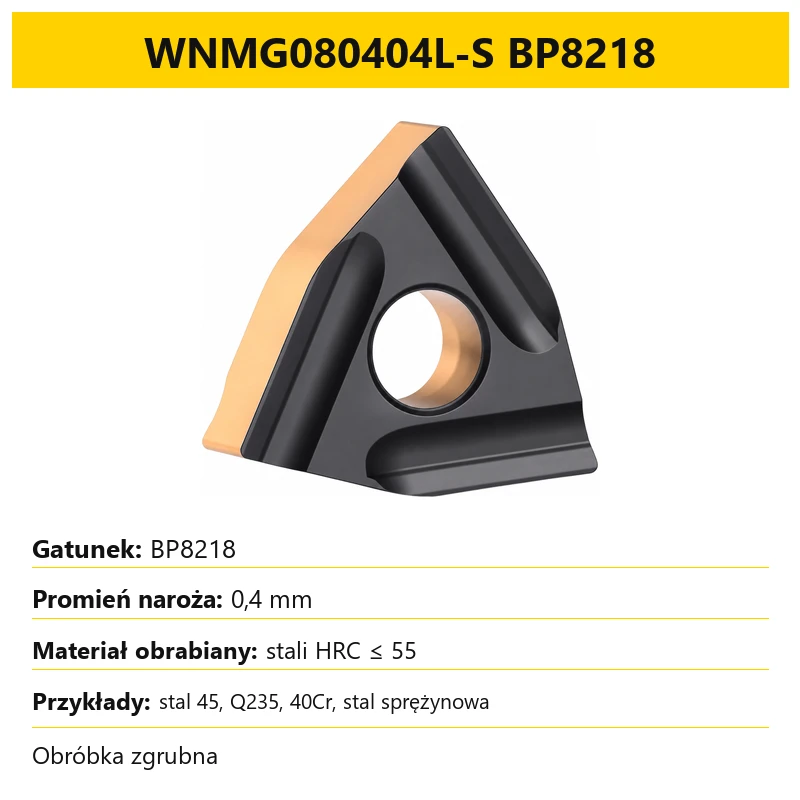
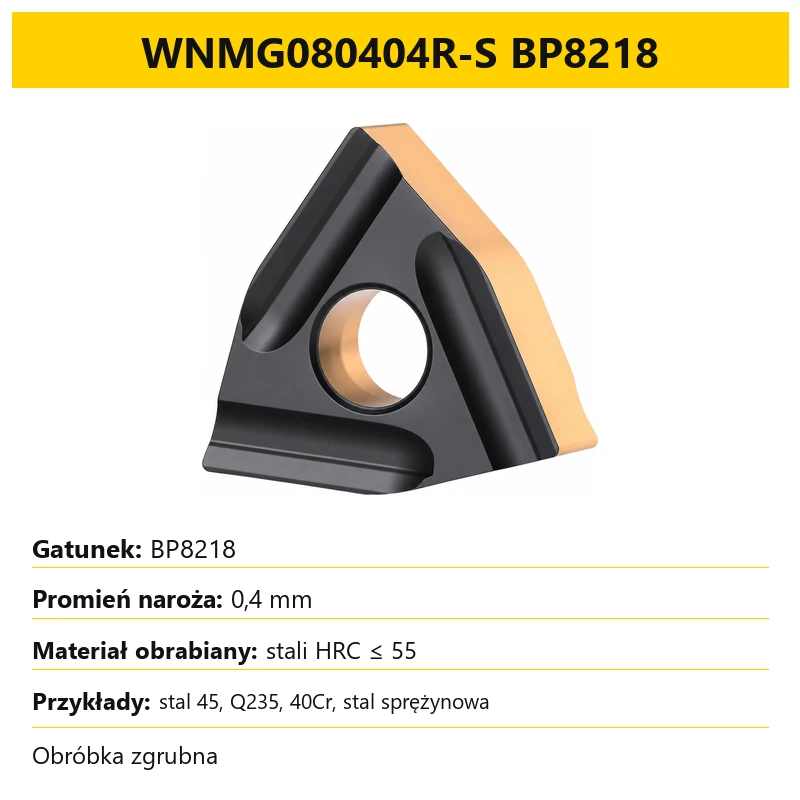
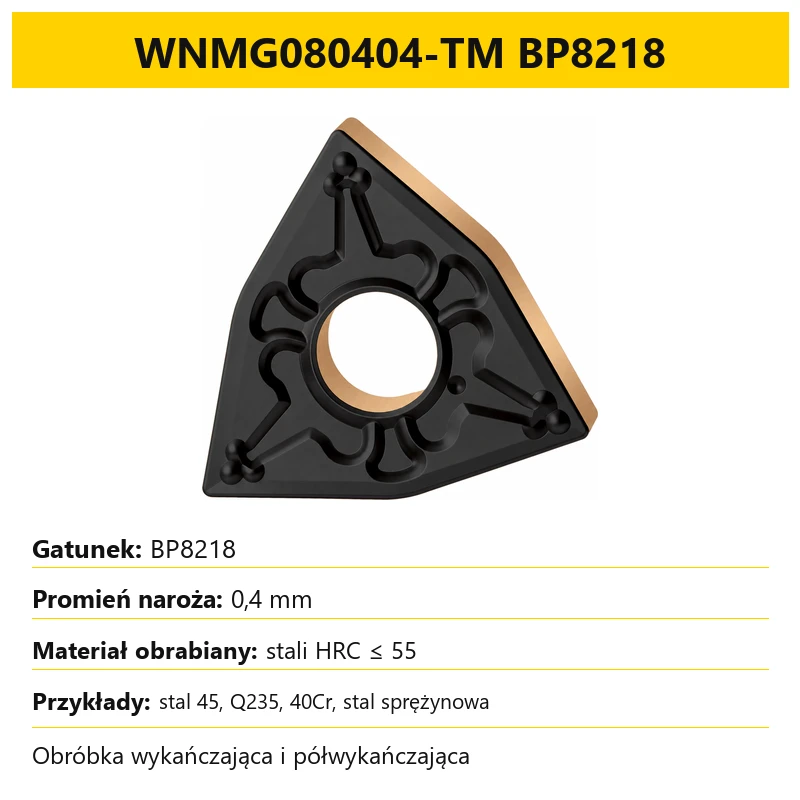
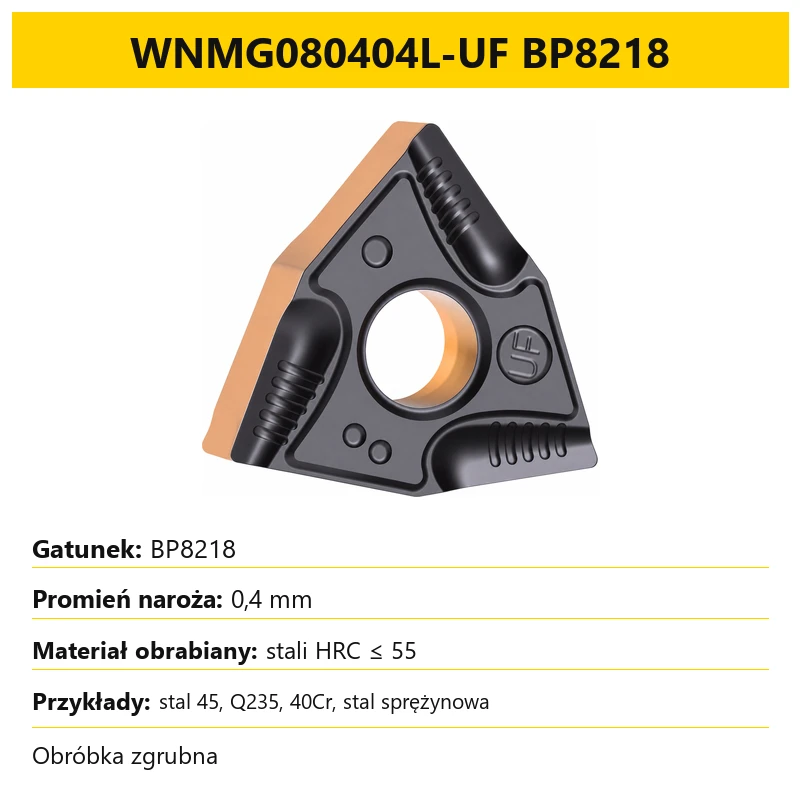
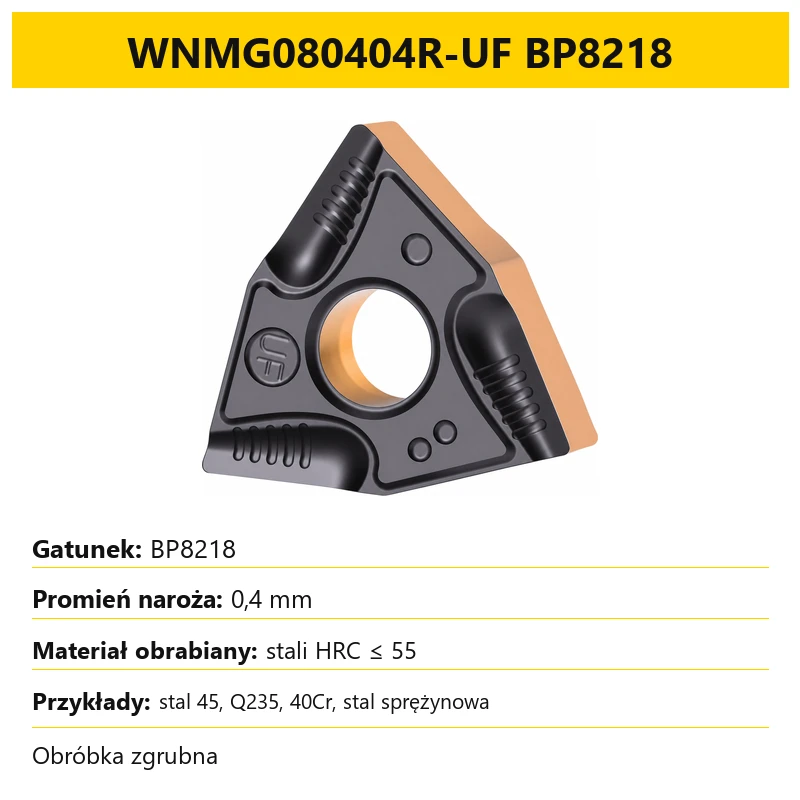
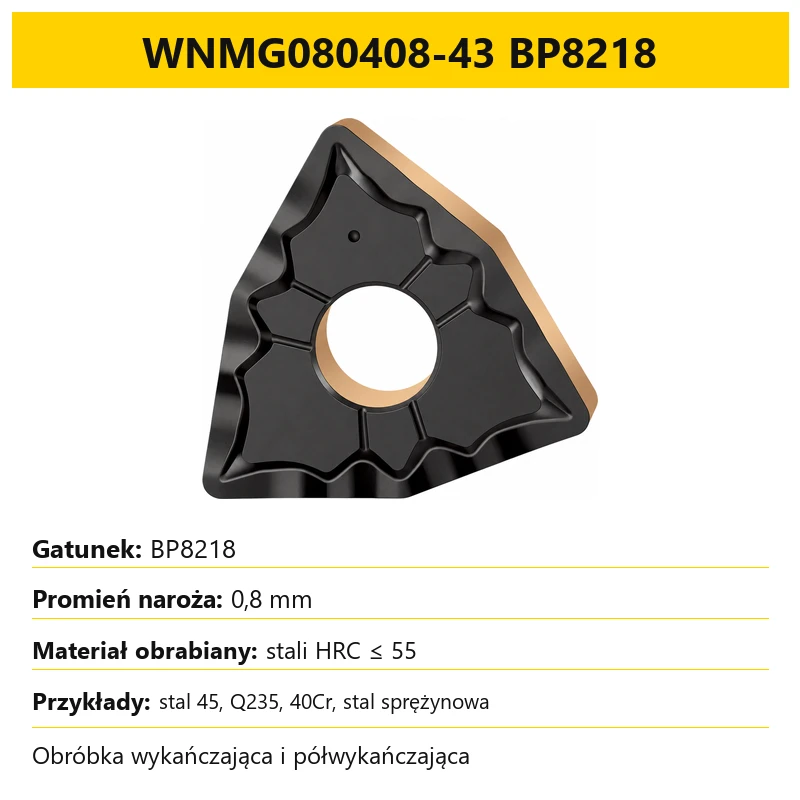
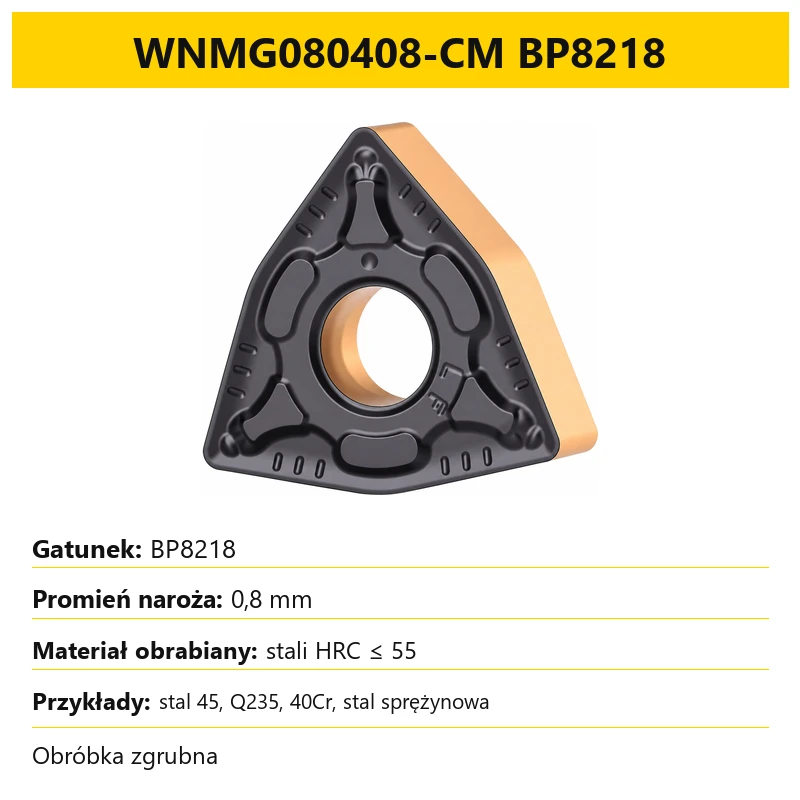
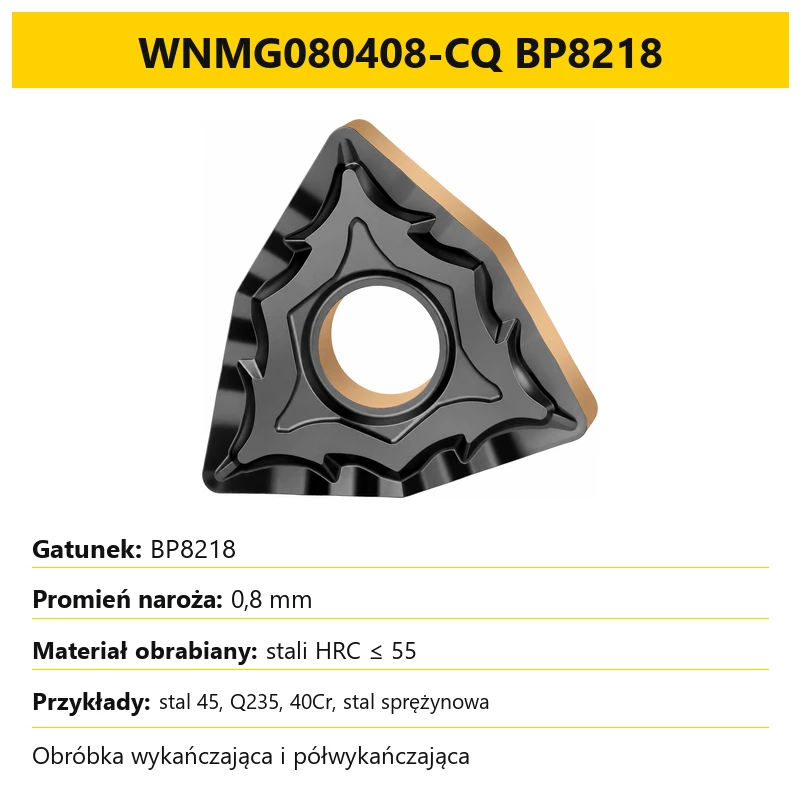
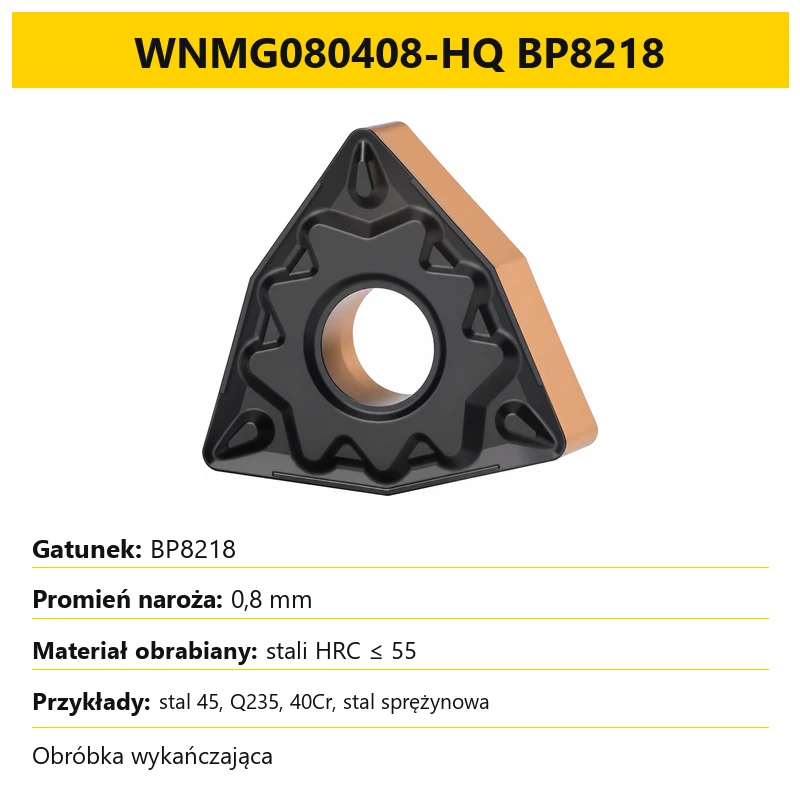
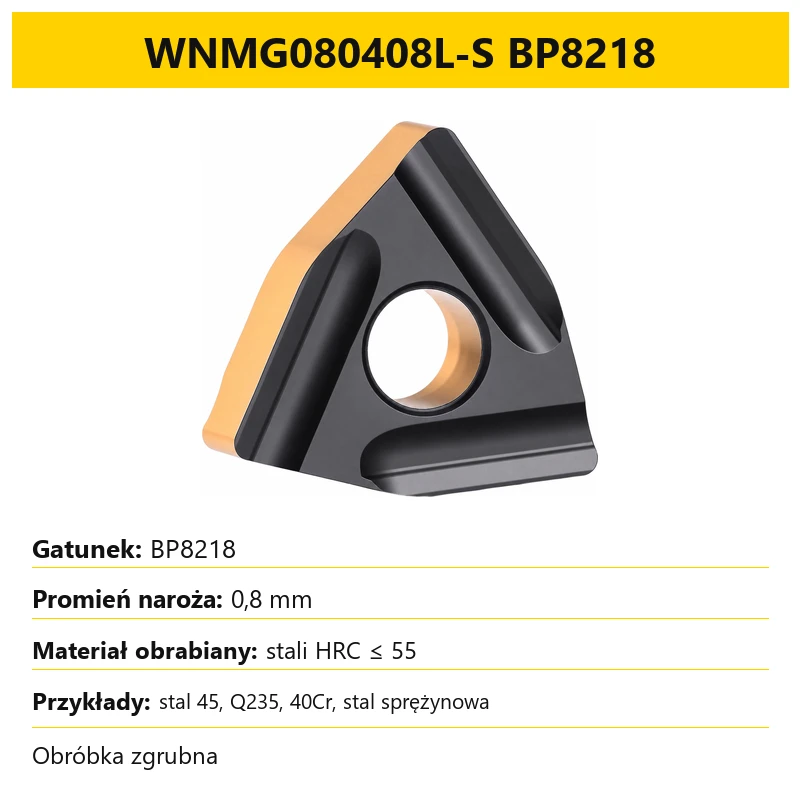
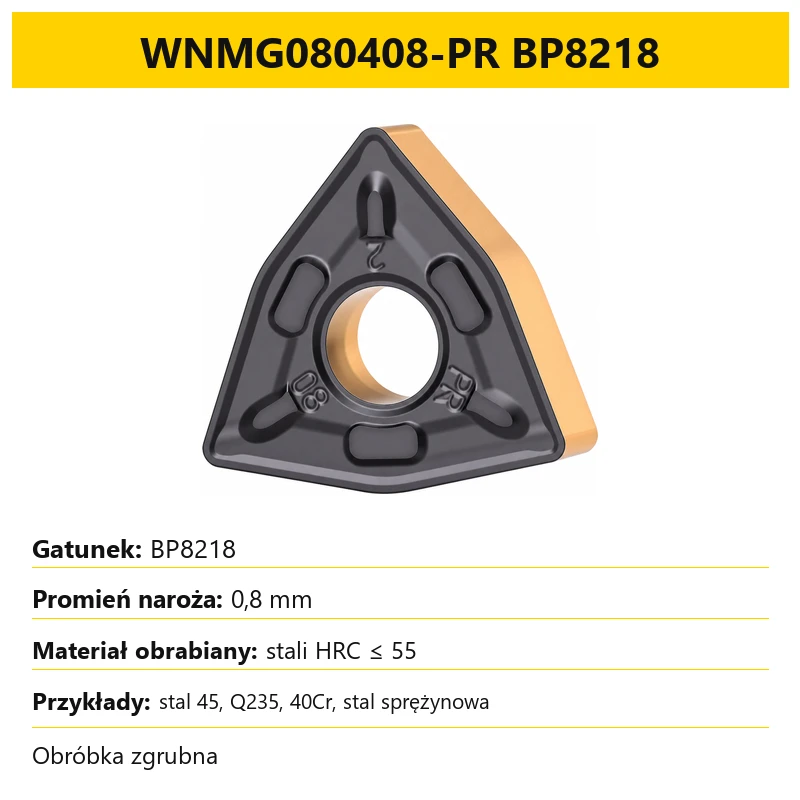
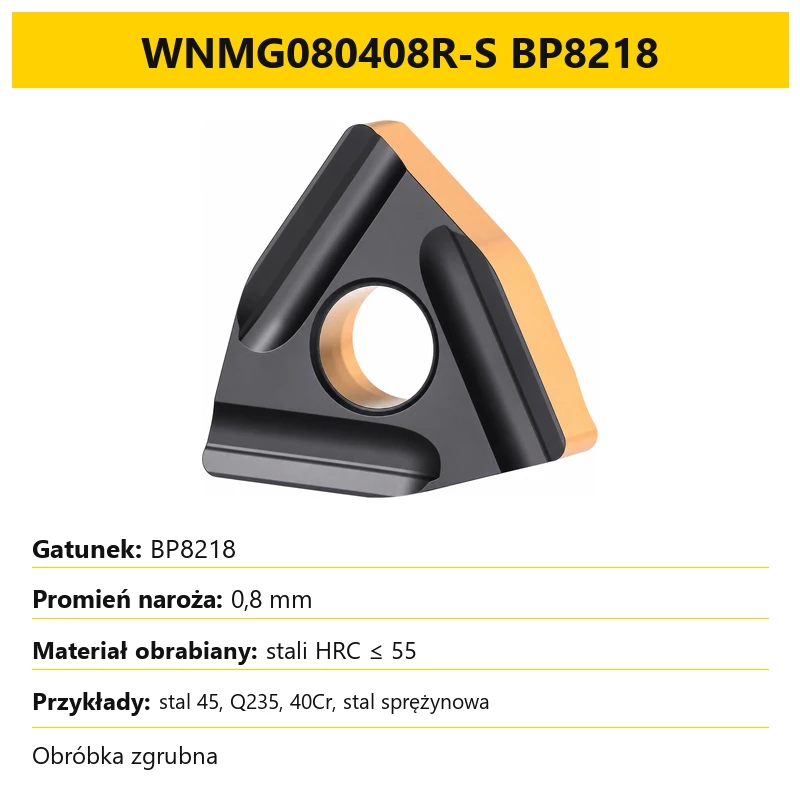
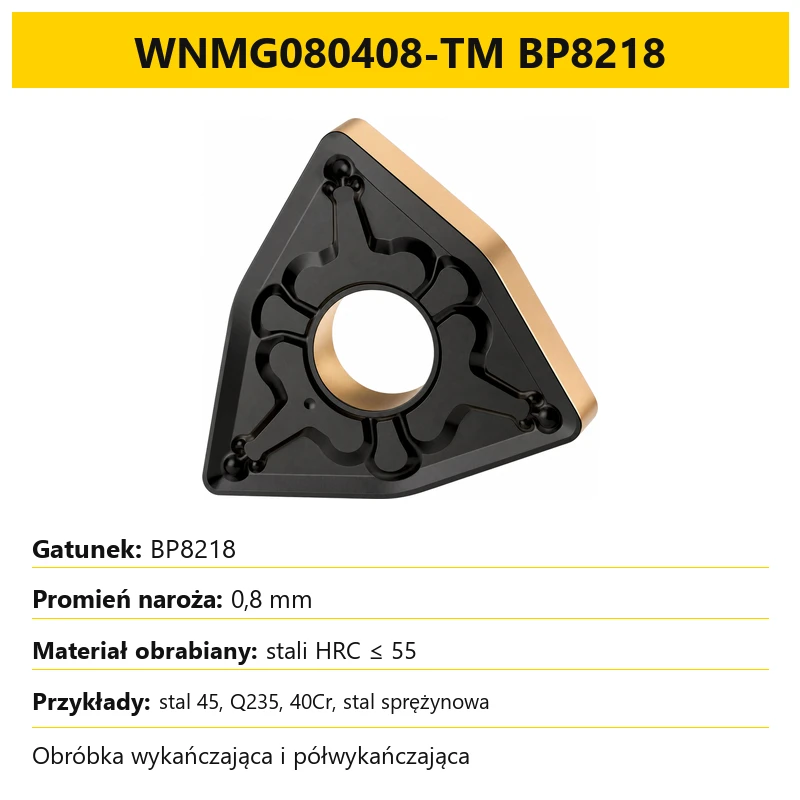
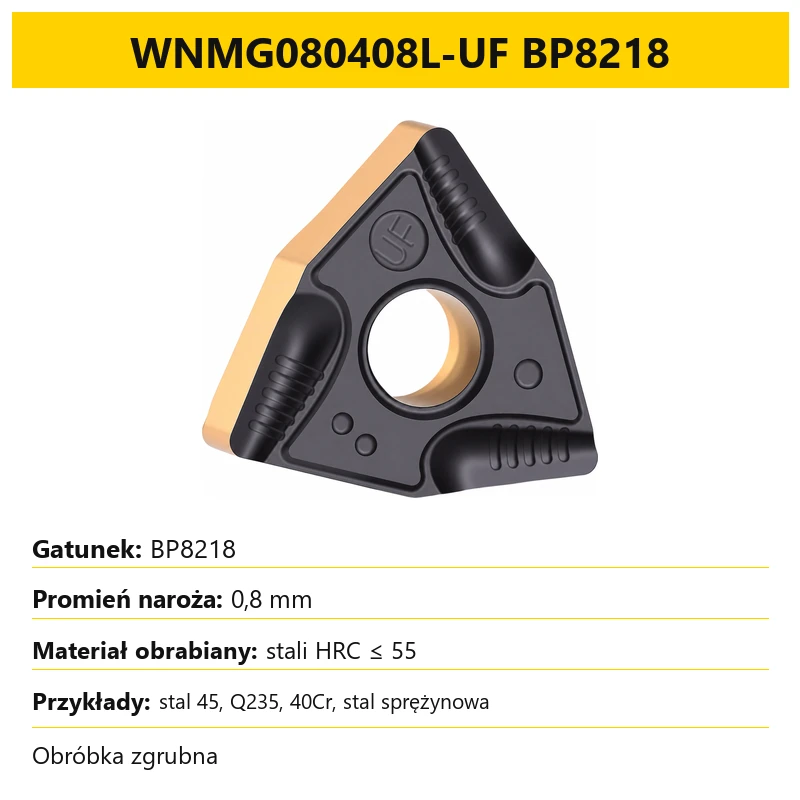
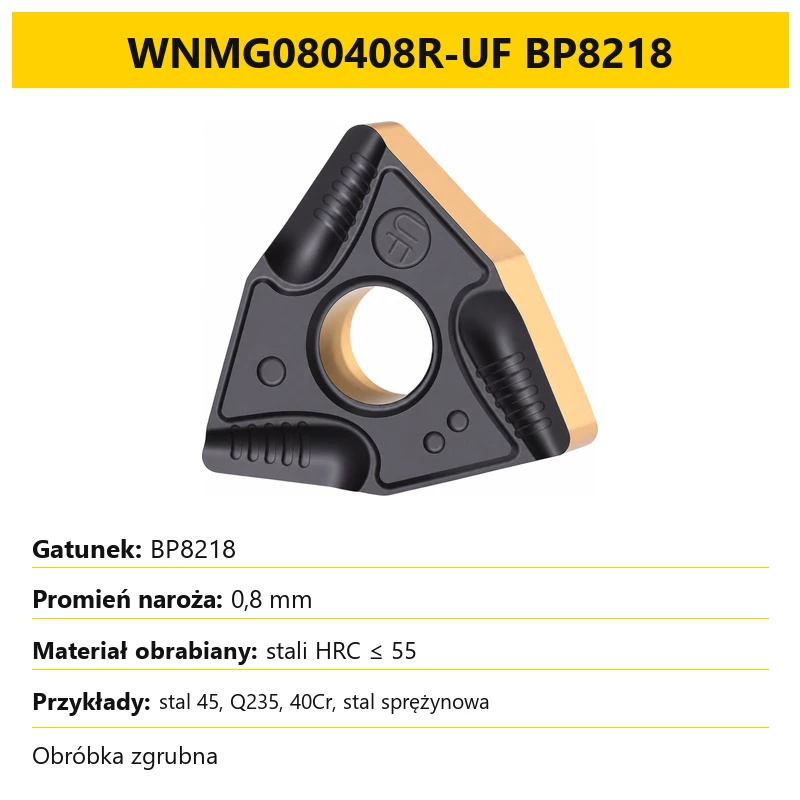
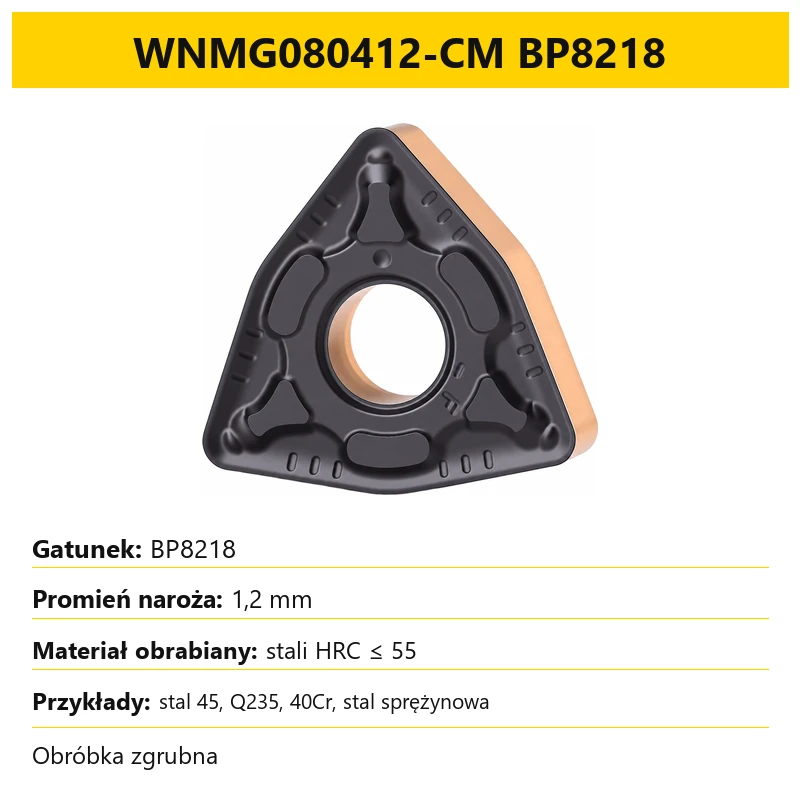
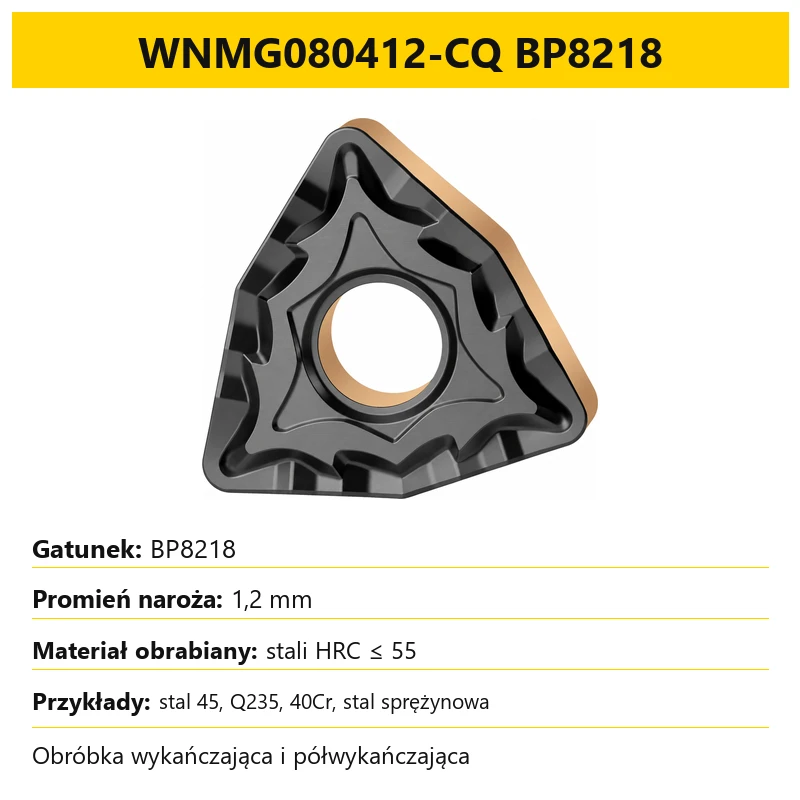
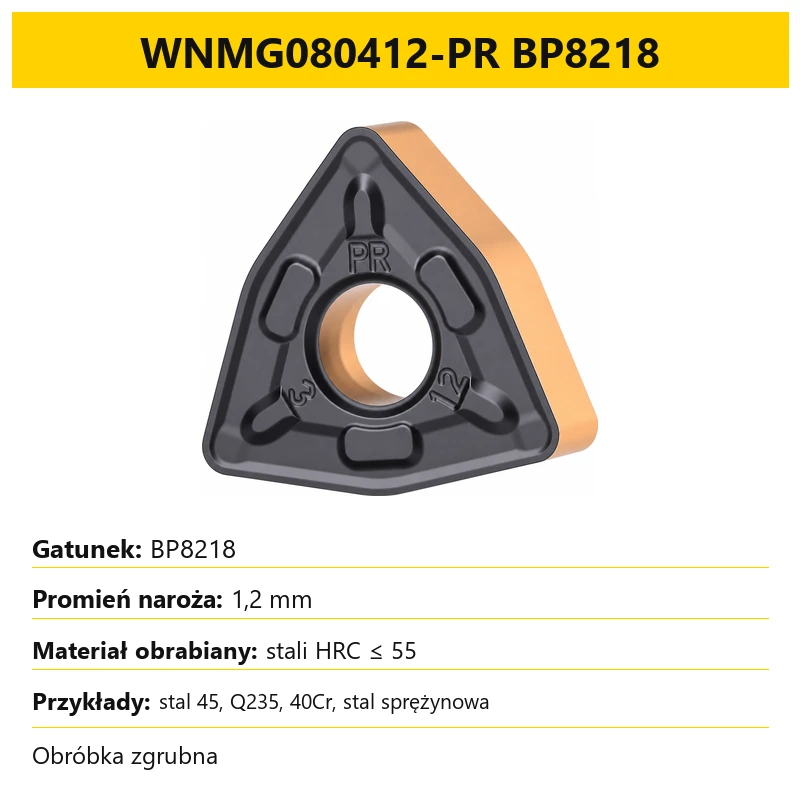
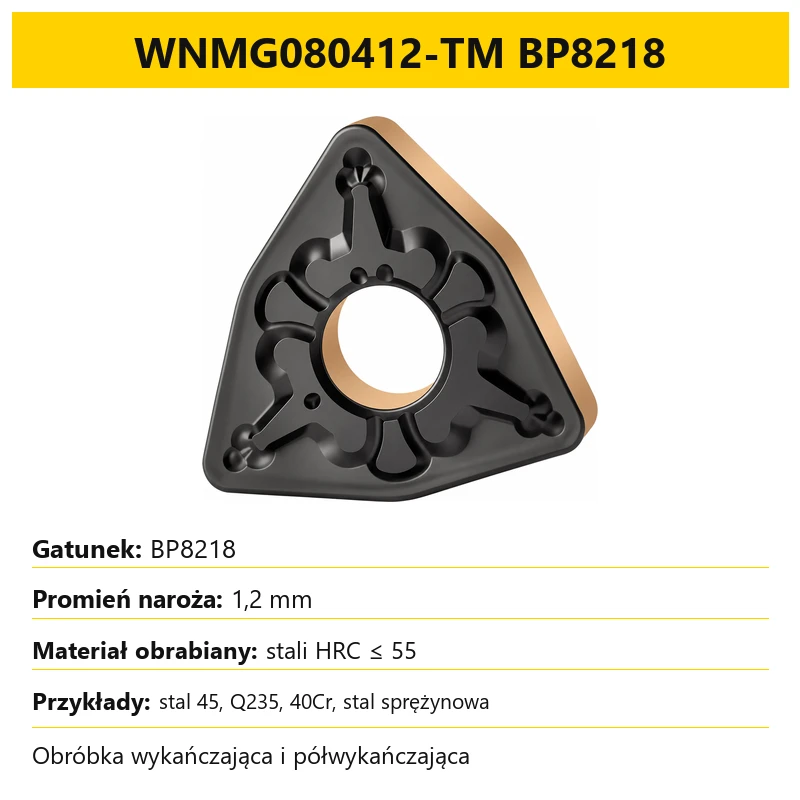
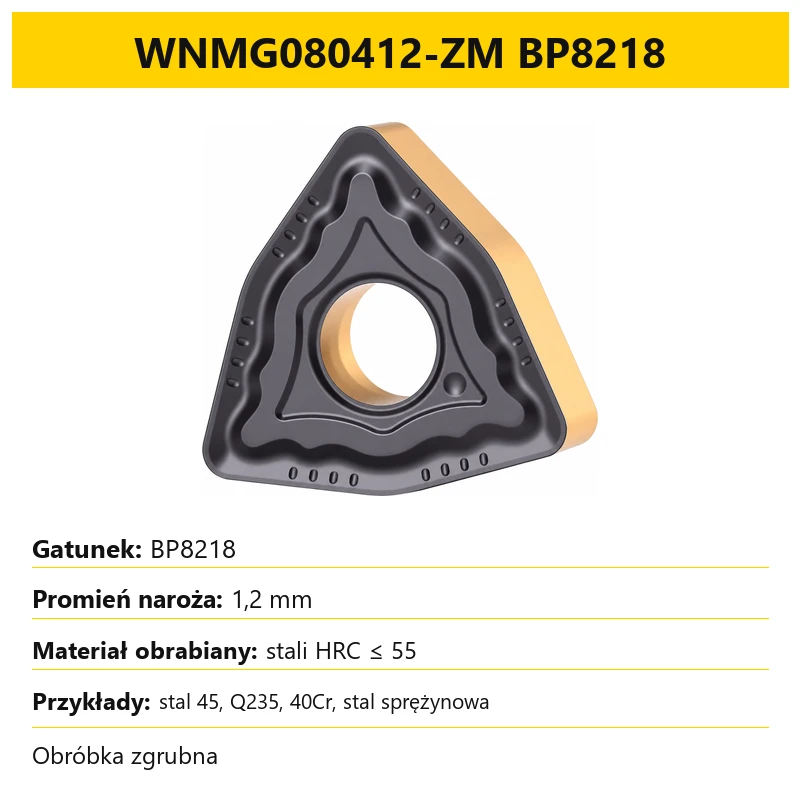
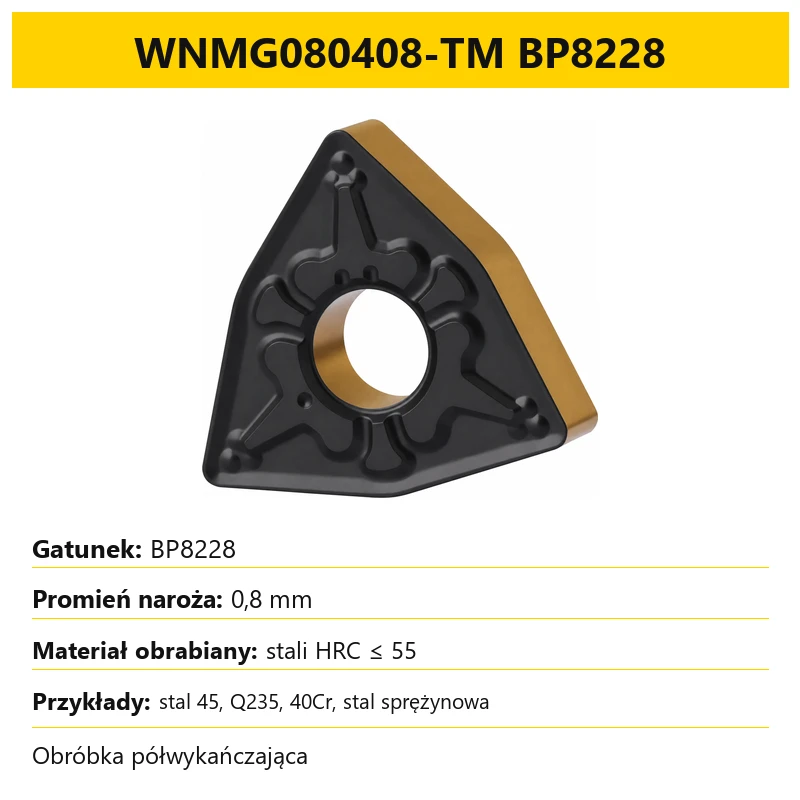
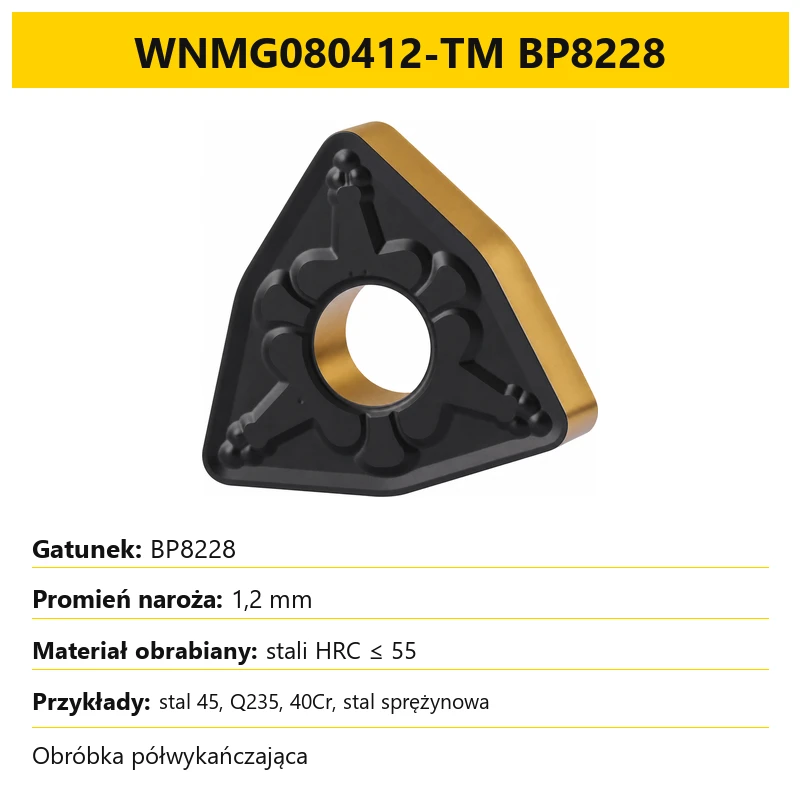
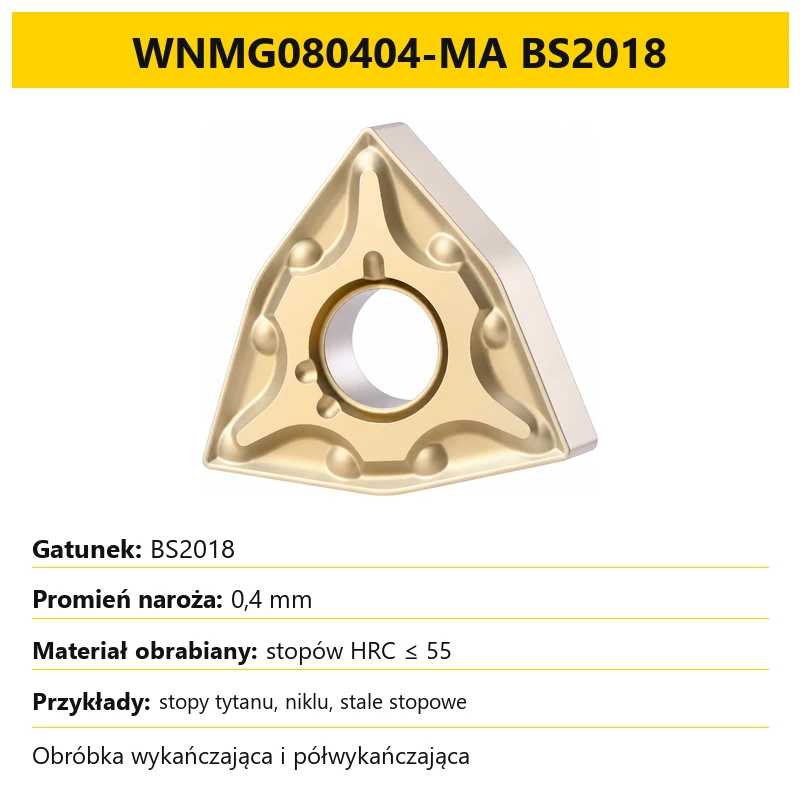
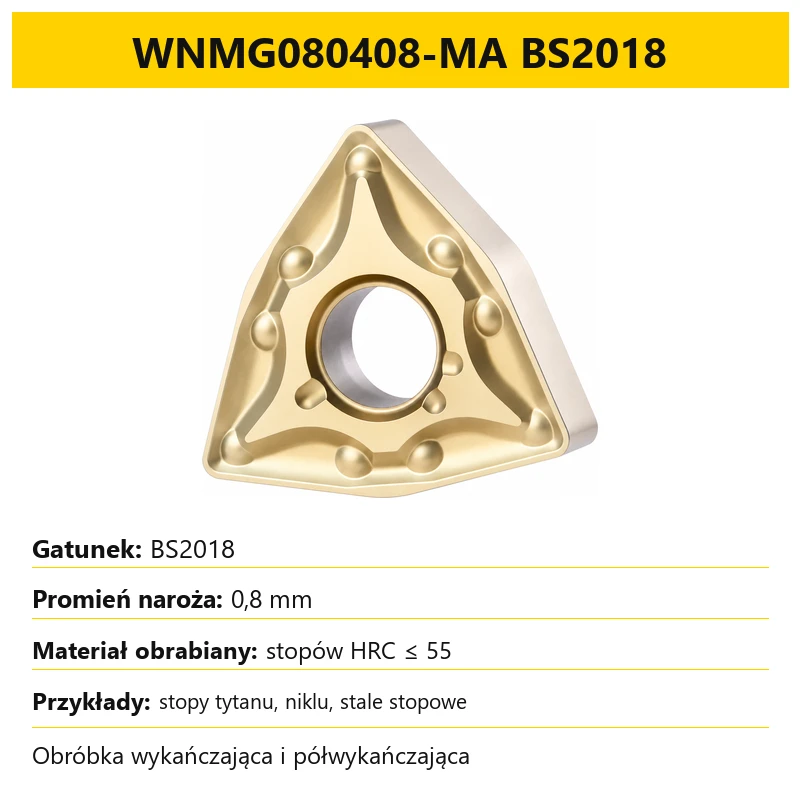
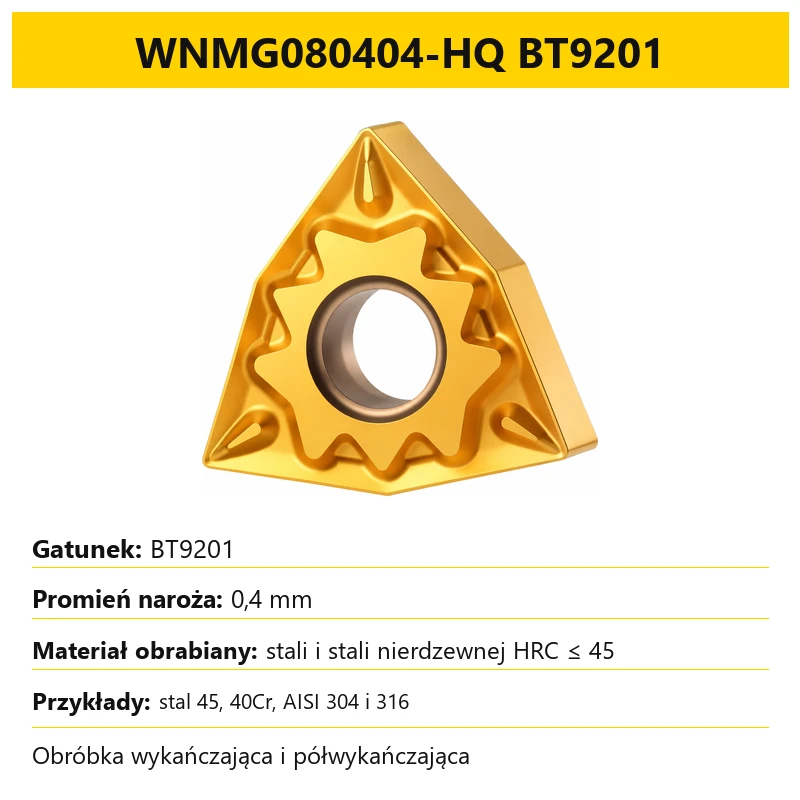
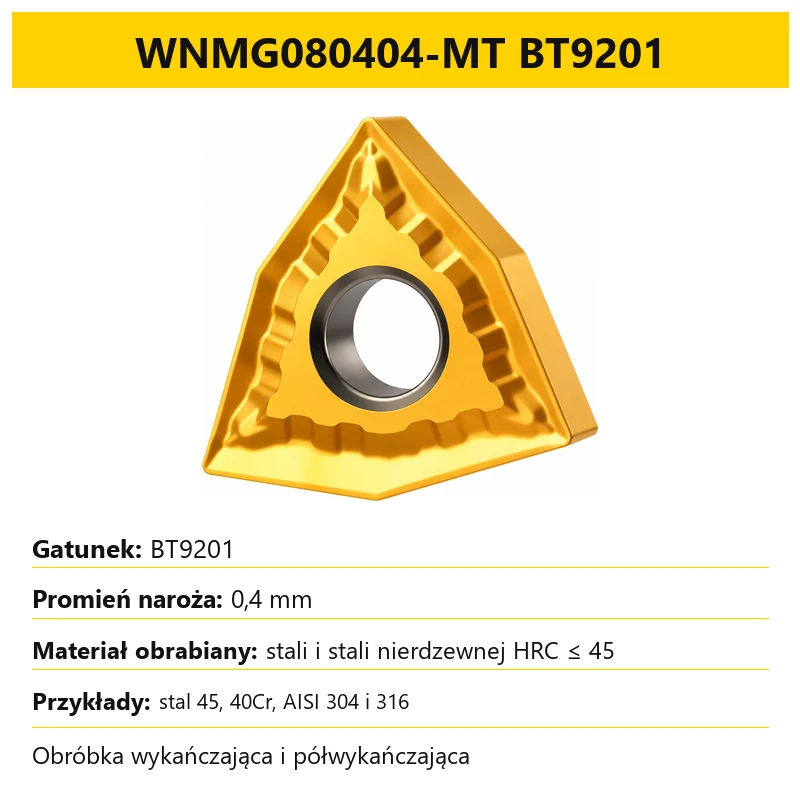
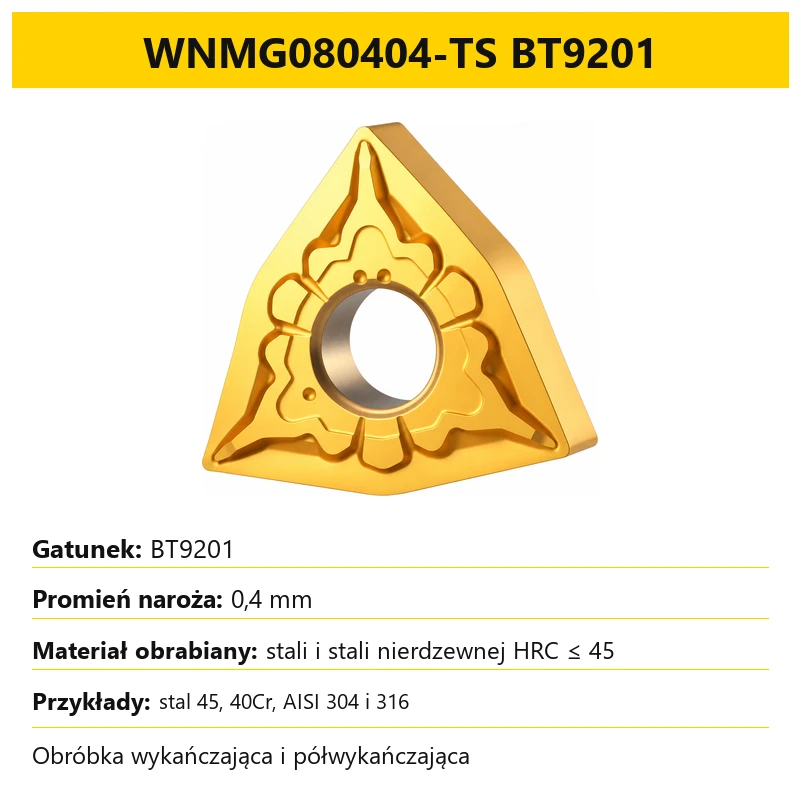
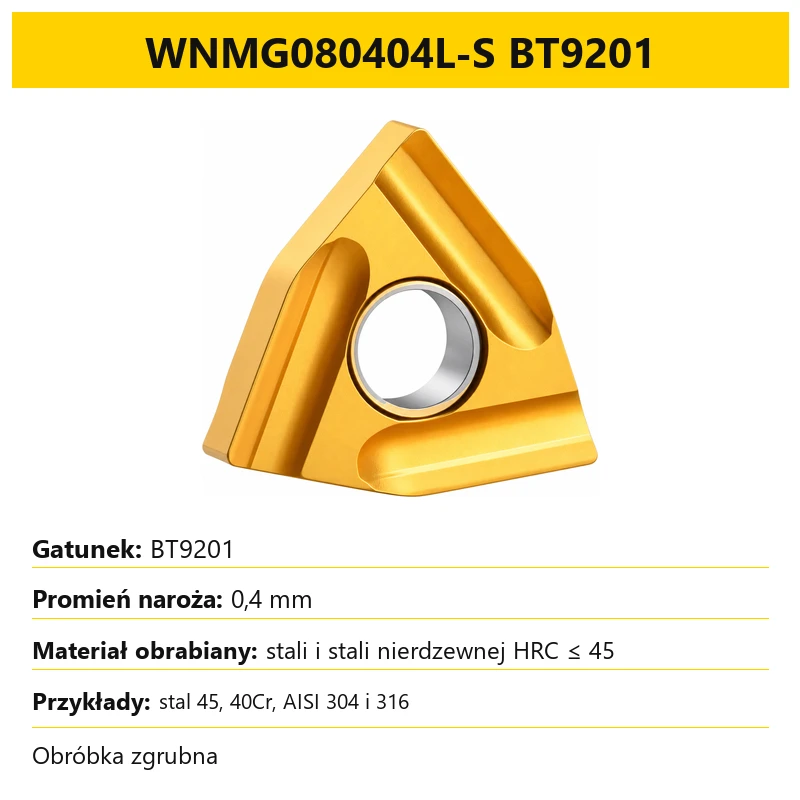
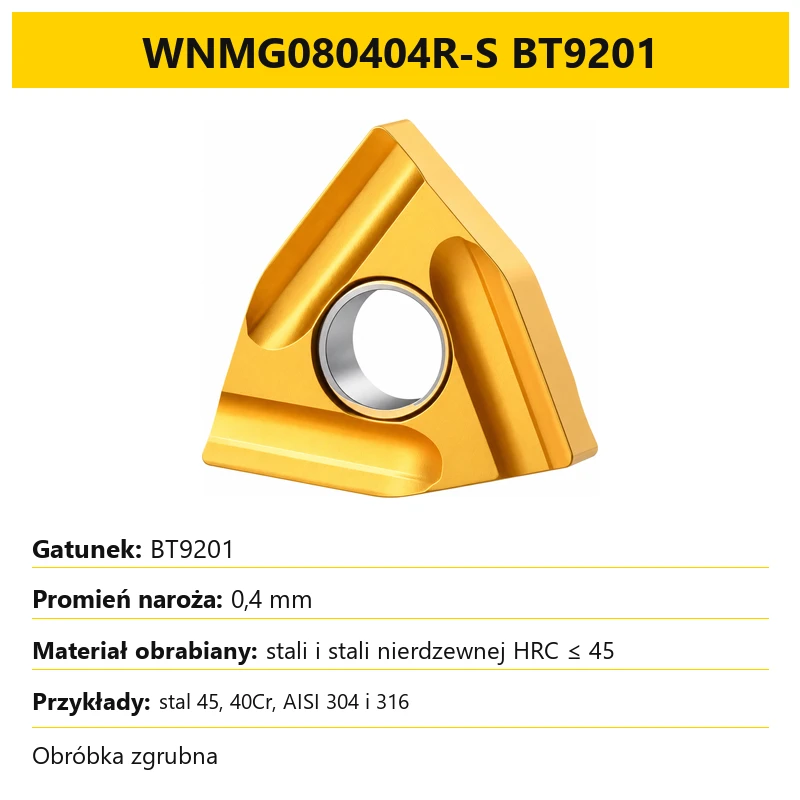
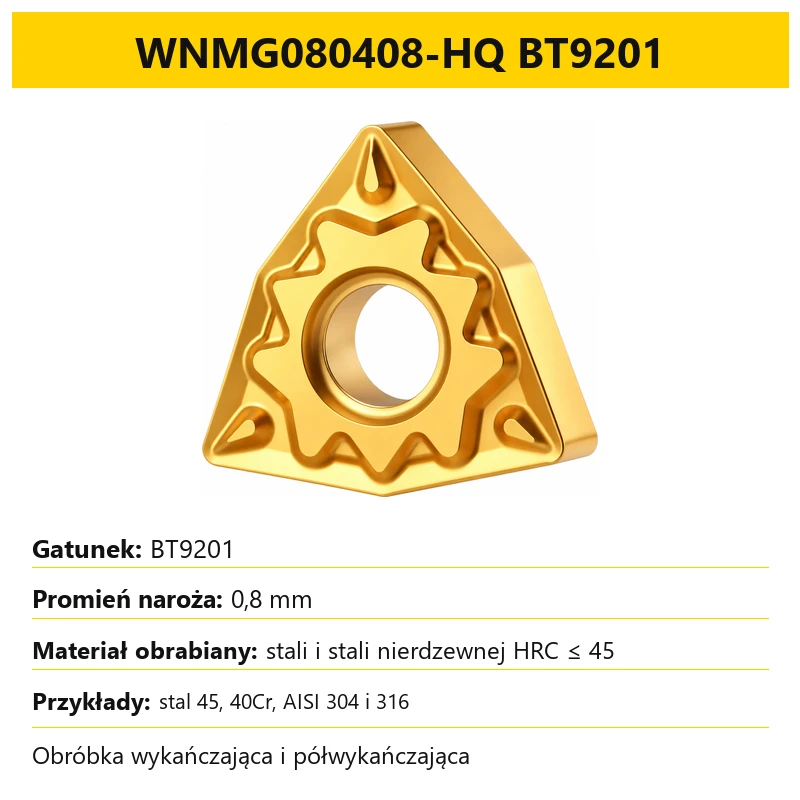
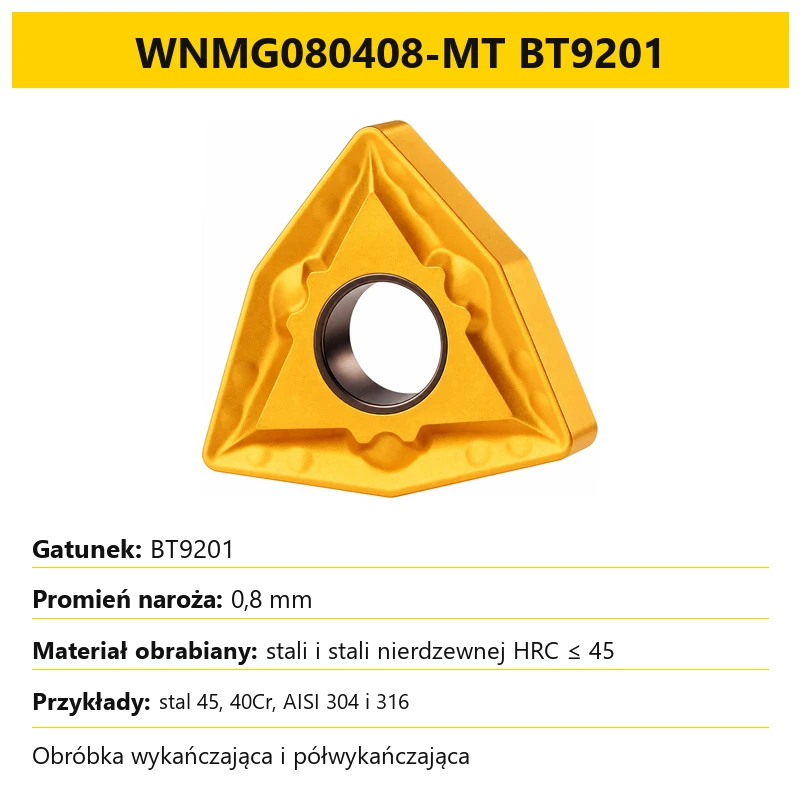
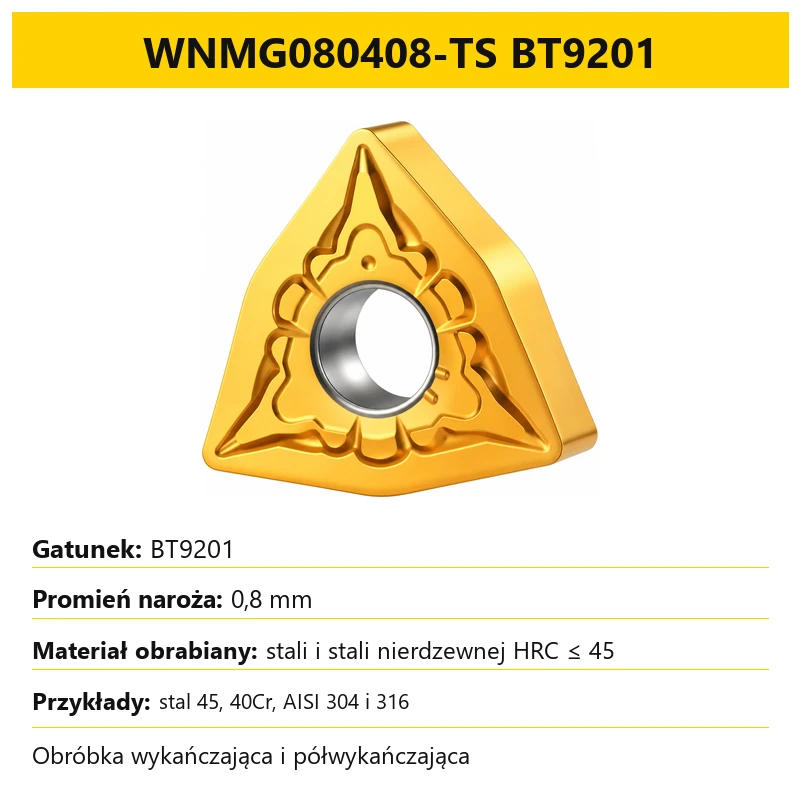
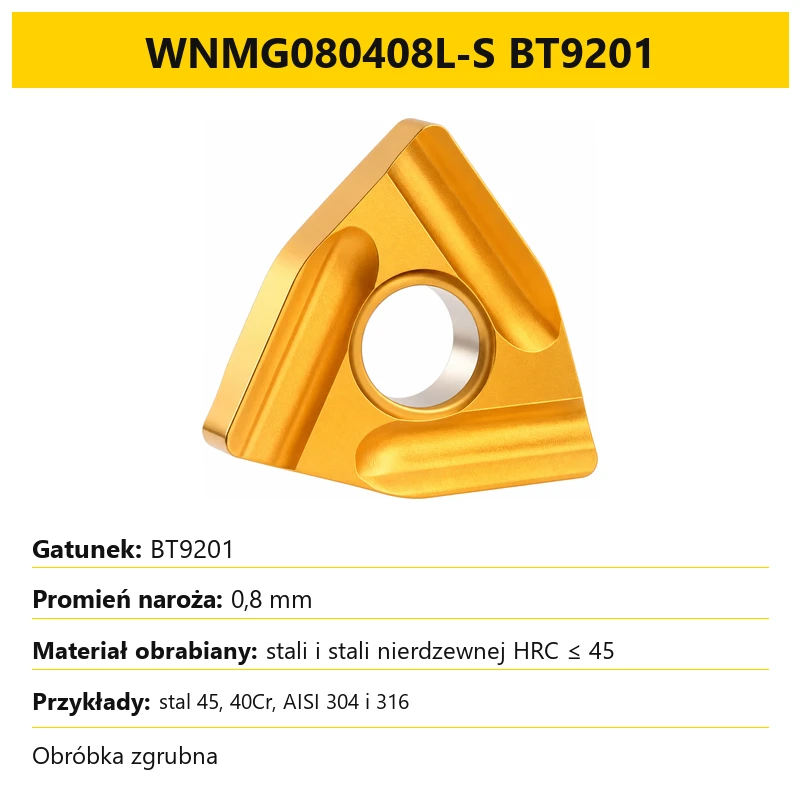
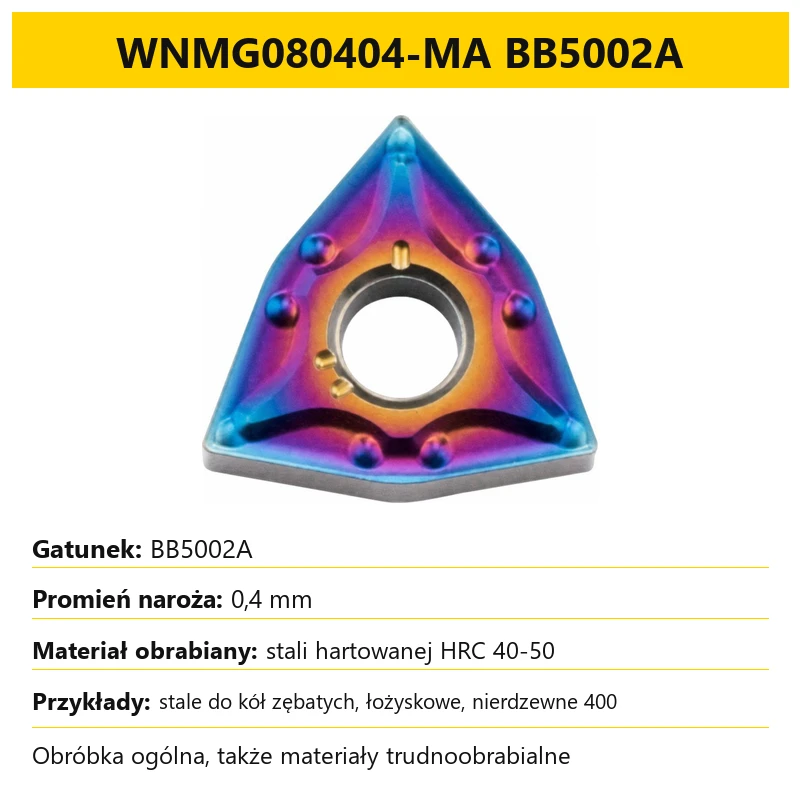
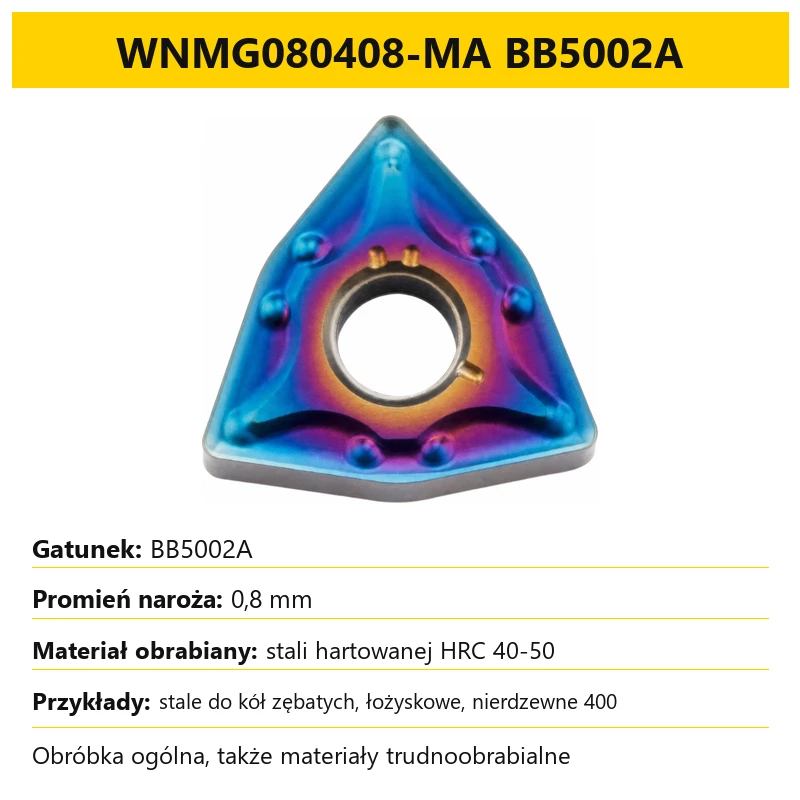
The pack contains 10 inserts of one selected variant. The assigned variant image shows the exact version and key information about the workpiece material and machining operation. Before adding the product to your basket, compare the complete insert code with the version currently used and check the card displayed after selection.
1. Applications
This family is used in turning holders designed for WNMG inserts, including MWLNR, MWLNL, SWLNR and SWLNL systems. The range includes variants for different material groups and for finishing, semi-finishing and roughing. The WNMG shape alone does not establish the application: check the complete name and selected variant card.
| Operation | What to check when selecting |
|---|---|
| External turning | The holder pocket must match the WNMG family and required insert size. |
| Finishing | A variant identified on its card as intended for finishing, with a corner radius suited to the task. |
| Semi-finishing | A grade matched to the material and a geometry identified for semi-finishing. |
| Roughing | A version whose card explicitly identifies roughing; do not select by insert colour alone. |
Different chipbreakers and grades occur within this family. Two inserts with the same basic size may have different applications, so the abbreviated size code is not enough for selection.
2. Construction and reading the designation
WNMG identifies a triangular insert family with a defined tolerance class and mounting hole. The following part of the code gives the size and corner radius; an additional symbol after the size distinguishes the geometry or chipbreaker. The final part of the variant name identifies the grade.
| Part of the designation | Meaning for selection |
|---|---|
| WNMG | Insert family and construction. This part must match the holder pocket. |
| Size code | Identifies the insert size, thickness and corner radius. Compare the complete number sequence. |
| Geometry symbol | Distinguishes the chipbreaker or cutting-edge version. Its application is given on the variant card. |
| Grade | Identifies the workpiece group and operating range confirmed for that variant. |
Store variant names combine the complete size, geometry and grade. Do not transfer the application from one version to another simply because the inserts look similar.
3. Sizes and corner radius
The family contains four basic size-code endings. The last two digits identify the corner radius. The radius forms part of the insert designation and is not selected independently of its size.
| Size-code ending | Corner radius | Check before ordering |
|---|---|---|
| 02 | 0,2 mm | Compare the complete code with the insert currently used. |
| 04 | 0,4 mm | Also check the geometry symbol and grade. |
| 08 | 0,8 mm | Do not substitute another radius without checking the process. |
| 12 | 1,2 mm | Confirm that the size matches the holder pocket. |
Read the complete designation from the packaging or an unworn area of the insert. If it is illegible, check the holder documentation and measure the insert rather than selecting by photograph alone.
4. Selecting a grade for the material
Grades in this product include versions for steel, stainless steel, cast steel, cast iron, hardened materials, titanium and nickel alloys, and aluminium and copper. Hardness ranges and operations differ between variants. Check the card displayed after selecting the exact option.
| Workpiece material | Examples listed for variants | How to confirm the selection |
|---|---|---|
| Steel | 45 steel, Q235, 40Cr and spring steels, depending on the grade. | Select a card that specifies steel and check the permitted hardness. |
| Stainless steel | AISI 201, 304 and 316 and duplex steels, where explicitly listed on the card. | Select a stainless-steel variant rather than assuming a general-purpose application from appearance. |
| Cast steel | Cast steel and steel castings. | Check the card’s cast-steel designation and stated HB range. |
| Cast iron and castings | Grey and ductile cast iron and common casting materials, depending on the grade. | Do not treat cast-steel and cast-iron variants as automatically equivalent. |
| Hardened materials and tool steels | Hardened, tool, mould and case-hardened steels, as listed on the variant card. | Compare the actual workpiece hardness with the HRC limit shown on the card. |
| Aluminium and copper | Aluminium, copper and brass, for suitable variants in this group. | Select a version whose card explicitly identifies non-ferrous metals. |
Note: coating colour alone does not identify the intended workpiece material. Different grades can look similar; the complete variant name and card determine the application.
5. Geometry and machining operation
The symbol after the size code distinguishes the cutting-edge or chipbreaker version. Different geometries cover different operating ranges. Variant cards identify finishing, semi-finishing, roughing or a combination of these applications.
Not every geometry symbol is offered in every size and grade. The variant list shows the combinations available for selection. When replacing an insert, keep the complete code or deliberately select another geometry for the changed machining conditions.
6. Holder compatibility and installation
The insert must match the holder pocket in family, size and clamping method. WNMG alone does not establish dimensional compatibility. Holder families include MWLNR, MWLNL, SWLNR and SWLNL, but check the documentation for the exact holder.
| Check | What to compare |
|---|---|
| Insert family | The holder pocket must be specified for a WNMG insert. |
| Pocket size | Compare the size section of the insert code with the holder documentation. |
| Pocket condition | Clean seating surfaces without chips trapped beneath the insert. |
| Clamping | Correct seating and tightening for the holder design. |
Remove chips and dirt from the pocket before installation. The insert should rest against the support surfaces. After one cutting edge wears, it can be indexed to the next corner. After using the three corners, turn it over to use the other face, provided the insert is undamaged.
7. Selecting the correct variant
- Check the holder. Identify the required insert family and size code.
- Identify the material. Record the material type and hardness where relevant to the process.
- Select the operation. Determine whether finishing, semi-finishing or roughing is required.
- Compare the complete name. Include the geometry symbol and the grade at the end of the designation.
- Open the variant card. Confirm the workpiece materials, examples, hardness and operation.
- Check the pack quantity. The selected variant is sold as a pack containing 10 identical inserts.
| If you know… | Selection method |
|---|---|
| The complete code of the existing insert | Select the identical complete designation from the variant list. |
| Only the holder designation | Check its documentation for the insert family and size, then select the grade for the material. |
| The material and operation | First establish the pocket size, then filter variants using the card information. |
| Only the insert’s appearance | Do not select by photograph alone; read the designation or holder documentation. |
After changing the variant, set cutting conditions for the material, geometry, clamping stability and recommendations for the selected grade. This product includes different versions, so one universal cutting speed, feed or depth of cut would not be correct for every option.
8. Frequently asked questions
How many inserts are in the pack?
The pack contains 10 inserts of one selected variant.
How many cutting edges does one insert have?
The insert is double-sided with six usable cutting edges, three on each face.
Are all WNMG variants suitable for steel?
No. This family includes versions for different workpiece groups. Check the exact variant card for its application.
Is the size alone enough to select an insert?
No. The geometry and grade must also suit the material and operation.
How do I identify the corner radius?
The last two digits of the size code identify the radius: 02 means 0,2 mm, 04 means 0,4 mm, 08 means 0,8 mm and 12 means 1,2 mm.
Which holders do these inserts fit?
Holders with a pocket specified for the WNMG family and insert size, including MWLNR, MWLNL, SWLNR and SWLNL groups. Confirm compatibility against the exact holder designation.
Can I select a variant by colour?
No. Similar colour does not establish the grade or application. Compare the complete name and variant card.
What if the old insert designation is illegible?
Check the holder documentation and pocket dimensions. Do not select a replacement by photograph alone.
Bestsellers
-
Bestseller
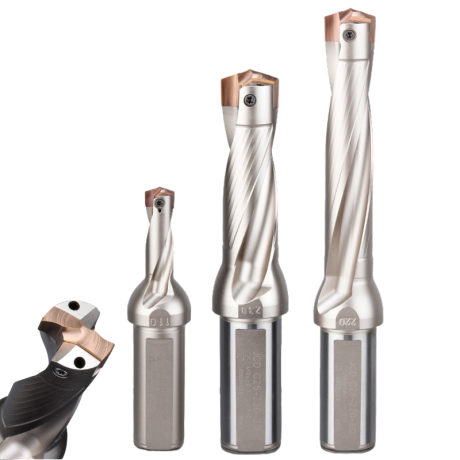
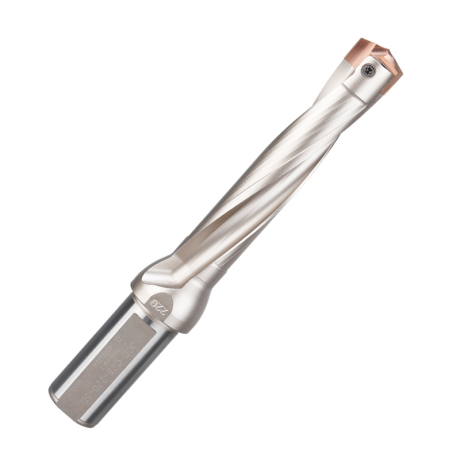
JCD modular drill with replaceable tip - internal cooling, for deep holes | GrotXD
JCD C20-100-3D Ø10~10.9 JCD C20-110-3D Ø11~11.9 JCD C20-120-3D Ø12~12.9 JCD C20-130-3D Ø13~13.9 JCD C20-140-3D Ø14~14.9 + 61 morePrice €69.52Price €56.52without VAT -
Price €17.09Price €13.90without VAT
-
Price €7.07Price €5.74without VAT
-
Price €7.52Price €6.12without VAT
-
Bestseller
 Other Accessories 0.00
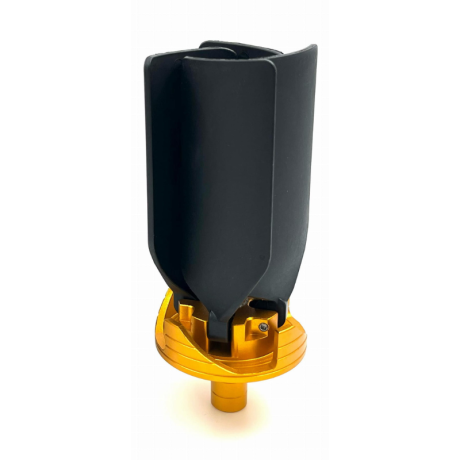
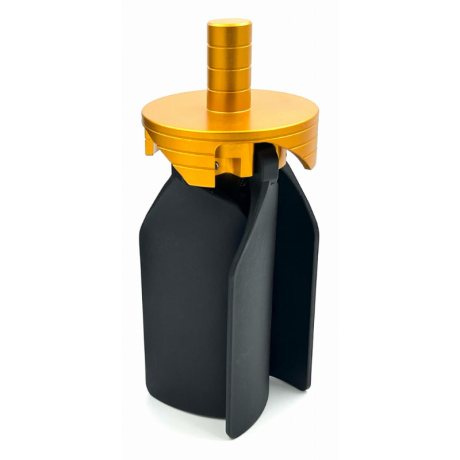
CNC Chip Fan / Chip Blower
Complete CNC chip fan Kit: blades, springs, pins and screwsPrice €53.56Price €43.55without VAT -
Bestseller
 Ball Nose End Mills 0.00
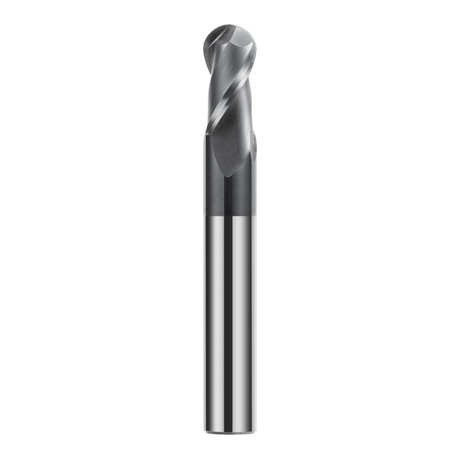
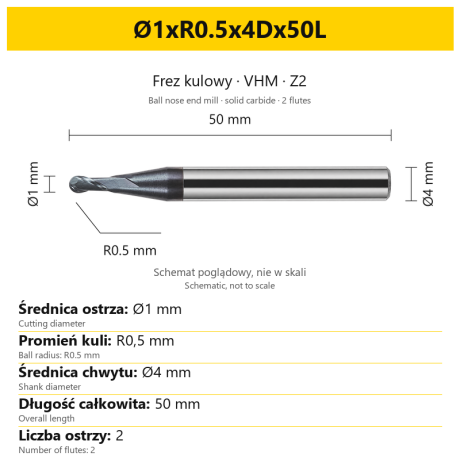
2-Flute Carbide Ball Nose End Mill - HYPERCUT
Ø1xR0.5x4Dx50L Ø1.5xR0.75x4Dx50L Ø2xR1x4Dx50L Ø2.5xR1.25x4Dx50L Ø3xR1.5x3Dx50L + 26 morePrice €10.09Price €8.21without VAT -
Bestseller
 2-Flute End Mills 0.00
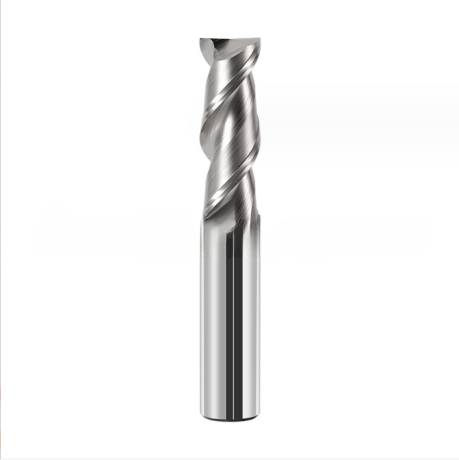
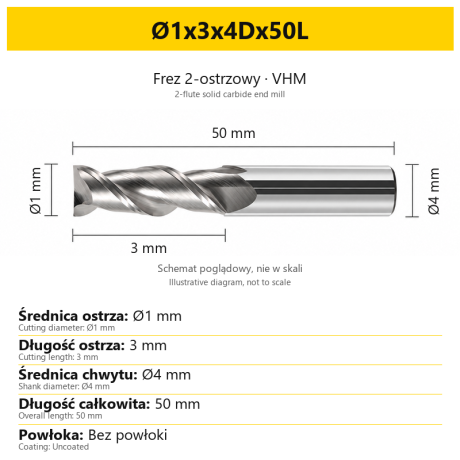
2-Flute Carbide End Mill for Aluminium
Ø1x3x4Dx50L Ø1.5x4x4Dx50L Ø2x6x4Dx50L Ø2.5x7.5x4Dx50L Ø3x9x3Dx50L + 31 morePrice €5.33Price €4.33without VAT -
Bestseller
 2-Flute End Mills 0.00
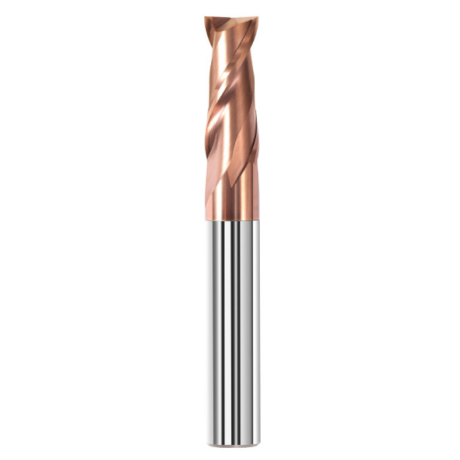
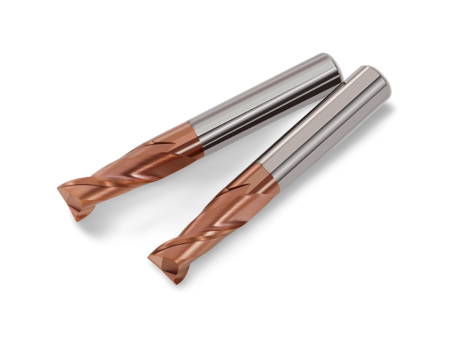
2-Flute Carbide End Mill for Steel 55 HRC - TiSiN - Solid Carbide
Ø6x24x6Dx75L Ø8x25x8Dx75L Ø4x20x4Dx100L Ø5x30x5Dx100L Ø6x30x6Dx100L + 31 morePrice €4.38Price €3.56without VAT -
Bestseller
 Ball Nose End Mills 0.00
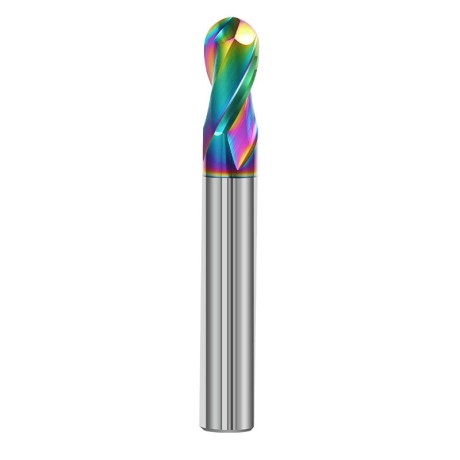
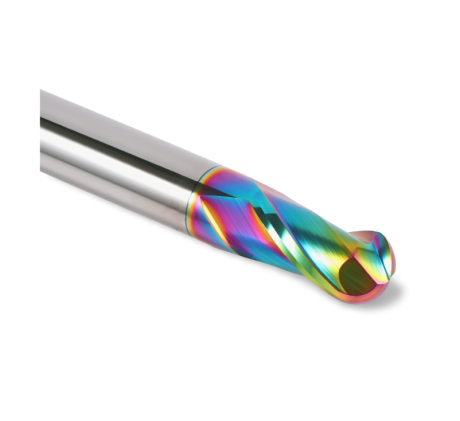
2-Flute DLC Coated Carbide Ball Nose End Mill| DuraEdge Alu
Ø1.0xR0.5x4Dx50L Ø1.5xR0.75x4Dx50L Ø2.0xR1x4Dx50L Ø2.5xR1.25x4Dx50L Ø3.0xR1.5x3Dx50L + 34 morePrice €7.85Price €6.38without VAT -
Bestseller
 2-Flute End Mills 0.00
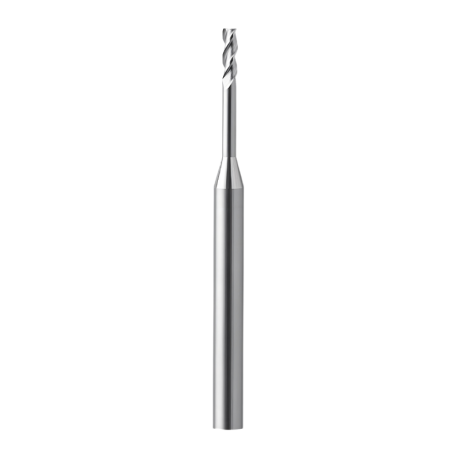
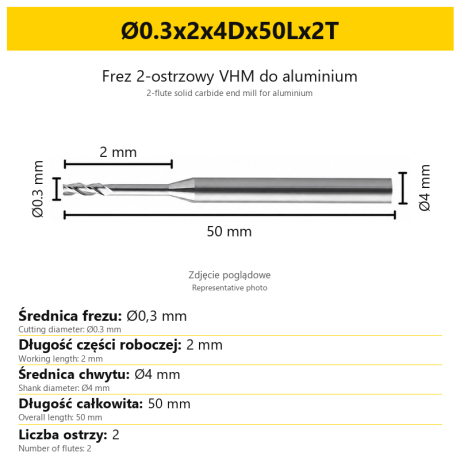
2-Flute End Mill for Aluminium | VHM | Miniature Ø0.3 - Ø0.9
Ø0.3x2x4Dx50Lx2T Ø0.3x3x4Dx50Lx2T Ø0.3x4x4Dx50Lx2T Ø0.4x2x4Dx50Lx2T Ø0.4x3x4Dx50Lx2T + 28 morePrice €7.95Price €6.47without VAT -
Bestseller
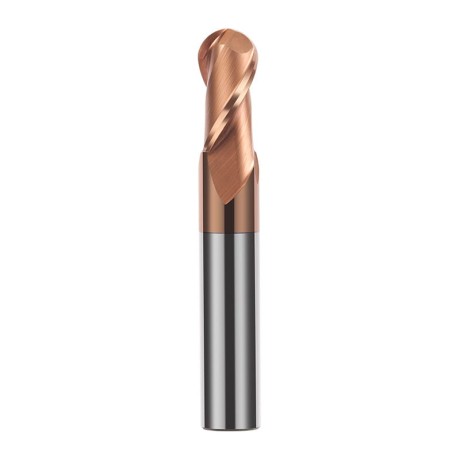
 Ball Nose End Mills 0.00
2-Flute TiSiN Coated Carbide Ball Nose End Mill
Ø1xR0.5x4Dx50L Ø1.5xR0.75x4Dx50L Ø2xR1x4Dx50L Ø2.5xR1.25x4Dx50L Ø3xR1.5x3Dx50L + 38 morePrice €7.24Price €5.89without VAT -
Bestseller
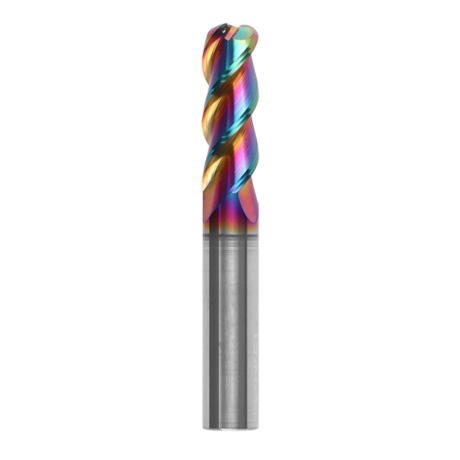
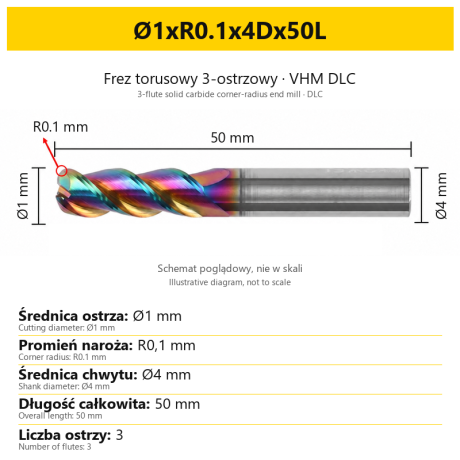
3-Flute Carbide Corner Radius End Mill for Aluminium| AL DLC
Ø1xR0.1x4Dx50L Ø1xR0.2x4Dx50L Ø1xR0.3x4Dx50L Ø1.5xR0.1x4Dx50L Ø1.5xR0.2x4Dx50L + 137 morePrice €5.89Price €4.79without VAT -
Bestseller
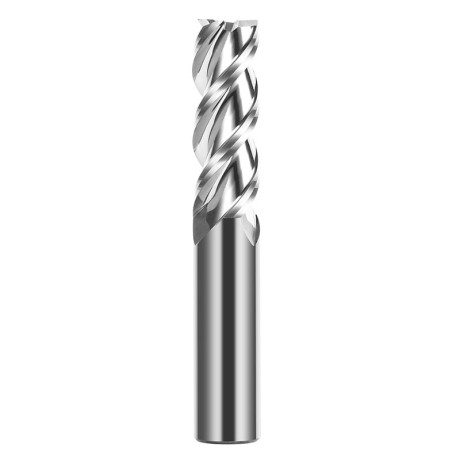
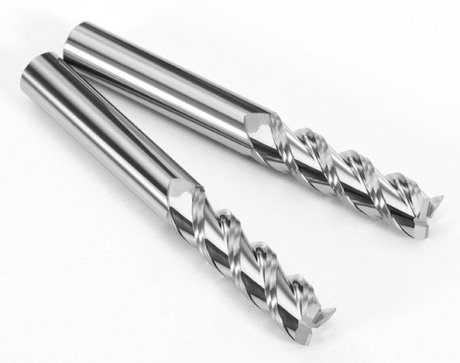 3-Flute End Mills 0.00
3-Flute Carbide End Mill VHM Z-3 for Aluminium| TriMill AL
Ø1x3xD4x50L Ø1.5x5x4Dx50L Ø2x6x4Dx50L Ø2.5x8x4Dx50L Ø3x9x3Dx50L + 41 morePrice €5.08Price €4.13without VAT -
Bestseller
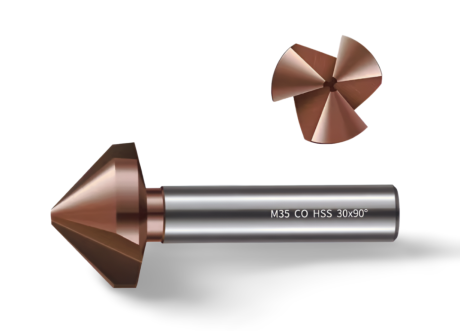
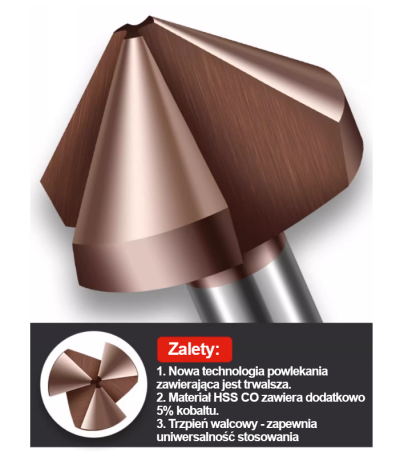 Countersinks 0.00
3-Flute Countersink Fi4.5-fi60, 90° - HSS-CO - 5% Kobaltu | Straight Shank
Ø4.5 x 4 x 90° x 40L Ø5 x 5 x 90° x 45L Ø6.3 x 5 x 90° x 45L Ø8.3 x 6 x 90° x 50L Ø10.4 x 6 x 90° x 50L + 12 morePrice €4.79Price €3.89without VAT -
Bestseller
 3-Flute End Mills 0.00
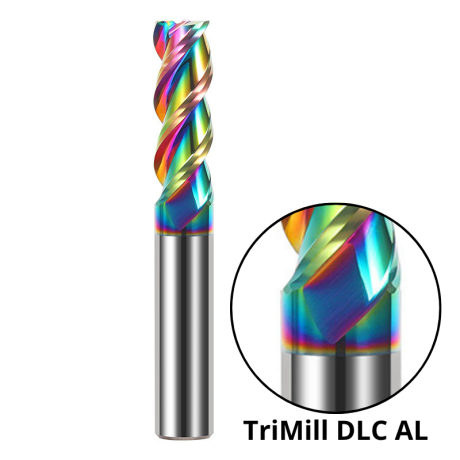
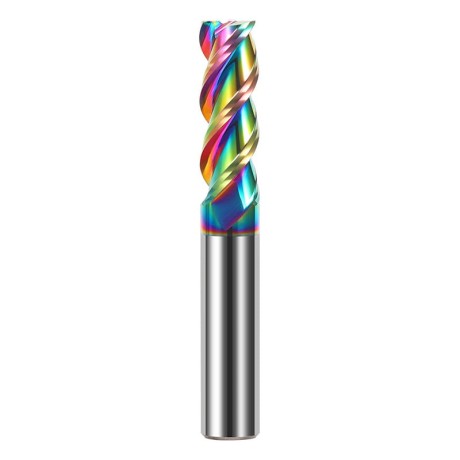
3-Flute DLC Coated Carbide End Mill | TriMill DLC AL
Ø1x3x4Dx50L Ø1.5x5x4Dx50L Ø2x6x4Dx50L Ø2.5x8x4Dx50L Ø3x8x3Dx50L + 38 morePrice €5.05Price €4.10without VAT -
Bestseller

 3-Flute End Mills 0.00
3-Flute HRC65 DLC Coated Carbide End Mill, U-Shaped Flute, for Aluminium | DuraEdge3 Alu
Ø1x3x4Dx50L Ø1.5x5x4Dx50L Ø2x6x4Dx50L Ø2.5x8x4Dx50L Ø3x9x3Dx50L + 40 morePrice €6.73Price €5.47without VAT