










2-Flute TiSiN End Mill | VHM | Miniature Ø0.3 - Ø0.9
Shipping costs are not included in the price.
Shipping costs are not included in the price.
Ask about the product

The administrator of personal data is Kortools. We process it to respond to your inquiry. More information regarding the processing of personal data can be found in privacy policy.
Select a product variant:
Individual variants may differ in price
Product code: 1193-31611
Product description
TiSiN solid carbide end mill · 2 flutes · Ø0.3–0.9 mm
For small features, slots and side milling · Ø4 mm shank · 50 mm overall length
A TiSiN-coated solid carbide end mill with 2 cutting edges for milling small features in steel, stainless steel and cast iron. The Ø0.3–0.9 mm diameter range lets you select a tool for fine details in the workpiece.
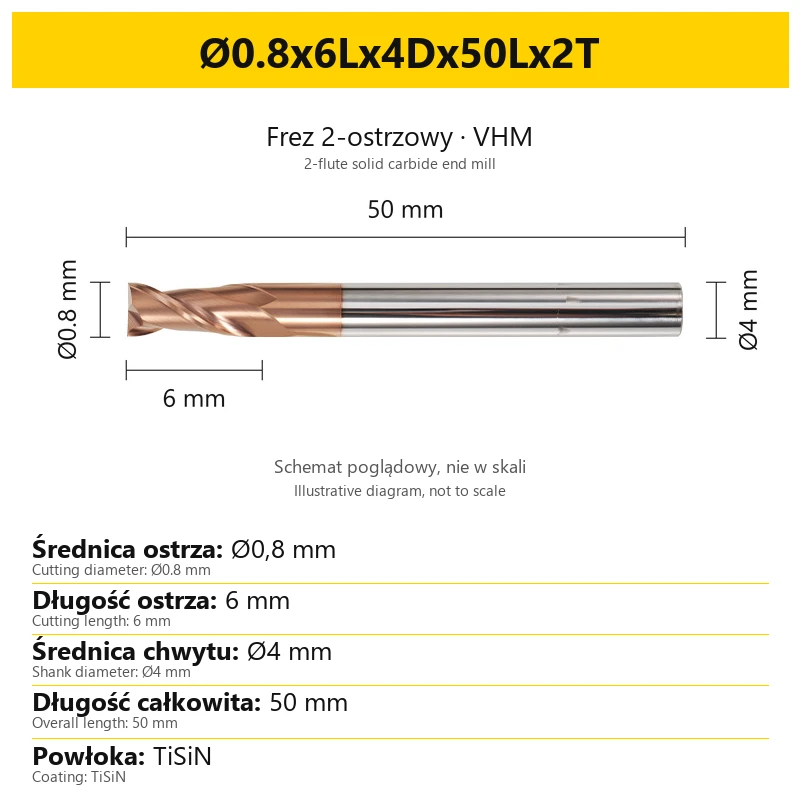
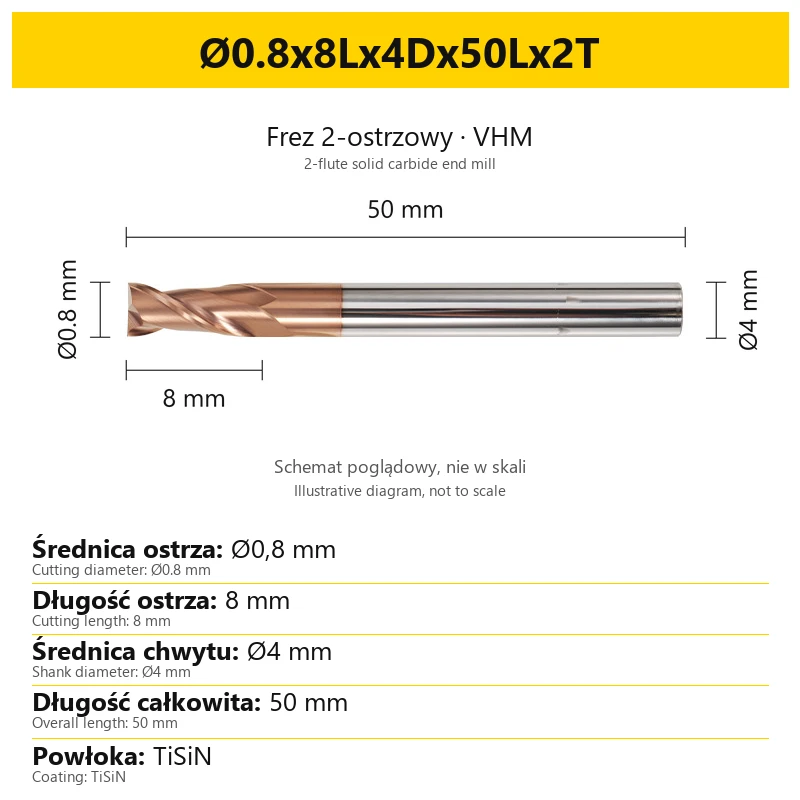
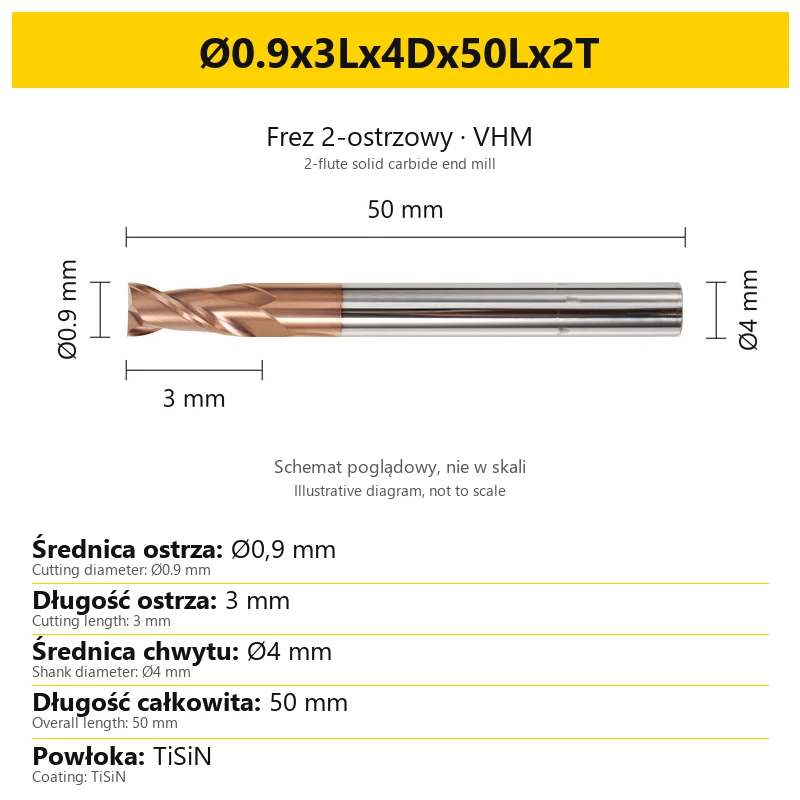
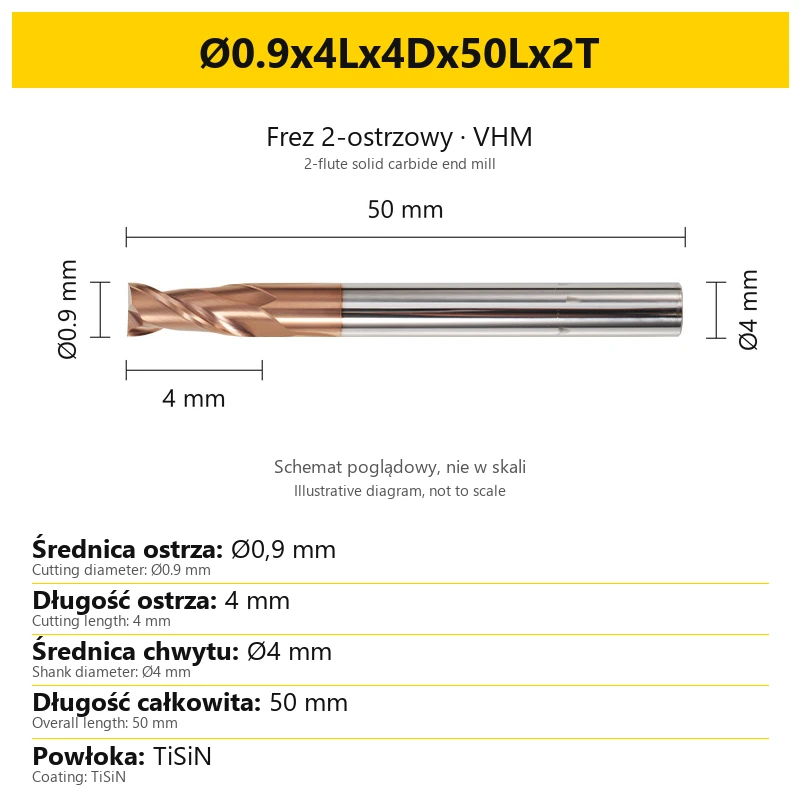
Every tool in this family has a 4 mm shank and a 50 mm overall length. Variants differ in cutting diameter and length of cut. Check these two dimensions together when selecting the cutting section for your operation.
1. Workpiece materials and applications
Select the tool for the specific material grade, hardness and workpiece geometry. With small diameters, spindle capability, tool holding and actual stick-out also matter.
| Workpiece material | Selection considerations |
|---|---|
| Steel | Check the grade and material condition, including heat treatment. The general term “steel” alone is insufficient to select cutting conditions. |
| Stainless steel | Match cutting conditions to the particular grade and operation. Keep chips moving away from the cutting zone. |
| Cast iron | Account for the type of cast iron and workpiece clamping rigidity. Select a tool size that fits the available space and required geometry. |
2. Tool construction and specifications
The designation 2T identifies the number of flutes. The cutting diameter is smaller than the shank diameter; select the holder for the 4 mm shank regardless of the cutting diameter.
| Parameter | Value |
|---|---|
| Tool type | Solid end mill |
| Tool material | VHM — solid carbide |
| Coating | TiSiN |
| Number of flutes | 2 — designated 2T / Z2 |
| Cutting diameter | Ø0.3–0.9 mm, depending on the variant |
| Length of cut | 2–10 mm, depending on the variant |
| Shank diameter | 4 mm |
| Overall length | 50 mm |
| Shank type | Cylindrical |
The selected variant shows its exact combination of cutting diameter and length of cut. The ranges above describe the tool family; they do not mean that every diameter is available with every cutting length.
3. Milling operations
| Operation | Selecting for the job |
|---|---|
| Side milling | Machining walls and side surfaces. Compare the required machining height with the length of cut and check clearance for the shank and holder. |
| Slot milling | Machining narrow slots. Match the diameter to the slot width and select the depth per pass for the tool load and chip evacuation conditions. |
| Small flat surfaces | Milling local surfaces within the capabilities of the tool geometry. Match the toolpath and stock allowance to the cutting diameter. |
Length of cut is not a recommendation to engage the full cutting length in one pass. Select axial and radial engagement separately for the material and rigidity of the complete setup.
4. How to select a variant
- Choose the cutting diameter. Check slot width, clearance at walls and workpiece geometry. Avoid choosing a smaller tool unless the feature requires it.
- Select the length of cut. Use the shortest cutting section that provides the required access. A longer cutting section requires closer attention to cutting load.
- Check access and tool holding. Account for the transition to the shank, tool stick-out and clearance between the holder and workpiece. The shank diameter is 4 mm.
- Compare the complete designation with the dimension card. Check all dimensions after selecting a variant. The selector shows current size combinations, price and availability.
5. Understanding the size designation
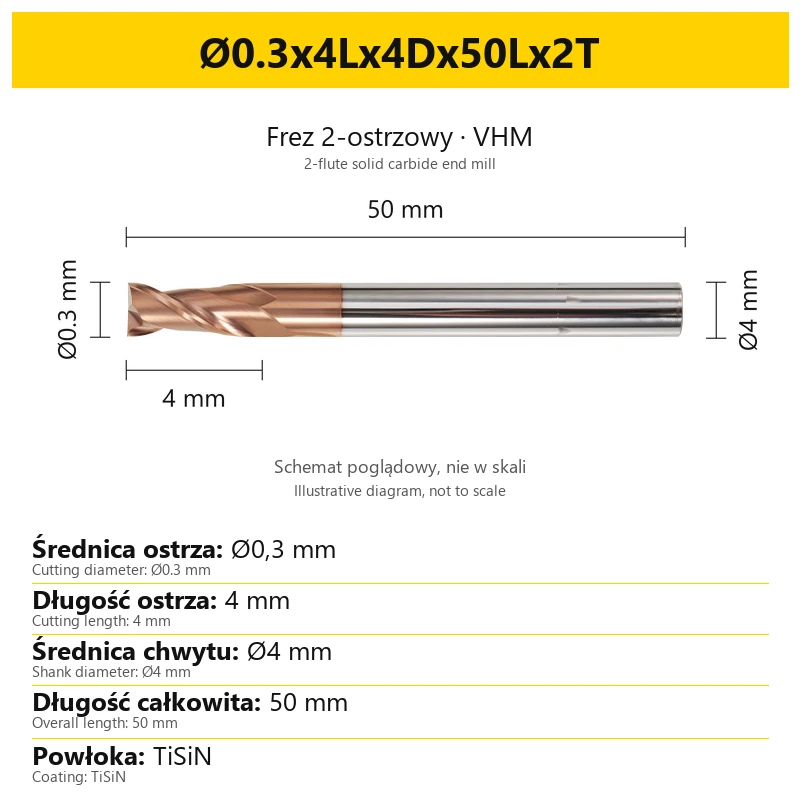
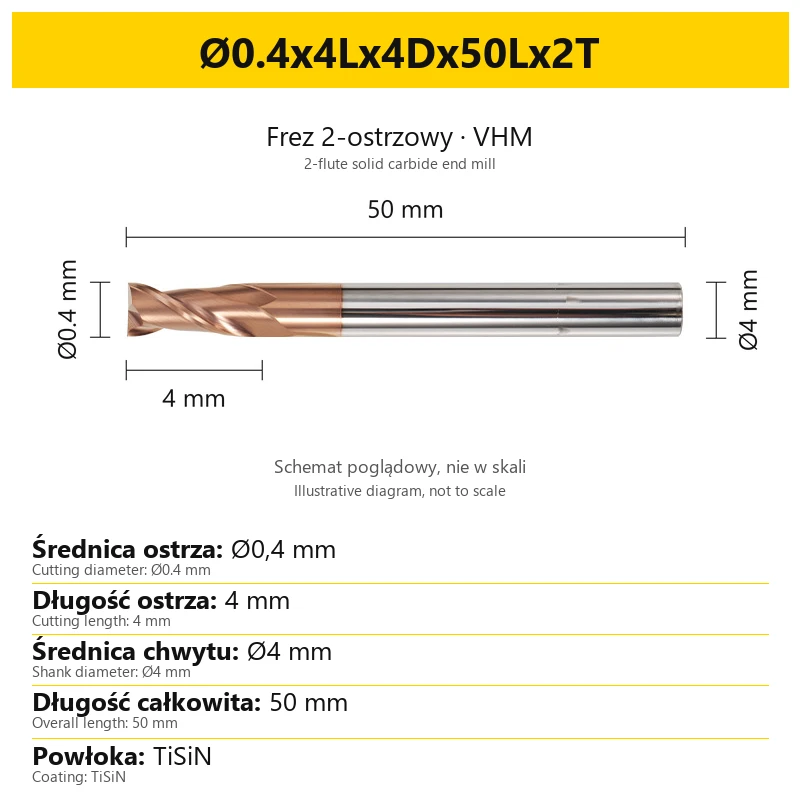
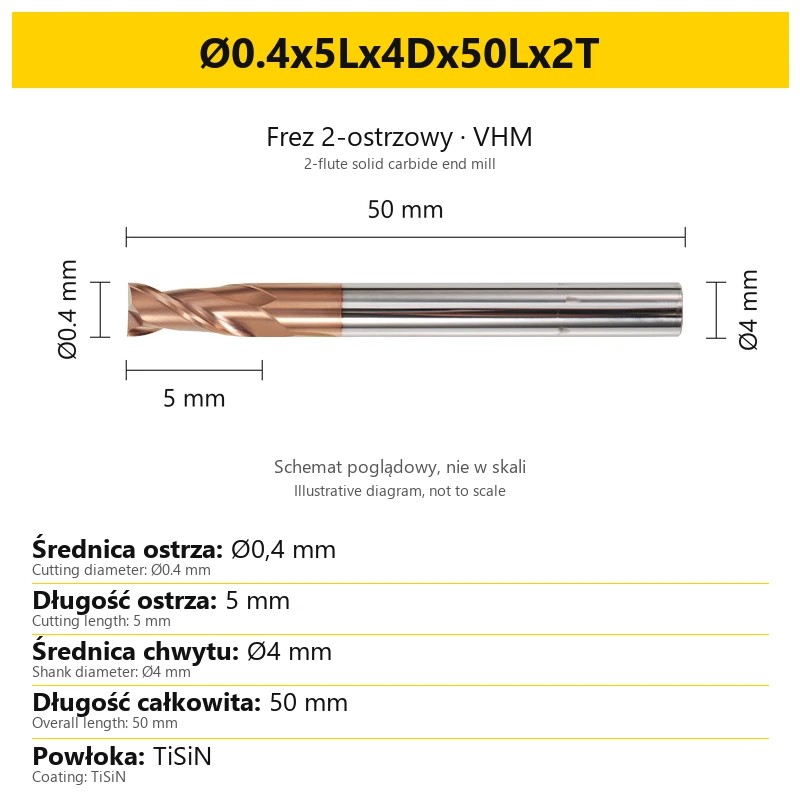
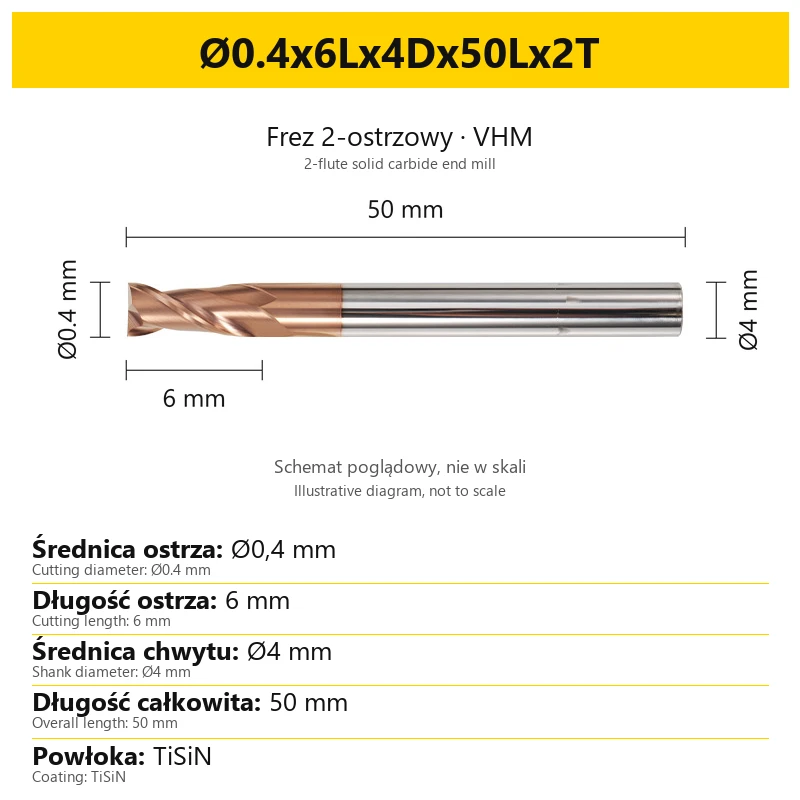
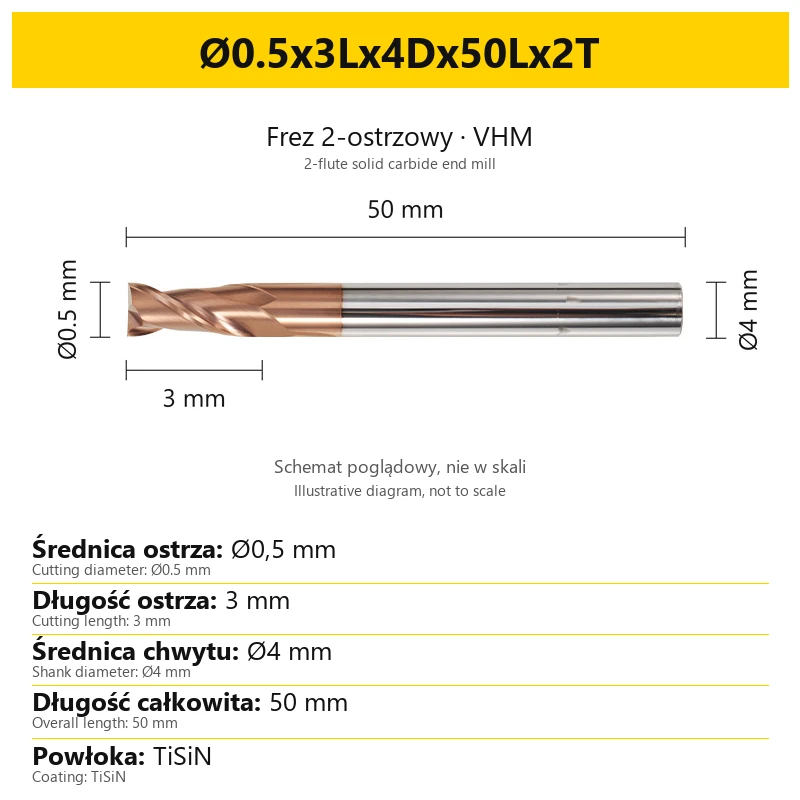
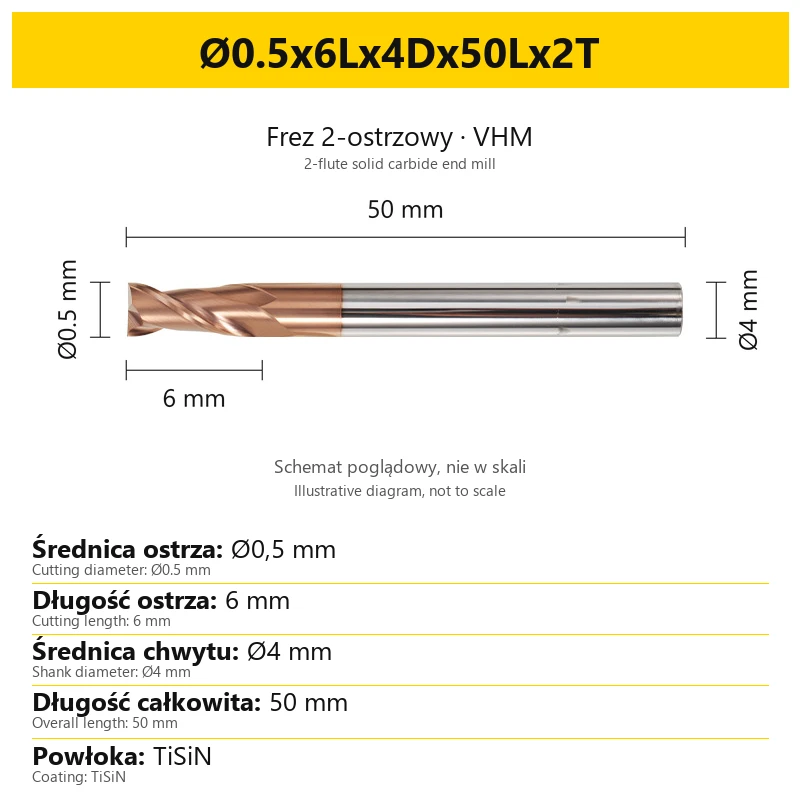
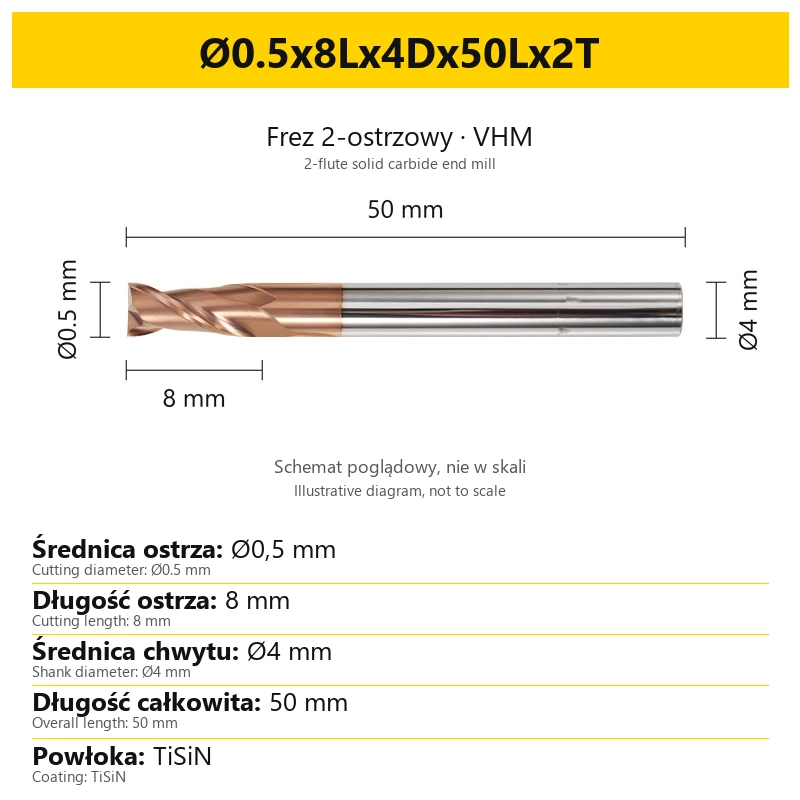
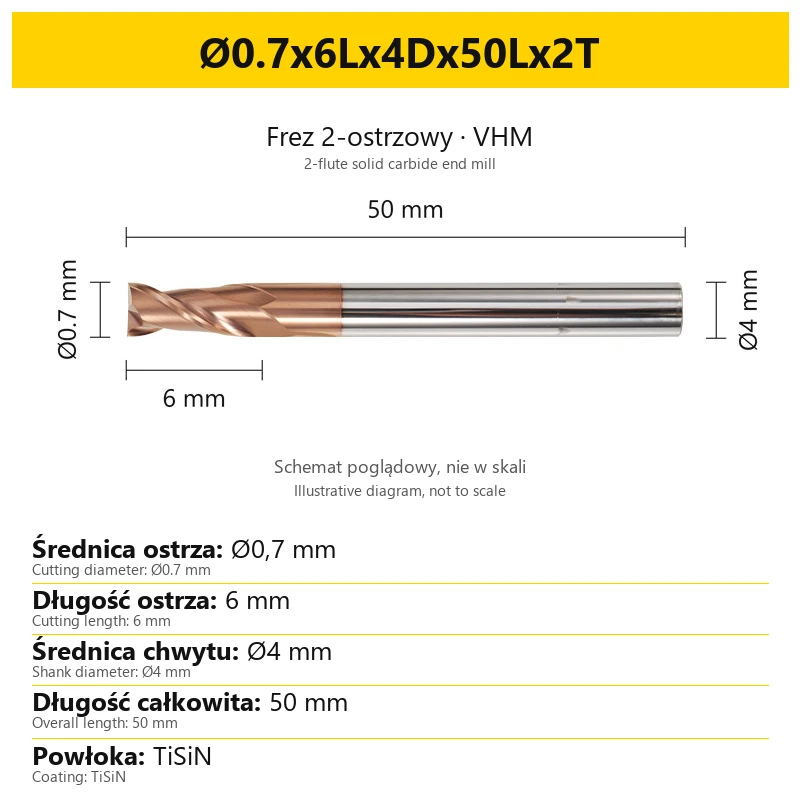
Example: Ø0.3x2Lx4Dx50Lx2T. All dimensions in the designation are in millimetres.
| Designation element | Meaning | Value in the example |
|---|---|---|
| Ø0.3 | Cutting diameter | 0.3 mm |
| 2L | Length of cut — second dimension | 2 mm |
| 4D | Shank diameter | 4 mm |
| 50L | Overall length | 50 mm |
| 2T | Number of flutes | 2 |
The letter L appears twice: in the second dimension it denotes length of cut, while 50L denotes overall length. The D after 4 identifies the shank diameter.
Variant cards show an illustrative photograph with labelled dimensions. Select by the numerical dimensions; image proportions are not a scale drawing of the tool.
6. Tool holding and small-diameter milling
With small diameters, even slight runout or excessive stick-out can noticeably change the load on the cutting edges. Preparing the tool, holder and spindle is an important part of setting up the operation.
- Check runout with the tool mounted. Use a method suitable for the delicate cutting section and keep clamping surfaces clean.
- Minimise stick-out. Extend the tool only as far as the operation requires while maintaining correct shank engagement in the holder.
- Control chip evacuation. Avoid chip accumulation and recutting inside a slot. Match cooling and chip removal to the material and operation.
- Select cutting conditions for this diameter. Do not transfer speeds and feeds directly from a larger tool. Also account for flute count, cutting length and toolpath.
- Investigate irregular cutting. If vibration, unusual noise or poor surface finish develops, stop and inspect the cutting edges, clamping and cutting conditions.
For help selecting cutting conditions, provide the material grade and hardness, full tool size, operation, stick-out and spindle speed range. The TiSiN coating alone does not define a universal spindle speed or feed rate.
7. What you are ordering
| Item | Selection |
|---|---|
| Sales unit | 1 TiSiN-coated solid carbide end mill with 2 flutes |
| Size | The variant selected on the product page |
The quantity field specifies the number of individual tools in the chosen size. Before adding to the basket, compare the designation with the dimension card. Photographs showing several tools illustrate the product family.
8. Frequently asked questions
What do 2T and Z2 mean?
Both identify the flute count: this end mill has 2 cutting edges. They do not specify a workpiece material or package quantity.
Which collet or holder diameter should I choose?
Select the clamping arrangement for the 4 mm shank and follow the holder requirements. The cutting diameter at the beginning of the designation is smaller than the shank diameter.
Does a longer cutting section mean a longer tool?
The overall length is 50 mm throughout this family. Tools with the same cutting diameter can have different lengths of cut, so check the second dimension in the designation.
How do I choose spindle speed and feed rate?
Consider the material and hardness, diameter, flute count, operation and clamping rigidity. Provide the full variant designation and machine setup when requesting cutting advice.
Bestsellers
-
Bestseller
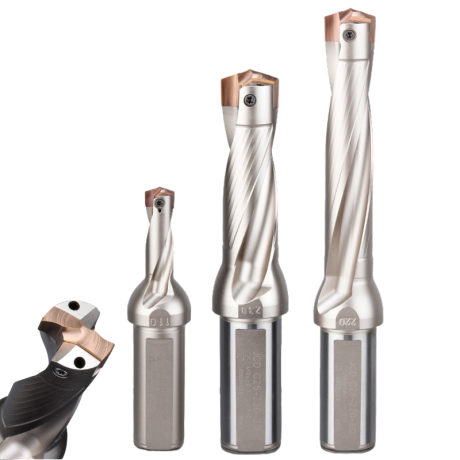
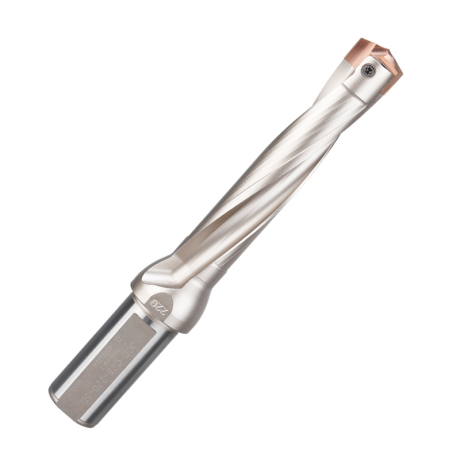
JCD modular drill with replaceable tip - internal cooling, for deep holes | GrotXD
JCD C20-100-3D Ø10~10.9 JCD C20-110-3D Ø11~11.9 JCD C20-120-3D Ø12~12.9 JCD C20-130-3D Ø13~13.9 JCD C20-140-3D Ø14~14.9 + 61 morePrice €69.86Price €56.79without VAT -
Bestseller
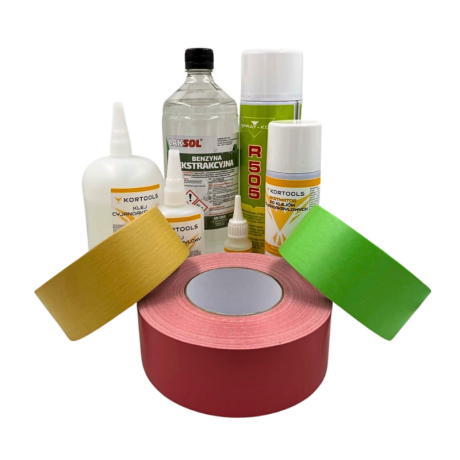
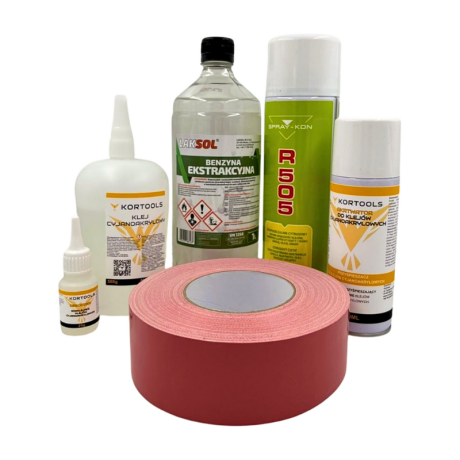
Kortools Adhesive + Tape CNC Workholding Kit
Yellow tape 5cm x 50m; adhesive 100g Yellow tape 5cm x 50m; adhesive 500g Yellow tape 10cm x 50m; adhesive 100g Yellow tape 10cm x 50m; adhesive 500g Green tape 5cm x 50m; adhesive 100g + 7 morePrice €44.66Price €36.31without VAT -
Price €17.18Price €13.97without VAT
-
Price €7.10Price €5.77without VAT
-
Price €7.56Price €6.14without VAT
-
Bestseller
 Other Accessories 0.00
CNC Chip Fan / Chip Blower
Complete CNC chip fan Kit: blades, springs, pins and screwsPrice €53.82Price €43.76without VAT -
Bestseller
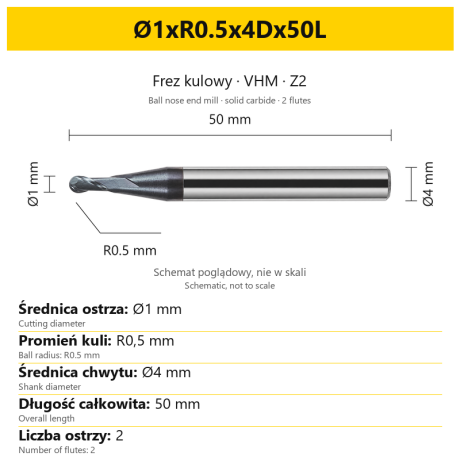 Ball Nose End Mills 0.00
2-Flute Carbide Ball Nose End Mill - HYPERCUT
Ø1xR0.5x4Dx50L Ø1.5xR0.75x4Dx50L Ø2xR1x4Dx50L Ø2.5xR1.25x4Dx50L Ø3xR1.5x3Dx50L + 26 morePrice €10.14Price €8.25without VAT -
Bestseller
 2-Flute End Mills 0.00
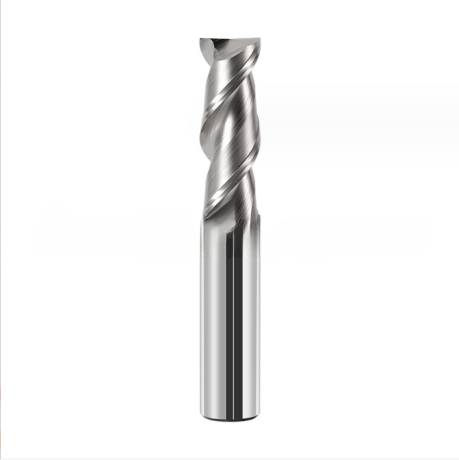
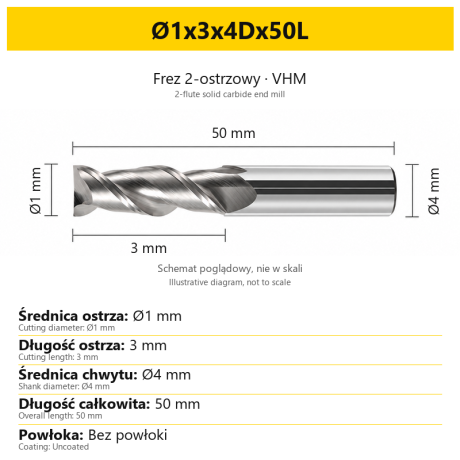
2-Flute Carbide End Mill for Aluminium
Ø1x3x4Dx50L Ø1.5x4x4Dx50L Ø2x6x4Dx50L Ø2.5x7.5x4Dx50L Ø3x9x3Dx50L + 31 morePrice €5.35Price €4.35without VAT -
Bestseller
 2-Flute End Mills 0.00
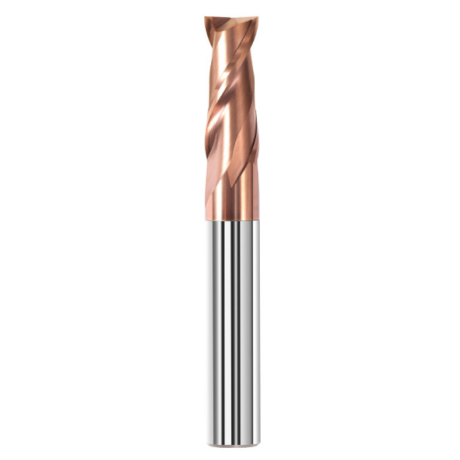
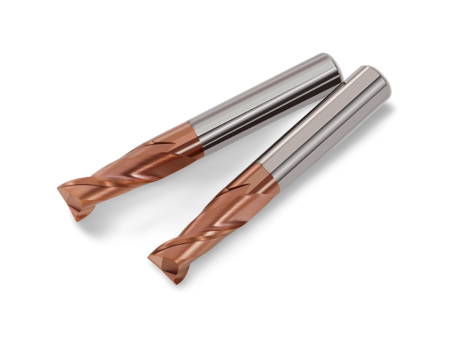
2-Flute Carbide End Mill for Steel 55 HRC - TiSiN - Solid Carbide
Ø6x24x6Dx75L Ø8x25x8Dx75L Ø4x20x4Dx100L Ø5x30x5Dx100L Ø6x30x6Dx100L + 31 morePrice €4.40Price €3.58without VAT -
Bestseller
 Ball Nose End Mills 0.00
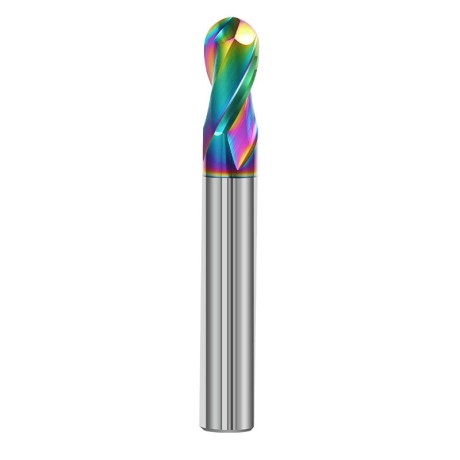
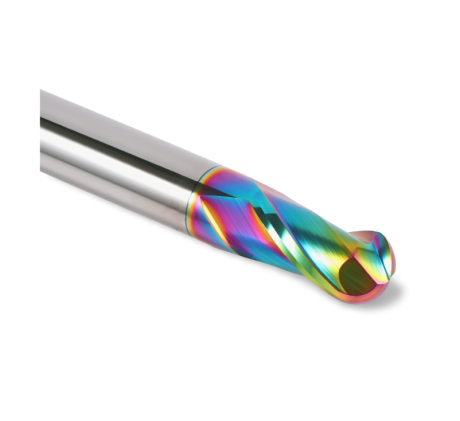
2-Flute DLC Coated Carbide Ball Nose End Mill| DuraEdge Alu
Ø1.0xR0.5x4Dx50L Ø1.5xR0.75x4Dx50L Ø2.0xR1x4Dx50L Ø2.5xR1.25x4Dx50L Ø3.0xR1.5x3Dx50L + 34 morePrice €7.89Price €6.41without VAT -
Bestseller
 2-Flute End Mills 0.00
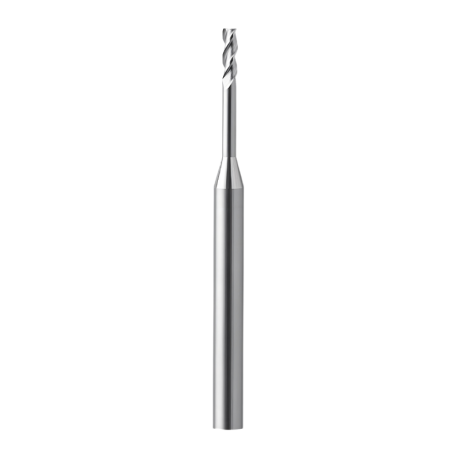
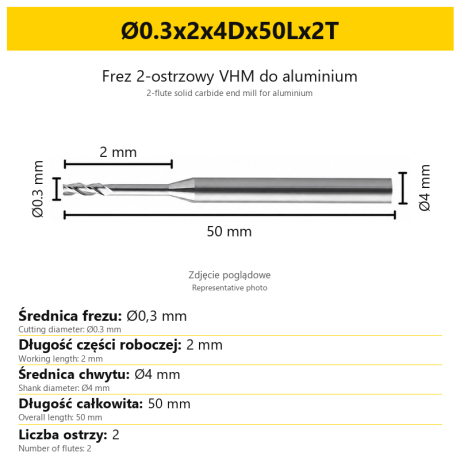
2-Flute End Mill for Aluminium | VHM | Miniature Ø0.3 - Ø0.9
Ø0.3x2x4Dx50Lx2T Ø0.3x3x4Dx50Lx2T Ø0.3x4x4Dx50Lx2T Ø0.4x2x4Dx50Lx2T Ø0.4x3x4Dx50Lx2T + 28 morePrice €7.99Price €6.50without VAT -
Bestseller
 Ball Nose End Mills 0.00
2-Flute TiSiN Coated Carbide Ball Nose End Mill
Ø1xR0.5x4Dx50L Ø1.5xR0.75x4Dx50L Ø2xR1x4Dx50L Ø2.5xR1.25x4Dx50L Ø3xR1.5x3Dx50L + 38 morePrice €7.28Price €5.92without VAT -
Bestseller
3-Flute Carbide Corner Radius End Mill for Aluminium| AL DLC
Ø1xR0.1x4Dx50L Ø1xR0.2x4Dx50L Ø1xR0.3x4Dx50L Ø1.5xR0.1x4Dx50L Ø1.5xR0.2x4Dx50L + 137 morePrice €4.96Price €4.04without VAT -
Bestseller
 3-Flute End Mills 0.00
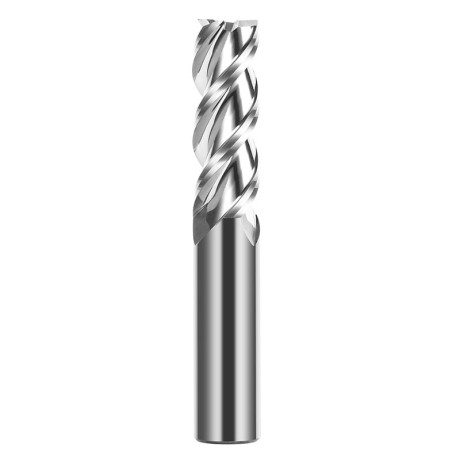
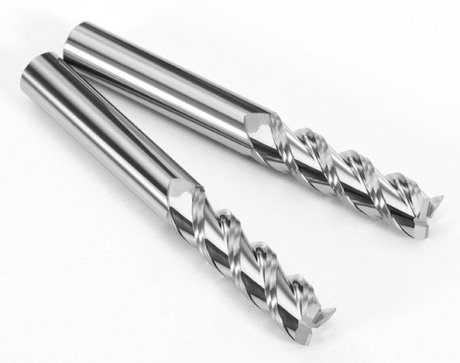
3-Flute Carbide End Mill VHM Z-3 for Aluminium| TriMill AL
Ø1x3xD4x50L Ø1.5x5x4Dx50L Ø2x6x4Dx50L Ø2.5x8x4Dx50L Ø3x9x3Dx50L + 41 morePrice €5.10Price €4.15without VAT -
Bestseller
 Countersinks 0.00
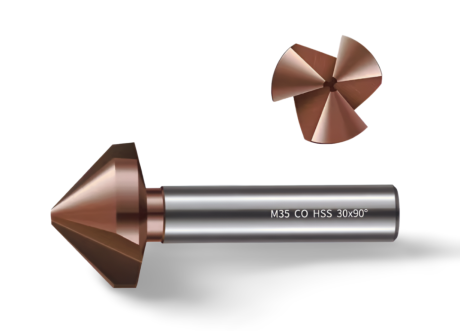
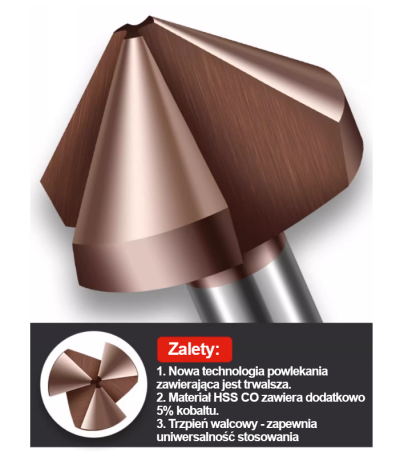
3-Flute Countersink Fi4.5-fi60, 90° - HSS-CO - 5% Kobaltu | Straight Shank
Ø4.5 x 4 x 90° x 40L Ø5 x 5 x 90° x 45L Ø6.3 x 5 x 90° x 45L Ø8.3 x 6 x 90° x 50L Ø10.4 x 6 x 90° x 50L + 12 morePrice €4.81Price €3.91without VAT -
Bestseller
 3-Flute End Mills 0.00
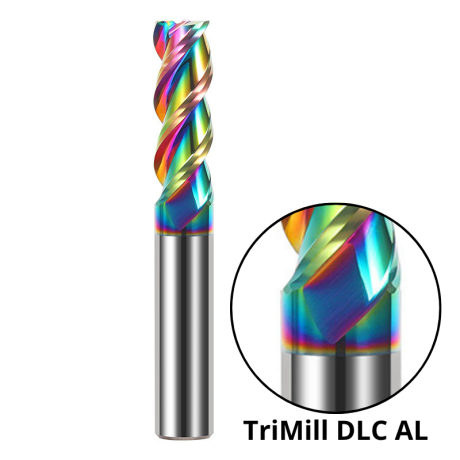
3-Flute DLC Coated Carbide End Mill | TriMill DLC AL
Ø1x3x4Dx50L Ø1.5x5x4Dx50L Ø2x6x4Dx50L Ø2.5x8x4Dx50L Ø3x8x3Dx50L + 38 morePrice €5.07Price €4.12without VAT