




4-Flute Carbide End Mill VHM TiSiN Coated Roughing
Shipping costs are not included in the price.
Shipping costs are not included in the price.
Ask about the product

The administrator of personal data is Kortools. We process it to respond to your inquiry. More information regarding the processing of personal data can be found in privacy policy.
Select a product variant:
Individual variants may differ in price
Product code: 19B7-502CD
Product description
TiSiN-coated solid carbide roughing end mill, Z4
With chip breaker · for steel, stainless steel and cast iron · workpiece hardness up to 55 HRC
Solid carbide end mill with four flutes, a TiSiN coating and serrated cutting edges for rough machining. This rougher, also known as a ripper, removes stock when milling pockets, slots and contours, and in trochoidal milling operations.
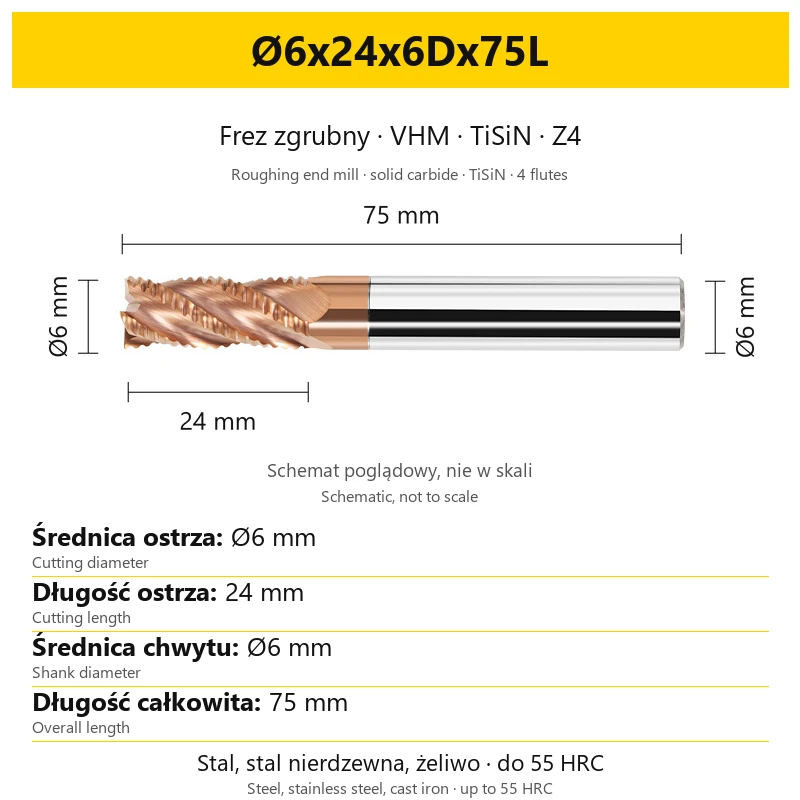
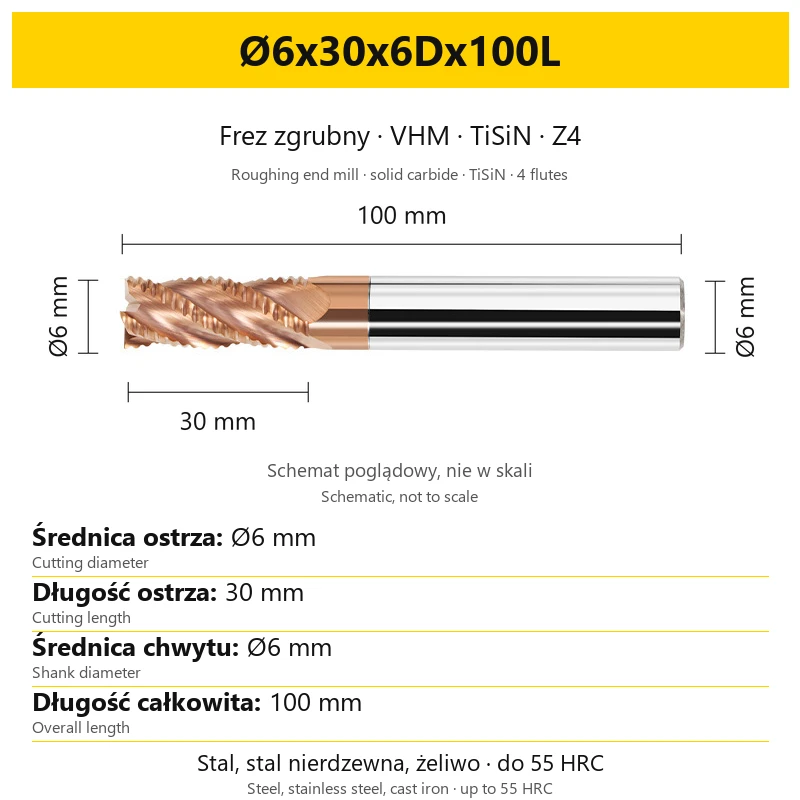
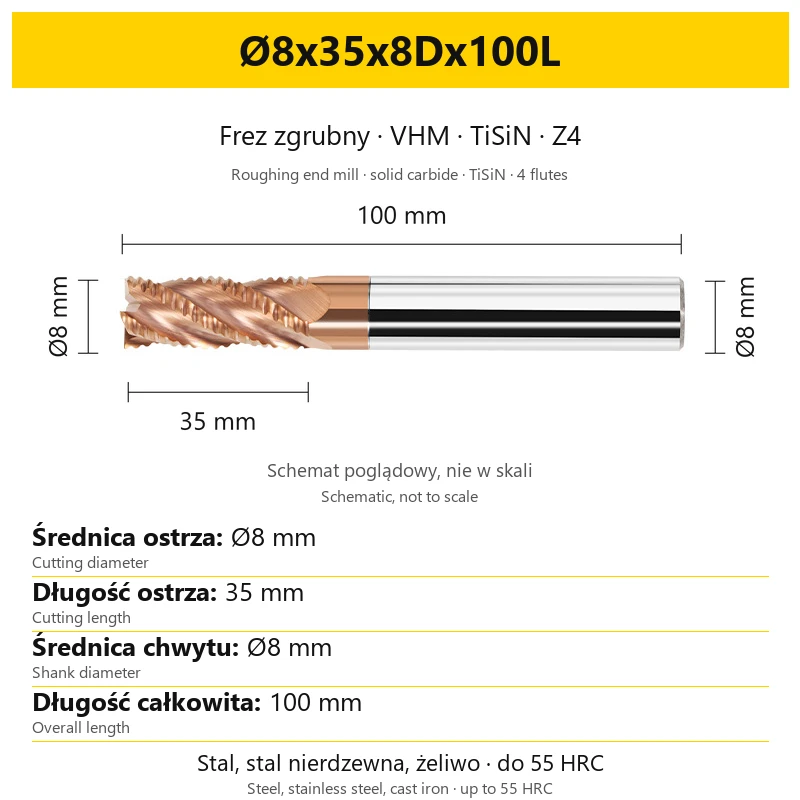
Select the tool by comparing cutting diameter, cutting length, shank diameter and overall length. The range covers cutting diameters of Ø4–20 mm and overall lengths of 50–150 mm. The available dimension combinations are shown in the variant selector and on the corresponding dimension cards.
1. Roughing and chip breaking
The serrations along the cutting edges form a chip-breaking geometry. During milling, they help divide the chips into smaller pieces that are easier to evacuate from the cutting zone. This feature is useful when removing stock, particularly in pockets and slots.
2. Workpiece groups and milling operations
This end mill is intended for steel, stainless steel and cast iron. Select the cutting conditions for the specific grade and hardness of the workpiece. The up-to-55-HRC range refers to the workpiece, rather than to the hardness of the tool itself.
| Operation | Intended use |
|---|---|
| Rough machining | Stock removal when preparing the shape of a component. |
| Pocket milling | Removing stock from a pocket along a programmed toolpath. |
| Contouring and side milling | Machining outlines, external profiles and component walls. |
| Slots and channels | Milling slots, including U-shaped channels, with a tool size suited to the geometry. |
| Trochoidal milling | Stock removal using a trochoidal toolpath prepared in the CNC program. |
| Helical interpolation | Milling holes along a helical path, with a suitable tool diameter and programmed path. |
Different operations produce different levels of cutting-edge engagement. Cutting conditions suitable for side milling may not be suitable for full-width slotting.
3. Technical specification
| Parameter | Specification |
|---|---|
| Tool substrate | VHM — solid carbide |
| Coating | TiSiN — titanium silicon nitride |
| Flute count | 4 — Z4 |
| Cutting edges | Serrated, with chip-breaking geometry |
| Shank | Cylindrical; diameter specified for the selected variant |
| Workpiece groups | Steel, stainless steel and cast iron |
| Workpiece hardness | Up to 55 HRC |
4. Dimensions and size selection
| Dimension | Range within the family | What to check |
|---|---|---|
| Cutting diameter | Ø4–20 mm | Suitability for the slot, pocket or contour to be machined. |
| Cutting length | 12–75 mm | The length of the working part needed for the planned operation. |
| Shank diameter | Ø4–20 mm | Compatibility with the tool holder or clamping collet. |
| Overall length | 50, 60, 75, 100 or 150 mm | Required reach, allowing for the length held inside the tool holder. |
- Select the cutting diameter to suit the geometry being machined.
- Check the cutting length required for the operation; it is separate from the overall tool length.
- Verify the shank diameter before choosing the tool holder or collet.
- Choose an overall length that provides the required reach with the shortest practical overhang.
5. Reading the size designation
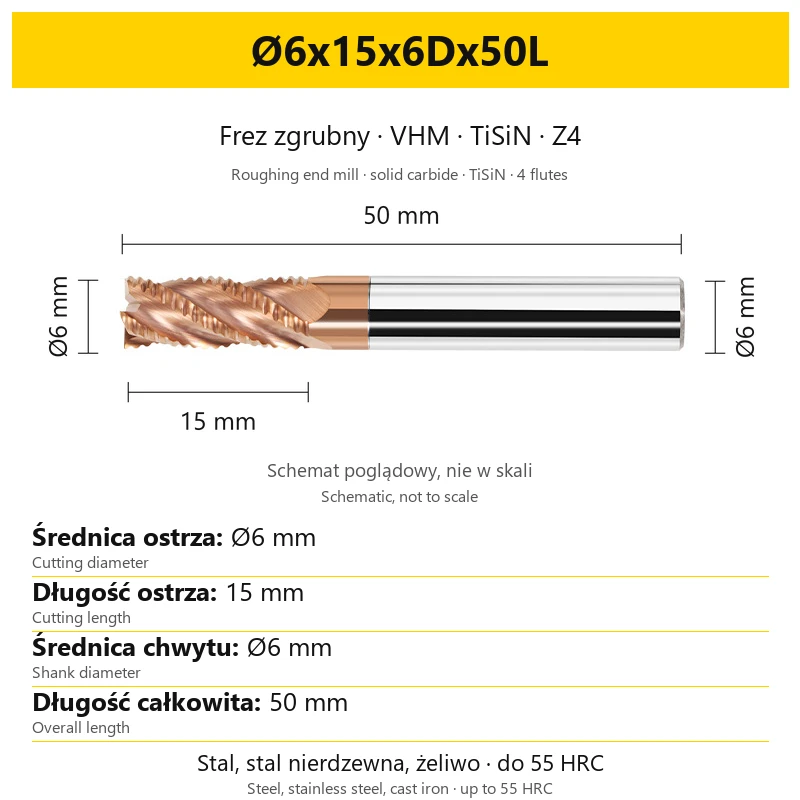
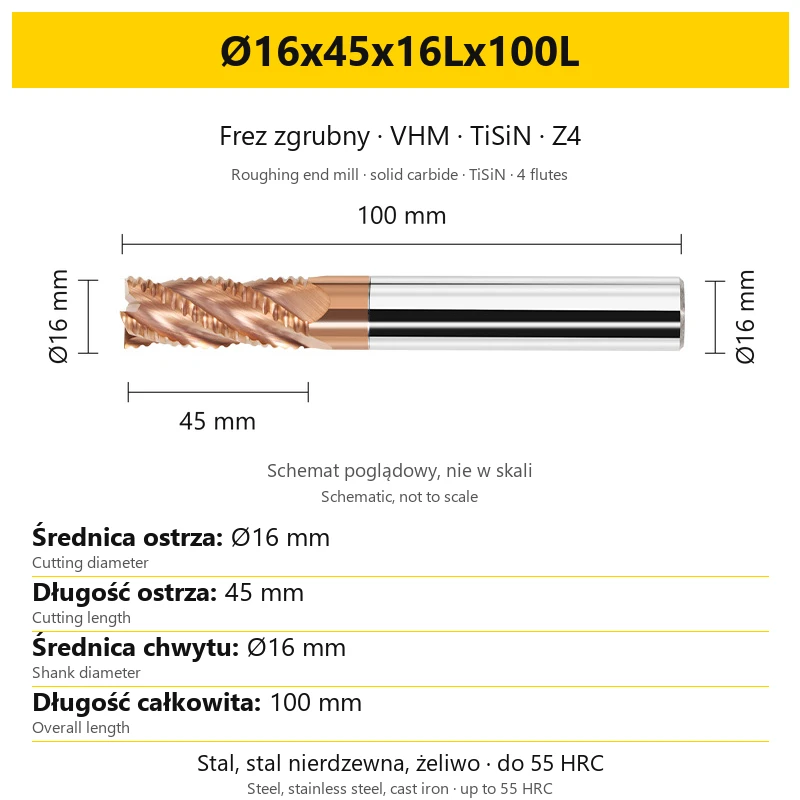
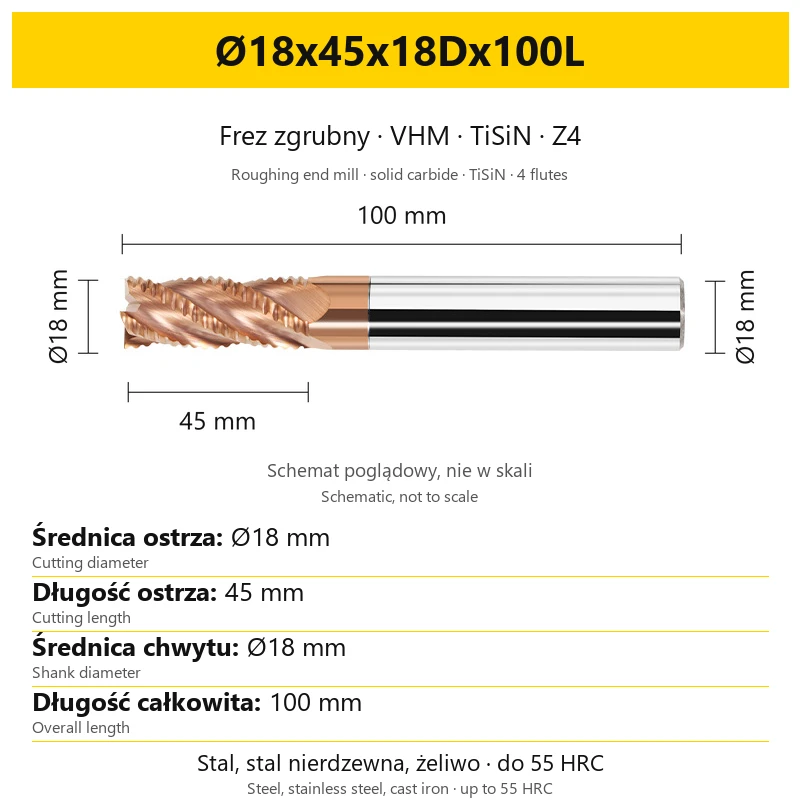
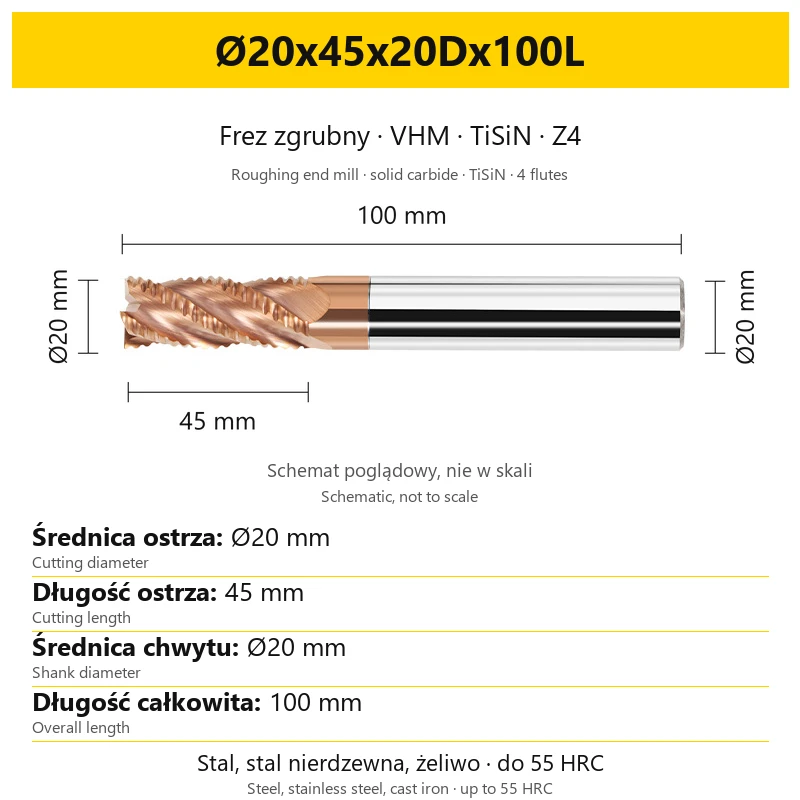
Example: Ø4x12x4Dx50L. All dimensions in this designation are given in millimetres.
| Part of the designation | Meaning | Value in the example |
|---|---|---|
| Ø4 | Cutting diameter | 4 mm |
| 12 | Cutting length of the working part | 12 mm |
| 4D | Shank diameter held by the tool holder | 4 mm |
| 50L | Overall tool length | 50 mm |
The sequence is cutting diameter × cutting length × shank diameter D × overall length L. The letter D after the third value refers to the shank, while L after the final value refers to the complete tool length.
Variant cards are illustrative diagrams, not to scale. Select the size using the numerical dimensions beside the dimension lines and in the card table. Do not measure diameter or length from the proportions of the illustration.
6. Clamping and cutting conditions
Before machining, inspect the cutting edges, correct seating of the shank and tool runout after clamping. Rigid workpiece and tool clamping remain part of process preparation when using an end mill with a chip breaker.
- Keep overhang to the required minimum. The further the tool projects from the holder, the more significant the rigidity of the complete setup becomes.
- Account for tool length when choosing cutting data. Select spindle speed, feed and depth of cut for the diameter, workpiece grade, operation and actual overhang.
- Monitor chip evacuation. Choose coolant or air delivery to suit the workpiece and the capabilities of the machine.
- Respond to unusual vibration or noise. Check clamping, cutting-edge condition and cutting conditions before continuing.
For cutting-data selection, identify the workpiece grade and hardness, full end-mill size, operation and planned overhang. There is no single spindle speed or feed setting suitable for every size and operation.
7. What the order includes
| Item | Your selection |
|---|---|
| Sales unit | 1 TiSiN-coated solid carbide roughing end mill, Z4 |
| Tool size | The variant selected in the size selector, specified by four dimensions |
| Quantity | The number of pieces of the selected size entered for the order |
Before adding the item to your basket, compare the full size designation with its dimension card. Selecting one diameter does not purchase a set of end mills or the other sizes displayed on the page.
8. Frequently asked questions
Is this end mill suitable for stainless steel?
Yes. Stainless steel, steel and cast iron are within its intended application range. Choose the cutting conditions for the specific workpiece grade, tool diameter and operation.
Does 55 HRC describe the hardness of the end mill?
No. In this description it refers to the workpiece hardness range. The tool itself is made of solid carbide and has a TiSiN coating.
Is overall length the same as cutting length?
No. Cutting length is the second dimension in the designation. Overall length is the final dimension, followed by L. Check both values before selecting a size.
Where can I check the exact dimensions?
Use the full size designation and the card displayed when you select a variant. Check all four dimensions; the image is an illustrative diagram rather than a drawing to scale.
Bestsellers
-
Bestseller
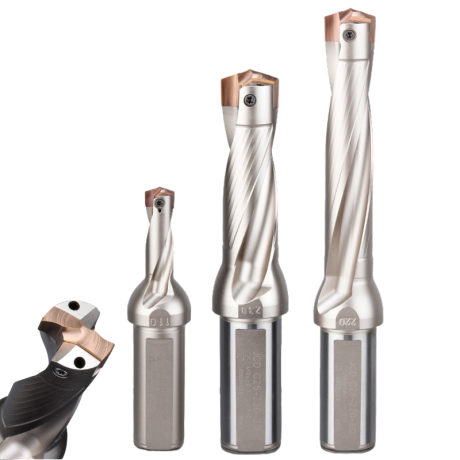
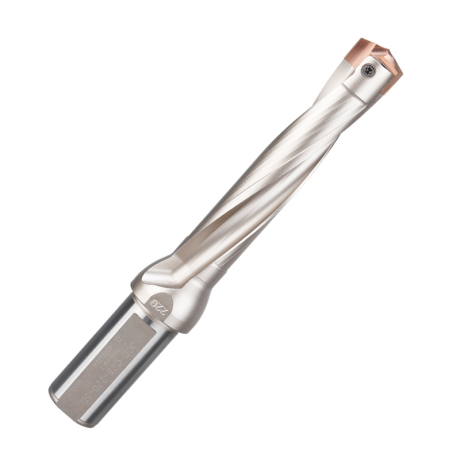
JCD modular drill with replaceable tip - internal cooling, for deep holes | GrotXD
JCD C20-100-3D Ø10~10.9 JCD C20-110-3D Ø11~11.9 JCD C20-120-3D Ø12~12.9 JCD C20-130-3D Ø13~13.9 JCD C20-140-3D Ø14~14.9 + 61 morePrice €69.77Price €56.72without VAT -
Bestseller
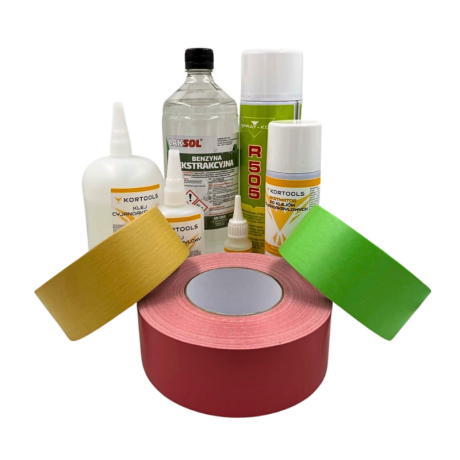
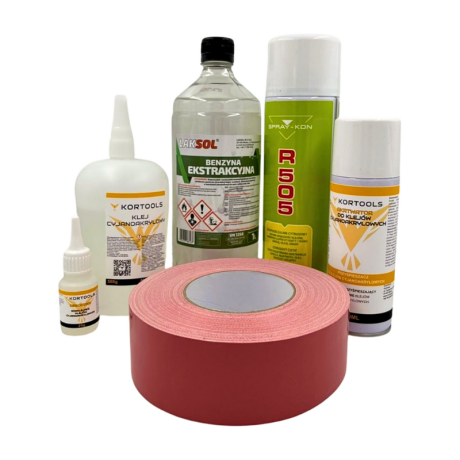
Kortools Adhesive + Tape CNC Workholding Kit
Yellow tape 5cm x 50m; adhesive 100g Yellow tape 5cm x 50m; adhesive 500g Yellow tape 10cm x 50m; adhesive 100g Yellow tape 10cm x 50m; adhesive 500g Green tape 5cm x 50m; adhesive 100g + 7 morePrice €44.61Price €36.27without VAT -
Price €17.16Price €13.95without VAT
-
Price €7.09Price €5.77without VAT
-
Price €7.55Price €6.14without VAT
-
Bestseller
 Other Accessories 0.00
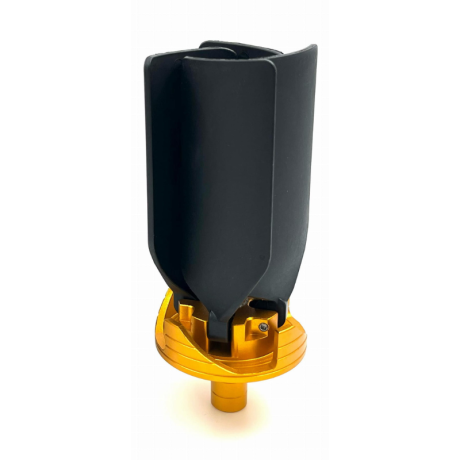
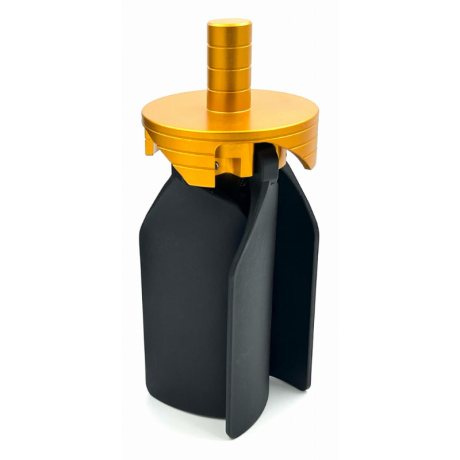
CNC Chip Fan / Chip Blower
Complete CNC chip fan Kit: blades, springs, pins and screwsPrice €53.76Price €43.70without VAT -
Bestseller
 Ball Nose End Mills 0.00
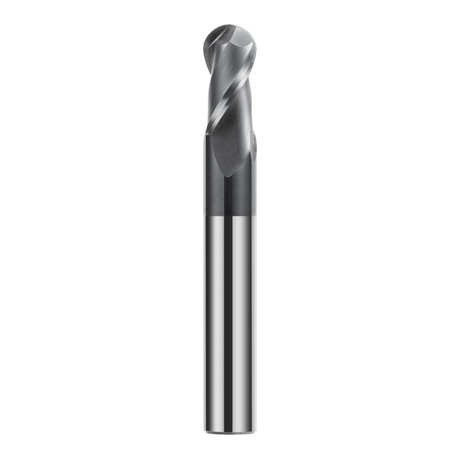
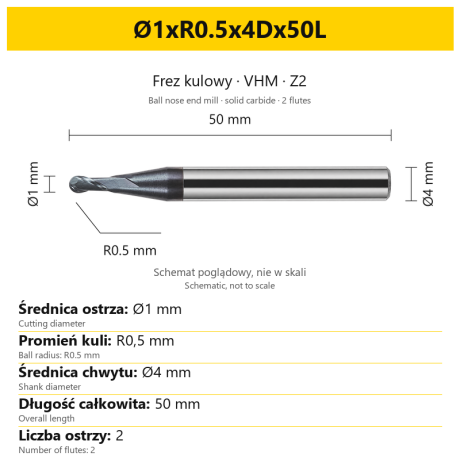
2-Flute Carbide Ball Nose End Mill - HYPERCUT
Ø1xR0.5x4Dx50L Ø1.5xR0.75x4Dx50L Ø2xR1x4Dx50L Ø2.5xR1.25x4Dx50L Ø3xR1.5x3Dx50L + 26 morePrice €10.13Price €8.23without VAT -
Bestseller
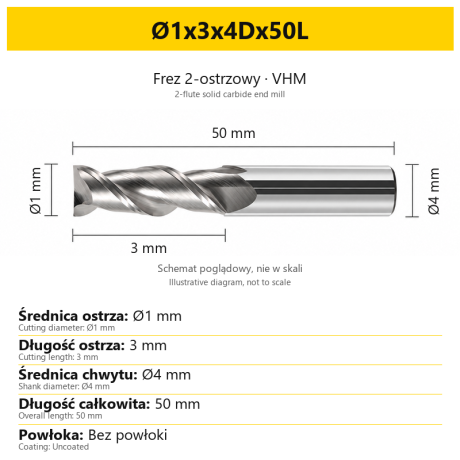 2-Flute End Mills 0.00
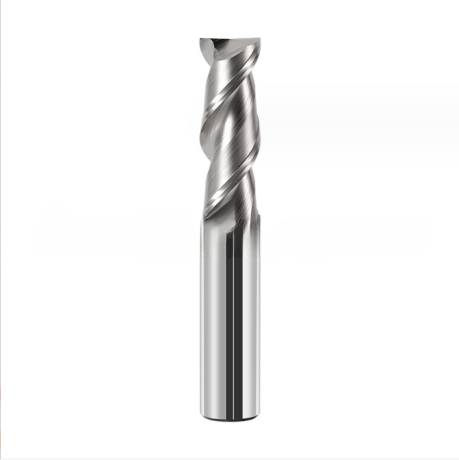
2-Flute Carbide End Mill for Aluminium
Ø1x3x4Dx50L Ø1.5x4x4Dx50L Ø2x6x4Dx50L Ø2.5x7.5x4Dx50L Ø3x9x3Dx50L + 31 morePrice €5.35Price €4.35without VAT -
Bestseller
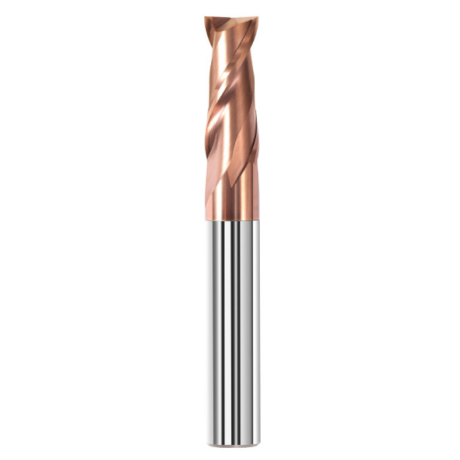
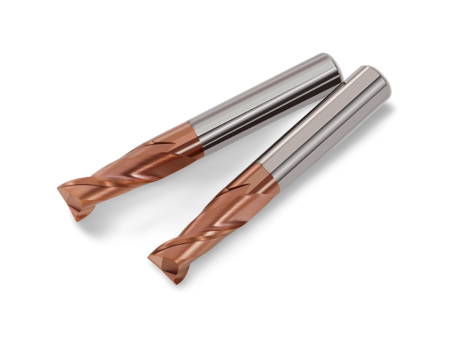 2-Flute End Mills 0.00
2-Flute Carbide End Mill for Steel 55 HRC - TiSiN - Solid Carbide
Ø6x24x6Dx75L Ø8x25x8Dx75L Ø4x20x4Dx100L Ø5x30x5Dx100L Ø6x30x6Dx100L + 31 morePrice €4.40Price €3.58without VAT -
Bestseller
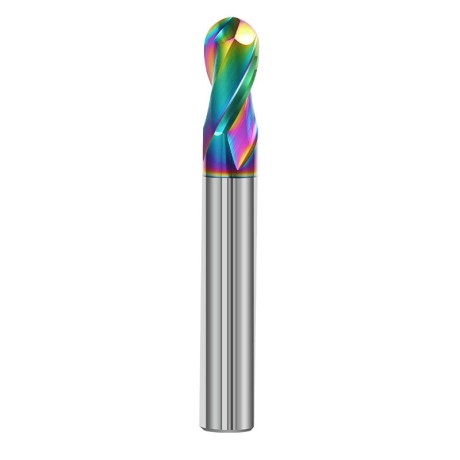
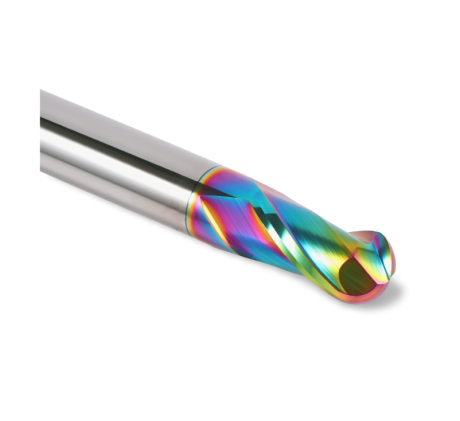 Ball Nose End Mills 0.00
2-Flute DLC Coated Carbide Ball Nose End Mill| DuraEdge Alu
Ø1.0xR0.5x4Dx50L Ø1.5xR0.75x4Dx50L Ø2.0xR1x4Dx50L Ø2.5xR1.25x4Dx50L Ø3.0xR1.5x3Dx50L + 34 morePrice €7.88Price €6.40without VAT -
Bestseller
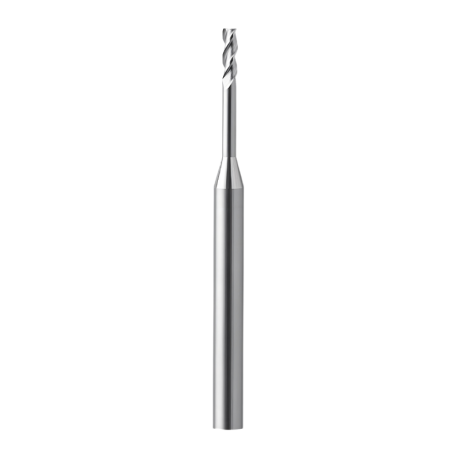
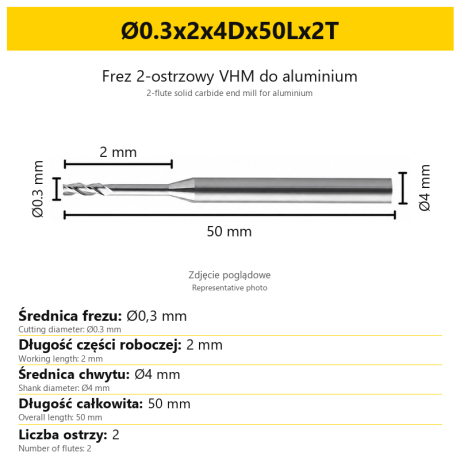 2-Flute End Mills 0.00
2-Flute End Mill for Aluminium | VHM | Miniature Ø0.3 - Ø0.9
Ø0.3x2x4Dx50Lx2T Ø0.3x3x4Dx50Lx2T Ø0.3x4x4Dx50Lx2T Ø0.4x2x4Dx50Lx2T Ø0.4x3x4Dx50Lx2T + 28 morePrice €7.98Price €6.49without VAT -
Bestseller
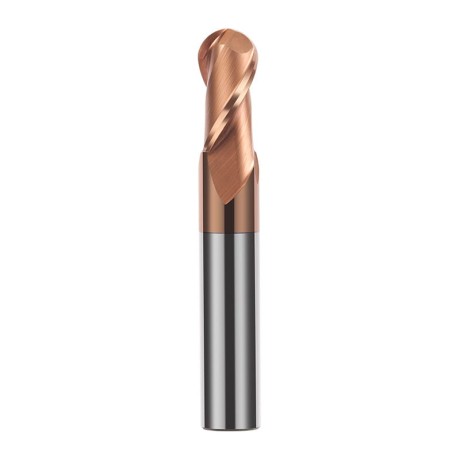
 Ball Nose End Mills 0.00
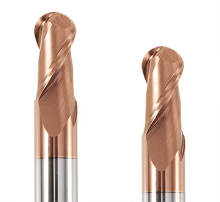
2-Flute TiSiN Coated Carbide Ball Nose End Mill
Ø1xR0.5x4Dx50L Ø1.5xR0.75x4Dx50L Ø2xR1x4Dx50L Ø2.5xR1.25x4Dx50L Ø3xR1.5x3Dx50L + 38 morePrice €7.27Price €5.91without VAT -
Bestseller
3-Flute Carbide Corner Radius End Mill for Aluminium| AL DLC
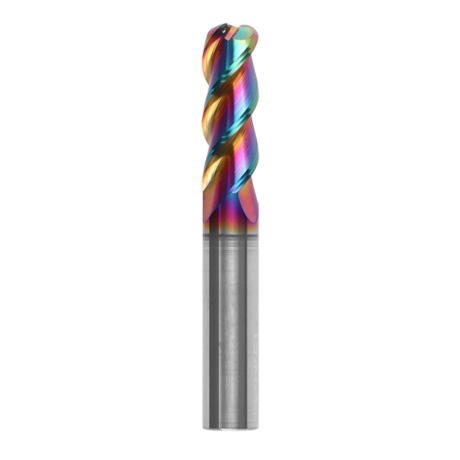
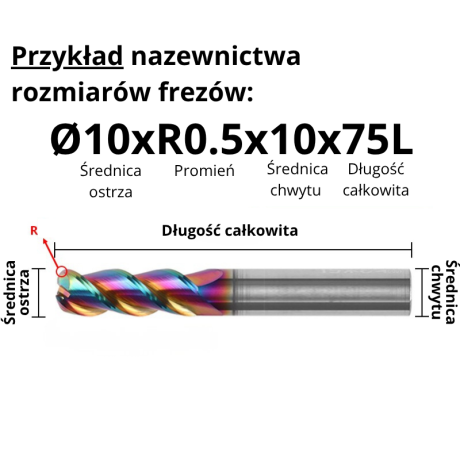
Ø1xR0.1x4Dx50L Ø1xR0.2x4Dx50L Ø1xR0.3x4Dx50L Ø1.5xR0.1x4Dx50L Ø1.5xR0.2x4Dx50L + 137 morePrice €4.96Price €4.03without VAT -
Bestseller
 3-Flute End Mills 0.00
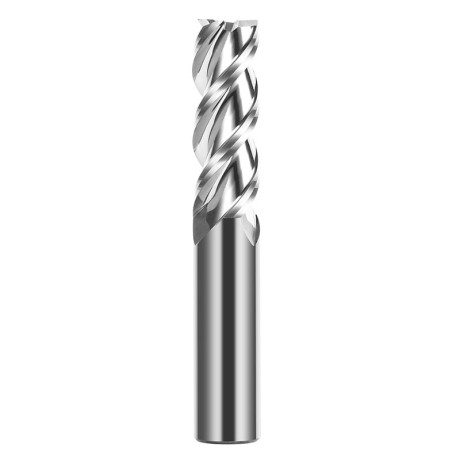
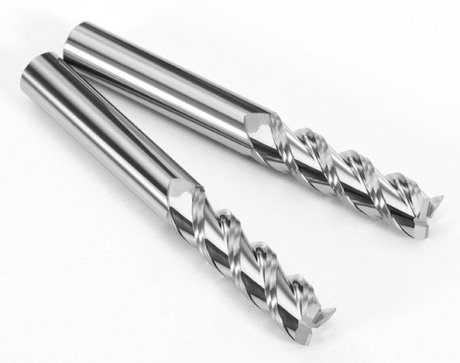
3-Flute Carbide End Mill VHM Z-3 for Aluminium| TriMill AL
Ø1x3xD4x50L Ø1.5x5x4Dx50L Ø2x6x4Dx50L Ø2.5x8x4Dx50L Ø3x9x3Dx50L + 41 morePrice €5.09Price €4.14without VAT -
Bestseller
 Countersinks 0.00
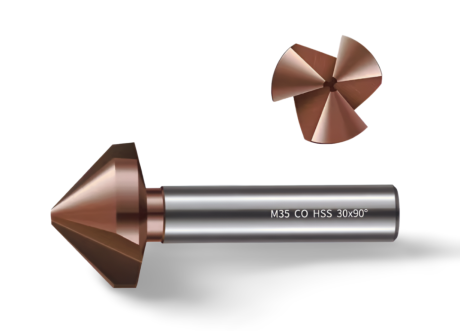
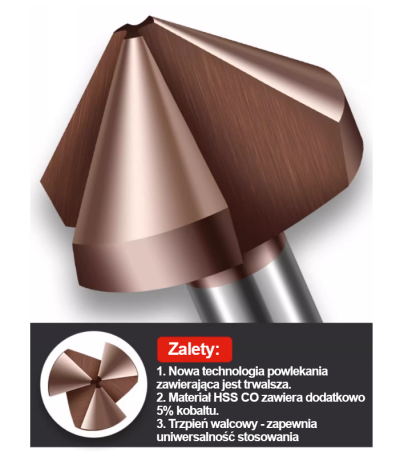
3-Flute Countersink Fi4.5-fi60, 90° - HSS-CO - 5% Kobaltu | Straight Shank
Ø4.5 x 4 x 90° x 40L Ø5 x 5 x 90° x 45L Ø6.3 x 5 x 90° x 45L Ø8.3 x 6 x 90° x 50L Ø10.4 x 6 x 90° x 50L + 12 morePrice €4.80Price €3.91without VAT -
Bestseller
 3-Flute End Mills 0.00
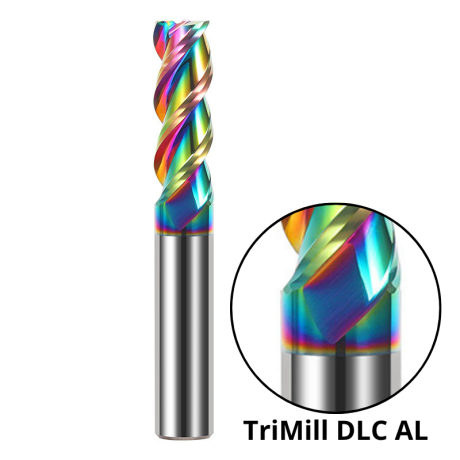
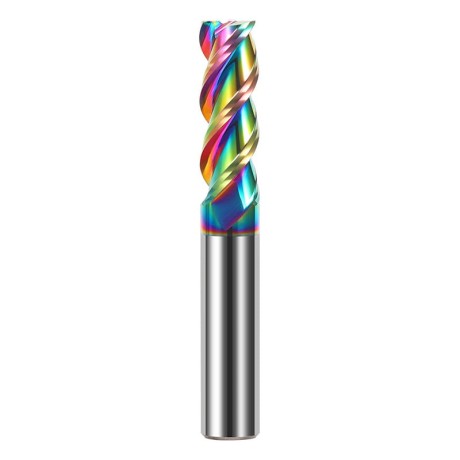
3-Flute DLC Coated Carbide End Mill | TriMill DLC AL
Ø1x3x4Dx50L Ø1.5x5x4Dx50L Ø2x6x4Dx50L Ø2.5x8x4Dx50L Ø3x8x3Dx50L + 38 morePrice €5.07Price €4.12without VAT