

6-Flute End Mill VHM up to 60HRC - AITiN - for Steel & Stainless Steel
Shipping costs are not included in the price.
Shipping costs are not included in the price.
Ask about the product

The administrator of personal data is Kortools. We process it to respond to your inquiry. More information regarding the processing of personal data can be found in privacy policy.
Select a product variant:
Individual variants may differ in price
Product code: EA4F-928BF
Product description
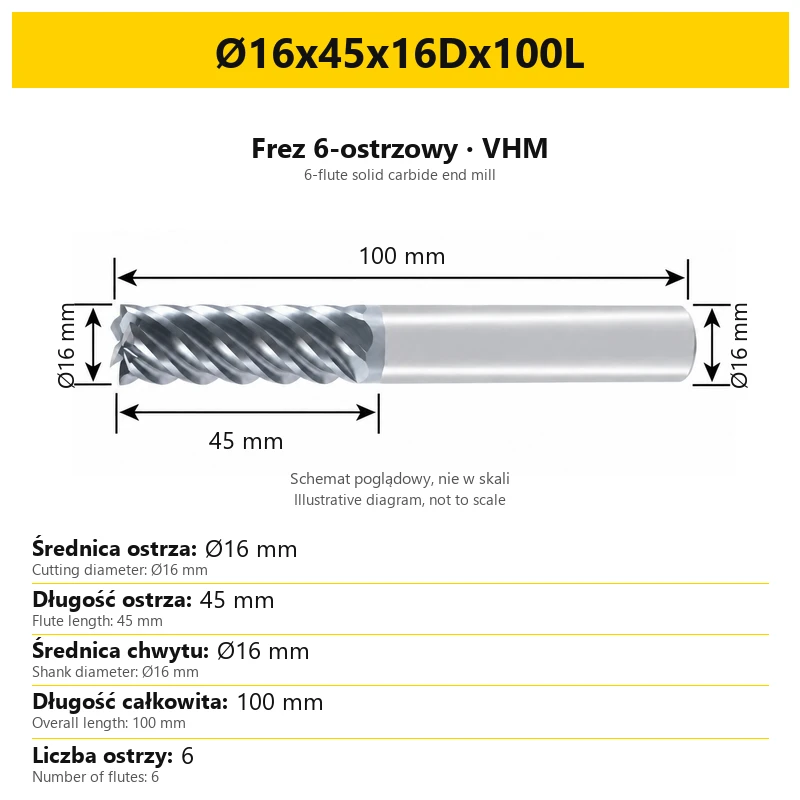
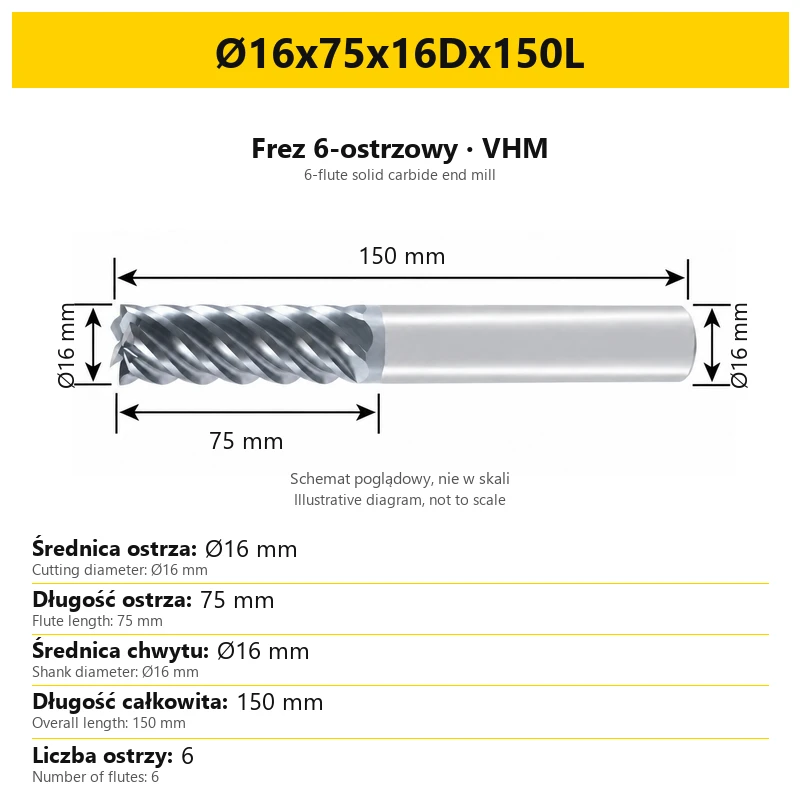
6-flute solid carbide end mill up to 60 HRC — AlTiN — for steel and stainless steel
Solid carbide (VHM) · six flutes · 45° helix · AlTiN coating
A solid carbide cylindrical end mill for finishing steel and stainless steel. The tool has six flutes, a 45° helix and a five-layer AlTiN coating. Applications also include hardened steels up to 60 HRC and the heat-resistant alloys listed below. Select a size using cutting diameter, flute length, shank diameter and overall length.
1. Applications
The end mill is intended for face and side milling, particularly finishing operations. The table separates the principal material groups from the additional cast-iron application. Maximum workpiece hardness is 60 HRC.
| Material group | Application scope |
|---|---|
| Steels — group P | General, carbon, alloy, pre-hardened, tool and mould steels. |
| Stainless steels — group M | Milling surfaces on stainless-steel components. |
| Hardened steels — group H | Machining hardened steels within the maximum hardness of 60 HRC. |
| Heat-resistant alloys — group S | Machining heat-resistant alloys specified for this geometry. |
| Cast iron — group K | Additional application; rated below the principal material groups listed above. |
This end mill is not recommended for aluminium or copper. Select a tool with the appropriate geometry and application for those materials. Choosing the workpiece material is a separate decision from selecting cutting diameter and tool length.
2. Construction and specifications
| Parameter | Specification |
|---|---|
| Tool type | Shank end mill; cylindrical end-cutting tool. |
| Tool material | VHM — monolithic solid carbide. |
| Number of flutes | 6. |
| Helix angle | 45°. |
| Coating | AlTiN — aluminium titanium nitride; five-layer design. |
| Maximum workpiece hardness | 60 HRC. |
| Cutting-section construction | Six helical flutes, chip grooves and a large-core-diameter design. |
| Shank | Cylindrical; diameter stated in the selected size designation and variant card. |
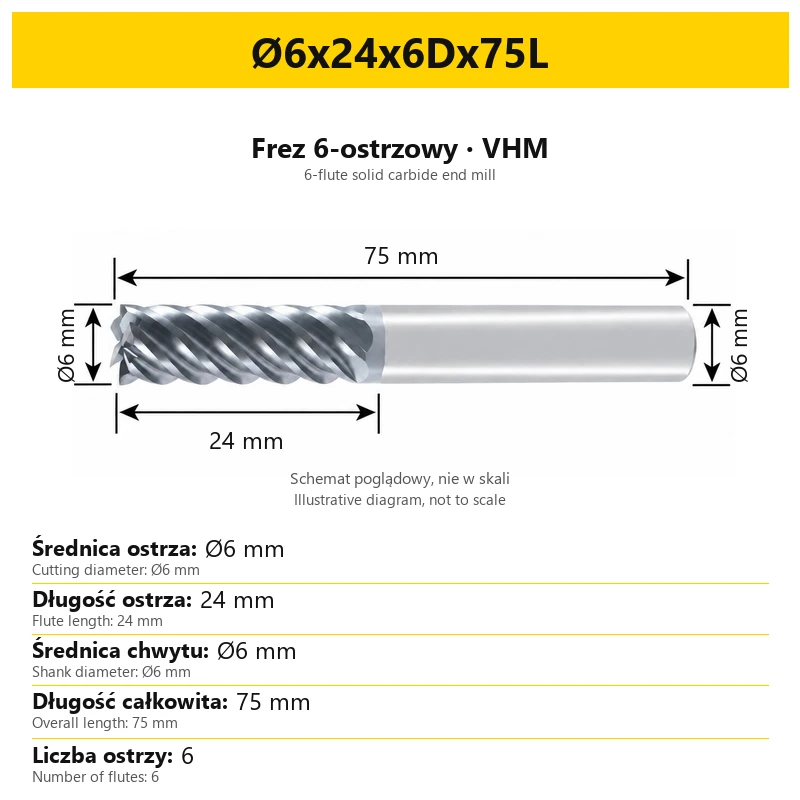
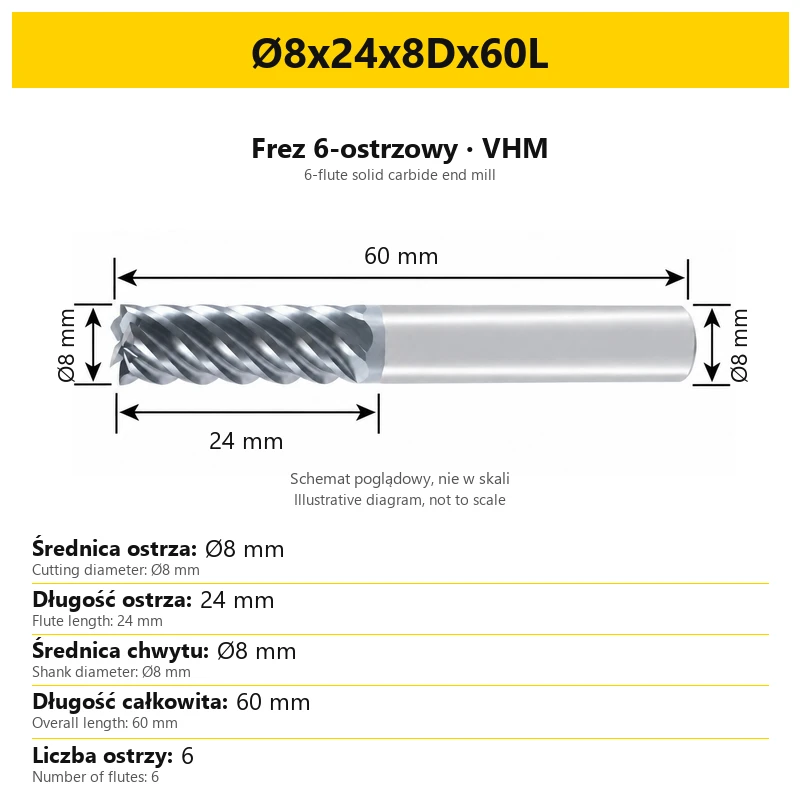
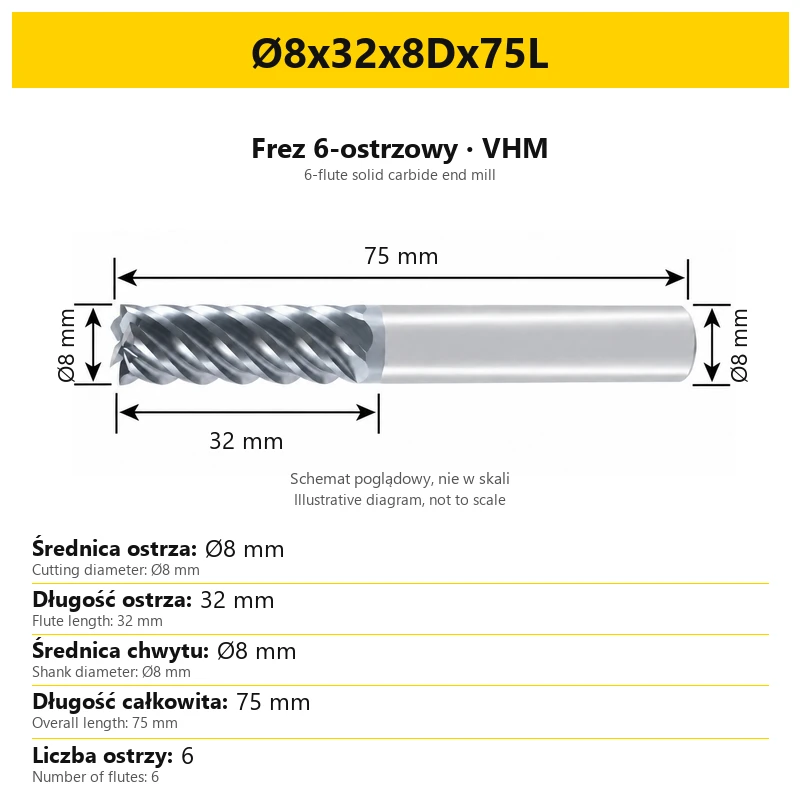
| Dimensions identifying the size | Cutting diameter, flute length, shank diameter and overall length. |
| Dimension unit | Millimetres (mm). |
VHM identifies the end mill body material, while AlTiN identifies its coating. The 45° value is the flute helix angle. The 60 HRC value describes the maximum workpiece hardness. These designations refer to separate tool characteristics and should not be interchanged.
3. Geometry and machining operations
The cutting section has six helical flutes and chip grooves. A large core diameter is part of this family’s geometry. The end mill is intended for surface finishing and side and face milling, with operating conditions selected for the workpiece material.
The illustrated operations include surface milling, side milling, slots and U-shaped slots, and hole machining by interpolation. For mould steels, the end mill can be used for roughing and finishing. Select the tool path and cutting-section engagement for the particular operation.
4. How to read the size designation
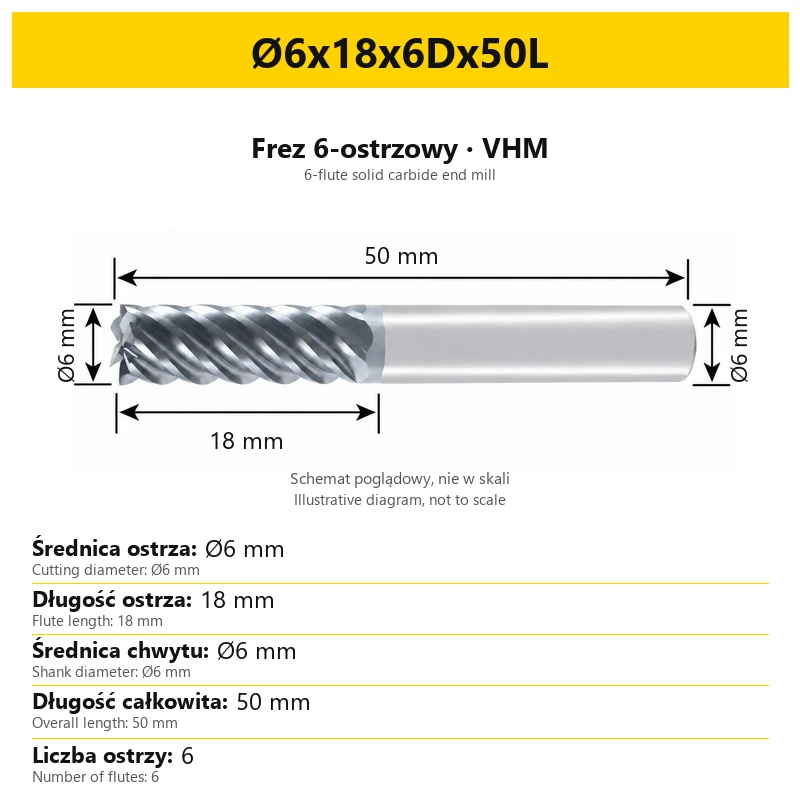
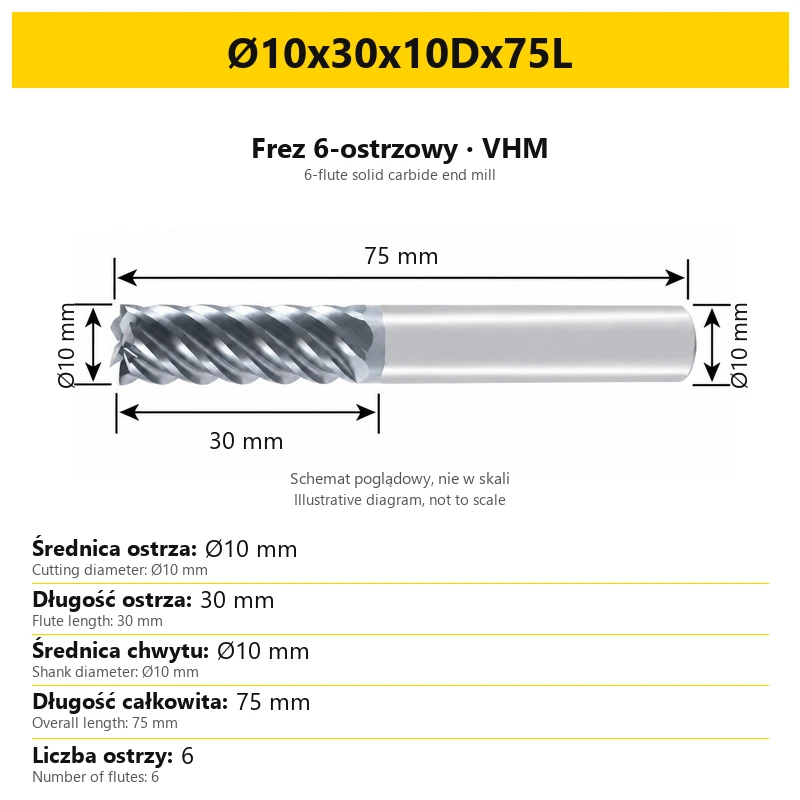
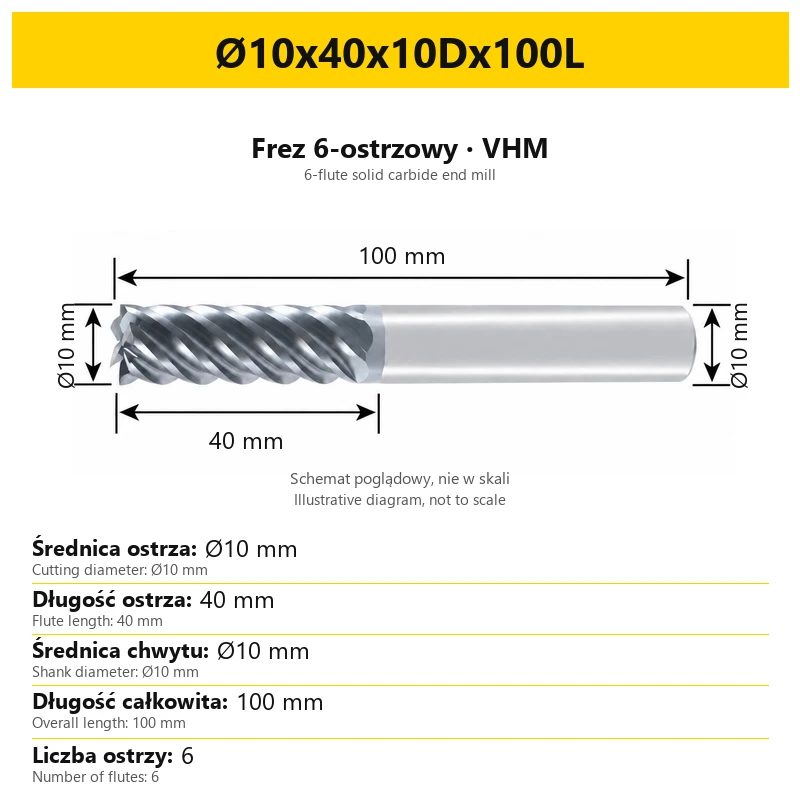
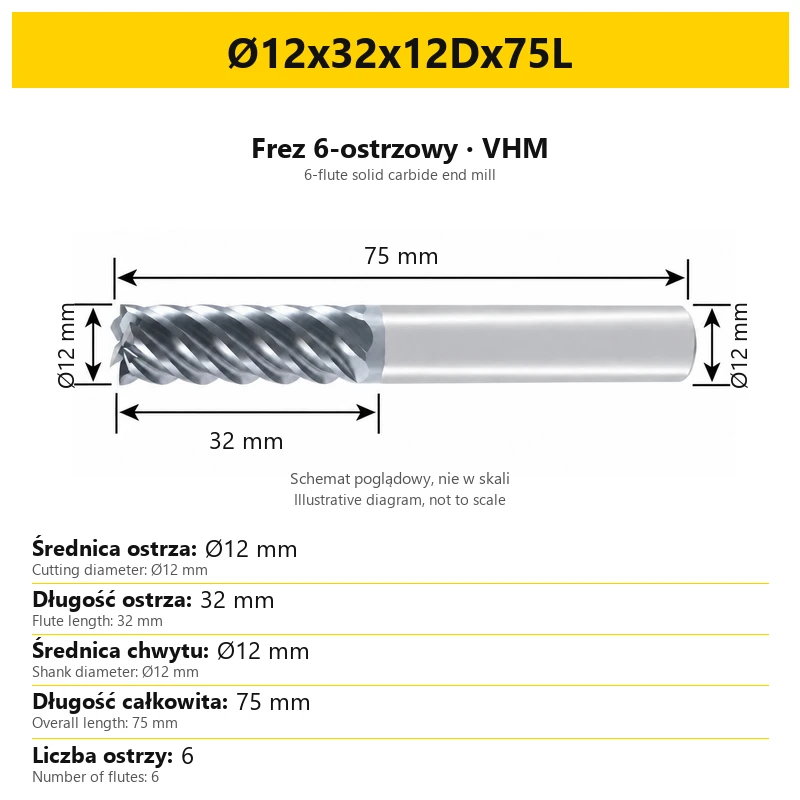
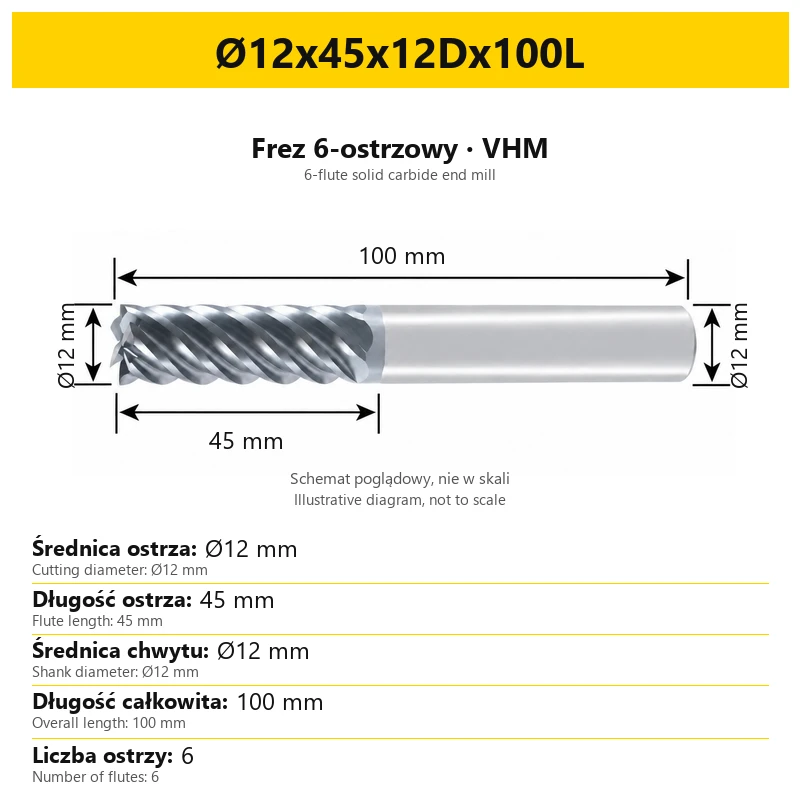
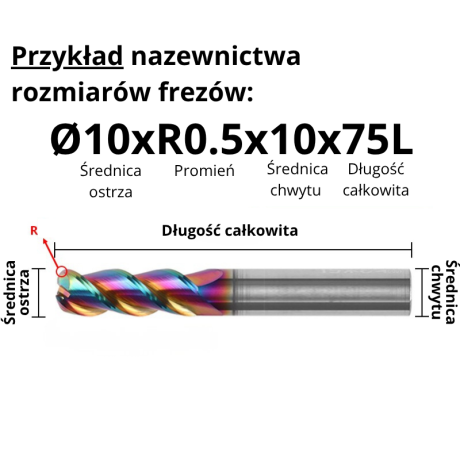
The example Ø6x18x6Dx50L means a cutting diameter of 6 mm, flute length of 18 mm, shank diameter of 6 mm and overall length of 50 mm. The designation contains four dimensions in millimetres. The letters D and L distinguish shank diameter from overall length.
| Designation element | Meaning | Example value |
|---|---|---|
| Ø6 | Cutting diameter | 6 mm |
| 18 | Flute length | 18 mm |
| 6D | Shank diameter | 6 mm |
| 50L | Overall tool length | 50 mm |
The number followed by D is the mounting-section diameter, rather than flute count. This end mill has six flutes, stated separately. Read the complete designation when comparing sizes: equal cutting diameters do not mean equal flute lengths or overall lengths.
5. Selecting diameter and length
First compare cutting diameter with the dimensions of the planned surface or slot. Then check the flute length required by the operation. Shank diameter identifies the mounting size, while overall length describes the complete tool length.
For tools with the same cutting diameter, check both lengths. A different shank size or cutting-section length can affect selection for the intended holder and access to the part. Check the selected end mill specifications before mounting it.
Keep tool projection from the holder as short as practicable while retaining the access needed by the operation. If greater projection is necessary, reduce spindle speed, feed or cutting engagement as appropriate for the operating conditions.
6. Mounting and preparation
Check mounting accuracy before machining. Measure tool runout before cutting; if it exceeds 0.01 mm, correct the mounting and check it again before starting the operation.
- Check the tool size. Compare its four dimensions with the variant card and operation requirements.
- Select the holder for the shank. Use the value followed by D and stated in its separate card row.
- Set the required projection. Keep the length extending from the holder as short as practicable.
- Measure runout. If it exceeds 0.01 mm, correct the mounting before cutting.
- Account for the material. Confirm the application and hardness within this listing’s limit.
7. Cooling and machining stability
For machining steel, mist cooling or an air blast is recommended. Account for cooling and chip removal when preparing an operation for the selected material and mounting arrangement.
If unusual vibration or noise occurs during cutting, reduce spindle speed and cutting engagement until conditions improve. Increased tool projection may also require a lower feed. These recommendations concern the mounted tool in operation rather than a change to its dimensions.
The dimensions and helix angle identify the end mill but do not provide one speed and feed setting for every operation. Select settings for the material, hardness, tool size, projection and machining conditions.
8. Frequently asked questions
What is the maximum workpiece hardness?
60 HRC, within the application scope stated in this description.
What is the helix angle?
45°. This is a flute-geometry characteristic, separate from maximum workpiece hardness.
Can the tool machine stainless steel?
Yes. Stainless steels are among the principal applications of this family.
Can it be used for aluminium and copper?
The end mill is not recommended for those materials; select a tool intended for machining them.
What do D and L mean in the size designation?
D identifies shank diameter and L identifies overall length. Flute length is a separate element of the designation.
Related products
-
0678-65504Bestseller


Carbide Corner Rounding End Mill - TiSiN Coated
-
92D6-291C7

 Screw-in End Mills 0.00
Screw-In Carbide End Mill VHM | TiSiN | ⌀8-⌀32 |
-
F6E0-701F2Bestseller
 2-Flute End Mills 0.00
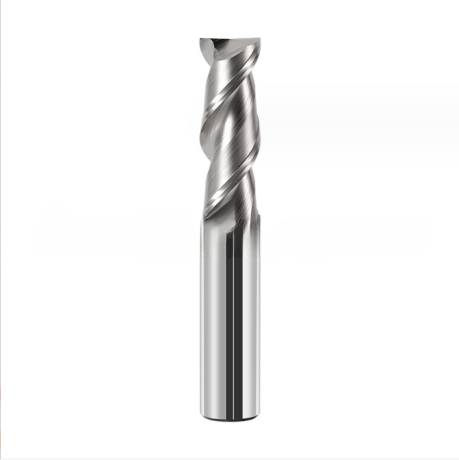
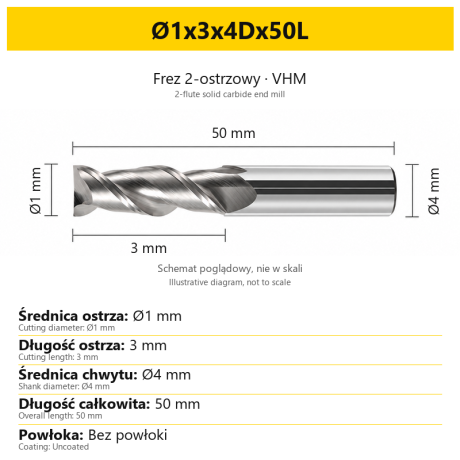
2-Flute Carbide End Mill for Aluminium
-
19B7-502CDBestseller

 4-Flute End Mills 0.00
4-Flute Carbide End Mill VHM TiSiN Coated Roughing
-
F677-248B8Bestseller
 3-Flute End Mills 0.00
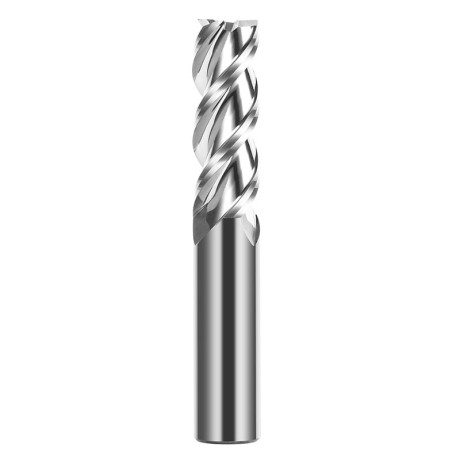
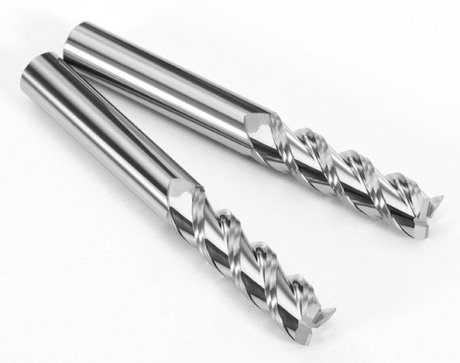
3-Flute Carbide End Mill VHM Z-3 for Aluminium| TriMill AL


Bestsellers
-
Bestseller
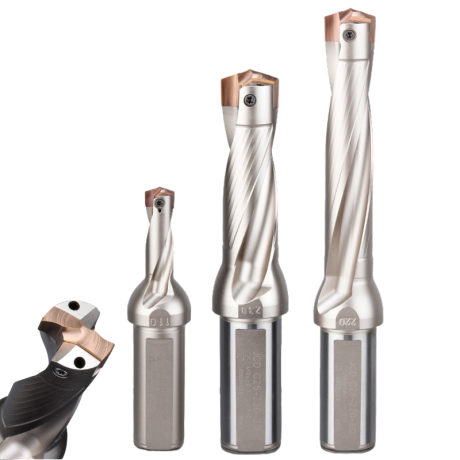
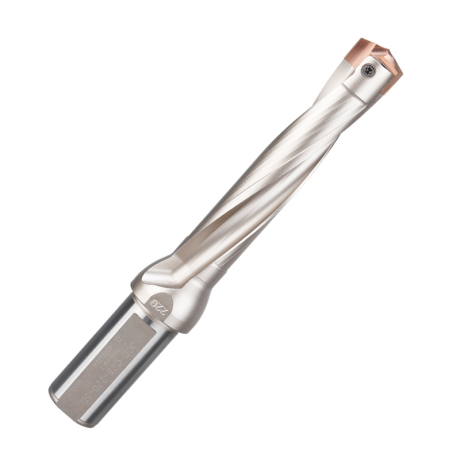
JCD modular drill with replaceable tip - internal cooling, for deep holes | GrotXD
JCD C20-100-3D Ø10~10.9 JCD C20-110-3D Ø11~11.9 JCD C20-120-3D Ø12~12.9 JCD C20-130-3D Ø13~13.9 JCD C20-140-3D Ø14~14.9 + 61 morePrice €69.86Price €56.79without VAT -
Bestseller
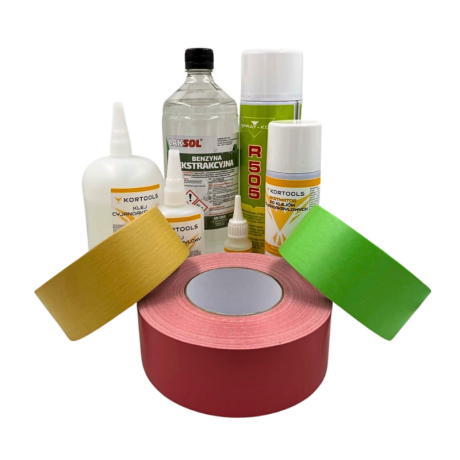
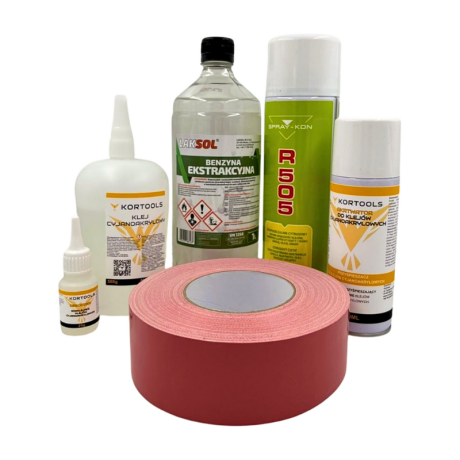
Kortools Adhesive + Tape CNC Workholding Kit
Yellow tape 5cm x 50m; adhesive 100g Yellow tape 5cm x 50m; adhesive 500g Yellow tape 10cm x 50m; adhesive 100g Yellow tape 10cm x 50m; adhesive 500g Green tape 5cm x 50m; adhesive 100g + 7 morePrice €44.66Price €36.31without VAT -
Price €17.18Price €13.97without VAT
-
Price €7.10Price €5.77without VAT
-
Price €7.56Price €6.14without VAT
-
Bestseller
 Other Accessories 0.00
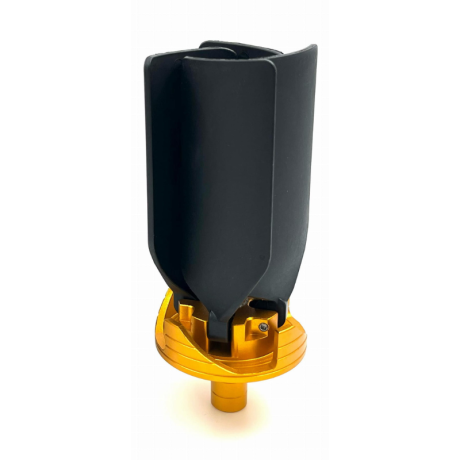
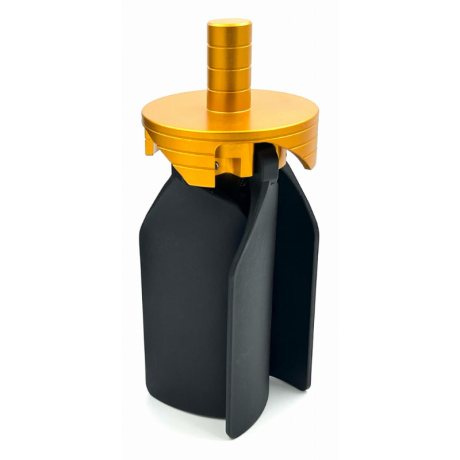
CNC Chip Fan / Chip Blower
Complete CNC chip fan Kit: blades, springs, pins and screwsPrice €53.82Price €43.76without VAT -
Bestseller
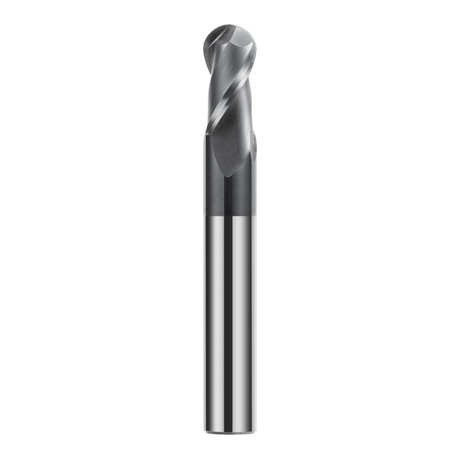
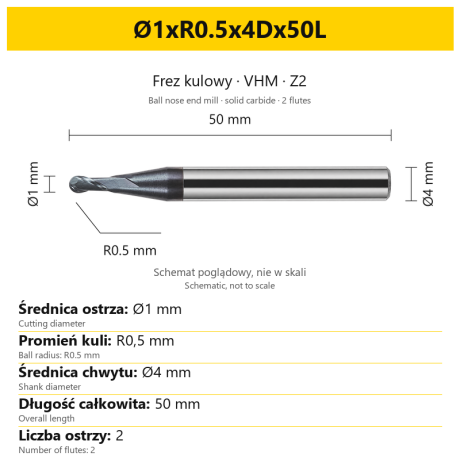 Ball Nose End Mills 0.00
2-Flute Carbide Ball Nose End Mill - HYPERCUT
Ø1xR0.5x4Dx50L Ø1.5xR0.75x4Dx50L Ø2xR1x4Dx50L Ø2.5xR1.25x4Dx50L Ø3xR1.5x3Dx50L + 26 morePrice €10.14Price €8.25without VAT -
Bestseller
2-Flute End Mills 0.00
2-Flute Carbide End Mill for Aluminium
Ø1x3x4Dx50L Ø1.5x4x4Dx50L Ø2x6x4Dx50L Ø2.5x7.5x4Dx50L Ø3x9x3Dx50L + 31 morePrice €5.35Price €4.35without VAT -
Bestseller
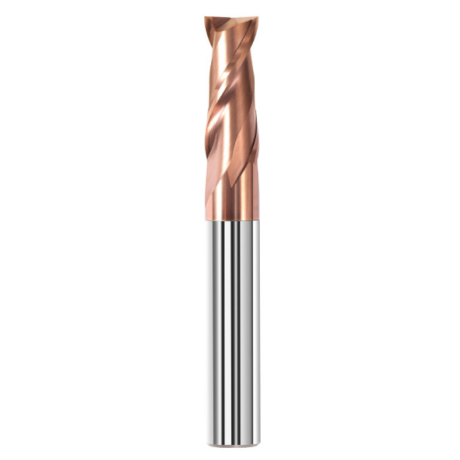
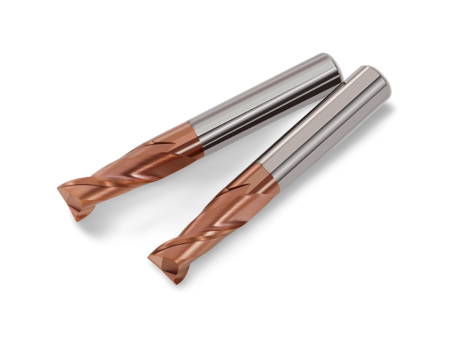 2-Flute End Mills 0.00
2-Flute Carbide End Mill for Steel 55 HRC - TiSiN - Solid Carbide
Ø6x24x6Dx75L Ø8x25x8Dx75L Ø4x20x4Dx100L Ø5x30x5Dx100L Ø6x30x6Dx100L + 31 morePrice €4.40Price €3.58without VAT -
Bestseller
 Ball Nose End Mills 0.00
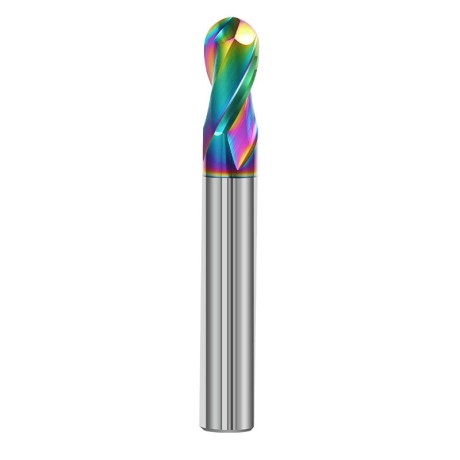
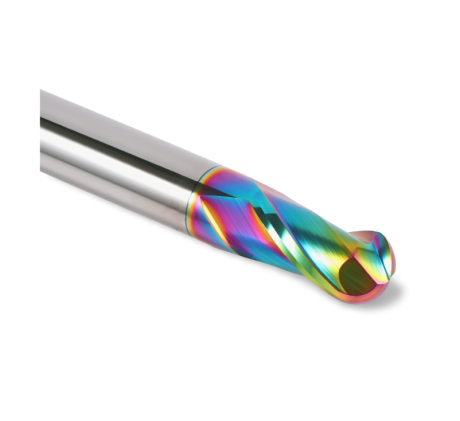
2-Flute DLC Coated Carbide Ball Nose End Mill| DuraEdge Alu
Ø1.0xR0.5x4Dx50L Ø1.5xR0.75x4Dx50L Ø2.0xR1x4Dx50L Ø2.5xR1.25x4Dx50L Ø3.0xR1.5x3Dx50L + 34 morePrice €7.89Price €6.41without VAT -
Bestseller
 2-Flute End Mills 0.00
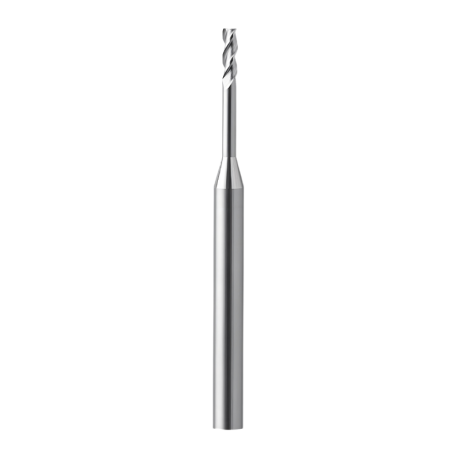
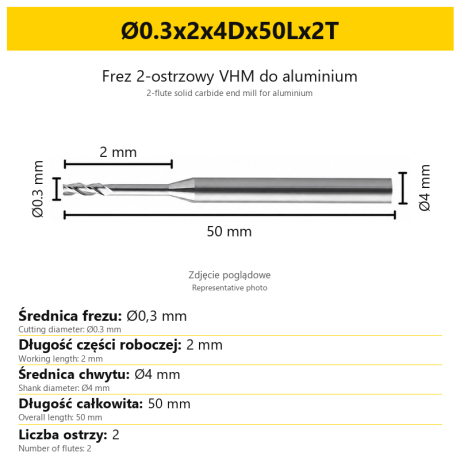
2-Flute End Mill for Aluminium | VHM | Miniature Ø0.3 - Ø0.9
Ø0.3x2x4Dx50Lx2T Ø0.3x3x4Dx50Lx2T Ø0.3x4x4Dx50Lx2T Ø0.4x2x4Dx50Lx2T Ø0.4x3x4Dx50Lx2T + 28 morePrice €7.99Price €6.50without VAT -
Bestseller
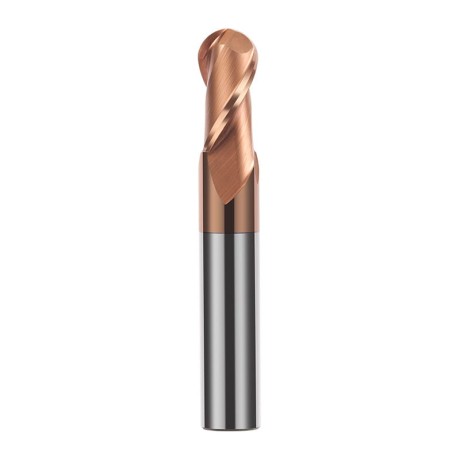
 Ball Nose End Mills 0.00
2-Flute TiSiN Coated Carbide Ball Nose End Mill
Ø1xR0.5x4Dx50L Ø1.5xR0.75x4Dx50L Ø2xR1x4Dx50L Ø2.5xR1.25x4Dx50L Ø3xR1.5x3Dx50L + 38 morePrice €7.28Price €5.92without VAT -
Bestseller
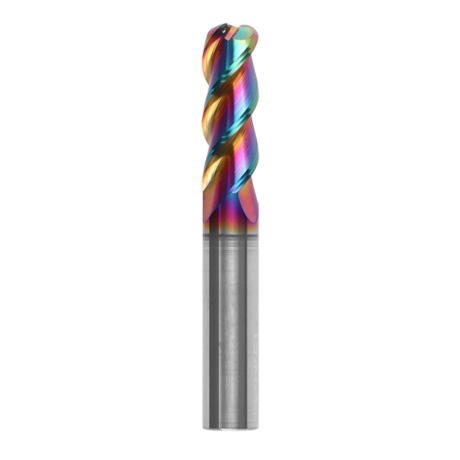
3-Flute Carbide Corner Radius End Mill for Aluminium| AL DLC
Ø1xR0.1x4Dx50L Ø1xR0.2x4Dx50L Ø1xR0.3x4Dx50L Ø1.5xR0.1x4Dx50L Ø1.5xR0.2x4Dx50L + 137 morePrice €4.96Price €4.04without VAT -
Bestseller
3-Flute End Mills 0.00
3-Flute Carbide End Mill VHM Z-3 for Aluminium| TriMill AL
Ø1x3xD4x50L Ø1.5x5x4Dx50L Ø2x6x4Dx50L Ø2.5x8x4Dx50L Ø3x9x3Dx50L + 41 morePrice €5.10Price €4.15without VAT -
Bestseller
 Countersinks 0.00
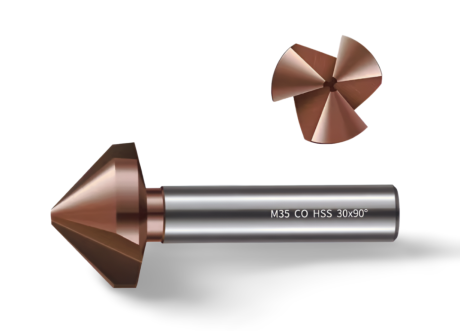
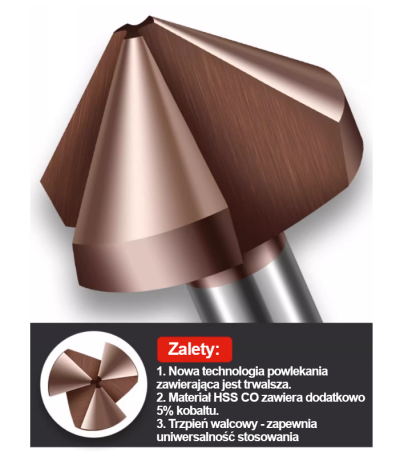
3-Flute Countersink Fi4.5-fi60, 90° - HSS-CO - 5% Kobaltu | Straight Shank
Ø4.5 x 4 x 90° x 40L Ø5 x 5 x 90° x 45L Ø6.3 x 5 x 90° x 45L Ø8.3 x 6 x 90° x 50L Ø10.4 x 6 x 90° x 50L + 12 morePrice €4.81Price €3.91without VAT -
Bestseller
 3-Flute End Mills 0.00
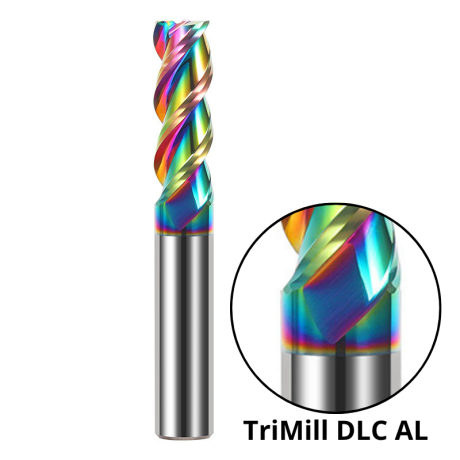
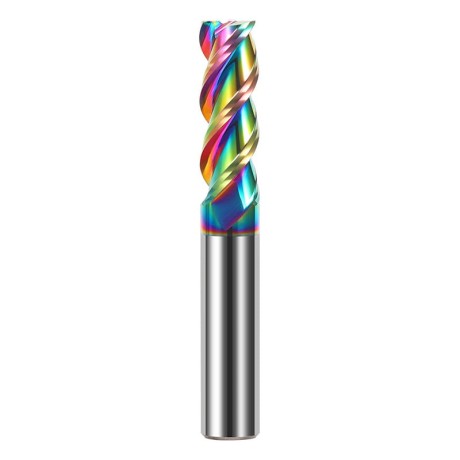
3-Flute DLC Coated Carbide End Mill | TriMill DLC AL
Ø1x3x4Dx50L Ø1.5x5x4Dx50L Ø2x6x4Dx50L Ø2.5x8x4Dx50L Ø3x8x3Dx50L + 38 morePrice €5.07Price €4.12without VAT