


Carbide Corner Rounding End Mill
Shipping costs are not included in the price.
Shipping costs are not included in the price.
Ask about the product

The administrator of personal data is Kortools. We process it to respond to your inquiry. More information regarding the processing of personal data can be found in privacy policy.
Select a product variant:
Individual variants may differ in price
Product code: E006-379B3
Product description
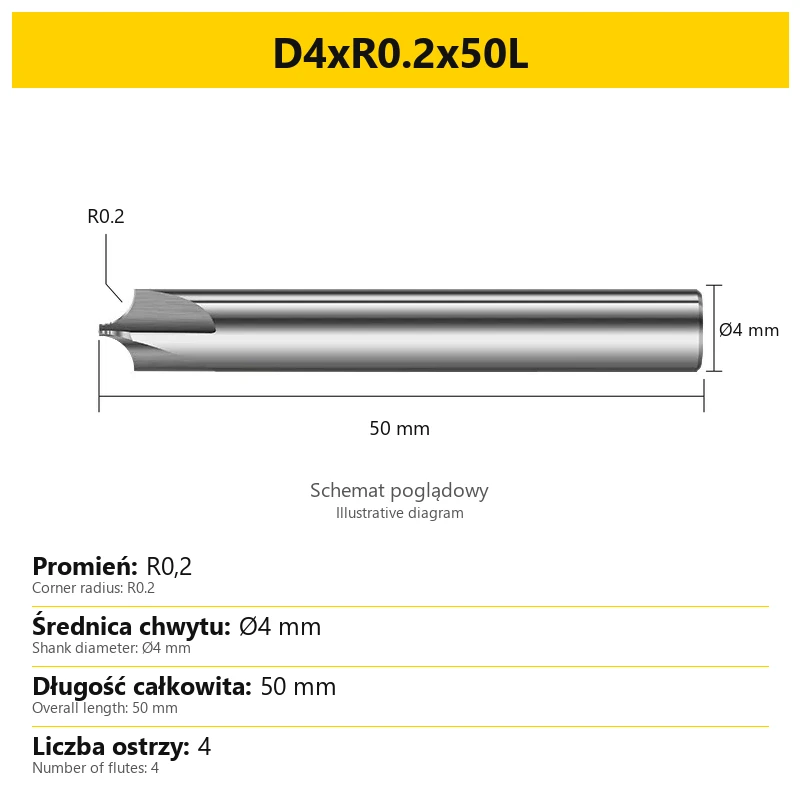
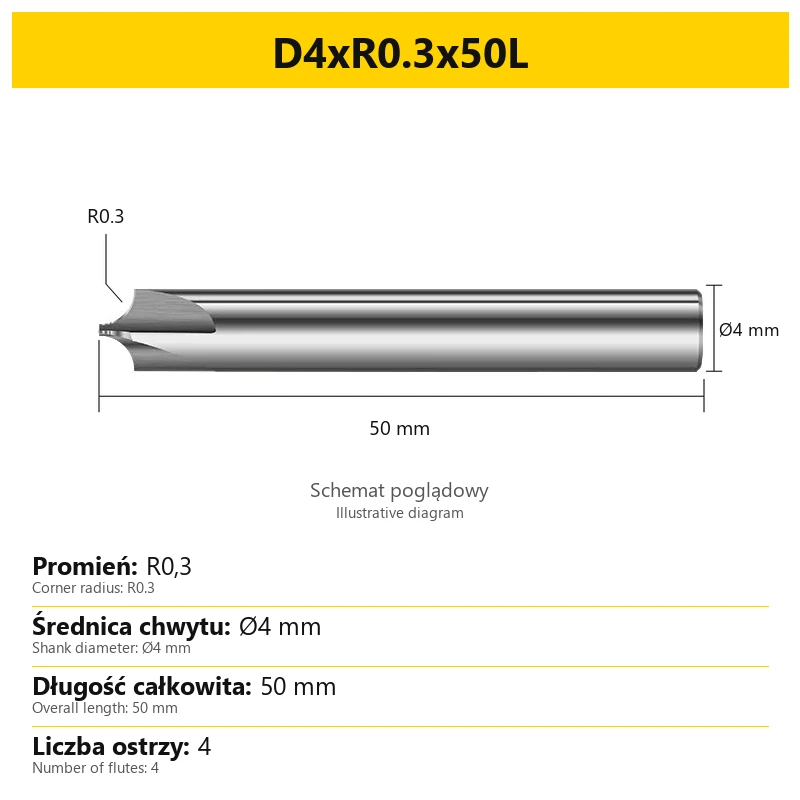
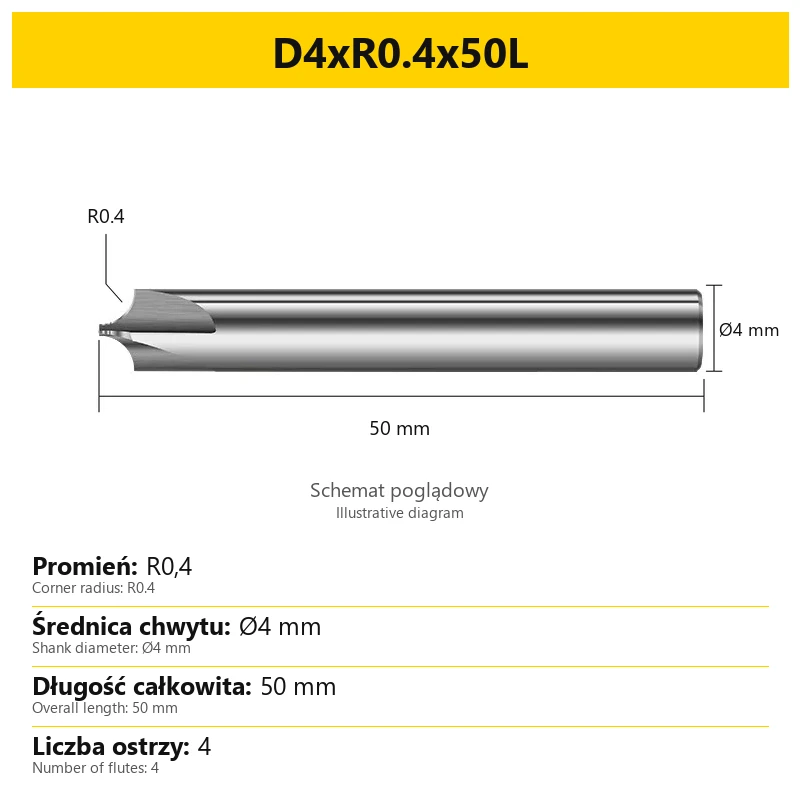
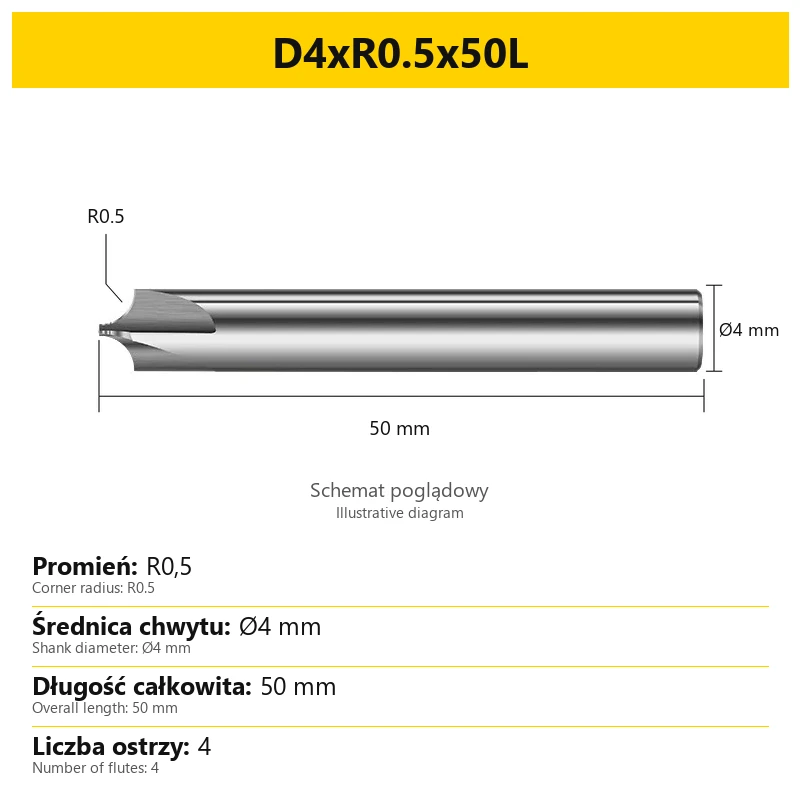
External edge radii R0.2–R8 • cylindrical shank
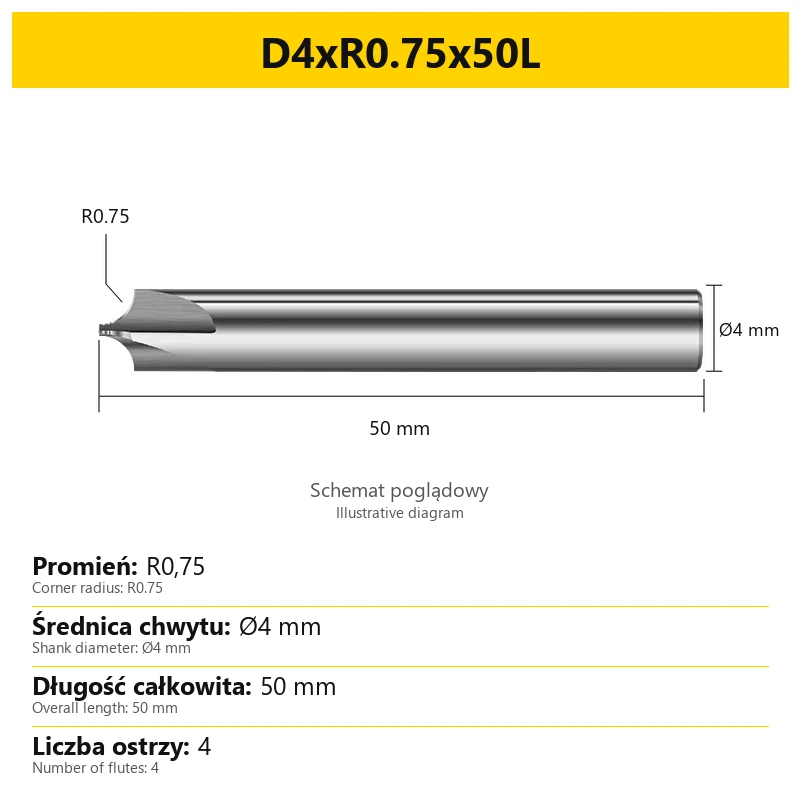
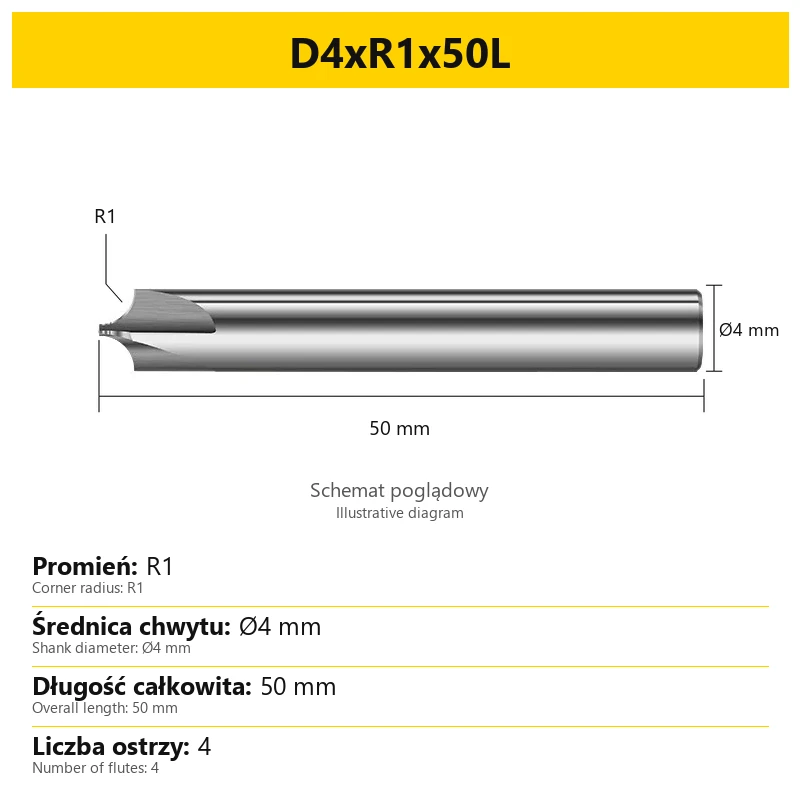
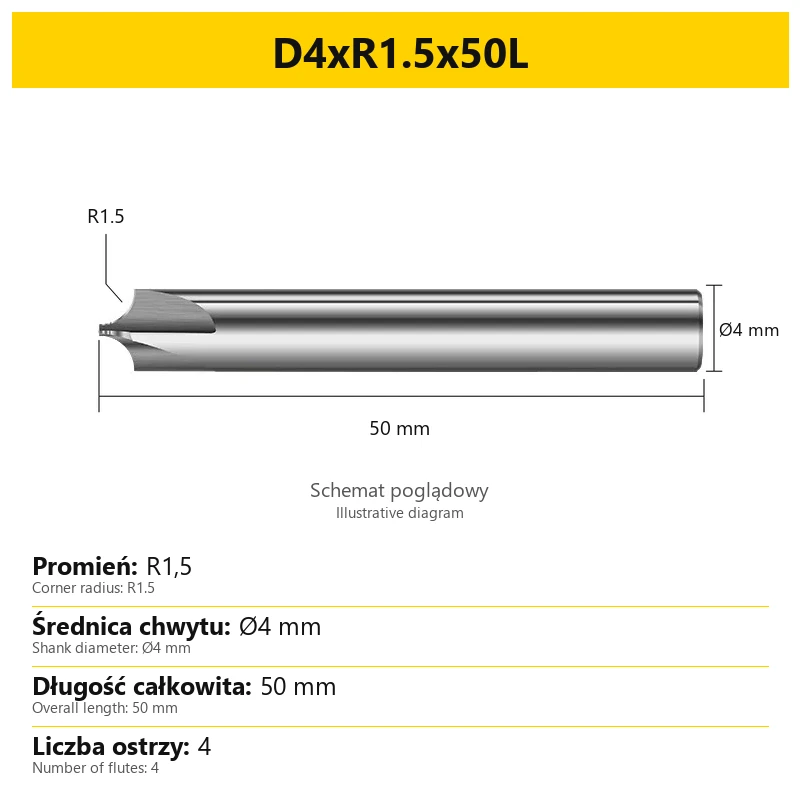
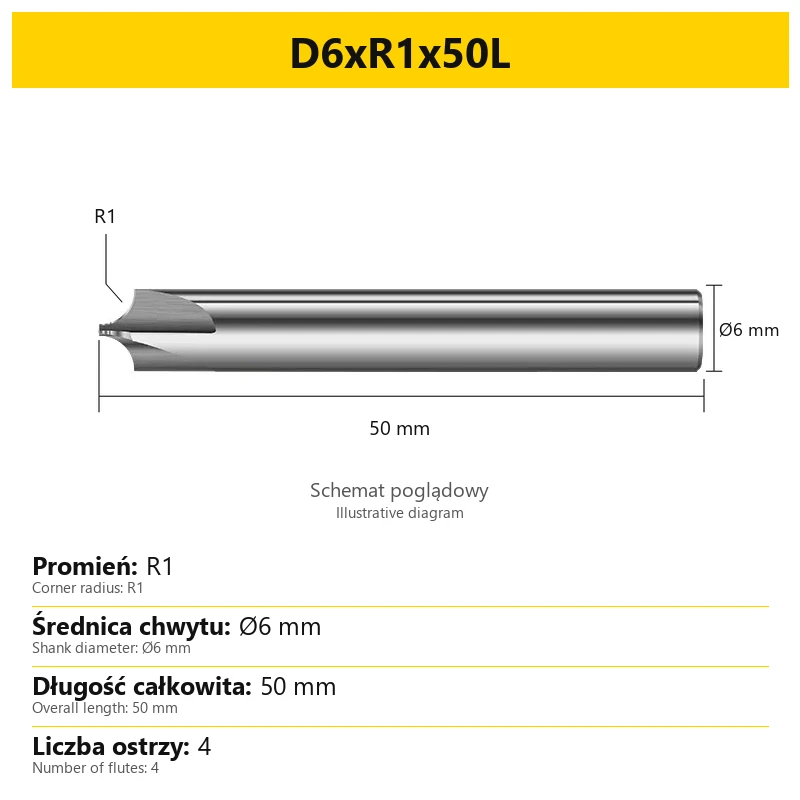
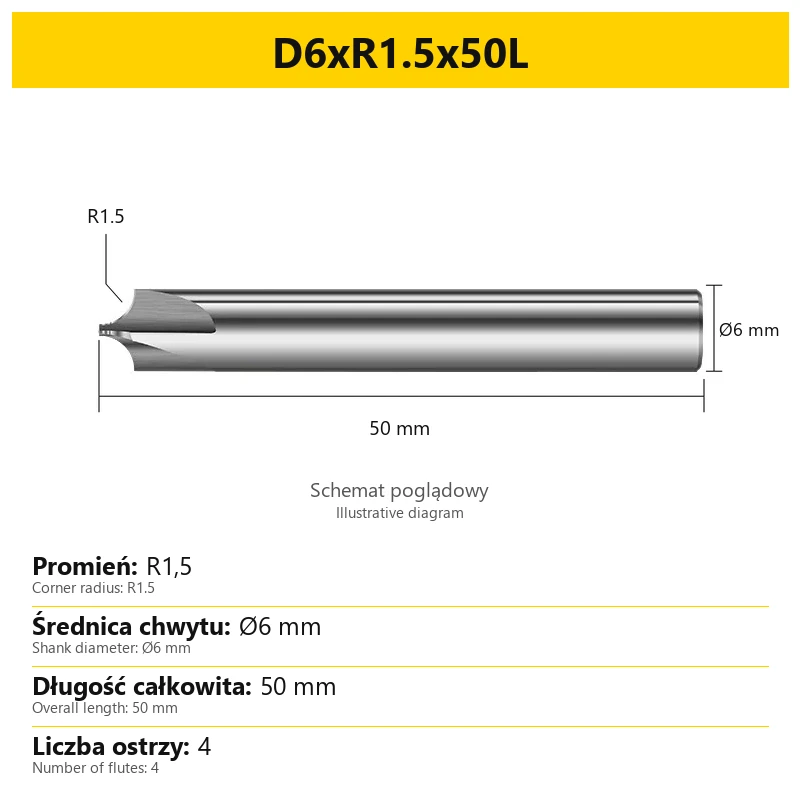
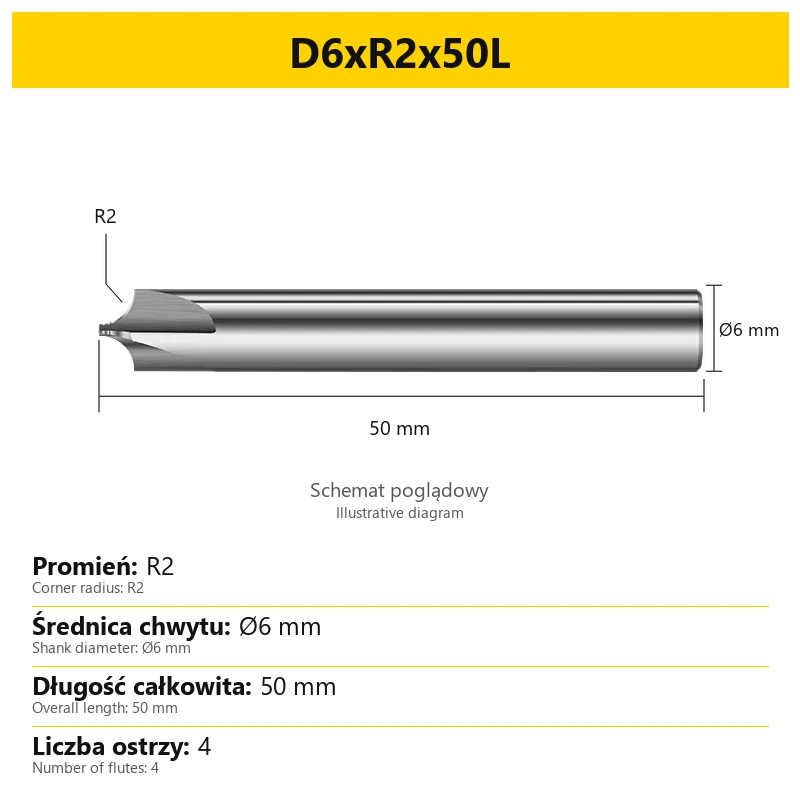
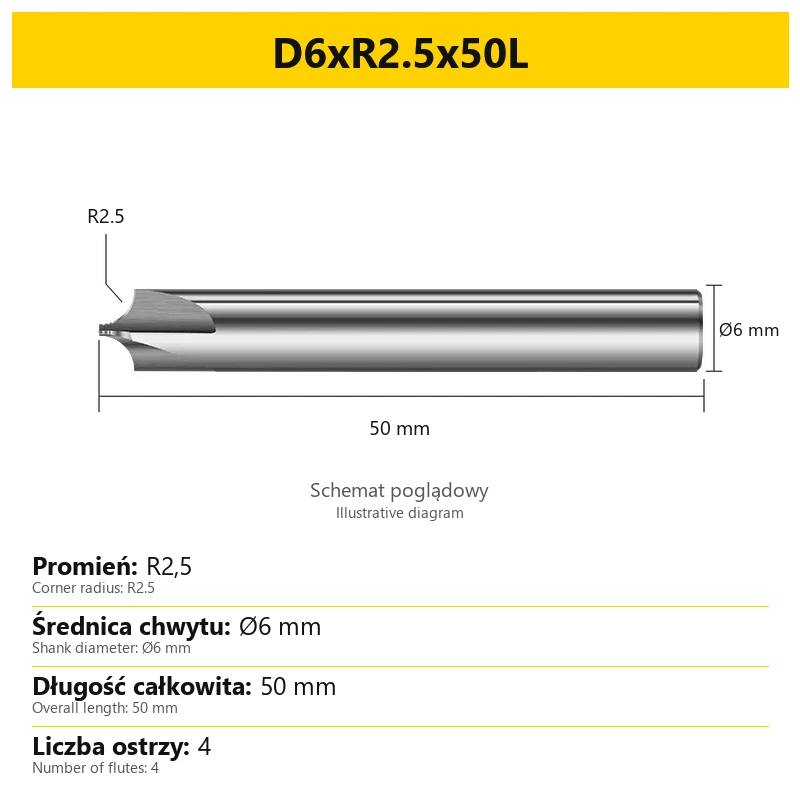
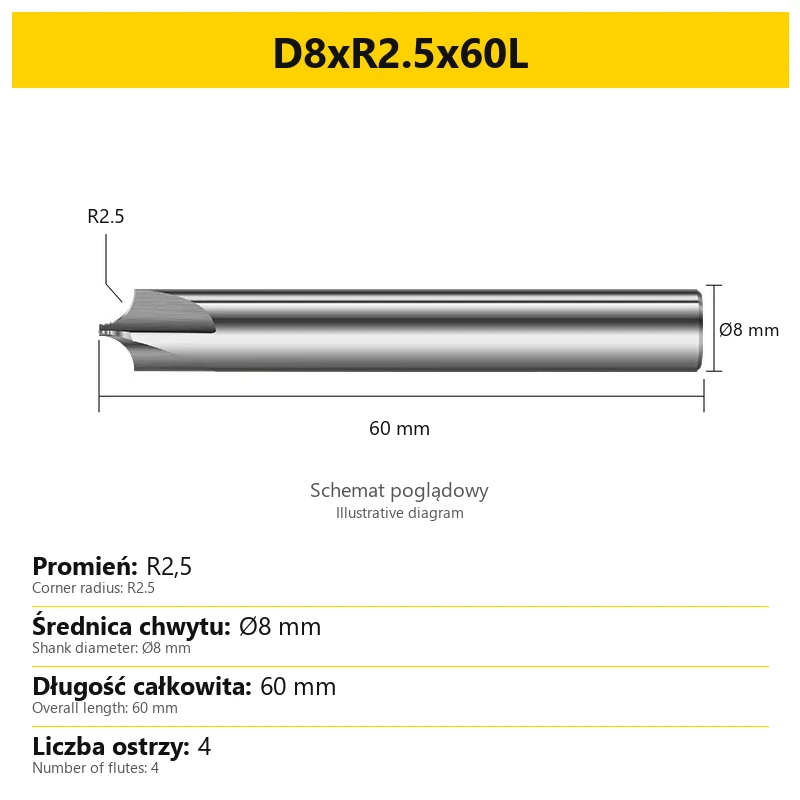
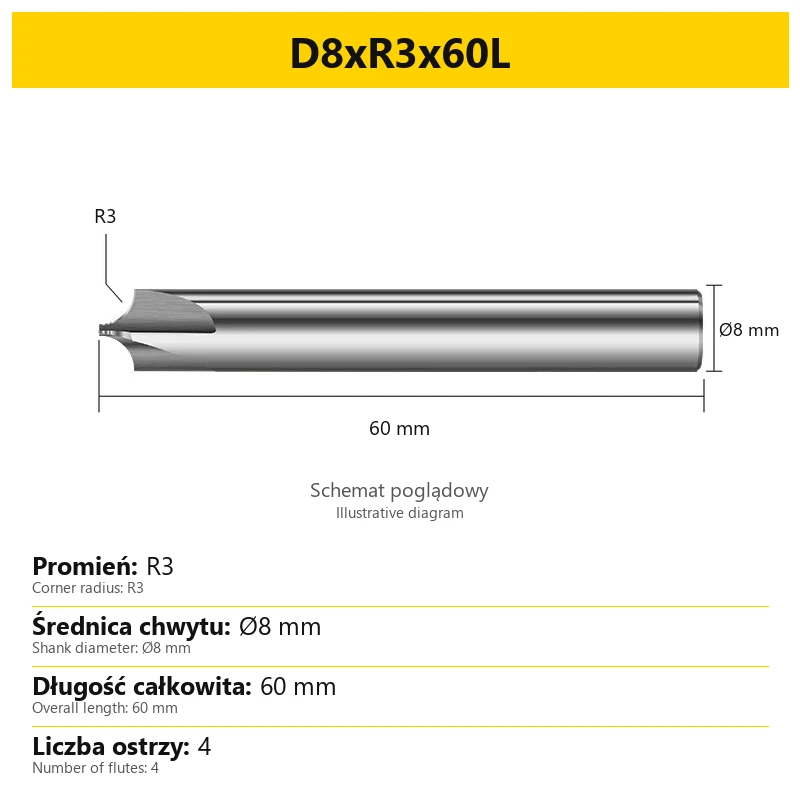
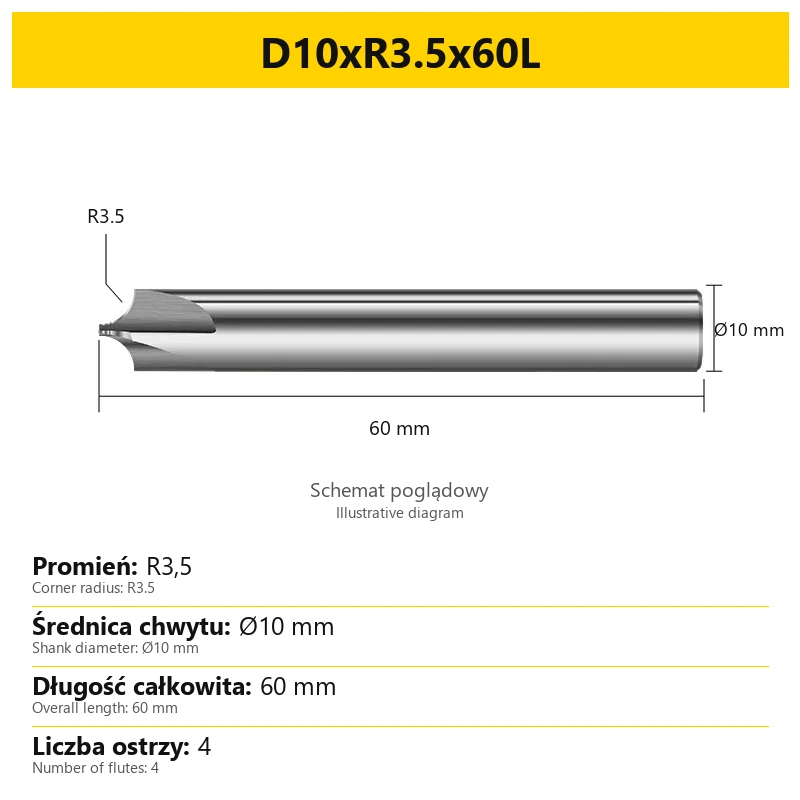
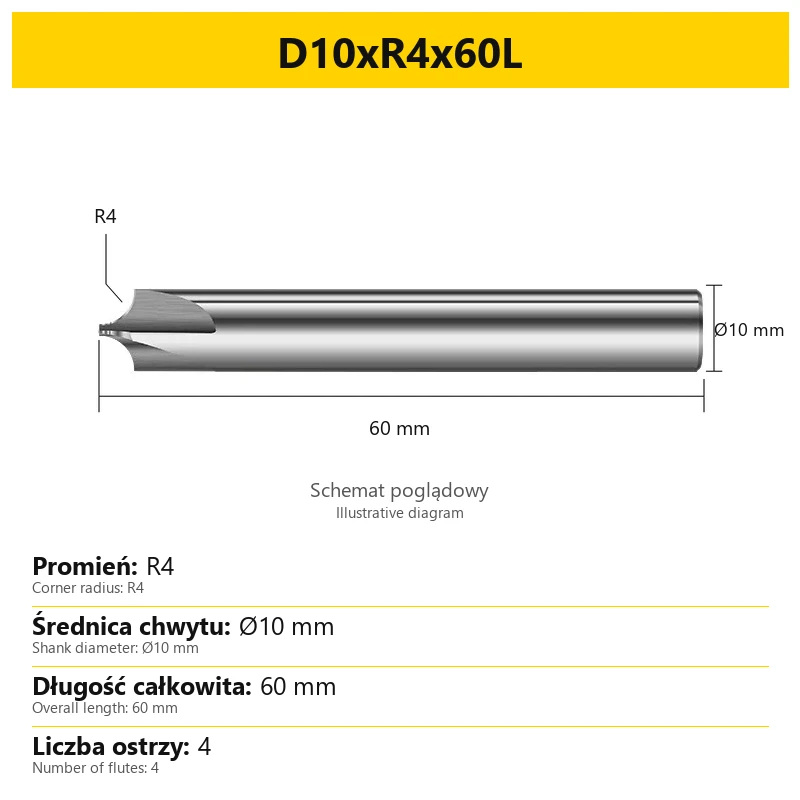
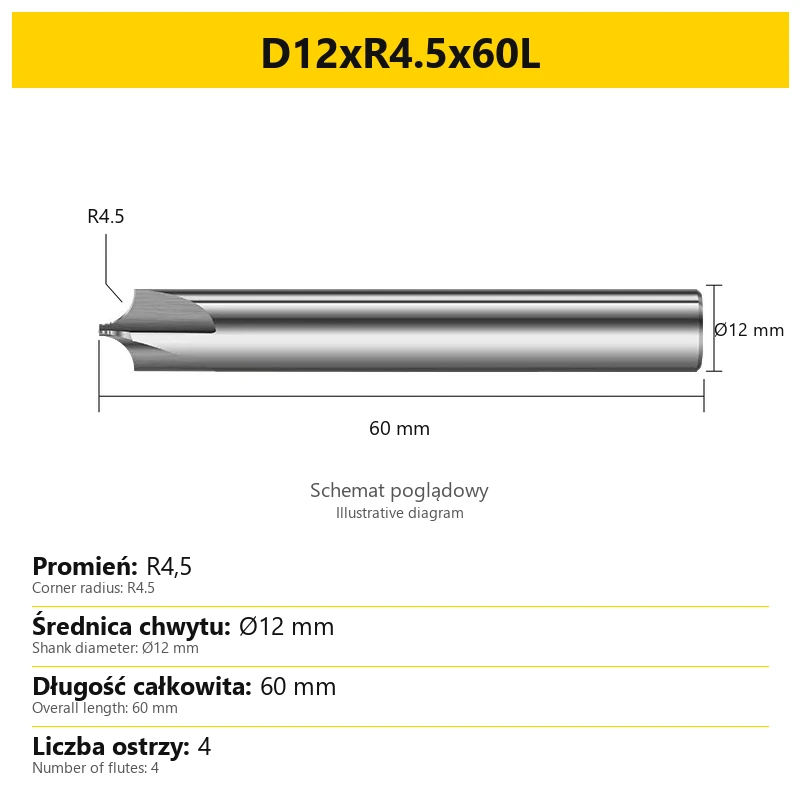
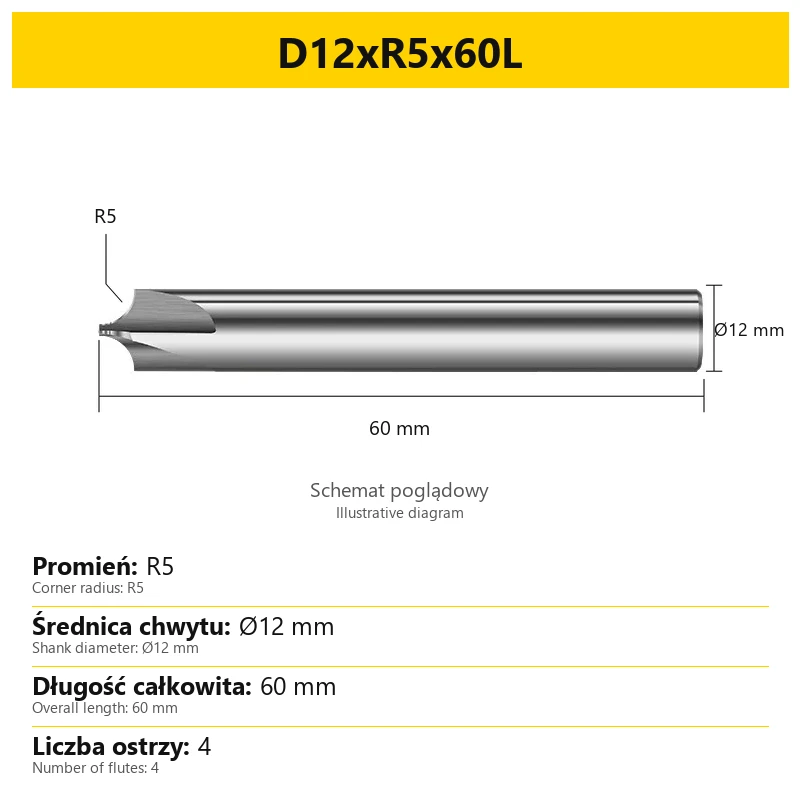
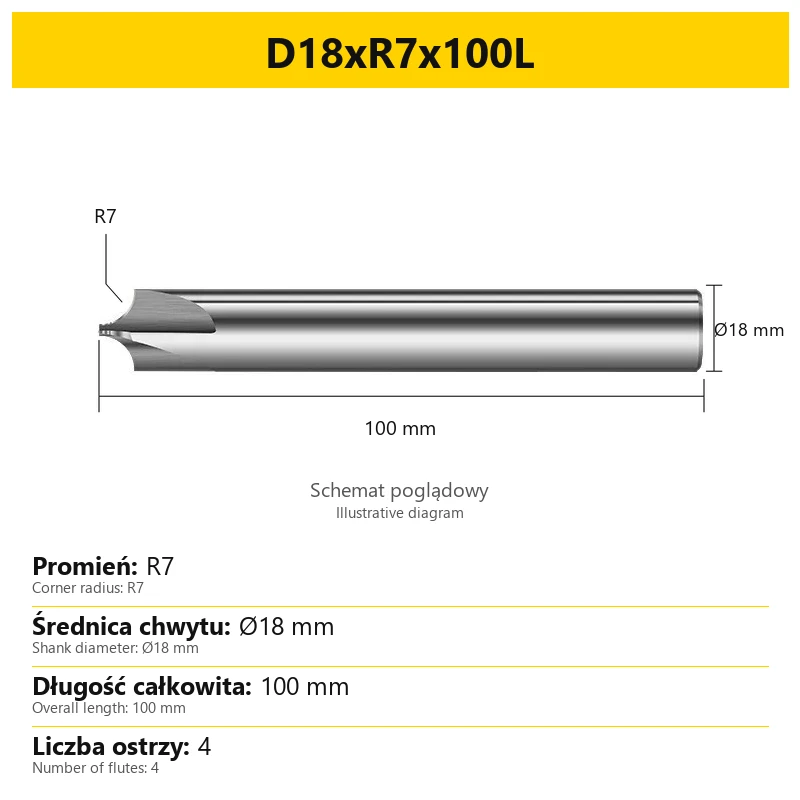
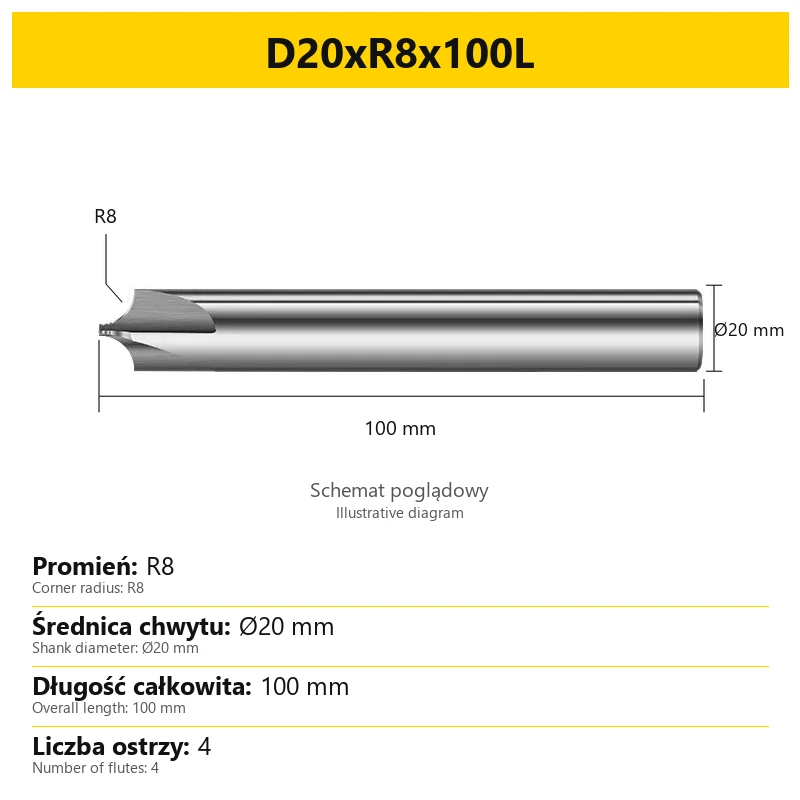
An uncoated solid carbide cutter for rounding external edges. The concave cutting profile creates a convex radius on the workpiece. Select the tool by radius R, shank diameter D and overall length L.
Applications and workpiece materials
The cutter is used for profile machining and producing external edge radii. It is intended for CNC milling machines, machining centres and engraving machines with suitable toolholding.
| Material | Application |
|---|---|
| Aluminium | Producing radii on external workpiece edges. |
| Copper and brass | Profile machining of non-ferrous metals. |
| Plastics | Rounding edges in acrylic, PVC, POM and PE. |
| Plywood | Forming radii on plywood component edges. |
Construction and specifications
| Parameter | Specification |
|---|---|
| Tool material | VHM — solid carbide |
| Coating | Uncoated |
| Number of flutes | 4 |
| Cutting profile | Concave, quarter-circle radius |
| Radius | R0.2–R8, depending on the selected size |
| Shank D | Cylindrical, Ø4–Ø20 mm, depending on the selected size |
| Overall length L | 50–100 mm, depending on the selected size |
The cutting section and shank form a single solid carbide tool. Four cutting edges machine the profile, while the cylindrical shank is held in the toolholder. Dimension D in the code specifies the shank diameter.
Concave tool profile and workpiece radius
Radius R specifies the round-over produced on an external edge. The concave cutting geometry corresponds to the convex profile produced on the component. “Concave” describes the cutter geometry; its application is machining external radii.
Start with the radius required on the component drawing. Then check the shank diameter, overall length and access to the edge. Radius R and diameter D describe different dimensions and are not interchangeable.
How to read the size designation
Example: D4xR1x50L. All dimensions are in millimetres. The code gives the shank diameter, radius and overall length, in that order.
| Code element | Meaning |
|---|---|
| D4 | Cylindrical shank diameter: Ø4 mm |
| R1 | Profile radius: R1 |
| 50L | Overall tool length: 50 mm |
Length L covers the entire tool, from the cutting tip to the end of the shank. It is not the cutting-edge length. Select the current size in the product variant selector and check the complete code before ordering.
Toolholding and preparation
- Select the toolholder by diameter D. The cylindrical shank must match the toolholding size.
- Set suitable overhang. Excessive extension reduces rigidity, while insufficient extension can restrict access and cause a collision.
- Clamp the tool securely. Tighten according to the requirements of the toolholder used.
- Check the working envelope. Before machining, rule out collisions involving the cutter, toolholder and workholding.
The cutter is intended for CNC machine tools. Do not use it in hand drills, bench drills or manually guided equipment. The tool has individual plastic packaging.
Frequently asked questions
Does a concave cutter produce a concave groove?
Its intended use is machining external radii. The concave tool profile creates a convex round-over on the workpiece edge.
What does R mean?
It is the radius of the cutting profile and the resulting round-over, in millimetres.
Which dimension determines the toolholder size?
The cylindrical shank diameter, marked D.
How many flutes does the cutter have?
Every size in this series has four flutes.
Does L mean cutting-edge length?
L is the overall tool length, including the shank.
Related products
-
A31B-1652FBestseller


Carbide T-Slot End Mill - TiSiN Coated
-
0678-65504Bestseller


Carbide Corner Rounding End Mill - TiSiN Coated
-
1670-1921ABestseller


4-Flute TiSiN Coated Carbide Corner Radius End Mill, up to 55HRC
-
4405-36841Bestseller
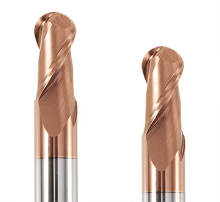 Ball Nose End Mills 0.00
2-Flute TiSiN Coated Carbide Ball Nose End Mill
-
A31B-1652F_2Bestseller

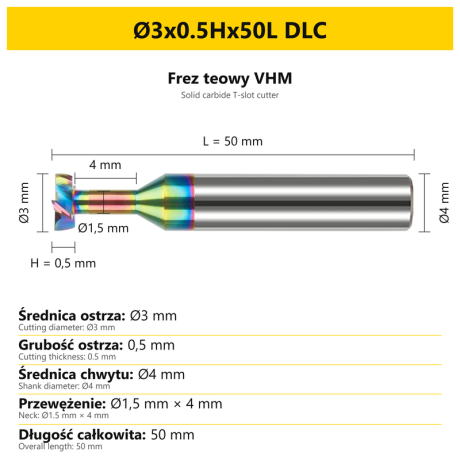
4-Flute Carbide T-Slot End Mill DLC
-
4B22-646C6Bestseller

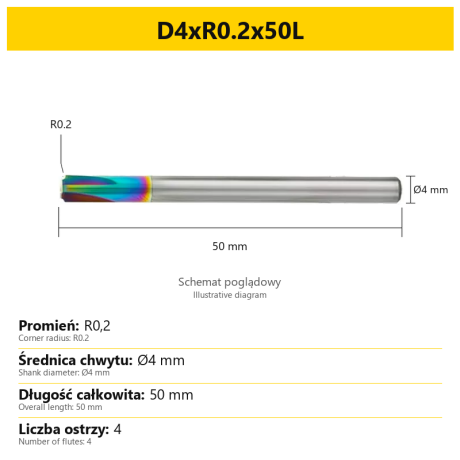
Carbide Corner Rounding End Mill - DLC Coated


Bestsellers
-
Bestseller
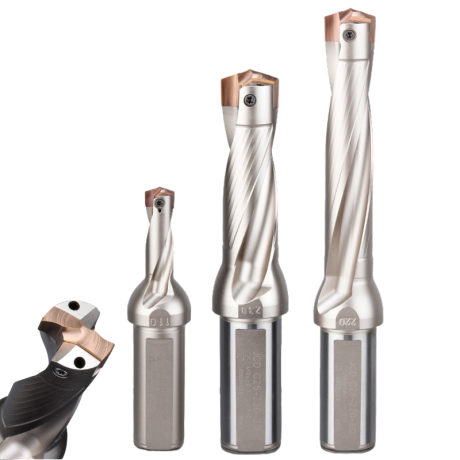
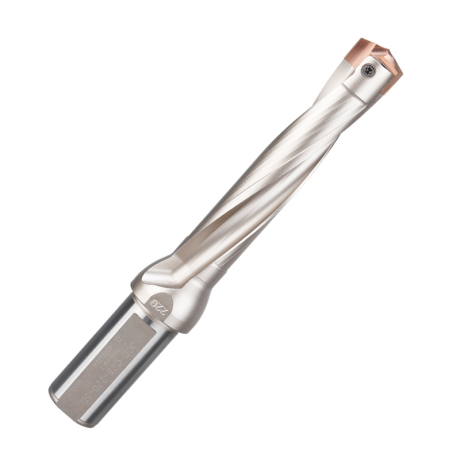
JCD modular drill with replaceable tip - internal cooling, for deep holes | GrotXD
JCD C20-100-3D Ø10~10.9 JCD C20-110-3D Ø11~11.9 JCD C20-120-3D Ø12~12.9 JCD C20-130-3D Ø13~13.9 JCD C20-140-3D Ø14~14.9 + 61 morePrice €69.86Price €56.79without VAT -
Bestseller
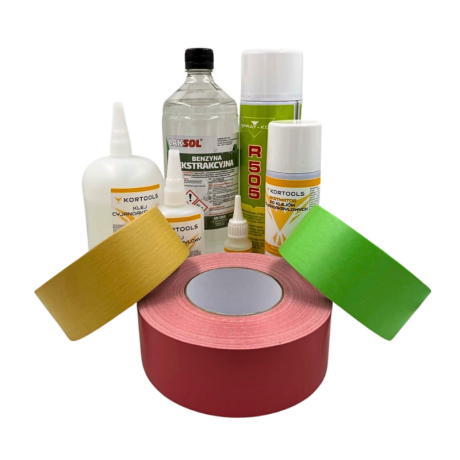
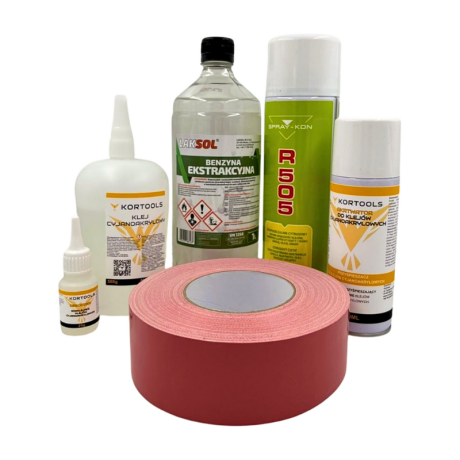
Kortools Adhesive + Tape CNC Workholding Kit
Yellow tape 5cm x 50m; adhesive 100g Yellow tape 5cm x 50m; adhesive 500g Yellow tape 10cm x 50m; adhesive 100g Yellow tape 10cm x 50m; adhesive 500g Green tape 5cm x 50m; adhesive 100g + 7 morePrice €44.66Price €36.31without VAT -
Price €17.18Price €13.97without VAT
-
Price €7.10Price €5.77without VAT
-
Price €7.56Price €6.14without VAT
-
Bestseller
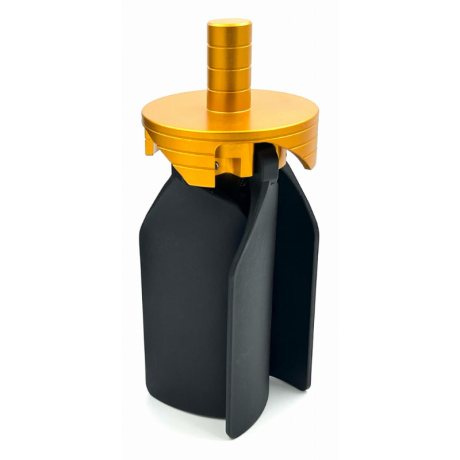 Other Accessories 0.00
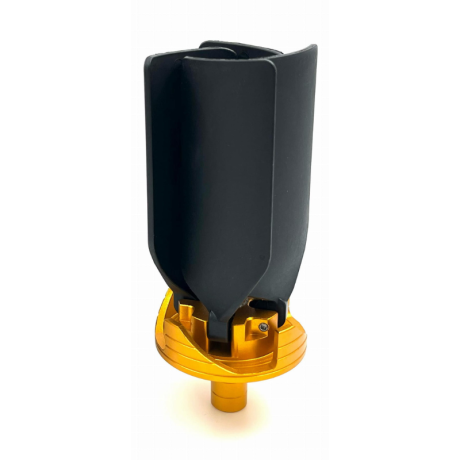
CNC Chip Fan / Chip Blower
Complete CNC chip fan Kit: blades, springs, pins and screwsPrice €53.82Price €43.76without VAT -
Bestseller
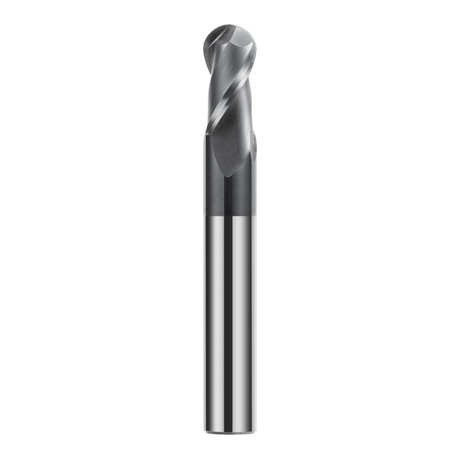
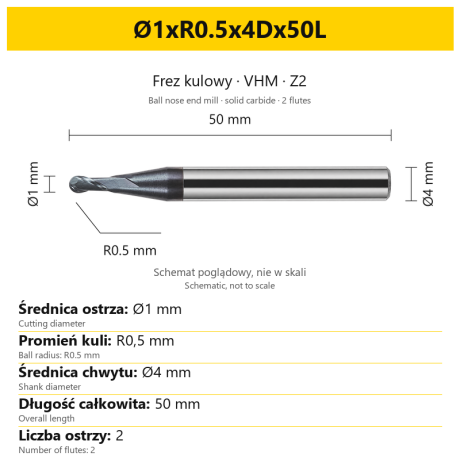 Ball Nose End Mills 0.00
2-Flute Carbide Ball Nose End Mill - HYPERCUT
Ø1xR0.5x4Dx50L Ø1.5xR0.75x4Dx50L Ø2xR1x4Dx50L Ø2.5xR1.25x4Dx50L Ø3xR1.5x3Dx50L + 26 morePrice €10.14Price €8.25without VAT -
Bestseller
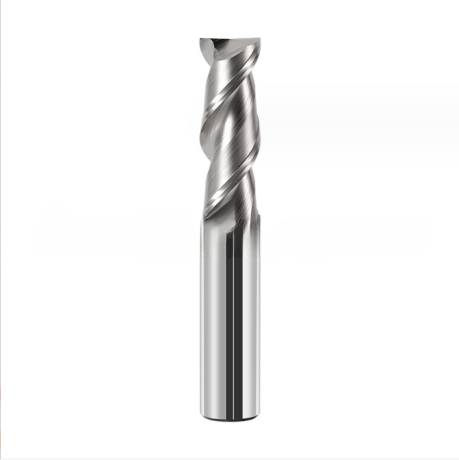
 2-Flute End Mills 0.00
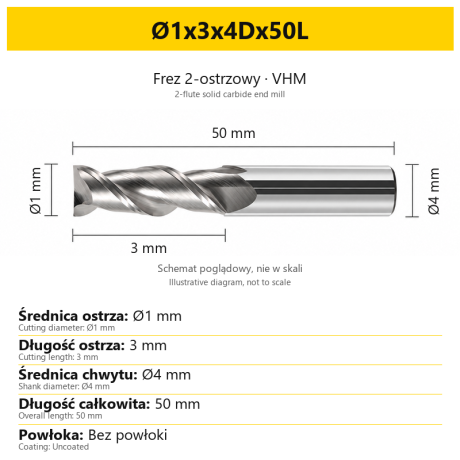
2-Flute Carbide End Mill for Aluminium
Ø1x3x4Dx50L Ø1.5x4x4Dx50L Ø2x6x4Dx50L Ø2.5x7.5x4Dx50L Ø3x9x3Dx50L + 31 morePrice €5.35Price €4.35without VAT -
Bestseller
 2-Flute End Mills 0.00
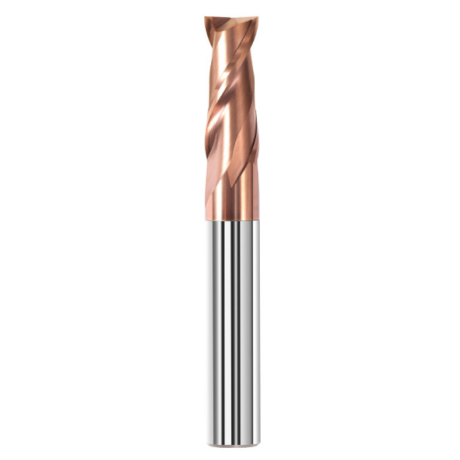
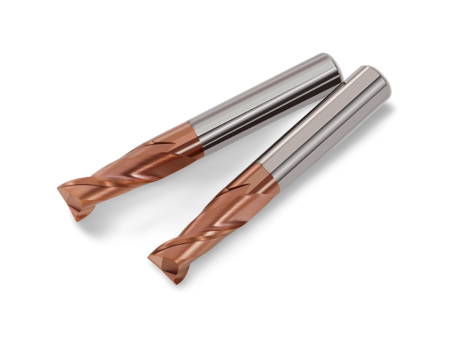
2-Flute Carbide End Mill for Steel 55 HRC - TiSiN - Solid Carbide
Ø6x24x6Dx75L Ø8x25x8Dx75L Ø4x20x4Dx100L Ø5x30x5Dx100L Ø6x30x6Dx100L + 31 morePrice €4.40Price €3.58without VAT -
Bestseller
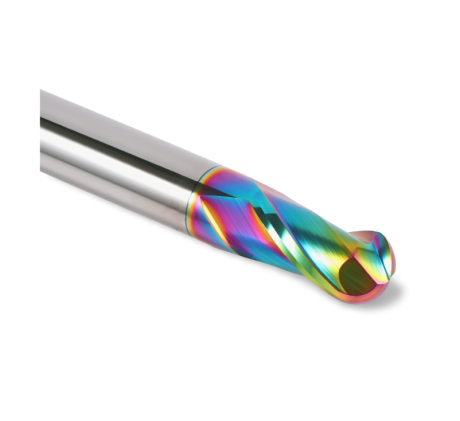 Ball Nose End Mills 0.00
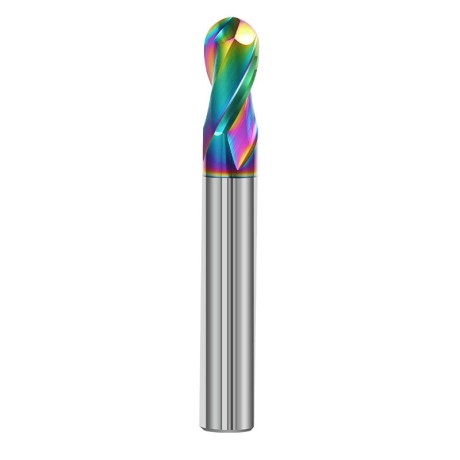
2-Flute DLC Coated Carbide Ball Nose End Mill| DuraEdge Alu
Ø1.0xR0.5x4Dx50L Ø1.5xR0.75x4Dx50L Ø2.0xR1x4Dx50L Ø2.5xR1.25x4Dx50L Ø3.0xR1.5x3Dx50L + 34 morePrice €7.89Price €6.41without VAT -
Bestseller
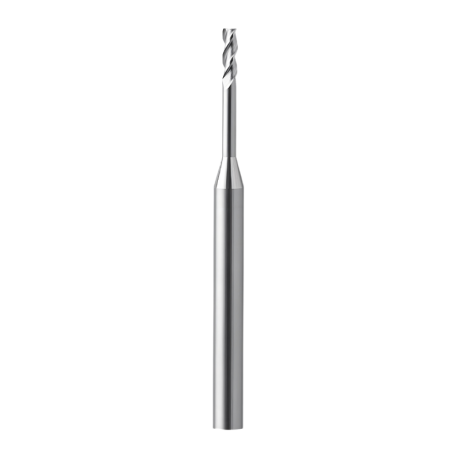
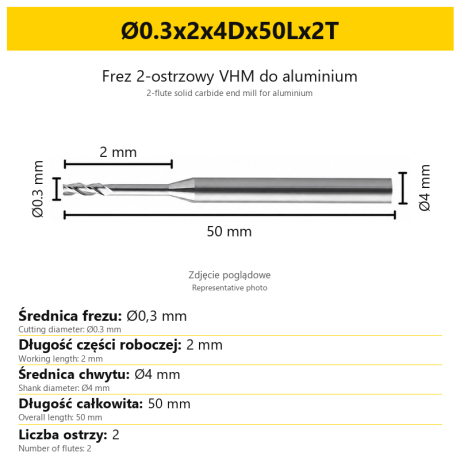 2-Flute End Mills 0.00
2-Flute End Mill for Aluminium | VHM | Miniature Ø0.3 - Ø0.9
Ø0.3x2x4Dx50Lx2T Ø0.3x3x4Dx50Lx2T Ø0.3x4x4Dx50Lx2T Ø0.4x2x4Dx50Lx2T Ø0.4x3x4Dx50Lx2T + 28 morePrice €7.99Price €6.50without VAT -
Bestseller
Ball Nose End Mills 0.00
2-Flute TiSiN Coated Carbide Ball Nose End Mill
Ø1xR0.5x4Dx50L Ø1.5xR0.75x4Dx50L Ø2xR1x4Dx50L Ø2.5xR1.25x4Dx50L Ø3xR1.5x3Dx50L + 38 morePrice €7.28Price €5.92without VAT -
Bestseller
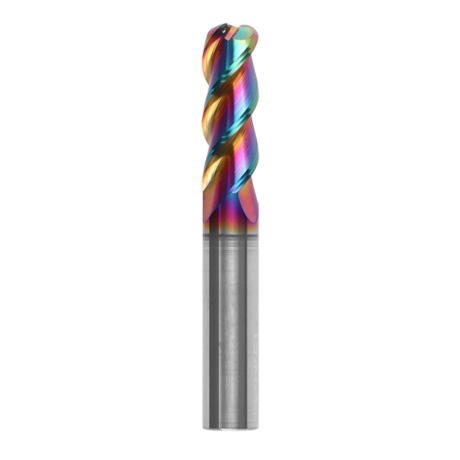
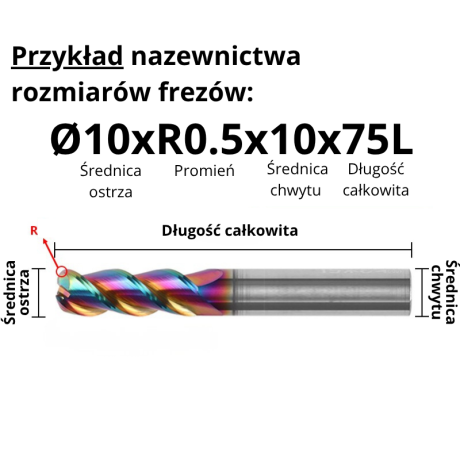
3-Flute Carbide Corner Radius End Mill for Aluminium| AL DLC
Ø1xR0.1x4Dx50L Ø1xR0.2x4Dx50L Ø1xR0.3x4Dx50L Ø1.5xR0.1x4Dx50L Ø1.5xR0.2x4Dx50L + 137 morePrice €4.96Price €4.04without VAT -
Bestseller
 3-Flute End Mills 0.00
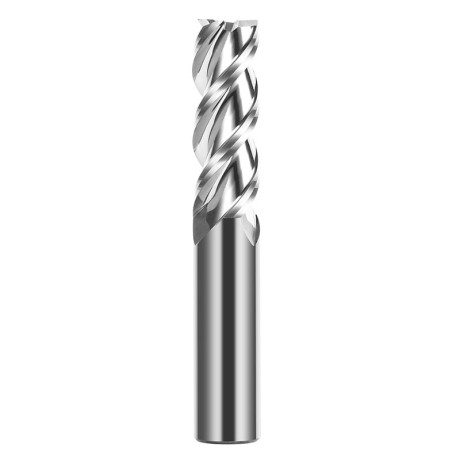
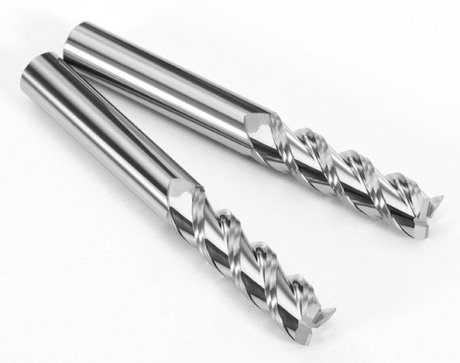
3-Flute Carbide End Mill VHM Z-3 for Aluminium| TriMill AL
Ø1x3xD4x50L Ø1.5x5x4Dx50L Ø2x6x4Dx50L Ø2.5x8x4Dx50L Ø3x9x3Dx50L + 41 morePrice €5.10Price €4.15without VAT -
Bestseller
 Countersinks 0.00
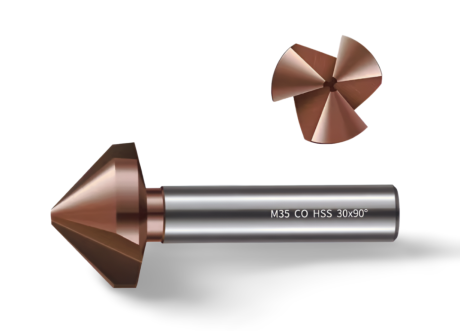
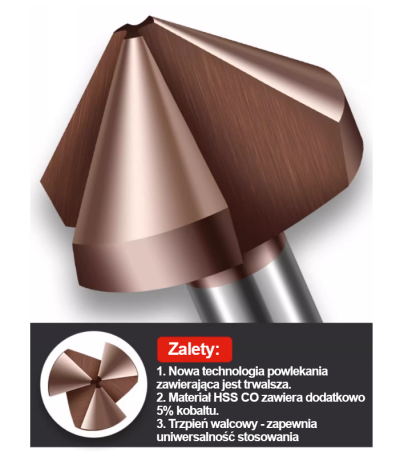
3-Flute Countersink Fi4.5-fi60, 90° - HSS-CO - 5% Kobaltu | Straight Shank
Ø4.5 x 4 x 90° x 40L Ø5 x 5 x 90° x 45L Ø6.3 x 5 x 90° x 45L Ø8.3 x 6 x 90° x 50L Ø10.4 x 6 x 90° x 50L + 12 morePrice €4.81Price €3.91without VAT -
Bestseller
 3-Flute End Mills 0.00
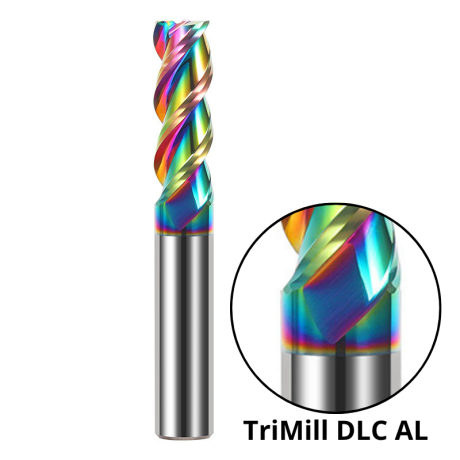
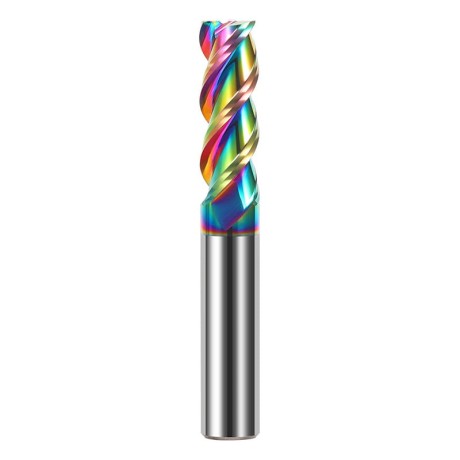
3-Flute DLC Coated Carbide End Mill | TriMill DLC AL
Ø1x3x4Dx50L Ø1.5x5x4Dx50L Ø2x6x4Dx50L Ø2.5x8x4Dx50L Ø3x8x3Dx50L + 38 morePrice €5.07Price €4.12without VAT